Buzz Cut Hairstyles for Men: Every Style, Fade, and Length That Works
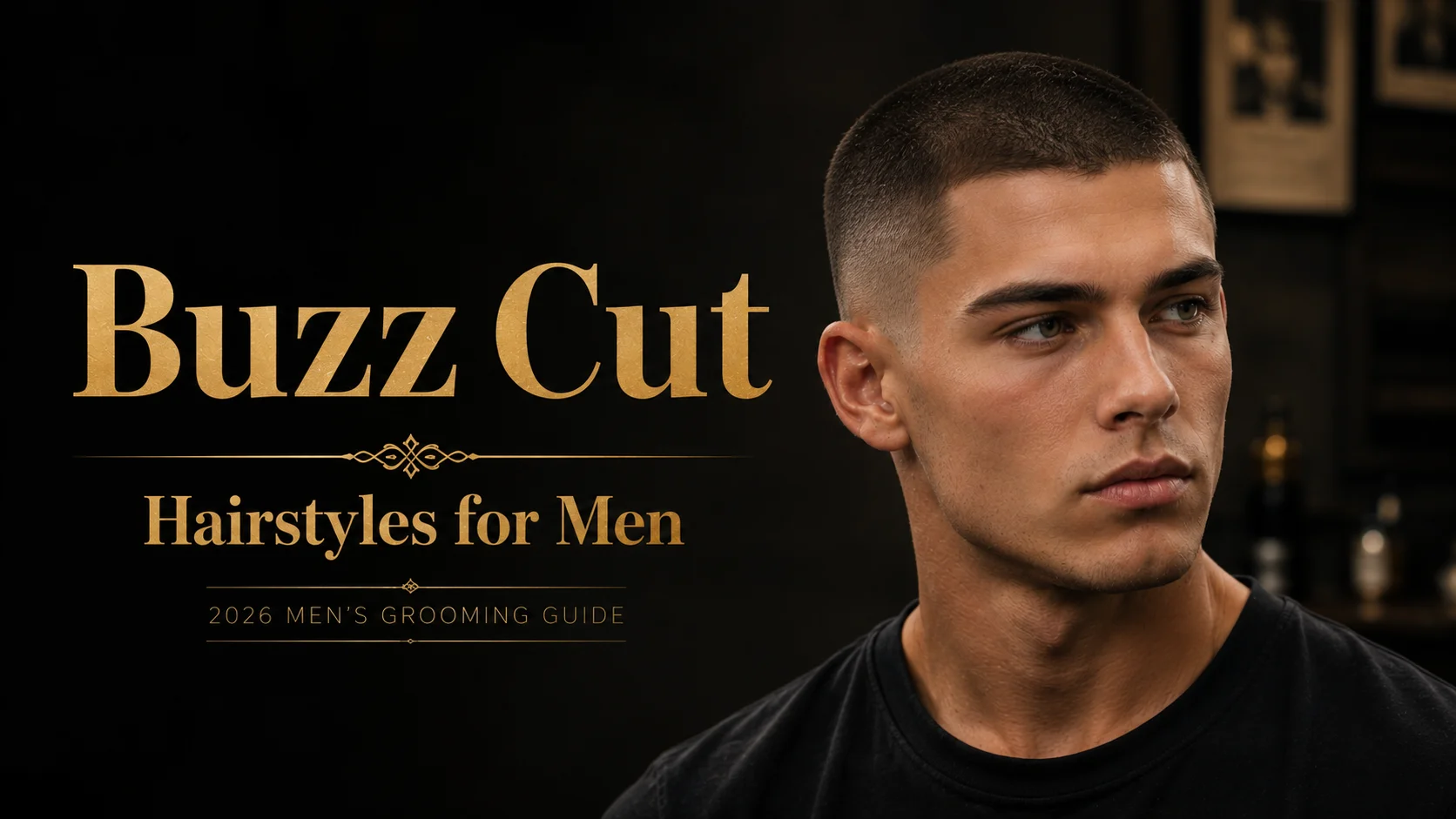
A buzz cut looks simple from the outside. Pick a guard number, run the clippers, done in ten minutes.
Get it wrong, though, and it shows in a way no other haircut does, since there is no length left to hide a bad line or a mismatched fade. There is nowhere for a mistake to hide.
This guide covers what actually separates a sharp buzz cut from a bad one. Guard numbers, fade pairings, and how the cut changes across hair type, face shape, and age.
What Is a Buzz Cut?
A buzz cut is a very short haircut created entirely with clippers, usually all one length or gradually faded at the sides. The name comes from the buzzing sound the clippers make when running close to the scalp.
The classic version keeps the hair trimmed evenly all over. The modern version pairs it with a fade, sharp edges, or even color, but the core idea stays the same: minimal length, minimal styling, maximum simplicity.
Every buzz cut is built around a guard number, which controls exactly how much length gets left behind.
| Guard | Length | Approximate mm |
|---|---|---|
| 0 | 1/16 inch | 1.5mm |
| 1 | 1/8 inch | 3mm |
| 2 | 1/4 inch | 6mm |
| 3 | 3/8 inch | 10mm |
| 4 | 1/2 inch | 13mm |
| 5 | 5/8 inch | 16mm |
| 6 | 3/4 inch | 19mm |
| 8 | 1 inch | 25mm |
Buzz Cut vs Crew Cut vs Bald
These three get lumped together constantly, but they are not the same cut.
| Style | Length | Maintenance | Best For |
|---|---|---|---|
| Buzz Cut | Even, guard 1 to 5 | Lowest | Simplicity, most face shapes |
| Crew Cut | Slightly longer on top, scissor finished | Low to medium | A bit more styling flexibility |
| Bald | No guard, skin close | Highest | Guys who want the boldest possible look |
A buzz cut is clipper cut and even throughout. A crew cut leaves a bit more length on top, usually finished with scissors rather than a single clipper pass. Going bald means no guard at all, which actually needs more frequent upkeep than a buzz cut, since any regrowth shows immediately against bare skin.
Buzz Cut Length and Guard Variations
The guard number is the real decision here. Everything else is a variation on how much length it leaves behind.
Induction Cut
The shortest version, done with no guard or guard 0. It cuts hair almost to the skin, requires zero styling, and traces directly back to military grooming standards where speed and simplicity mattered most.
Burr Cut
Using guard 1 or 2, this leaves a light shadow of coverage rather than exposing the scalp. It is a common starting point for anyone trying a buzz cut for the first time, since it is short but not as stark as the induction cut.
Butch Cut
Guard 3 or 4 gives noticeably more coverage and a softer overall look while still counting as a true buzz cut. It works well for both office and casual settings.
Brushed Buzz
At guard 4 or 5, there is enough length on top to brush forward or add a small amount of product. This version blends the low effort of a buzz cut with a bit of personal styling.
Longer Buzz
Guard 5 through 8 leaves enough length for real texture, though it starts moving toward crew cut territory the longer it gets. If you like the idea of more length up top, our quiff hairstyle guide covers a natural next step up from here.
Buzz Cut Fade Pairings
Pairing a buzz cut with a fade is where most of the visual customization happens.
Buzz Cut Low Fade
The fade starts just above the ear and blends down to nothing at the neckline. It is subtle, professional, and works with almost any face shape. Our low fade guide covers the technique in full.
Buzz Cut Mid Fade
Starting around the temple, a mid fade adds more visible contrast without going bold. It is the most requested pairing for guys who want their buzz cut to read as intentional rather than plain.
Buzz Cut High Fade
The fade starts above the temple, creating strong contrast between the top and sides. It suits round and oval faces especially well, since the added height makes the head look slightly longer.
Buzz Cut Skin Fade
The fade blends all the way down to bare skin rather than stopping at a short length. It is the boldest fade option and grabs the most attention, while still being easy to maintain since there is no length to manage.
Buzz Cut Taper Fade
A gentler blend from the top of the ear down to the neckline, with much less contrast than a full fade. Good for conservative settings or anyone who wants a soft transition rather than a hard line.
Buzz Cut Burst Fade
A curved fade that wraps around the ear instead of running in a straight line. It pairs especially well with a slightly longer, textured top.
Buzz Cut Drop Fade
The fade line drops down behind the ear, following the natural curve of the head. It adds a bit more movement and depth compared to a straight fade line.
Buzz Cut with No Fade
Some guys skip the fade entirely and keep everything one even length. It is the lowest maintenance option here, since there is no line that needs regular touch ups as it grows out.
High and Tight and Textured Variations
A few structured takes on the buzz cut that move beyond a plain, even length.
High and Tight
Very short sides with a slightly longer, defined patch on top, cut with guard 0 or 1 on the sides and guard 2 up top. Rooted in military tradition, it gives a sharp, masculine shape that makes the jawline stand out. An undercut pushes that same contrast even further if you want more drama.
Textured Crop Buzz
A longer top, cut with scissors or a high guard number, styled messy on purpose with a matte product, paired with faded or tapered sides. It works especially well for thick hair, since the texture adds shape without adding bulk. Our guide to textured haircuts covers the wider family this style belongs to.
Buzz Cut French Crop
A hybrid where the sides are buzzed down evenly instead of faded, paired with the short, forward swept fringe that defines a French crop. It is the lowest maintenance version of the French crop family. Our French crop guide covers the full style in depth.
Buzz Cut for Every Hair Type
How a buzz cut looks and holds up day to day changes quite a bit depending on your natural hair texture.
Straight Hair
Straight hair gives the cleanest, most uniform buzz cut, since there is no natural texture working against the even clipper line.
Curly Hair
A buzz cut works well on curly hair and tends to simplify the daily routine significantly, since there is no length left for curls to tangle or frizz. Our curly hairstyle guide covers more on working with natural curl patterns.
Thick Hair
Thick hair holds a buzz cut’s shape especially well, since there is enough density to avoid looking patchy even at short guard lengths.
Fine or Thin Hair
A buzz cut is one of the better options for fine or thinning hair specifically, since an even, short length reads as fuller and more deliberate than longer hair with visible gaps.
Buzz Cut by Ethnicity and Texture
Hair texture varies significantly by background, and the right fade pairing often follows that texture.
Black Men
Buzz cuts pair especially well with tightly coiled hair textures. Skin fades, high fades, and crisp line ups are the most common combinations, since they highlight both the hair texture and the shape of the head.
Latino Men
Mid fades combined with design work, like sharp lines or etched shapes, are a common approach here, since naturally dense hair holds clipper detailing well.
Asian Men
Straight, dense hair keeps a buzz cut’s lines clean and symmetrical. Drop fades and mid fades paired with a uniform top length are the most requested combinations, and buzz cuts are also a reliable fix for stubborn cowlicks.
Best Face Shapes for a Buzz Cut
Face shape does not change whether a buzz cut works. It changes which fade pairs with it best.
| Face Shape | Best Fade Pairing |
|---|---|
| Round or Oval | High fade, to add visual height |
| Square | Low fade, to soften strong angles |
| Long | Mid fade with a bit more length on top |
| Heart | Low or mid fade to balance a narrower jaw |
Buzz Cut for a Receding Hairline or Thinning Hair
A buzz cut is genuinely one of the better options if your hair is thinning or your hairline is receding. Keeping everything the same short length removes the contrast between thicker and thinner areas that makes thinning more noticeable on longer styles.
Fading the sides also pulls attention toward the fade line itself rather than the hairline. Matte products work better than anything with shine here, since shine tends to make a thinning scalp more visible rather than less.
Buzz Cut with a Beard
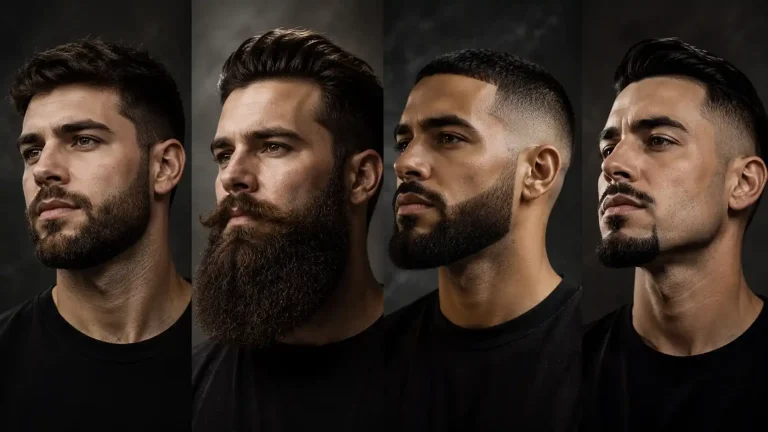
A buzz cut and a well kept beard is one of the most reliable combinations in men’s grooming, since both rely on clean, even lines to look intentional. Keeping the beard trimmed on a similar schedule to the buzz cut itself keeps the whole look consistent rather than letting one half grow out while the other stays sharp.
Buzz Cut with Color or Design
Two easy ways to push a buzz cut beyond a plain, single length look.
Dyed and Bleached Buzz Cuts
Platinum and icy blonde are the most common color choices on a buzz cut, since the short length shows off color clearly. Bleached hair needs regular toning to stop it from turning yellow between salon visits.
Line Ups and Edge Designs
A barber can use a razor or a detail clipper to cut sharp lines, shapes, or patterns into the faded section of a buzz cut. A clean line up around the hairline alone, without any extra design work, is usually enough to make a buzz cut look noticeably more polished.
Buzz Cut for Boys and Kids
Kids’ buzz cuts generally use a slightly longer guard than an adult version, both for comfort and because it grows out more gracefully between cuts. A burr cut at guard 1 or 2 is a common starting point for a first buzz cut, since it is short but not as stark as a full induction cut.
How to Buzz Cut Your Own Hair at Home
Start with a longer guard than you think you want. It is easy to go shorter after the first pass, but impossible to add length back once it is cut.
Work against the direction of hair growth for the most even result, and use a mirror behind you to check the back and sides as you go. Go over the whole head at least twice with the same guard to catch any spots the clippers missed the first time.
How Long It Takes to Grow Out a Buzz Cut
Regrowth becomes noticeable within two to four weeks, adding a soft shadow of length across the scalp. By six to eight weeks, most buzz cuts have grown into a longer, textured length that needs actual styling rather than just clipper maintenance.
If you are trying to grow it out into a longer style entirely, expect the awkward in between phase to last a couple of months before there is enough length to work with.
Can You Preview a Buzz Cut Before Cutting It?
Yes. Several apps and social platforms, including Instagram and TikTok filters, let you preview a rough approximation of a buzz cut on your own photo before committing. These tools are useful for getting a general sense of the shape, though they tend to smooth over real details like your actual head shape and hairline, so treat the result as a rough guide rather than an exact preview.
Buzz Cuts in Pop Culture
The buzz cut has long been tied to a certain look of stripped down toughness in film and television, most famously through Tyler Durden’s induction style buzz cut in Fight Club. That reference alone still drives a steady stream of searches for the style decades later.
Common Mistakes with a Buzz Cut
Choosing a guard number without trying it first. Going straight to guard 1 when you meant to ask for guard 3 is a common and completely avoidable mistake. Confirm the number with your barber before the clippers start.
Skipping the fade line maintenance. A faded buzz cut needs a touch up every two to three weeks to stay sharp. Left too long, the fade grows out unevenly and loses its clean edge.
Using shiny products on short hair. Shine sits on top of short hair and makes the scalp more visible underneath it. A matte product keeps the look natural instead.