French Crop Haircut: The Only Guide You’ll Need
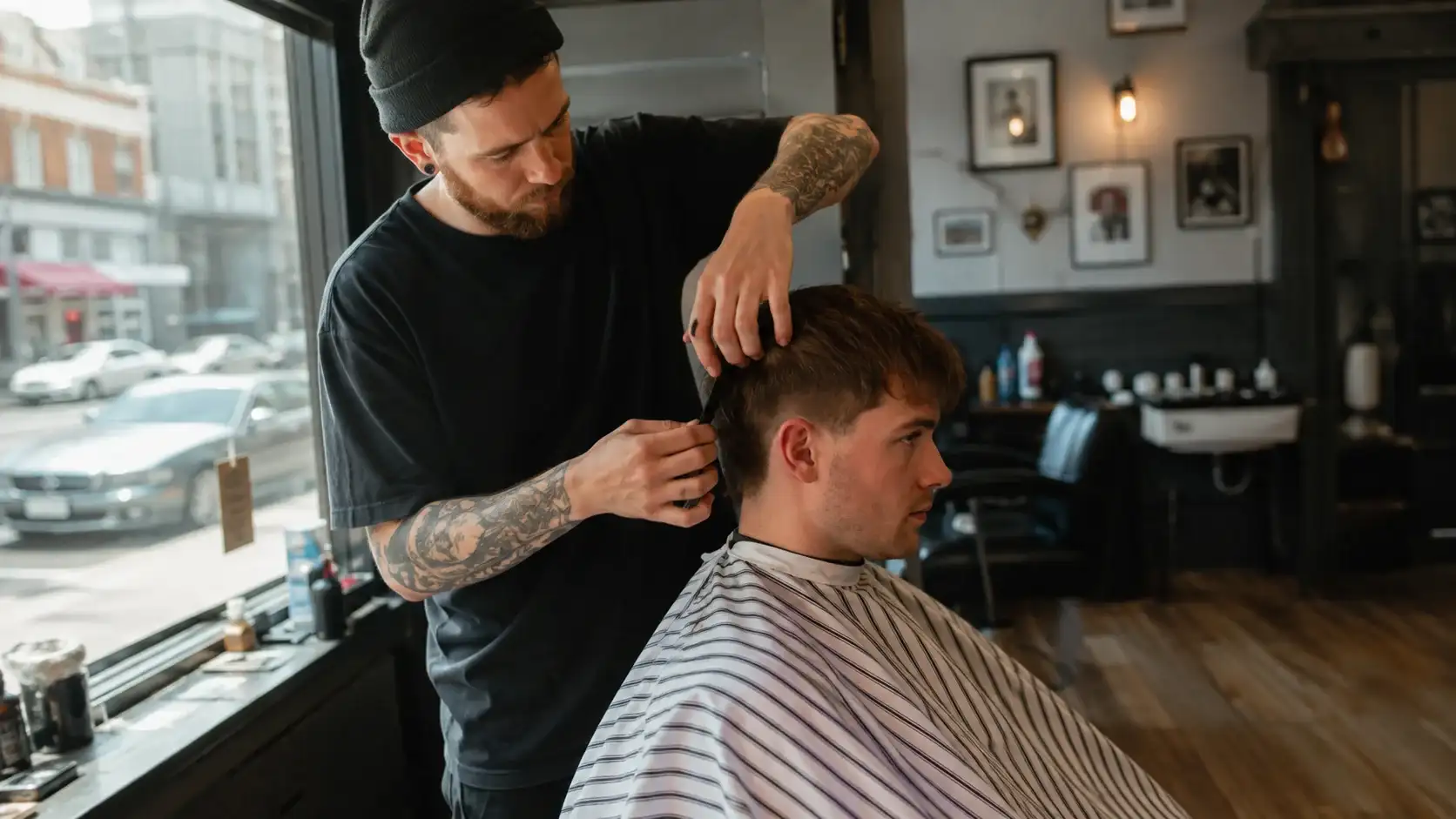
Ask five different guys what a French crop haircut actually is, and you will get five different answers. Most of them are only half right.
The real French crop is specific. Short sides, a slightly longer top, and a fringe that sits low and points forward instead of getting swept back or to the side. That one detail is what separates it from a dozen other cuts it constantly gets confused with.
This guide breaks down exactly what makes a French crop a French crop, every fade and length variation worth knowing, and how to ask for the right one for your hair. For the wider family of textured cuts this one belongs to, our guide to textured haircuts for men covers the full range.
What Is a French Crop Haircut?
A French crop haircut is a short to medium men’s cut defined by a forward swept fringe, tapered or faded sides, and a slightly textured top. The fringe is the defining feature. It sits low on the forehead and points forward rather than being pushed back or parted.
The cut originated as a simplified, barbershop-friendly version of the French crew, which itself borrowed from mid-century European scissor cuts. Today’s French crop is looser and more textured than its older version, built around movement rather than a stiff, uniform line.
French Crop vs. Textured Crop vs. Caesar Cut
These three get confused constantly, so here is the actual difference.
| Style | Fringe Direction | Texture Level | Best For |
|---|---|---|---|
| French Crop | Forward, low on forehead | Medium to heavy | Most face shapes, receding hairlines |
| Textured Crop | Varies, often side swept | Heavy | Guys who want more styling flexibility |
| Caesar Cut | Straight across, no sweep | Light | A cleaner, more uniform look |
A textured crop is the broader category. A French crop is a specific style within it, defined by that forward fringe. A Caesar cut is its own separate style entirely: the fringe sits straight across the forehead in a horizontal line with almost no texture or sweep, closer in spirit to a modern mod cut than to a French crop.
How to Ask Your Barber for a French Crop Haircut
Say “French crop” by name first, since it is a recognized style and most barbers will know exactly what you mean. Follow it with your fade preference and how much length you want left in the fringe.
A clear ask sounds like, “French crop, short tapered sides, keep the fringe long enough to push forward, texture through the top.” That single sentence covers the three things that actually vary between individual French crops.
French Crop Fade Pairings
The sides are where most of the customization happens. Here is what each fade pairing actually changes about the finished look.
French Crop Low Fade
The fade starts just above the ear and blends gradually, keeping contrast subtle. This is the most common pairing for a first French crop, and it is a safe, professional-looking choice. Our low fade guide covers the full technique if you want more detail before your appointment.
French Crop Mid Fade
Starting around the temple, a mid-fade adds noticeably more contrast than a low fade without going as bold as a high-fade. This is the most requested pairing overall, since it balances visibly sharp sides with a top that still feels soft and textured.
French Crop High Fade
The fade starts higher on the head, creating a sharper, more dramatic contrast between the buzzed sides and the fringe. It draws more attention to the top, so the fringe needs to be styled with intention rather than left loose. If you want even more contrast than a high fade offers, an undercut pushes that further.
French Crop Taper Fade
A taper fade skips the hard blend line entirely, thinning gradually into the natural hairline. It is the lowest maintenance fade option here, since there is no sharp edge that needs regular touch-ups to stay clean.
French Crop Burst Fade
Instead of a straight fade line, a burst fade curves around the ear. It pairs especially well with a French crop because the curved shape echoes the soft, rounded fringe rather than cutting against it with a hard straight line.
French Crop Drop Fade
The fade line dips down behind the ear rather than staying level. This suits a slightly longer, rounder crop shape and adds a bit more visual movement to the back and sides.
French Crop with No Fade
Some guys skip the fade entirely and keep the sides scissor-tapered instead. This is the most classic, least barbershop-dependent version of the cut, and it holds its shape longer between visits since there is no hard line growing out.
French Crop Length: Short vs. Long
Length is the other major variable, and it changes how much daily styling the cut actually needs.
Short French Crop
The fringe sits just above the eyebrows, barely long enough to push forward. This is the lowest maintenance version, closest to the cut’s original barbershop roots, and it grows out cleanly without losing its shape fast.
Long French Crop
More length is left throughout, especially in the fringe, giving room for heavier texture and a bit more styling flexibility. A long textured French crop needs a stronger hold product to keep the fringe forward rather than falling into the eyes, but it is currently one of the more requested variations.
Textured, Messy, and Fringe-Focused Styles
Beyond fade and length, texture work is what separates a sharp French crop from a flat, dated one.
Textured French Crop
This is the standard modern French crop haircut: point cut or razored through the top to break up the line and add separation, rather than leaving it cut blunt.
Messy French Crop
A looser, more undone finish where the texture is left intentionally uneven. Worked through with fingers and a matte clay rather than combed into place, it reads as more casual and lived in than a precisely styled French crop.
French Crop with Textured Fringe
Texturizing focused specifically on the fringe itself keeps it from sitting as one flat, solid piece across the forehead, which is a common issue when the fringe is cut blunt without any texture work.
French Crop Haircut for Every Hair Type
The cut adapts to nearly every hair type, though the technique and upkeep shift slightly depending on what you start with.
Straight Hair
Straight hair gives the cleanest, most defined fringe line and is generally the easiest hair type to style into a French crop day to day.
Wavy Hair
Natural wave adds texture on its own, often reducing how much product is needed to get the finished look right.
Curly Hair
A French crop works on curly hair, but it needs to be cut slightly longer than it looks while wet, since curls shrink as they dry. Our curly hairstyle guide covers this in more depth for curl-specific cutting and styling.
Thick Hair
Thick hair is arguably where the French crop haircut performs best, since the fringe removes bulk at the front while the fade thins out the sides, keeping the overall shape from looking heavy.
French Crop for Face Shape and Receding Hairlines
The forward fringe is naturally flattering across most face shapes, since it adds visual weight to the forehead area rather than leaving it exposed.
This also makes the French crop a genuinely good option for a receding hairline specifically. A forward swept fringe covers a receding line more effectively than styles that sweep hair back or to the side. It is less effective if recession is concentrated heavily at the temples rather than the front hairline, since fringe alone cannot cover that pattern.
French Crop Mullet and Buzzed Side Variations
Two crossover versions worth knowing, both moving away from the traditional fade pairing entirely.
French Crop Mullet
A hybrid where the classic short, forward fringe stays up front while length is allowed to grow out longer at the back. This pairing has picked up real momentum alongside the broader mullet trend, giving the mullet’s length without losing the clean, defined fringe the French crop is known for.
Buzz Cut French Crop
Instead of a faded or tapered blend, the sides are buzzed down evenly with clippers and no gradient. It is the lowest maintenance side option on this list, since a buzzed section needs far fewer touch-ups than a sharp fade line. Our buzz cut guide covers guard lengths and upkeep in more detail.
French Crop with a Beard
The crop’s clean, defined fringe line pairs naturally with a well-maintained beard line, since both rely on sharp edges to look intentional. Keeping both on a similar trim schedule, rather than letting the beard grow out while the crop stays fresh, keeps the overall look balanced.
The Tommy Shelby French Crop
The French crop haircut got a major visibility boost from Peaky Blinders, where Tommy Shelby’s version became one of the most searched reference cuts for the style. That version leans slightly messier and less uniformly styled than a typical salon French crop, with the fringe left a bit looser rather than precisely combed into place.
French Crop for Boys and Kids
A kids’ or boys’ French crop generally skips the fade in favor of simple scissor-tapered sides and keeps the fringe shorter, so it needs less daily upkeep than an adult version. The core shape stays the same: short sides, a bit more length on top, and a fringe forward.
How Long a French Crop Lasts and Maintenance
Trim the fringe every three to four weeks, since it is the fastest-growing part of the cut and the first section to lose its shape. If the sides are faded, expect to need a touch-up every two to three weeks to keep the line clean. A tapered or buzzed side, without a hard fade line, can go longer between visits.
Common Mistakes with a French Crop
- Cutting the fringe too short. Without enough length, there is nothing to push forward, and the style loses its defining feature entirely.
- Going too high with the fade on a round or soft face shape. A high-contrast fade can end up drawing more attention to width than the fringe adds in balance. A low or mid fade is usually the safer starting point.
- Skipping styling product entirely. The fringe needs at least a small amount of matte clay or paste to hold its forward direction. Without it, the style tends to fall flat by midday.