Crew Cut Haircut: Every Style Worth Trying in 2026
The crew cut has stayed in style for decades because it works for almost any man, any hair type, and almost any setting. It’s short, sharp, and low maintenance, which is exactly why it never really goes out of fashion.
Originally worn by military recruits and athletes for practical reasons, this style has since become a mainstream favorite for men who want a clean, professional look without spending much time in front of a mirror each morning.
What makes it so dependable is how easy it is to adapt. A classic version works just as well in a corporate office as it does on the gym floor, and small changes in length or fade can shift the whole feel of the cut.
This guide covers everything worth knowing about the crew cut haircut, including the most popular variations, how to style one, how it compares to a buzz cut, and how to keep it looking sharp between trims.
What Is a Crew Cut Haircut?
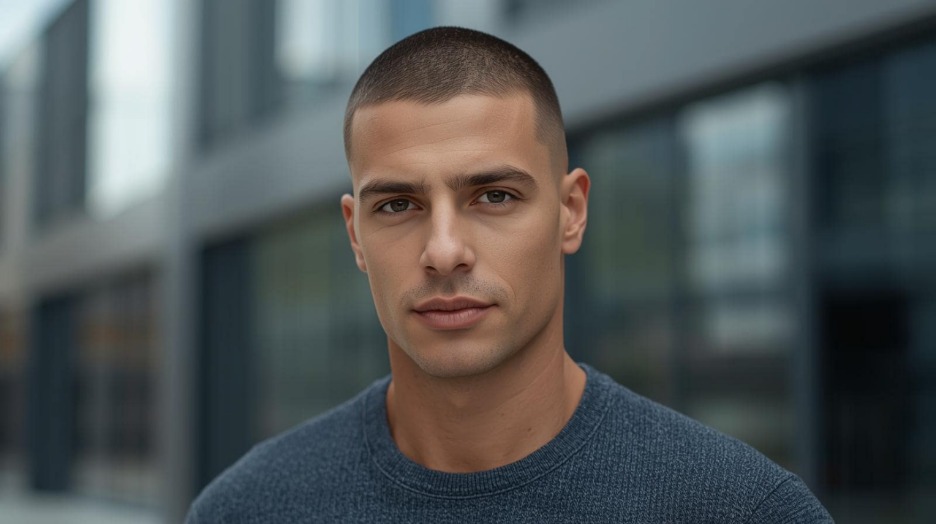
A crew cut haircut is a short men’s hairstyle where the hair on top is left slightly longer than the closely trimmed sides and back. The top usually ranges from half an inch to an inch and a half, tapering down into short sides that can be faded or simply clipped short.
The defining feature is the contrast between the longer top and the short sides, which gives the cut structure without requiring much styling effort. Unlike a buzz cut, where the length stays uniform all over, this style keeps just enough length on top to add texture or a bit of shape.
That contrast is also what makes it one of the most versatile short styles available, since the top can be worn flat, textured, or slightly spiked depending on the occasion. A barber can adjust the taper, the fade, and the exact top length to suit your hair type and face shape without changing the core idea of the cut.
Why Choose a Crew Cut Haircut?
- Low Maintenance: Grows out cleanly and rarely needs more than a quick comb or a small amount of product.
- Professional: Works well in office settings, interviews, and formal environments without looking too severe.
- Versatile: Pairs with a beard, a hard part, or a fade depending on how much personality you want to add.
- Practical: Handles heat, sweat, and physical activity better than longer styles, which is part of why it started as a military cut.
- Face-Shape Friendly: The short sides and defined top work well across most face shapes, from round to angular.
- Budget-Friendly: Fewer products and fewer specialized styling tools are needed compared to longer, more structured cuts.
This style tends to suit men who want a low-effort routine without giving up personal style entirely. It’s a common pick for first-time clients trying to move away from longer hair, since the short length makes the transition feel manageable rather than drastic.

Best Crew Cut Variations for Men
Each version below changes the sides, the fade, or the texture on top while keeping the core shape intact. Pick the one that matches your hair type and how much styling time you’re willing to put in.
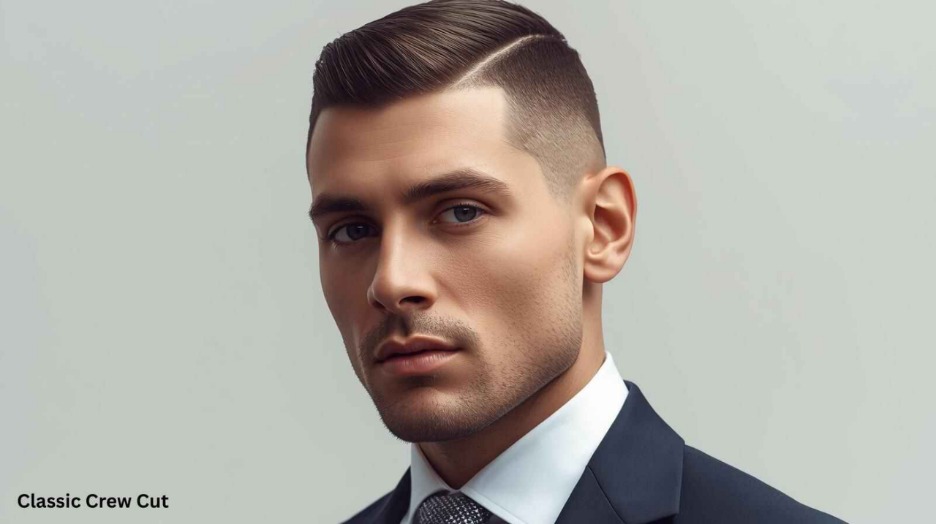
1. Classic Crew Cut:
The original version keeps the top short and slightly tapered, with the sides trimmed close but not faded to the skin. It’s the most low-maintenance take on the style and works for nearly any hair type, from straight to slightly wavy.
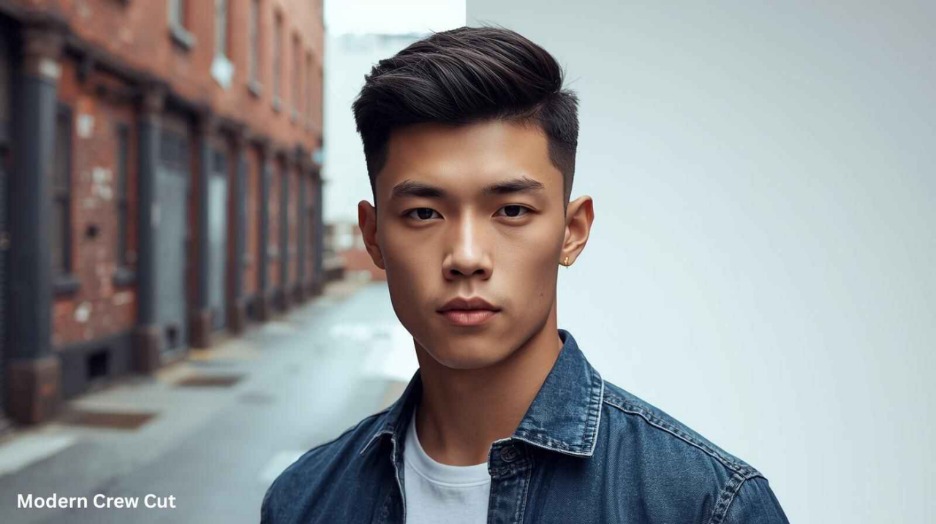
2. Modern Crew Cut:
A modern interpretation that includes subtle layers, light fades, and more volume on top. Great for a stylish edge while keeping it refined.
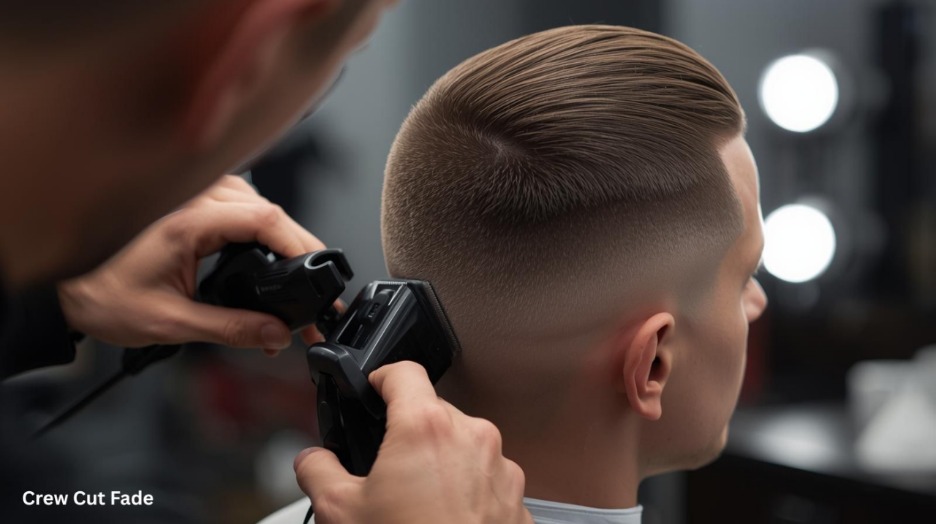
3. Crew Cut with Fade:
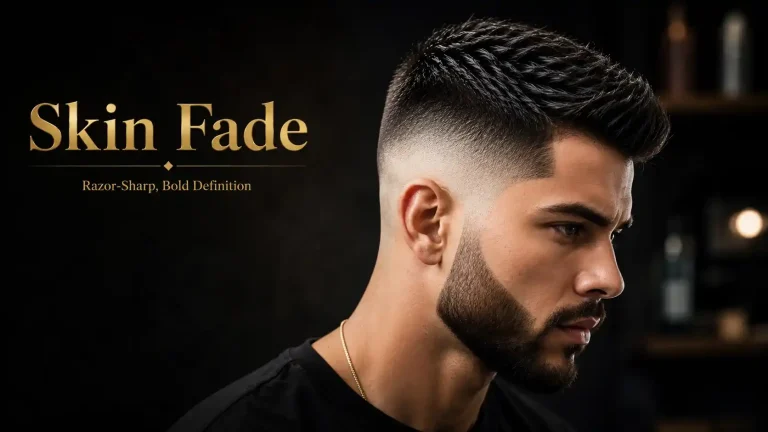
Pairing the short top with a skin fade on the sides creates sharp contrast and a more modern edge. This is one of the more popular crew cut haircut variations right now, especially among younger men who want a bit more definition without changing the length on top.
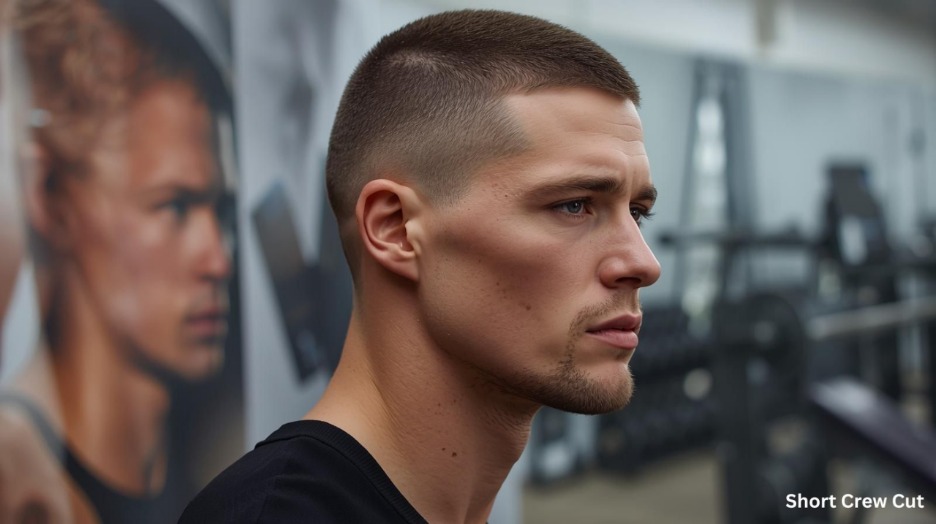
4. Short Crew Cut:
A cropped top and faded or tapered sides give this haircut a clean, athletic look. Requires little maintenance.
5. Long Crew Cut:
The hair top represents the crew cut hairstyle by grown out slightly to allow for more texture and styling versatility. Ideal for guys who like variety without going long.

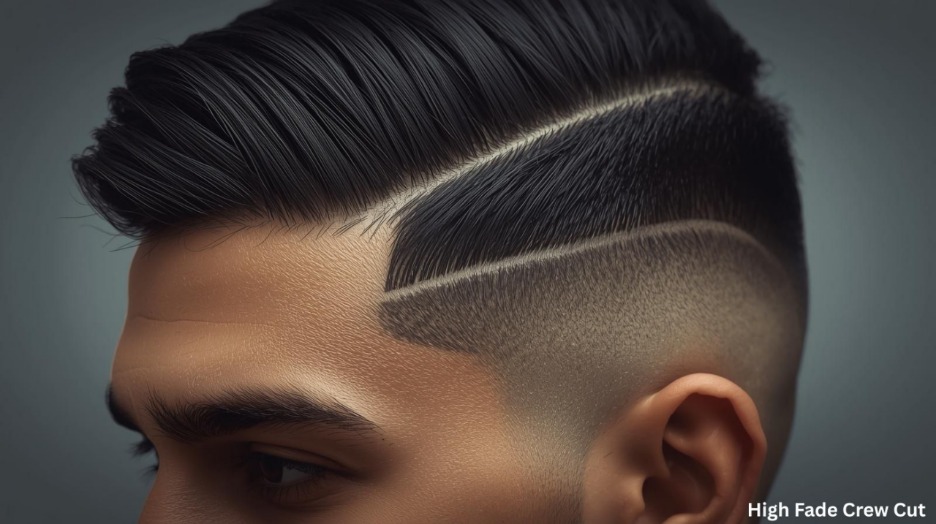
6. High Fade Crew Cut:
The fade starts higher up the head, creating a strong visual contrast and a more dramatic outline.
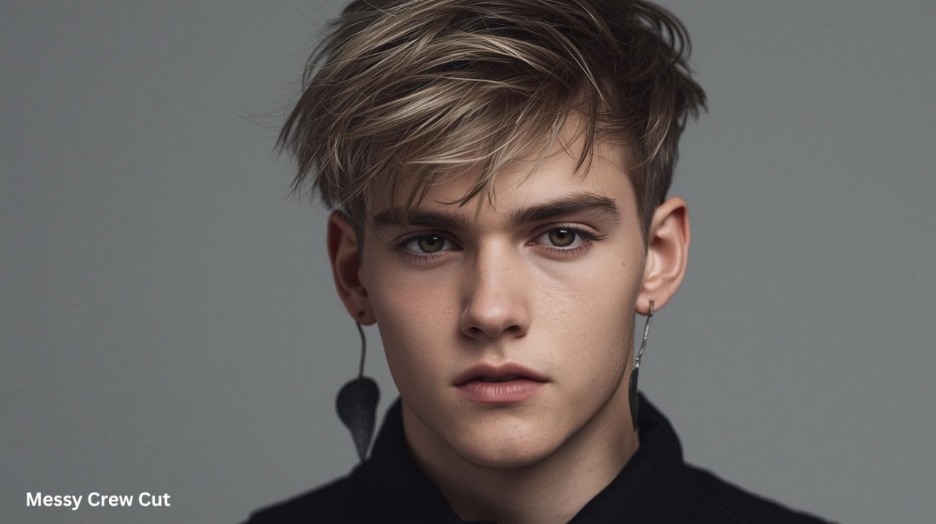
7. Messy Crew Cut:
Designed with volume and a bit of disheveled charm, the messy crew cut uses styling products for an undone yet controlled finish.
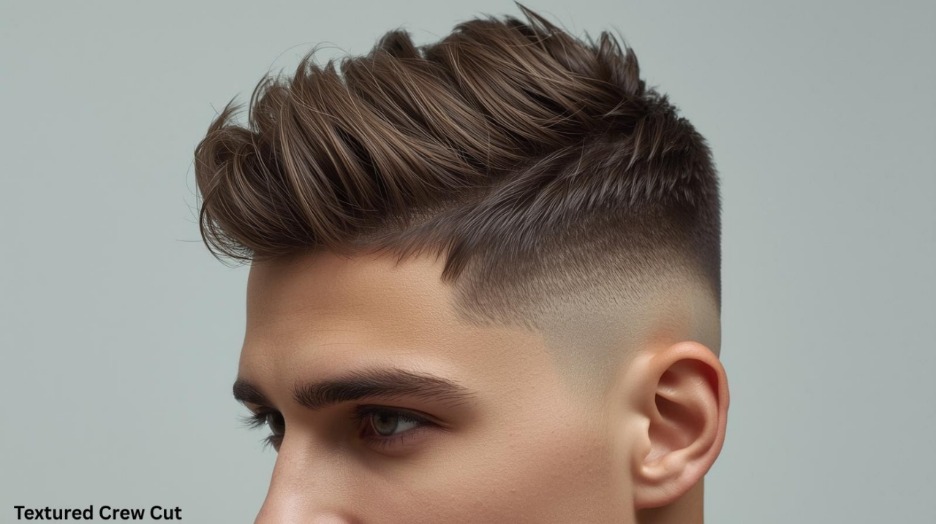
8. Textured Crew Cut:
Leaving slightly more length on top and using a matte product to add texture gives this version a rougher, more lived-in finish. It works particularly well for thicker or coarser hair that holds texture naturally, since finer hair tends to fall flat without extra product.
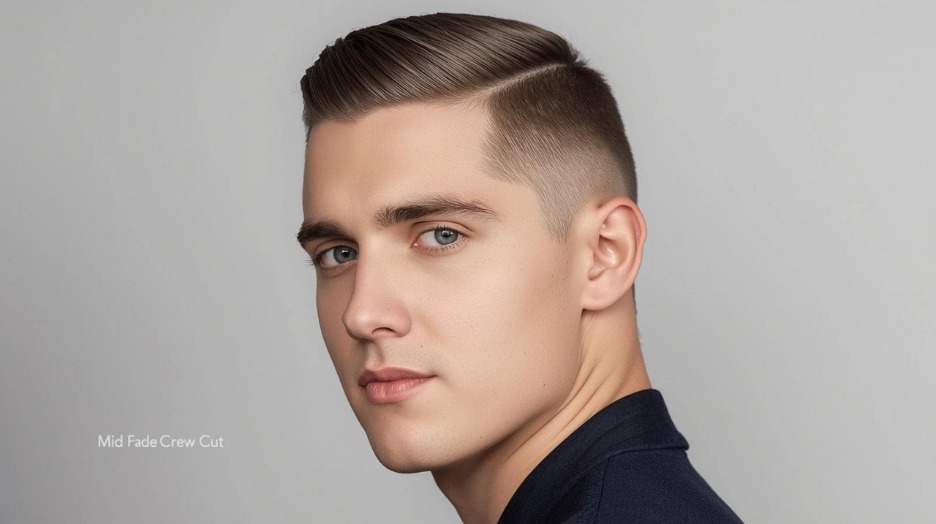
9. Mid Fade Crew Cut:
The mid-fade type of styling always sits between the temple and the ear to flatten the neat look for the personality by striking a balance between intensity and subtlety for the representation of a clear style.
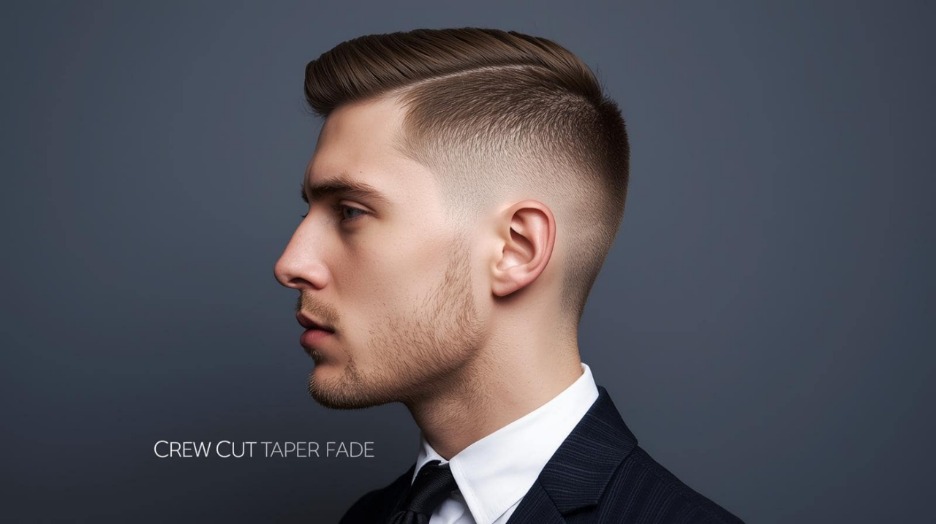
10. Crew Cut Taper Fade:
A taper fade in which a crew cut hairstyle that gradually reduces length down the sides of the head and neckline, it is used in blending seamlessly into the top for a classic and attractive profile.
11. Ivy League Crew Cut:
A slightly longer take on the classic, the Ivy League version leaves enough length on top to comb into a soft side part. It’s one of the more polished options on this list, suited to business-casual and formal settings where a slightly softer edge works better than a sharp one.

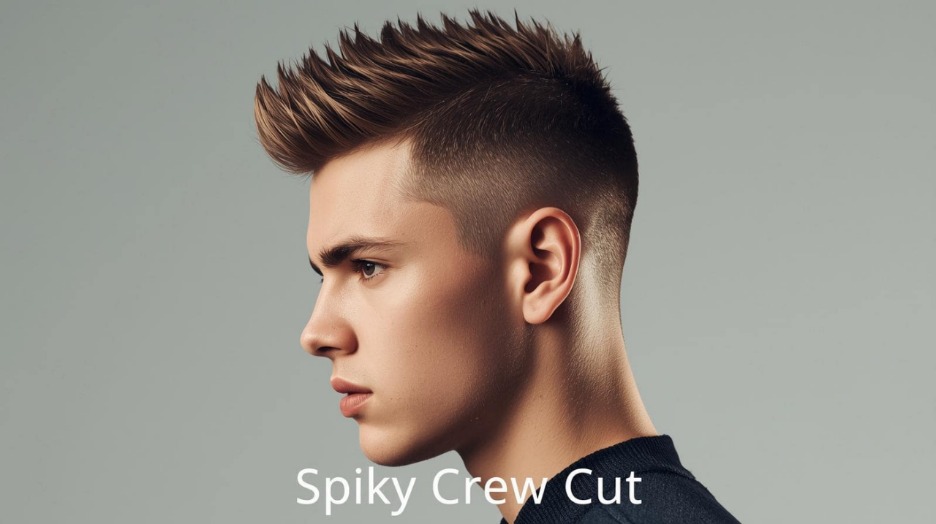
12. Spiky Crew Cut:
Adding a small amount of styling wax or gel to the top and working it into short spikes gives the classic shape a bit more energy. This version needs slightly more daily styling than most other options on this list but still stays low effort compared to longer hairstyles.
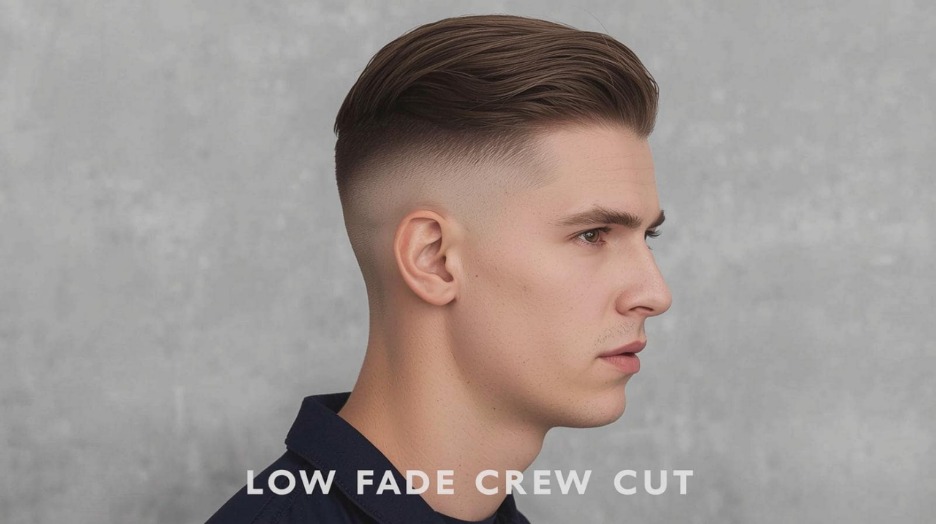
13. Low Fade Crew Cut:
Begins just above the ears, making the transition more subtle and professional. Perfect for conservative workplaces.
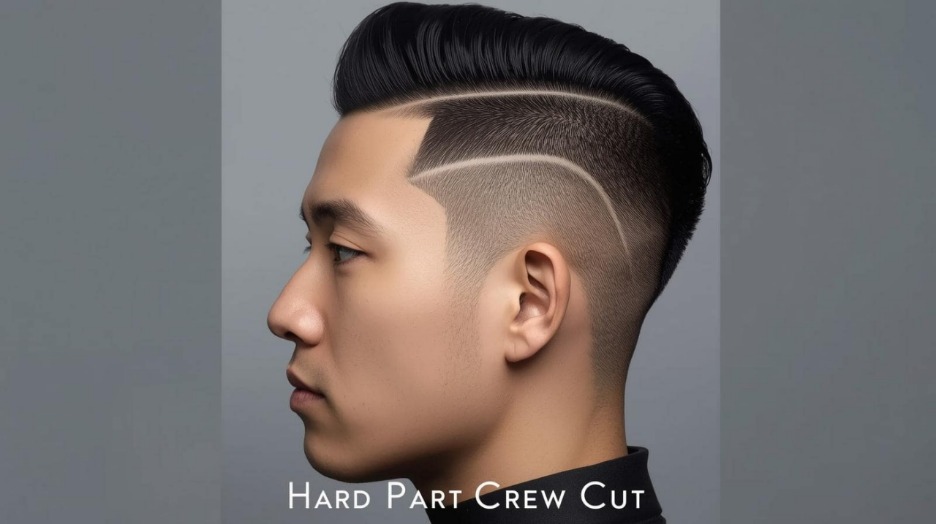
14. Hard Part with Crew Cut:
A shaved line cut into the side part adds a sharp, defined detail to an otherwise simple style. It works especially well on shorter cuts, where the hard part stands out clearly against the closely trimmed sides and adds a bit of personality to a fairly understated look.
15. Crew Cut with Tapered Sides:
Instead of hair styling by crew cut method like a fade or taper, the sides taper gently, it helps in preserving a natural silhouette and a fuller look for modern men.
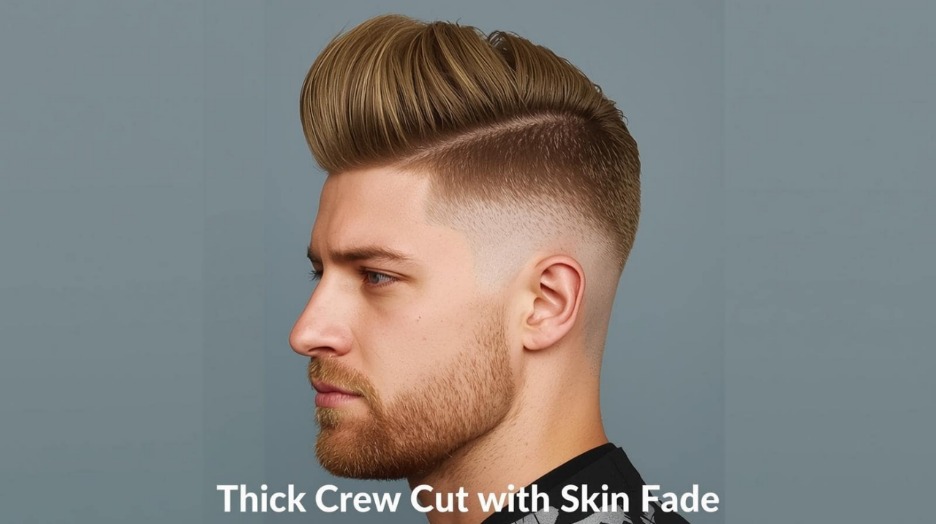
16. Thick Crew Cut with Skin Fade:
This is ideal for men with dense hair as this style accentuates volume of the hair on top with a clean fade down the sides.
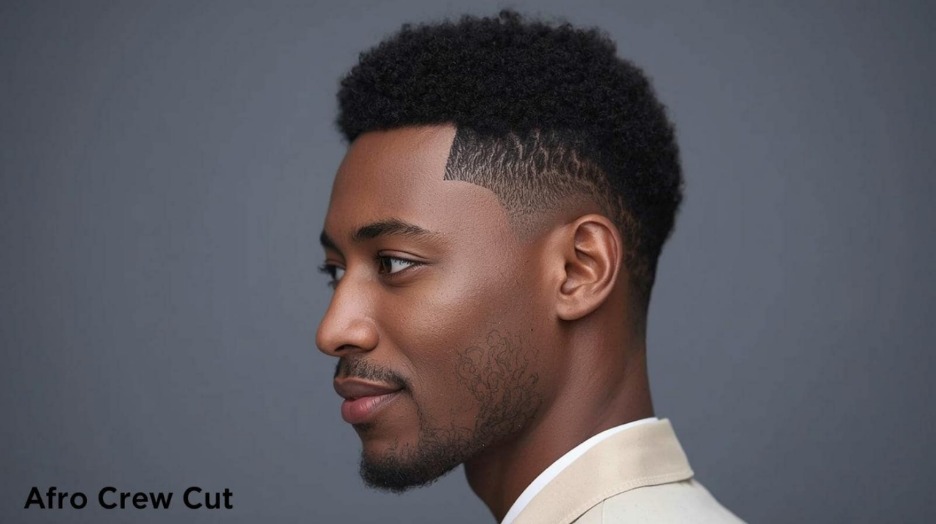
17. Afro Crew Cut:
This kind of styling perfectly maintains natural curls on top while shaping and tapering the sides of hair for a neat, structured style.
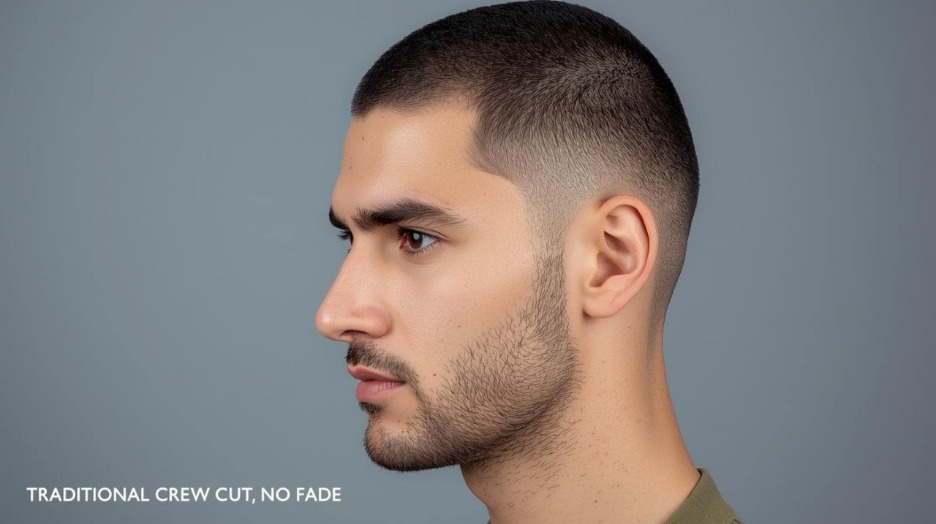
18. Traditional Crew Cut but with No Fade:
In this, there is a uniform length around the head with no dramatic blending anymore. It shows a simple, military-inspired, and easy-to-maintain hairstyle with the groomed versions of men.
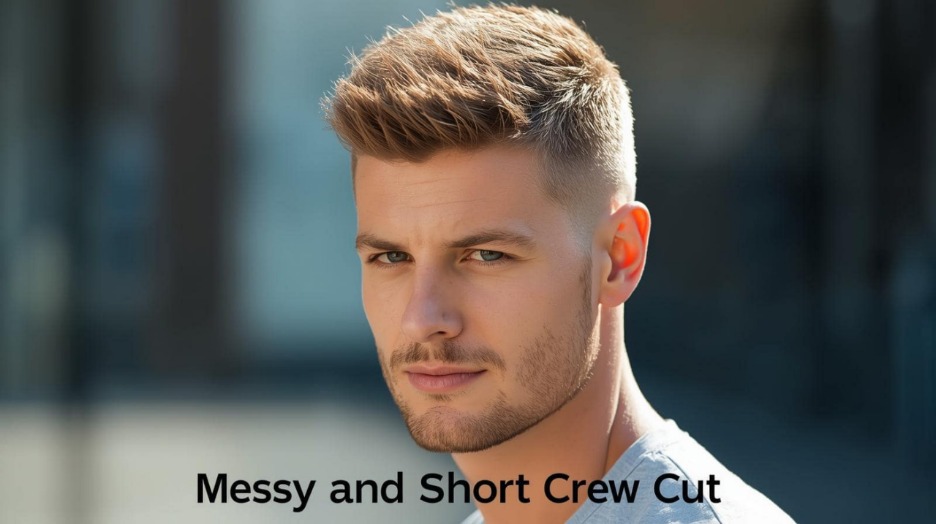
19. Messy and Short Crew Cut:
It adds a slight texture to the cropped top of hair, for creating a casual and effortless appearance.
20. Crew Cut Fade with Beard:
Pairing this cut with a well-groomed beard balances the short, clean top with fullness lower on the face. It’s a strong option for men who want a more mature, put-together look, and it works especially well for square or oval face shapes.
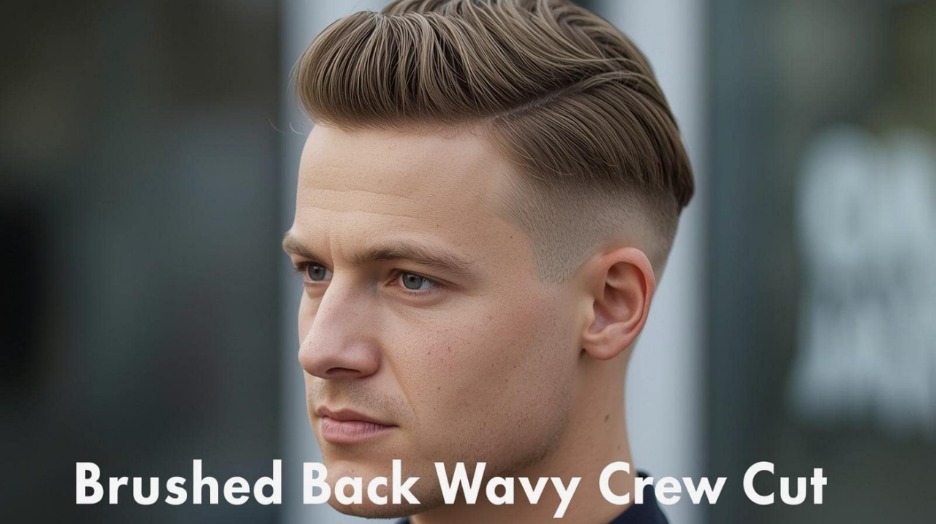
21. Brushed Back Wavy Crew Cut:
The longer top is brushed backward to emphasize natural waves, and then it creates a beautiful natural outlook, while the sides of the haircut remain tight.
22. Military-Inspired Crew Cut:
The crew cut is very short on top and even shorter on the sides for a clean look. It emphasizes the structure, discipline, and low maintenance.

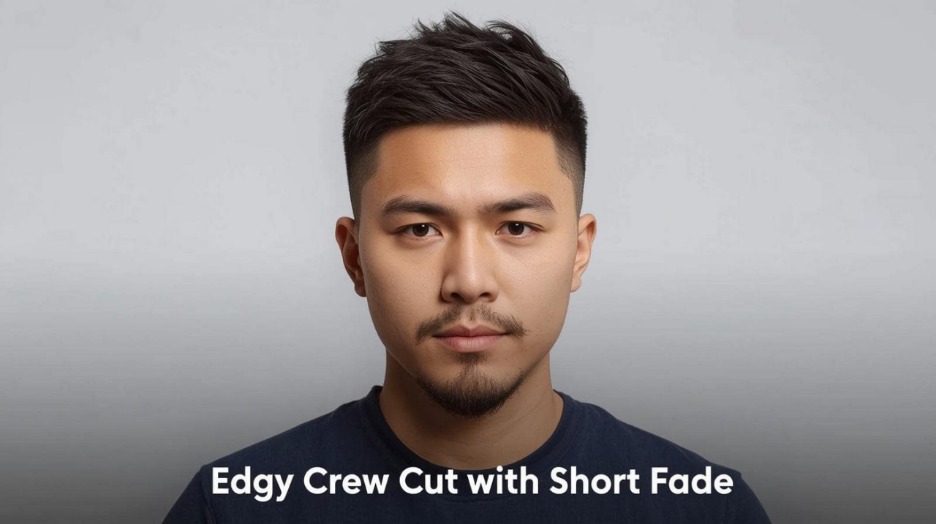
23. Edgy Crew Cut with Short Fade:
Textured on top with a short, sharp fade. Excellent for modern trendsetters.
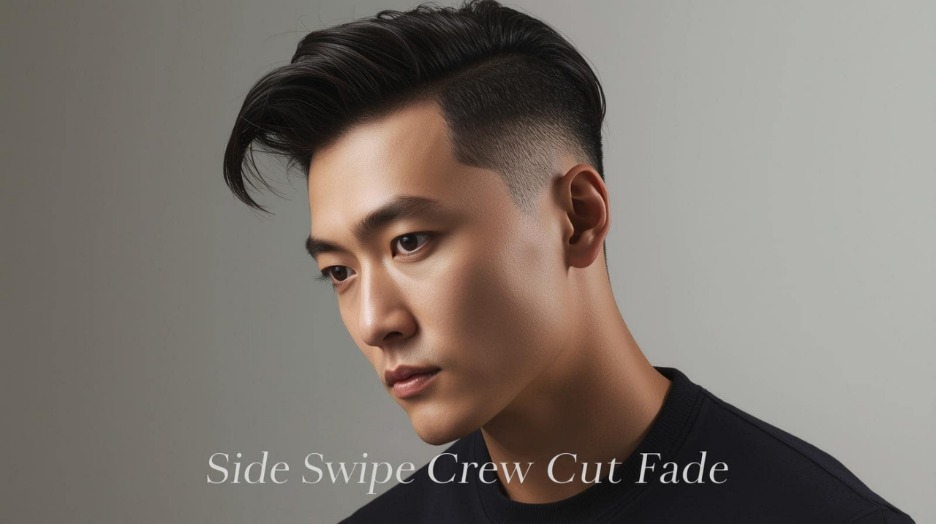
24. Side Swept Crew Cut Fade:
Styled to the side with a fade for a dynamic and mature look.
25. High and Tight Crew Cut
This variation keeps the top slightly longer while the sides and back are cut extremely short, almost to the skin, starting higher up the head than a standard cut. It’s a favorite in military and athletic circles for its clean, no-fuss look and its ability to hold up through intense physical activity.
26. Ivy League Crew Cut
A slightly longer take on the classic, the Ivy League version leaves enough length on top to comb into a soft side part. It’s one of the more polished options on this list, suited to business-casual and formal settings where a slightly softer edge works better than a sharp one.
27. Tapered Crew Cut
Instead of a hard line between the top and sides, this version blends the length gradually down the head. The taper softens the transition and gives the cut a slightly more relaxed, less severe finish than the classic style, while still keeping the overall shape short and clean.
28. French Crew Cut
The French crop influence adds a short, blunt fringe at the front while keeping the rest of the top and sides in classic proportions. It’s a good option for men who want a bit of texture and shape at the front without adding much overall length.
29. Curly Crew Cut
For men with naturally curly or coily hair, keeping a bit more length on top lets the curl pattern show through while the sides stay short and manageable. A light curl cream helps keep the texture defined without adding excess frizz or weight.
30. Butch Cut
An extra-short take on the style, the butch cut trims the top down to a quarter inch or less, blending closely with the sides. It’s about as low-maintenance as a hairstyle can get while still keeping a small amount of texture and structure on top.
31. Flat Top Crew Cut
This version squares off the top rather than tapering it, using a flat top comb to create a level, almost table-like surface. It’s a bolder, more dramatic take on the crew cut haircut and needs a bit more upkeep to maintain the sharp, flat line.
32. Crew Cut with Design
Adding a shaved line, pattern, or shape into the short sides gives this version a more personalized, standout finish. It’s a popular choice among younger men and works especially well when paired with a fade for maximum contrast.
How to Style a Crew Cut Haircut
Most variations of this style need very little daily effort, but a few small habits keep the shape looking sharp between trims.
- Wash with a gentle, daily-use shampoo. Short hair shows oil and product buildup quickly, so a light shampoo keeps the top from looking greasy or flat by midday.
- Towel-dry until just damp. Styling product works best on slightly damp hair rather than soaking wet or completely dry hair, since it distributes more evenly through short strands and sets more predictably.
- Apply a small amount of product. A matte clay or light pomade is usually enough, since there’s less hair to work with than in longer styles. Rub it between your palms first to warm it up before applying, then work it through with your fingers rather than a comb for a more natural finish.
- Comb or finger-style the top. Depending on the variation, comb the top flat for a classic look, work it into texture with your fingers, or shape it into light spikes for something bolder.
- Keep up with regular trims. This style grows out fast because the contrast between the top and sides is part of what defines the cut. A trim every 2 to 3 weeks keeps the shape sharp and prevents the sides from growing out into an uneven, shaggy look.
- Deal with cowlicks early. If you have a stubborn cowlick, ask your barber to cut with it rather than against it. Fighting a cowlick with product alone usually looks worse than working the style around it from the start.
Crew Cut vs Buzz Cut
| Crew Cut | Buzz Cut | |
|---|---|---|
| Top length | Half inch to 1.5 inches, tapered | Uniform, usually under half an inch |
| Styling needed | Light styling optional | None |
| Maintenance | Trim every 2 to 3 weeks | Trim every 1 to 2 weeks |
| Best for | Men who want some texture on top | Men who want the lowest possible maintenance |
Both cuts are practical and easy to maintain. The main difference comes down to whether you want any length or texture left on top, which one offers and the other does not.
How to Ask the Barber for a Crew Cut?
To get the perfect crew cut, it’s very important to communicate clearly with your barber, as he understands the choice of his customer. Here’s the most important point about what to consider:
- Length on top: Do you want it super short, slightly textured hair, or long enough to part?
- Sides and back: Would you like a fade that is in the form of low, mid, high, or a taper?
- Finish: the last part of styling is it hard part, brushed back, spiked, messy, or clean?
- Styling: Let them know if you use products or prefer wash-and-go styles, then agree to cut.
If he is in doubt, please bring a photo to help explain what you’re after or show them the preferred style from our website. Most professional barbers will also guide you based on your hair type, growth pattern, and face shape.
FAQs
Final Thoughts
The crew cut haircut has lasted this long because it solves a real problem: looking sharp without needing much time or effort. Whether you go classic, faded, or textured, the core shape stays practical and easy to maintain.
Talk to your barber about which variation suits your hair type and face shape, and stick to a regular trim schedule to keep the cut looking as sharp as the day you left the chair. It’s a small routine to maintain, and the payoff is a style that works almost anywhere you need it to.