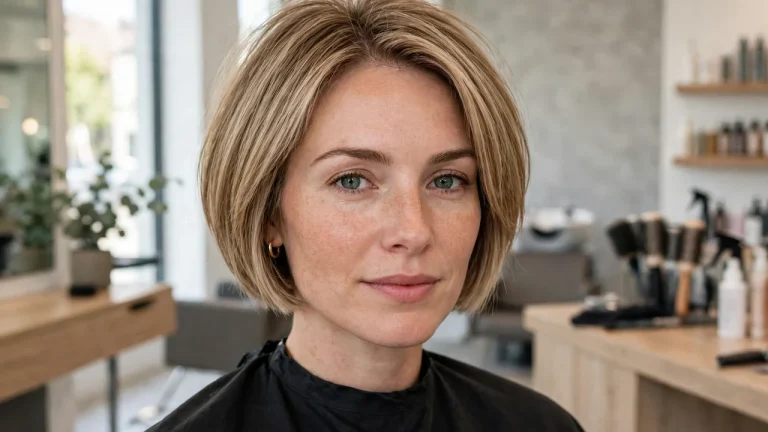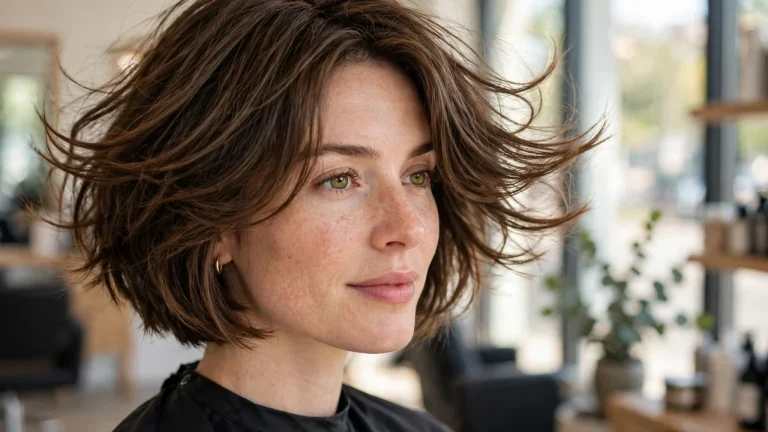
Curly Haircuts, Layers and Shapes That Let Curls Shine
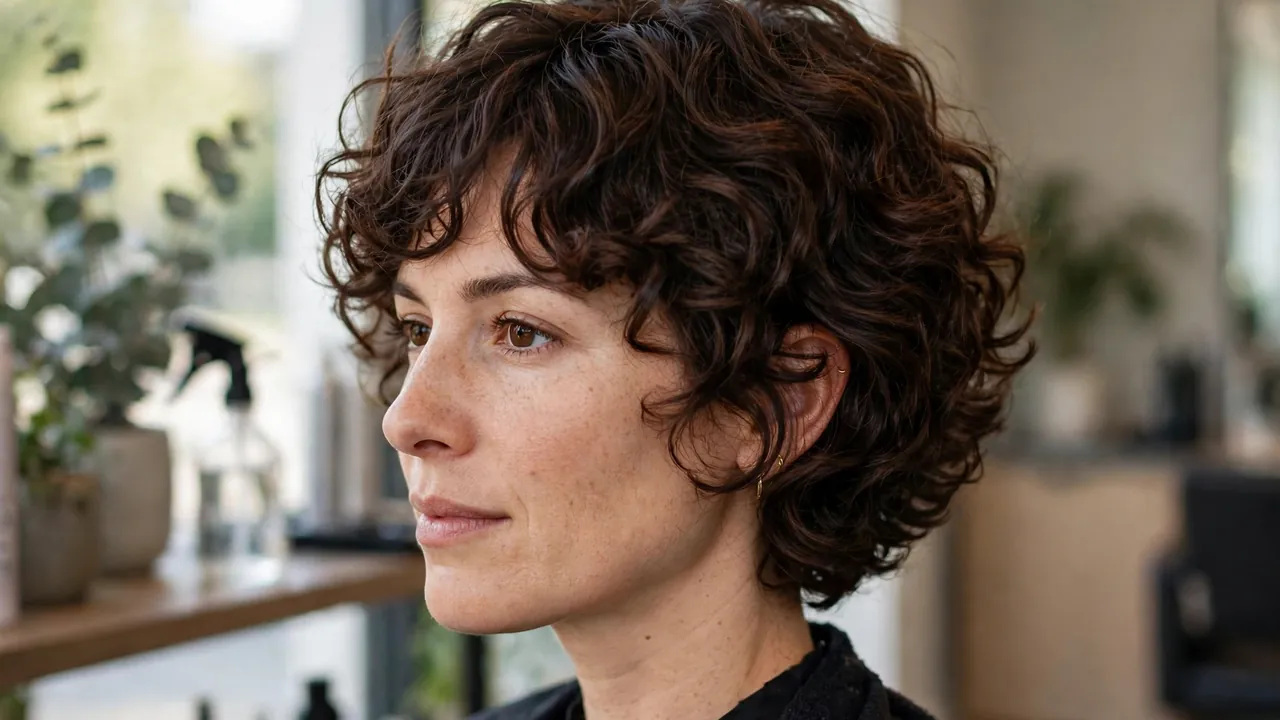
Layered short curly haircuts work best when the cut follows the curl pattern instead of fighting it. Short layers lift the roots, remove heavy ends and let each curl spring up into its natural shape with far less frizz and far less morning effort.
Why Curly Hair Needs a Different Kind of Cut
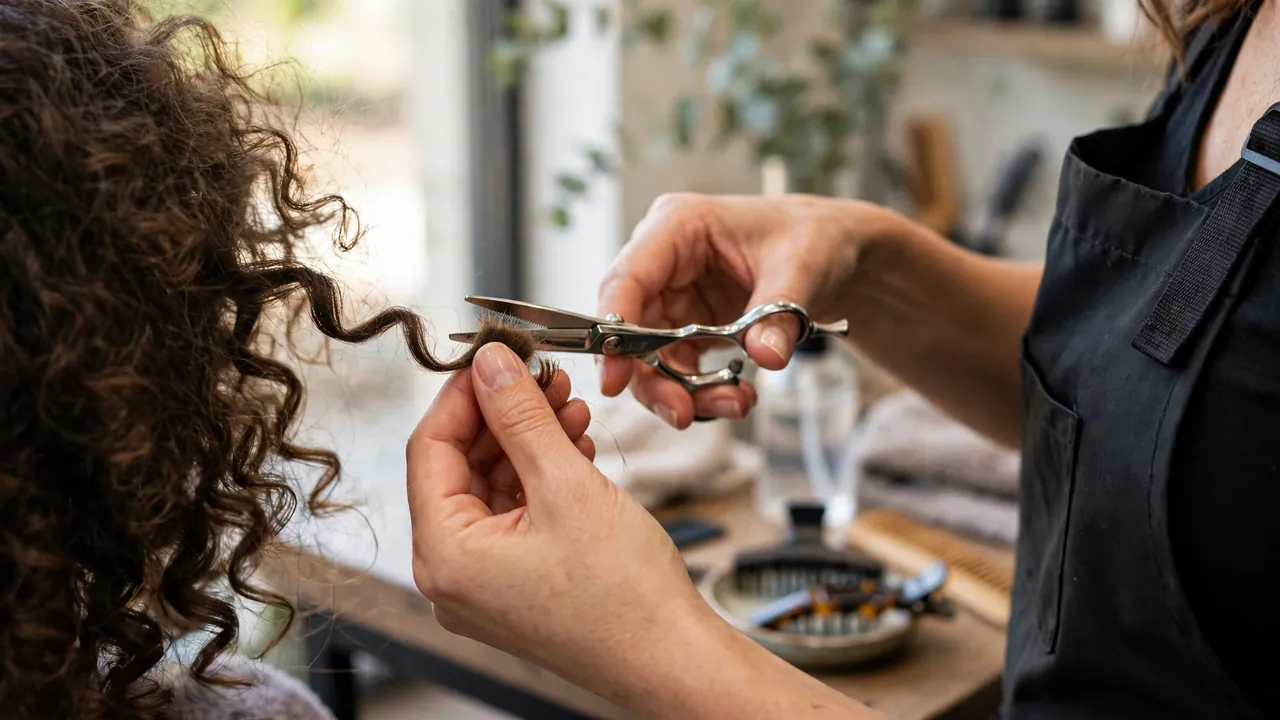
Straight hair falls where the scissors put it. Curly hair does not. A curl that looks perfect when wet can shrink by a third once it dries, and a blunt line that looks neat on straight hair can turn into a heavy triangle on curls. That is why curly haircuts for women are built around shape first and length second. The stylist has to see how your curls behave dry, how tight they spring, and where they naturally want volume.
The most common mistake is cutting curls wet and straight, then being surprised by the result. A good curly cut is usually done dry or partly dry, curl by curl, so the stylist can see the real length. Ask your stylist to cut your hair dry if your curls are tight, because wet cutting hides shrinkage. Loose waves can be cut damp, but the final shaping should still happen once the hair is dry.
Curl type matters too. Loose waves need less layering than tight coils, because waves fall flatter and can look stringy without enough weight at the ends. Tight curls and coils need more internal layering, because the weight of the hair pulls the curls down and flattens the roots. If you are not sure about your curl pattern, look at one dry curl with no product in it. If it forms a loose S shape, you have waves. If it forms a clear spiral, you have curls. If it forms a tight spring or a zigzag, you have coils. Each one takes a different layering plan, and a stylist who asks about this before picking up the scissors is already doing the job right.
Layered Short Curly Haircuts That Work
Short curly haircuts for women succeed when the layers are placed to create lift at the crown and lightness at the ends. Short does not mean one length all over. It means the shape is controlled, so the curls sit where you want them instead of spreading wide.
The Layered Curly Bob
The curly bob sits between the chin and the shoulders and it is the most forgiving of all short curly hairstyles for women. Layers through the back lift the crown, while slightly longer pieces at the front frame the face and stop the cut from looking round. This shape works for waves, curls and loose coils, and it grows out well because the layers keep their shape for weeks. Ask for the back to be layered shorter than the front, with no blunt line at the bottom, so the curls can stack instead of piling up into one heavy shelf.
The Curly Pixie
A curly pixie keeps length on top and goes short at the sides and back, which gives tight curls room to spring while keeping the shape neat. It is the lowest effort cut on this list once it is shaped right, because the curls themselves do the styling. The risk is a pixie cut too short on top, which can leave the curls with nothing to form around, so keep at least two to three inches on top and let the stylist thin the sides rather than shaving them close. A soft taper at the nape keeps the neckline clean without a harsh line.
The Rounded Curly Crop
The rounded crop is a chin length cut with layers all through, shaped like a soft halo around the head. It suits women who like volume and want their curls to look full from every angle. The key is internal layers that remove weight from underneath, so the top layer of curls can sit over a lighter base instead of being pushed out by bulk below. This cut needs a trim every six to eight weeks to keep the round shape, because the bottom layer grows fastest and can start to widen the silhouette.
The Curly Shag
The curly shag brings back the lived in texture of the seventies with modern layering. Short layers at the crown, longer pieces around the face and a slightly razored finish give curls movement and a relaxed edge. It works best on medium to thick curly hair, because fine curls can look thin when the layers are cut too short. A shag is also one of the best short haircuts for women with curly hair who want to air dry, since the shape is built to look good slightly messy.
Short Curly Haircuts for Women by Curl Type
Not every short cut suits every curl. Matching the cut to the curl pattern saves months of growing out a shape that never worked.
| Curl type | Best short cut | Layering | What to avoid |
|---|---|---|---|
| Loose waves | Layered bob | Long layers, light ends | Heavy blunt ends that drag waves flat |
| Defined curls | Curly bob or shag | Medium layers through the crown | One length cuts that turn triangular |
| Tight curls | Rounded crop or pixie | Short internal layers for lift | Cutting wet, which hides shrinkage |
| Coils | Tapered pixie or rounded crop | Layers that remove bulk underneath | Blunt bobs that widen at the bottom |
| Fine curls | Chin length bob | Few long layers only | Too many short layers that thin the ends |
For a wider look at how curls are shaped and styled, our curly hairstyle guide covers the basics of working with natural texture, and the ideas there apply just as well here. If your hair is naturally straight and you are thinking about a perm or heat styling to get curls, read how to get curly hair first so you understand what the styling routine really involves before you commit.
Medium Curly Haircuts for Women
Medium length, around the shoulders, is where many women with curls feel most comfortable. It is long enough to tie back on a bad hair day and short enough that the curls keep their bounce. Medium curly haircuts for women usually use long layers that start at the cheekbone or chin and continue down, which keeps the weight balanced and stops the top from going flat.
A medium cut also gives you more styling choices. You can wear it down with the layers doing the work, pull the front back with pins, or gather it into a low ponytail without the layers falling out. The trade off is drying time, which is longer than a short cut, and the ends need more moisture because they are older hair. A leave in conditioner on the mid lengths and ends after every wash makes a real difference here.
If you are growing out a short cut, the medium stage is the hardest part, because the layers grow at different rates and the shape can go wide before it goes long. Book a shaping trim every eight to ten weeks during the grow out, and ask the stylist to take weight out of the sides rather than cutting length off the bottom. That keeps the shape narrow while the length catches up.
Short Curly Haircuts for Women
Short curly haircuts for women work when the cut is planned around shrinkage. Curls spring up as they dry, so a cut that looks chin length when wet can sit well above the chin when dry. That is why the best short curly cuts are shaped dry, curl by curl, with the stylist checking the length after each section dries.
Haircuts for curly hair women should start with the curl pattern, not the photo. Loose curls can hold a bob shape with long layers, while tight curls suit a rounded crop or a pixie with length on top. Short haircuts for curly hair women also need the sides kept light, because heavy sides push the curls out into a wide shape instead of letting them stack neatly.
Choosing the Right Short Length
Curly short haircuts for women usually sit between the ears and the chin when dry. Shorter than that, and the curls may not have enough length to form. Longer than that, and the cut starts to behave like a medium cut, with more drying time and more weight at the ends. Ask your stylist to show you where the shortest layer will sit when the hair is dry, and agree on that length before the cutting starts.
Styling Short Curls Day to Day
Curly short hairstyles for women are easy to live with once the shape is right. Wash, apply curl cream to soaking wet hair, scrunch and leave the curls alone until they are dry. With short haircuts for women curly hair care stays simple. One styler, no touching while the hair dries, and a satin pillowcase at night are enough, because touching breaks the curl pattern and creates frizz. On the second day, refresh with water from a spray bottle and a little curl cream scrunched through the flat pieces.
Wavy Haircuts for Women
Wavy hair sits between straight and curly, and it needs its own approach. Waves have a loose S shape rather than a spiral, so they fall flatter and can look stringy without enough weight at the ends. Haircuts for wavy hair women work best with long layers that add movement without removing the weight the waves need.
Short wavy haircuts for women suit a bob or a lob with long layers through the ends. The layers stop the waves from lying flat, while the length keeps enough weight to hold the shape. Avoid short layers at the crown on wavy hair, because they can make the top look puffy while the ends stay straight.
Short Wavy Haircuts for Women
Short wavy hairstyles for women are easy to style because waves air dry into a soft shape. Wash, apply a light styling cream or a sea salt spray to damp hair, scrunch gently and let the hair dry. Short haircuts for women with wavy hair need little more than that on most days, and a side part adds shape without any heat. Short haircuts for wavy hair women also grow out well, because the waves hide the grow out line that straight hair would show.
Medium and Long Wavy Haircuts
Medium wavy haircuts for women usually sit at the shoulders with layers starting at the chin. The layers add movement through the mid lengths while the ends stay full enough to hold the wave. Haircuts for long wavy hair follow the same idea at a longer length, with long layers that start below the chin and a clean outline that keeps the ends from looking thin. Long wavy hair can be tied back, pinned up or worn loose, and the layers keep it from looking heavy when it is worn down.
Haircuts for Long Curly Hair
Haircuts for long curly hair are about removing weight without losing length. Long curls are heavy, and that weight stretches the curls near the roots while the ends stay springy, which can make the top look flat and the bottom look wide. Long layers through the interior fix this by letting the top curls spring up while the length stays.
The most useful technique for long curls is internal layering, where the stylist cuts shorter pieces underneath the top layer. You cannot see these layers from the outside, but you can feel the difference, because the hair moves more freely and dries faster. Another good option is face framing layers that start at the chin and fall forward, which open up the face and stop long curls from hiding your features.
Long curly hair needs the most care of any length. The ends are the oldest part of the hair and they dry out first, so regular dusting trims every ten to twelve weeks keep split ends from travelling up the curl. Deep conditioning once a week and sleeping on a satin pillowcase or in a loose pineapple ponytail both help the curls keep their pattern overnight. For more on keeping longer hair healthy between cuts, see our guide to taking care of long hair.
How Layers Change Curls
Layers are not decoration on curly hair. They are the structure that decides where the volume sits, how much the curls spring and how long the cut holds its shape. Understanding the three main kinds of layering helps you talk to your stylist in plain terms. For more on how layering choices change a cut, see our guide to layered haircuts.
Long layers are cut with only a small difference between the shortest and longest pieces. They keep most of the weight and suit loose waves and fine curls that need their ends to look full. Medium layers create a visible step between the top and the bottom and suit defined curls that need lift at the crown. Short layers create a big difference between the top and the bottom and suit thick, tight curls that need a lot of weight removed before they can spring.
The other decision is where the layers start. Layers that start high, near the crown, create the most volume and the shortest looking result. Layers that start low, near the chin, keep the top smooth and add movement only at the ends. Most curly cuts use a mix, with higher layers at the back for lift and lower layers at the front for framing. If a stylist suggests layers that start at the same point all around the head, ask what that will do to your volume, because even layers can make thick curls look wider than you want.
Thinning shears deserve a mention too, because they are often used on curly hair and often used badly. Thinning shears remove bulk without changing length, which sounds perfect for curls, but overuse can create frizz by cutting many short pieces that stick out of the curl pattern. Ask your stylist to use thinning shears sparingly and only on the underneath sections, never on the top layer where the frizz will show.
Styling and Daily Care for Short Curls
A good cut does half the work. The other half is a simple routine that respects how curls dry. The basics of hair care apply here, so wash with a sulfate free shampoo, because harsh shampoos strip the natural oils that keep curls soft, and follow with a conditioner that you rinse out only partly, leaving a little in the ends. Apply a curl cream or light gel to soaking wet hair, scrunching upwards, then either diffuse on low heat or let the hair air dry without touching it. Touching curls while they dry is the fastest way to create frizz, so once the product is in, leave the hair alone until it is fully dry, then scrunch out any stiffness with your hands.
On day two and three, refresh with water from a spray bottle and a small amount of curl cream scrunched through the flattened pieces. A silk or satin pillowcase reduces friction overnight, and a loose high ponytail, often called a pineapple, keeps the curls from being crushed while you sleep. Short curls usually need a wash every two to three days, while longer curls can often go three to four days between washes if the scalp stays comfortable.
Product choice matters less than technique. Expensive products applied badly will not beat a basic curl cream applied to wet hair and left alone. Start with one styler, learn how your curls react to it, and only add a second product if you have a specific problem to solve, such as frizz at the crown or curls that fall flat by midday. For inspiration on short curly shapes, the curly top fade shows how short sides and a curly top work together, and the same idea of keeping weight on top and lightness at the sides applies to many women’s short curly cuts.
What to Ask Your Stylist
Walk in with a clear request and you will walk out with a better cut. Bring two or three photos of cuts you like on hair with a similar curl pattern to yours, and one photo of a cut you do not want, because that tells the stylist as much as the ones you like. Arrive with your hair dry and in its natural state, not straightened, so the stylist can see the real curl pattern.
Say this at the salon. “I want layered short curly haircuts shaped for my curl pattern, cut dry so you can see the shrinkage. Please keep length on top, take weight out from underneath, and leave the front pieces long enough to frame my face. I air dry most days, so I need a shape that works without heat styling.”
Then ask three questions before the cutting starts. First, how much length will I lose when this dries. Second, where will the shortest layer sit. Third, how often should I come back for a shaping trim. A stylist who answers all three clearly understands curly hair. If the answers are vague, say so and ask for more detail before the first cut. You are paying for the consultation as much as the cut, and a good stylist welcomes the questions.
Also talk about your routine honestly. If you never diffuse and never use product, say so, because a cut that needs daily styling will fail in real life even if it looks perfect in the salon chair. The best curly cut is the one that looks good on your laziest morning, not only on the day you leave the salon.
Who Should Skip These Cuts
Short curly cuts are not right for everyone, and an honest stylist will say so. If your curls are very fine and sparse, short layers can make the hair look thinner, because each layer removes weight that fine hair cannot spare. A longer cut with only a few long layers usually suits fine curls better. If your curl pattern is uneven, with tight curls underneath and loose waves on top, a short cut can make the difference more obvious, so a medium length that lets the weight even things out may be kinder.
Women who straighten their hair most days should also think twice. A cut shaped for curls can look uneven when straightened, because the layers were placed for spring, not for fall. If you switch between curly and straight often, ask for a cut that works both ways, with longer layers and a shape that holds when the hair is flat. Finally, if you are growing your hair for a specific event in the next few months, a short cut now will set that plan back, so a shaping trim that keeps your length is the better move until after the event.
FAQs
Conclusion
The best layered short curly haircuts are the ones that work with your curl pattern, not against it. Choose a shape that matches your curl type, ask for dry cutting and weight removed from underneath, and pick a length you can live with on a normal morning. Bring photos, say exactly what you want at the salon, and keep the routine simple. When the cut, the curls and the routine all agree, short curly hair is some of the easiest hair to live with, and it shows.