Haircuts for Thick Hair That Remove Bulk
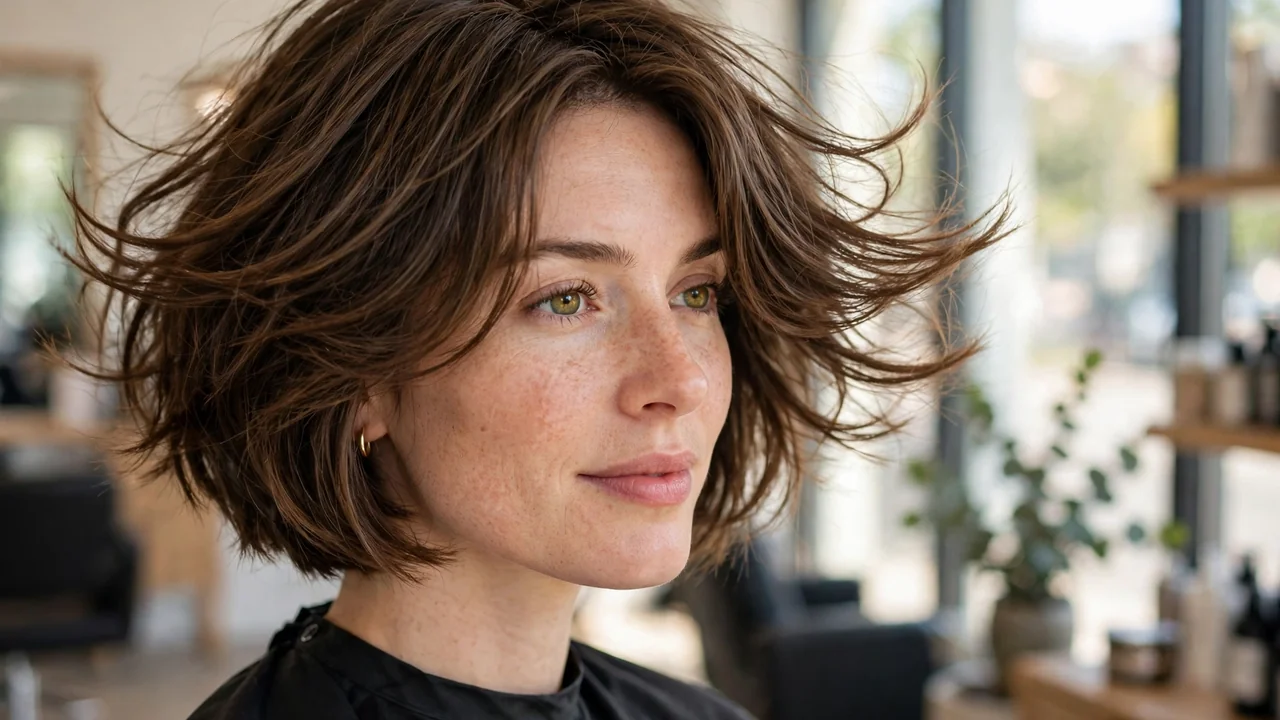
Short haircuts for women with thick hair work best when they remove weight from the inside, add movement through the lengths, and keep enough length to hold the shape. The right cut makes thick hair lighter, faster to dry and far easier to style.
Why Thick Hair Needs Weight Removal
Thick hair is a gift and a chore at the same time. It looks full and healthy, it holds a style well, and it rarely looks thin. The range of hairstyles that work on thick hair is wide, but the weight is the part that needs managing, because thick hair is heavy, slow to dry, hard to style, and prone to a wide, triangular shape when the cut does not remove enough weight. The weight pulls the roots flat while the ends spread out, which is the opposite of the shape most women want.
The solution is not to cut the hair shorter, although short cuts can help. The solution is to remove weight from the inside of the hair, where it cannot be seen, while keeping the outline long enough to look full. This is done with internal layers, point cutting, slide cutting and careful use of thinning shears, and it is the core skill of cutting thick hair well.
A stylist who cuts thick hair the same way as fine hair will leave you with a heavy, shapeless result. Thick hair needs a stylist who is comfortable taking weight out, who checks the shape dry as well as wet, and who is willing to spend extra time on the interior of the cut. If your stylist finishes a thick hair cut in the same time as a fine hair cut, ask whether enough weight was removed, because thick hair takes longer to cut well.
Short Haircuts for Women with Thick Hair
Short haircuts for women with thick hair are the fastest way to feel the difference, because removing length and weight together makes the hair dramatically lighter. The best short cuts for thick hair keep enough length on top for the hair to fall naturally, while the sides and underneath are thinned and tapered.
The Layered Short Bob
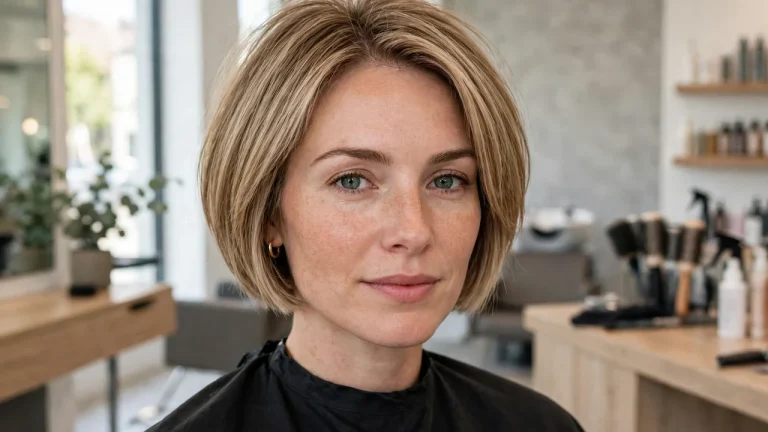
The layered short bob is the best short cut for thick hair, and it is one of the most popular layered low maintenance thick hair short bob haircuts for a reason. It ends near the chin, with layers through the interior that remove bulk and let the hair move. The outline stays full, but the hair feels half as heavy, dries in half the time, and holds a smooth shape without a straightener. Ask for the underneath layers to be cut shorter than the top, so the top layer sits over a lighter base.
The Textured Pixie
A textured pixie works for thick hair if the top is kept long enough and the sides are tapered rather than blunt. The texture breaks up the bulk, the taper keeps the sides flat, and the length on top gives the hair somewhere to go. Avoid a pixie with a blunt outline on thick hair, because the weight will push the shape outwards and make it look wide. Our notes on textured haircuts show how texture is used to break up bulk, and the same technique applies here.
The Short Shag
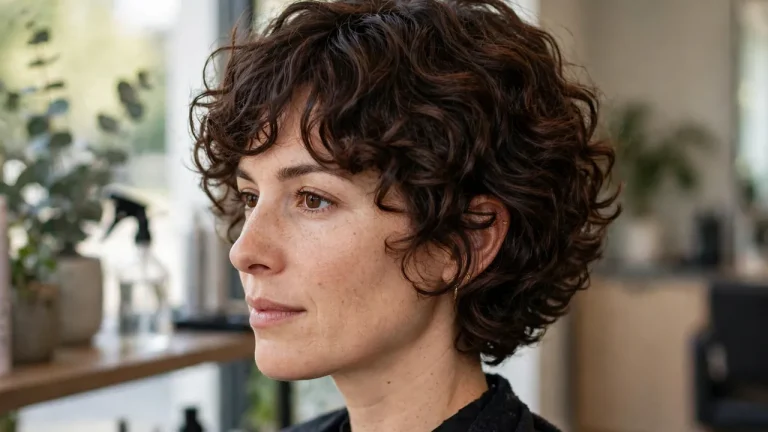
A short shag suits thick hair very well, because the choppy layers are designed to remove weight and create movement. The shag grows out gracefully, needs little styling, and looks good slightly messy, which is a natural state for thick hair. Keep the layers long enough that the cut holds together, and ask the stylist to thin the underneath sections so the top layer can move freely.
Short cuts for thick hair need a trim every six to eight weeks, because the interior weight grows back and the shape starts to widen. A shaping trim that focuses on weight removal, rather than just tidying the outline, is what keeps a short thick cut looking good.
Haircuts for Long Thick Hair
Haircuts for long thick hair are about keeping the length you love while making it livable. Long thick hair can take an hour to dry, pull at the scalp, and feel heavy by the end of the day. The right cut fixes all three without losing the length.
Long layers are the foundation. Layers that start at the chin or below and continue down remove weight through the lengths, while the outline stays long. Internal layers, cut underneath the top layer, remove even more weight without changing the look from the outside. The combination can take a surprising amount of weight out of the hair while the length looks almost unchanged, which is exactly the point.
A long thick cut also benefits from a soft U shaped or V shaped outline, which is slightly shorter at the front and longer at the back. The shape removes weight from the sides, where thick hair tends to widen, and keeps the length where it shows most, at the back. Avoid a blunt one length cut on long thick hair, because it creates a heavy shelf at the bottom that is hard to style and slow to dry.
Care matters as much as the cut for long thick hair. The basics of hair care apply here, so wash with a shampoo that suits your scalp, condition the mid lengths and ends well, and use a leave in conditioner to help the hair dry smoothly. Section the hair when blow drying, because drying long thick hair in one mass takes far longer and leaves the underneath damp. For more on keeping long hair healthy between cuts, see our guide to taking care of long hair.
Medium Cuts and the Shoulder Length Option
Haircuts for thick hair women at medium length, around the shoulders, are often the easiest to live with. The length is long enough to tie back, short enough to dry quickly, and the stylist has room to remove weight through the interior without the cut looking thin. A shoulder length cut with long layers is one of the easiest thick hair cuts to live with, and it grows out gracefully.
The Layered Lob
A layered lob ends at or just above the shoulders, with layers through the mid lengths that create movement and remove bulk. It air dries well on wavy thick hair, looks polished on straight thick hair with a quick blow dry, and ties back easily on days when you do not want to style it. Ask for the layers to start at the chin and blend down, with no short pieces at the crown that could frizz.
The Long Bob with Undercut Layers
An undercut layer, where the underneath section is cut shorter than the top, is a quiet way to remove a lot of weight from thick hair without changing the look. You cannot see the undercut from the outside, but you can feel the difference in weight and drying time. This technique works best at medium length, where the top layer is long enough to cover the shorter underneath section completely.
The Shoulder Length Shag
A shoulder length shag uses choppy layers and a textured finish to break up the bulk of thick hair, and it suits wavy and curly thick hair particularly well. The shape is built to look slightly undone, which means it needs little styling and grows out softly. Keep the fringe long and face framing, so it does not fall into the eyes as it grows.
Our notes on shoulder length hair cover how this length behaves day to day, and the same ease applies here. The main point is that medium length gives you options, and for thick hair, options matter, because some days you will want to wear it down and some days you will want it tied back.
| Cut | Weight removed | Drying time | Trim frequency | Best hair type |
|---|---|---|---|---|
| Layered short bob | High | Fast | 6 to 8 weeks | Straight, wavy, thick |
| Textured pixie | High | Very fast | 4 to 6 weeks | Straight, wavy, thick |
| Short shag | High | Fast | 6 to 8 weeks | Wavy, curly, thick |
| Layered lob | Medium to high | Medium | 8 to 10 weeks | Straight, wavy, thick |
| Long layers | Medium | Slow | 10 to 12 weeks | Straight, wavy, thick |
| Long shag | High | Medium | 8 to 10 weeks | Wavy, curly, thick |
Thinning Techniques That Actually Work
Weight removal is a skill, and knowing the techniques helps you talk to your stylist about what you want. The main methods are internal layering, point cutting, slide cutting and thinning shears, and each one does a different job.
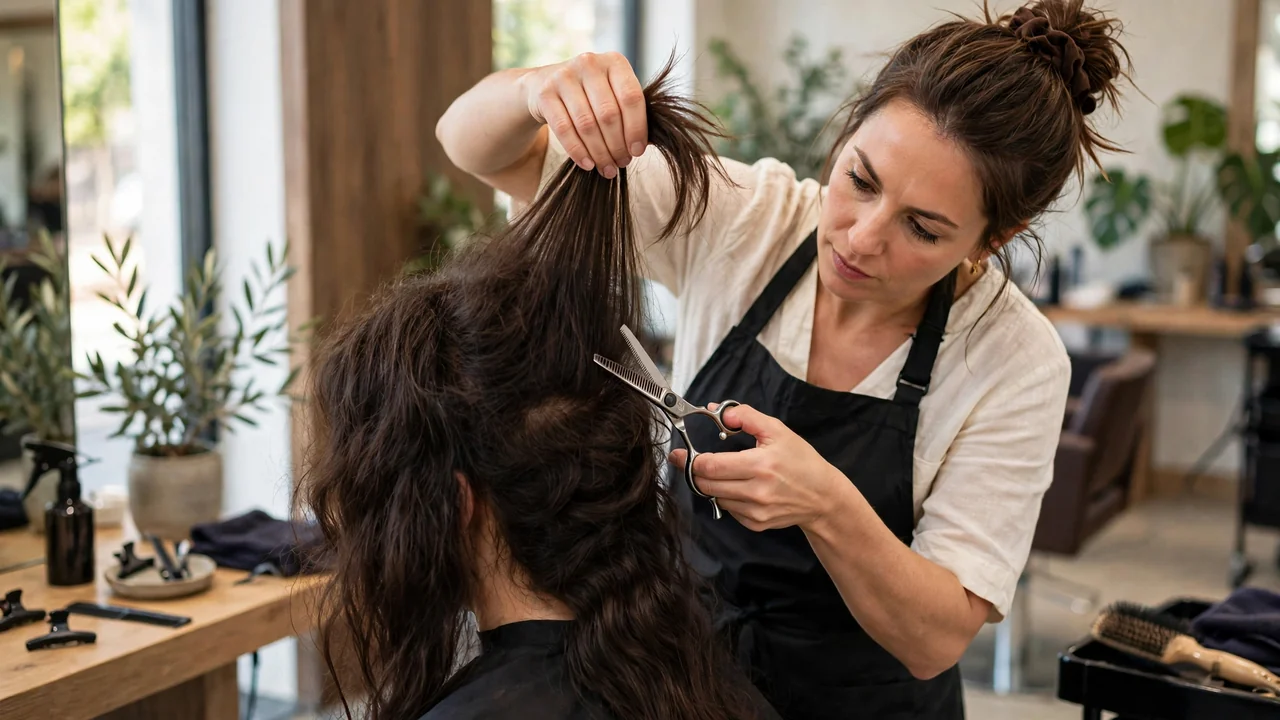
Internal layering cuts shorter pieces underneath the top layer, which removes weight without changing the outline. It is the most useful technique for thick hair, because it makes the hair lighter while the outside still looks full. Point cutting cuts into the ends of the hair at an angle, which softens a blunt line and removes a little weight at the same time. Slide cutting slides the scissors down the hair shaft to remove weight through the lengths, and it creates soft, blended layers. Thinning shears have teeth that remove some hairs while leaving others, which thins the hair without changing the length.
Thinning shears deserve a warning, because they are the most misused tool on thick hair. Used well, they remove bulk smoothly. Used badly, they create short pieces that stick out, frizz, and make the hair look thinner in the wrong places. Ask your stylist to use thinning shears mainly on the underneath sections and the interior, never heavily on the top layer where the short pieces will show. If your hair has ever looked frizzy after a thinning, that is usually why, and a stylist who understands this will thin with care.
A razor can also be used on thick hair to create soft, textured ends, but it should be used by a stylist who is experienced with it, because a razor on the wrong hair type can create frizz. Ask what tool your stylist plans to use and why, because a good stylist will explain the choice in plain words.
Styling and Drying Thick Hair Faster
Thick hair takes longer to dry than any other hair type, and the drying routine is where most of the daily effort goes. A good cut helps, but the routine matters too. Start by squeezing water out gently with a microfibre towel or an old cotton shirt, never rubbing, because rubbing creates frizz. Apply a leave in conditioner or a light styling cream to damp hair, then section the hair into four parts and dry one section at a time. Sectioning cuts the drying time dramatically, because the dryer can reach the underneath layers that otherwise stay damp.
If you air dry, the same sectioning idea helps. Clip the top layer up and let the underneath dry first, then let the top down. A microfibre towel wrap for ten minutes after washing absorbs a lot of water before you even start drying, and it is the simplest way to cut drying time without any heat.
Product choice for thick hair is about weight. Heavy creams and oils can make thick hair look greasy, while light leave in products give control without weight. Use a small amount and add more only if you need it, because it is easy to add product and hard to take it away. A good shampoo matters too, because a shampoo that leaves residue will make thick hair feel heavier. Our guide to choosing a good shampoo covers what to look for, and the advice on avoiding heavy buildup applies to thick hair more than any other type.
On day two and three, dry shampoo at the roots absorbs oil and adds lift, and a loose braid overnight keeps thick hair from tangling while you sleep. A silk pillowcase reduces friction and frizz, which matters more for thick hair because there is simply more hair to rub against the pillow.
What to Ask Your Stylist
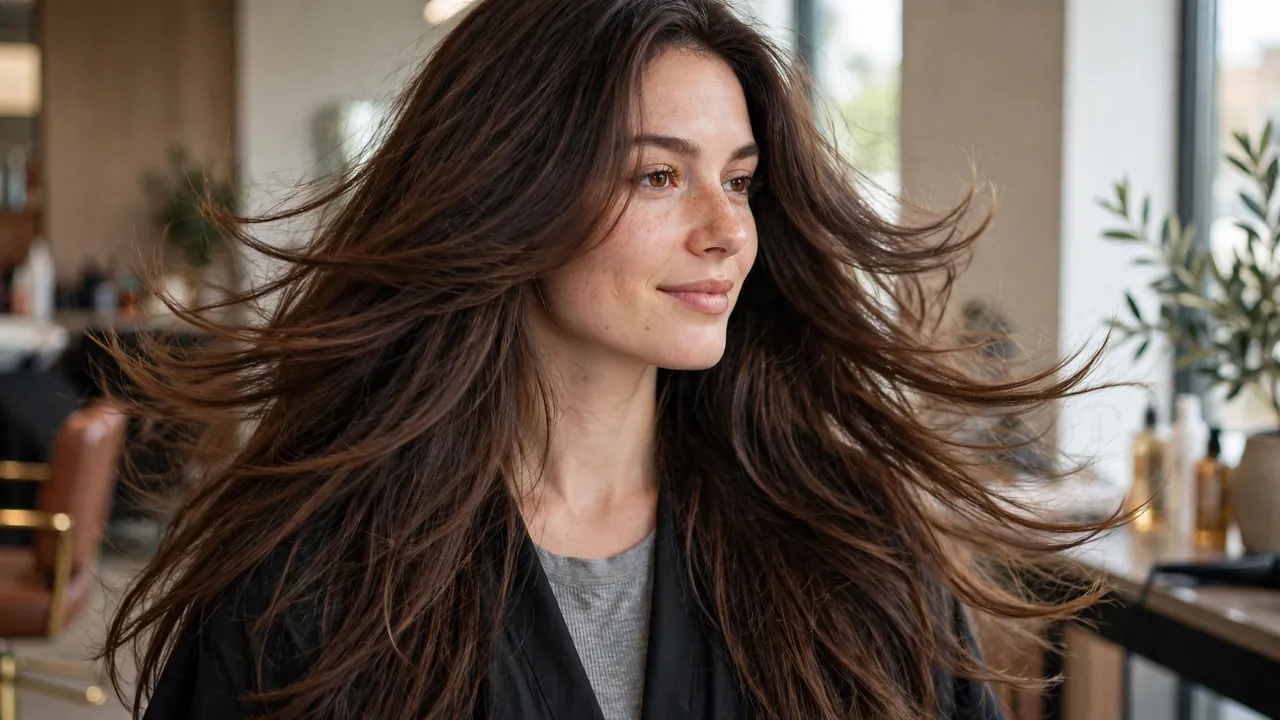
Thick hair needs a real consultation, not a quick chat, so book a stylist who allows time for it and arrive with your hair clean and dry in its natural state. Bring photos of cuts you like on thick hair specifically, because a cut that looks light and airy on fine hair can look completely different on thick hair.
Say this at the salon. “I have thick hair and I want short haircuts for women with thick hair that remove bulk. Please take weight out from the underneath and the interior, keep the outline full, and give me layers that start below my chin. I want the hair to feel lighter and dry faster, without looking thin.”
Then ask how much weight will be removed, which technique the stylist will use, and how the cut will look when it grows out. Ask whether thinning shears will be used on the top layer, and say you would rather they were kept to the underneath sections. Finally, ask how long the cut will take, because a good thick hair cut takes longer than a fine hair cut, and a stylist who rushes it has probably not removed enough weight. For a sense of how layers are planned, our guide to layered haircuts explains the layering choices that shape a cut, and the same questions are worth asking here.
Who Should Skip These Cuts
Weight removal cuts are not right for every head of thick hair. If your hair is thick but fine in texture, with many fine hairs rather than coarse ones, heavy thinning can make the hair look wispy and flyaway, because fine hairs do not have the weight to fall smoothly once they are thinned. A cut with long layers only, and no thinning shears, will suit fine thick hair better.
If your hair is thick and curly, be careful with short layers, because short layers on curly thick hair can create a wide, triangular shape. Longer layers and internal weight removal suit curly thick hair better than short surface layers. Talk to a stylist who cuts curly hair dry, because the shrinkage makes the layer placement harder to judge on wet hair.
Women who straighten thick hair every day should also think about the cut carefully. A cut with a lot of internal layering can look uneven when straightened, because the layers were placed for movement, not for a smooth fall. Ask for a cut that works both curly and straight, with longer layers and a shape that holds when the hair is flat.
Finally, if you love the weight and fullness of your thick hair and you do not mind the drying time, you do not have to remove weight at all. A long one length cut with a clean outline can look stunning on thick hair, and the weight is part of the look. The goal is a cut that fits your life, not a cut that follows a rule.
FAQs
Conclusion
Thick hair looks its best when the cut removes weight you cannot see and keeps the fullness you can. Short haircuts for women with thick hair are the fastest way to feel that difference, because they take length and weight off together. Choose internal layers, a soft outline and a length that fits your routine, and tell your stylist exactly how much lighter you want the hair to feel. A layered bob, a lob or long layers with interior thinning will all make thick hair easier to wash, faster to dry and simpler to style. When the weight is gone and the shape is right, thick hair stops being a chore and starts being the advantage it was always meant to be.