Pomade vs Clay vs Wax, What to Use and When It Works Best
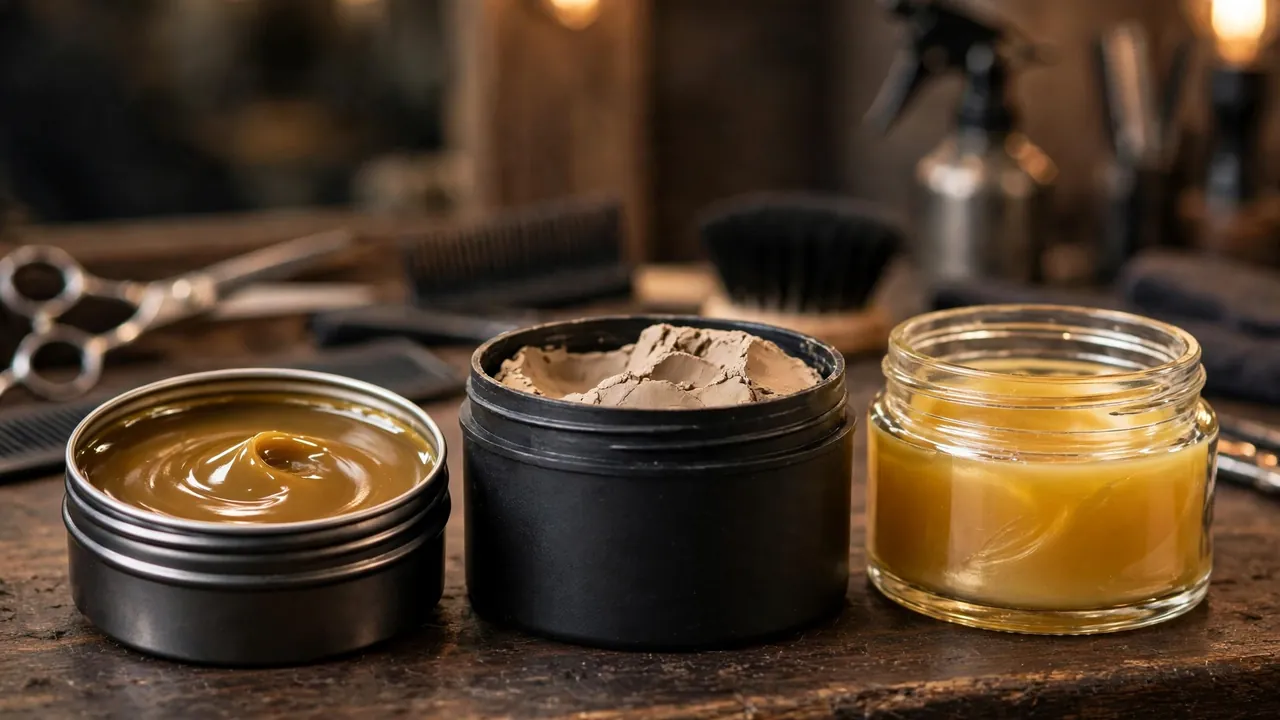
Pomade gives shine and control for classic styles, clay gives a matte finish with texture and volume, and wax gives flexible, reworkable separation. Pick your finish first, then match the hold to your hair type and haircut, and the pomade vs clay vs wax question answers itself.
Walk into any barbershop and the styling shelf looks like a wall of identical tins. It is not. Most styling frustration comes from using the right product for the wrong job. Pomade on a textured crop turns greasy by noon, clay on a slick back fights you all morning, and wax used like pomade never quite sets. This guide settles the debate the way a barber would, by finish first and hold second, covering what each product does, which hair and styles each suits, and the exact words to ask your barber.
What Each Product Actually Does
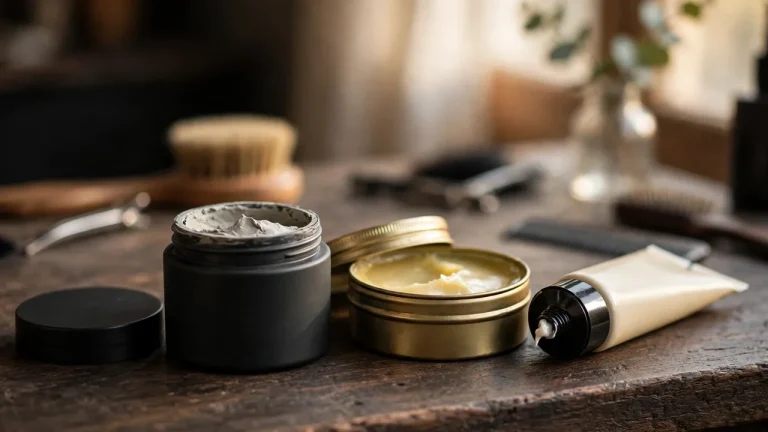
The difference between pomade, clay and wax comes down to what is inside the tin. The base ingredients decide the finish, the grip, and how the product washes out, so once you know what you are looking at, the choice stops being guesswork.
Pomade
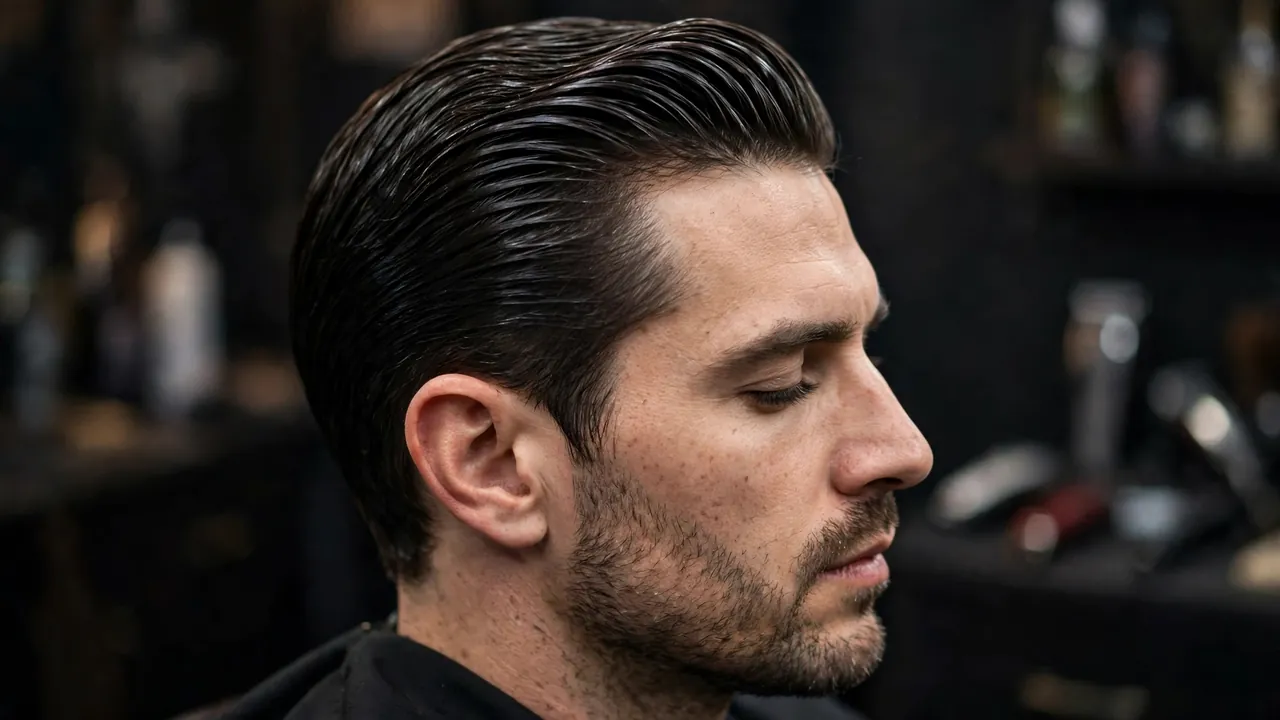
Pomade is the oldest of the three, and it was built for control and shine. Traditional oil-based pomades use petroleum or natural oils to coat the hair, which keeps it smooth, pliable and glossy all day. They never fully harden, so you can recomb your hair hours later and it falls back into place. Wikipedia’s pomade entry traces the product back to 19th century hairdressing, when it was literally made from bear fat, which tells you how long men have trusted this formula for polished styles.
Modern water-based pomades keep the shine and control but rinse out with one shampoo, which fixed the classic versions’ biggest flaw. Oil-based pomade still grips hardest, but it builds up on hair and scalp, so daily users need a weekly clarifying wash. In this three-way lineup, pomade is the pick whenever the goal is sleek and controlled rather than textured and undone.
Hair Clay
Hair clay is built around natural mineral clays, usually bentonite or kaolin. Those minerals absorb oil and add grit between the hair fibers, which creates the dry, piecey texture that makes hair look thicker and fuller. The finish is genuinely matte, with no shine at all, and the hold is firm without feeling stiff. Clay is the product behind most of the textured crops, messy fringes and lived-in quiffs you see in barbershop portfolios.
The best hair clay products for men share three traits. They give a true matte finish rather than a sneaky low shine, they wash out with one normal shampoo, and they stay pliable enough to restyle with dry hands. Cheap clays that dry chalky or flake by afternoon are usually overloaded with filler waxes, so look for a short ingredient list with clay near the top. In any honest comparison of the three, clay wins texture and volume for fine to medium hair.

Hair Wax
Hair wax sits between the other two. Its base is usually beeswax or carnauba wax blended with oils, giving a pliable, tacky grip that never sets hard. The finish is natural with a slight sheen, not glossy like pomade and not flat like clay. Wax is the most forgiving of the three, since you can pull your hair apart, reshape it and push it back together all day without adding more product, which also makes it the friendliest option for longer hair. The trade-off is raw hold. Wax will not lock a tall quiff like clay will, and it will not give a slick back the glassy finish pomade delivers.

Pomade vs Clay vs Wax at a Glance
If you want the short version before the detail, this is the breakdown across the traits that actually matter in the mirror.
| Trait | Pomade | Hair Clay | Hair Wax |
|---|---|---|---|
| Finish | Shiny to high shine | Fully matte | Natural, slight sheen |
| Hold | Medium to strong, smooth | Medium to strong, grippy | Light to medium, pliable |
| Texture and volume | Low, hair lies smooth | High, hair looks thicker | Medium, defined separation |
| Reworkability | High, recomb anytime | Medium, restyle with dry hands | High, reshape freely |
| Washability | Water-based rinses easy, oil-based builds up | Usually one shampoo | Needs shampoo, sometimes two washes |
| Best for | Slick backs, side parts, pompadours | Textured crops, quiffs, fine hair | Messy styles, wavy hair, all-day flexibility |
Pick the Finish First, Then the Hold
Most men shop for styling products by hold strength, and that is exactly why so many end up unhappy. Hold tells you how firmly the product grips, but finish tells you what the style looks like in daylight, and finish is what you actually see in the mirror. A strong hold pomade and a strong hold clay can feel equally firm in the tin and give completely different results on your head.
Think of finish as a sliding scale. Clay sits at the matte end, wax sits in the natural middle, and pomade sits at the shiny end. Decide where on that scale your hairstyle lives, and the product picks itself. Textured, piecey, undone styles live at the matte end. Polished, combed, deliberate styles live at the shiny end. Everything in between belongs to wax. Once the finish matches the style, then choose the hold strength your hair length needs. If you want to see the difference on real hair rather than read about it, this side-by-side video test of putty, clay and pomade on the same head shows how each one behaves through the day better than any description can.
This also explains why product reviews confuse people. A five-star pomade can be terrible for you if your haircut needs matte texture, because the review was written by someone with a different finish in mind. There is no overall winner in this three-way debate, only the right finish for your style.
Match the Product to Your Hairstyle
Your haircut narrows the field fast. Each of the classic men’s styles was built around one of these three products, so matching the product to the cut is the shortest route to a good result.
Slick Backs, Side Parts and Pompadours
These are pomade styles, full stop. They depend on direction and control, with every hair lying in the same flow, and only pomade gives the smooth finish that makes them read as intentional. A medium water-based pomade handles an office side part, while a strong oil-based one locks a tall pompadour all day. Clay fights these styles because its dry grip breaks the smooth surface apart, and wax lacks the glassy finish they need.
Textured Crops, Quiffs and Messy Fringes
This is clay territory. Textured cuts rely on visible separation between small sections, and clay’s mineral grit creates that piecey definition without shine. Work a small amount through dry hair from the roots and pinch the ends to build the texture the cut was designed to show. Wax is the backup if you want the same separation with a softer feel and more movement.
Wavy Hair, Curls and Longer Lengths
Longer hair changes the math because spreadability matters as much as hold. A soft wax or light water-based pomade works through the lengths without tugging, while a very dry clay can drag on hair past the ears. For waves that need definition without crunch, wax gives control while letting the natural pattern show. For curls, a light pomade defines without the matte dryness that dulls them.
Match the Product to Your Hair Type
The same haircut on two different hair types can need two different products. Hair thickness and scalp oil change how each formula behaves, so check your hair type against the cut before you commit to a tin.
Fine or Thinning Hair
Clay is the usual answer here, and the reason is simple optics. Shiny products reflect light off the scalp between the strands, making thin areas more obvious, while a matte finish scatters light so the hair reads as denser. Clay’s grit also gives fine hair something to grip, so styles hold volume instead of collapsing by midday. If this is your main concern, our guide to making thin hair look thicker pairs well with the right product, since the cut and the product attack the same problem from two sides. Avoid heavy oil-based pomades on fine hair, since the weight pulls it flat and the shine highlights the scalp.
Thick or Coarse Hair
Thick hair needs taming rather than building up. Strong-hold pomade excels here because its smooth, heavy base weighs hair into place and keeps dense growth lying in the intended direction. Wax also works when the goal is texture rather than polish, since its pliable grip controls bulk without looking wet. Clay suits short textured styles on thick hair, but very coarse hair sometimes needs the extra smoothing power only pomade provides.
Oily Hair and Scalps
Clay is built for this situation. Its mineral base absorbs excess oil through the day instead of adding to it, keeping the style matte and the roots from looking greasy by evening. Pomade, especially oil-based, is the worst choice for an already oily scalp, since it layers grease on grease. If your hair gets oily fast regardless of product, check our guide to getting rid of greasy hair alongside switching to clay.
How to Apply Each Product the Right Way
Whichever product you land on, technique matters as much as the tin. Most bad results blamed on the product are application mistakes, and each of the three needs a slightly different approach.
Start with less than you think. A pea-sized amount covers short hair and a fingertip-sized scoop covers medium lengths. Warm it thoroughly between your palms until it turns thin and even, with no clumps. Cold, unwarmed product sits on the surface instead of coating the hair, which is the main reason styles fall apart within an hour.
Damp versus dry splits by product. Pomade goes into towel-dried, slightly damp hair for the smoothest result, since moisture helps it glide and the comb does the shaping. Clay goes into fully dry hair, because water dilutes the matte grit that gives clay its texture. Wax works on either, though dry hair gives more defined separation. Work every product from the roots outward rather than coating the tips, since hold comes from the base. If your technique is the weak link rather than the product, read our full breakdown of how to style men’s hair with products like a barber before you buy another tin.
Finish with the right tool. A comb gives pomade styles their clean lines. Fingers give clay and wax their natural texture, so put the comb away once the product is in. For clay specifically, pinch and twist small sections at the ends rather than raking straight through, since that pinching builds the separation the product is known for.
What to Ask Your Barber, the Exact Script
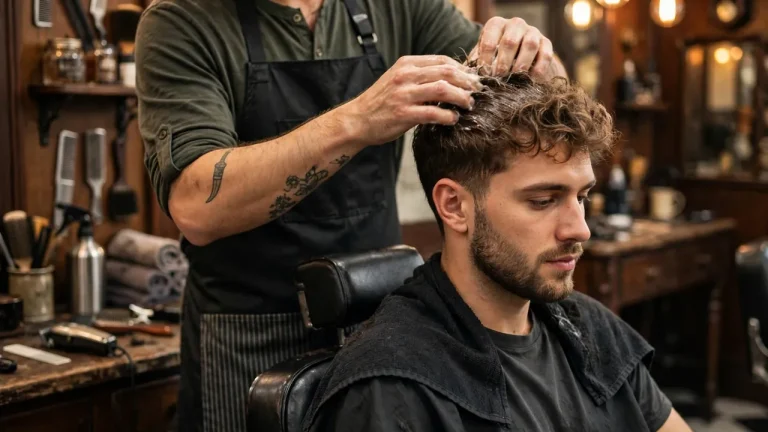
Your barber sees how products behave on real heads all day, which makes the chair the best place to settle the product question for your specific hair. Most men waste that opportunity with a vague “what should I use,” which gets a vague answer. Use this script instead and you will walk out with a real recommendation.
“I want to style it [matte and textured / smooth with some shine / natural with movement]. My hair is [fine / thick / gets oily fast], and I want to spend about [two / five] minutes on it in the morning. Between pomade, clay and wax, what would you actually use on my hair, and how much of it?”
That script works because it hands the barber the three facts that decide the answer, which are the finish you want, your hair type, and your effort budget. Ask them to show you the amount on their fingertip, and watch which product they reach for when they style you at the end of the cut. If any of the chair-side vocabulary feels foreign, our rundown of barber terms every regular should know translates the whole conversation.
Heat, Humidity and Layering, the Details Most Guides Skip
Two things decide whether a product survives a real day, and neither shows up in the hold rating on the tin. The first is the weather. The second is what you put underneath. Get either wrong and even the right product for your hair type will quit by lunch.
Using a Pre-Styler Under Your Main Product
A pre-styler is a light product worked through damp hair before your main product goes on, and sea salt spray is the one most barbers reach for. Spray it through towel-dried hair, rough dry it in, and you get grip and lift that a finishing product alone cannot build. That base matters most for fine hair, where clay or wax applied straight to clean, slippery hair slides off by midday. Keep the pre-styler light. One or two mists is enough. Soak the hair and you add weight that cancels the lift you were chasing. The finishing product still does the shaping. The pre-styler only gives it something to hold on to.
What Holds Up in Heat and Humidity
Heat softens wax first. A firm wax that holds a textured crop in an air-conditioned office can turn slack on a hot afternoon, so on summer days either switch to clay or use less wax and accept a looser finish. Humidity hits the other way. Damp air makes hair swell and frizz, and clay handles that better than pomade because it absorbs surface moisture instead of sitting on top of it. Water-based pomade sits in the middle. It holds its shape in normal weather and washes out easily, but it can flake if you keep combing it once it has set, so style it once and leave it alone. If your city stays humid most of the year, pick clay as your default and keep pomade for the days you want shine.
Washing Out and Upkeep
What happens at the sink matters as much as what happens in the morning, because the wrong wash routine turns a good product into a scalp problem. Here is how each one behaves when the day is over.
| Product | How It Washes Out | Weekly Routine |
|---|---|---|
| Water-based pomade | Rinses with one normal shampoo | No special routine needed |
| Oil-based pomade | Clings through regular shampoo, needs a degreasing wash | One clarifying shampoo per week, conditioner after |
| Hair clay | Usually one normal shampoo | No special routine needed for most formulas |
| Hair wax | Needs shampoo, sometimes a second wash | Double shampoo on heavy-use days |
One honest warning about oil-based pomade, the only one of the three that genuinely changes your wash routine. Its petroleum base does not dissolve in water, so a single daily shampoo leaves residue that builds up through the week, causing the itchy scalp and dull hair long-term users complain about. The fix is one thorough clarifying wash per week, but do not skip it. And no product rescues a grown-out shape, so keep the cut sharp between visits. A quick cleanup with the best hair clippers for men takes ten minutes and does more for your style than any tin on the shelf.
Who Should Skip Each Product
Honest exclusions matter, because the wrong product does not just underperform, it works against you. Skip clay if your scalp runs dry or flaky, since the same oil-absorbing minerals that help oily scalps can aggravate dryness and leave visible flaking by evening. Skip oil-based pomade if you are prone to forehead breakouts, since it migrates onto the skin along the hairline and clogs pores. Skip wax if your hair is very fine and you want volume, because its weight pulls fine hair flat, undoing the lift you styled in.
Also skip the idea that you need all three. Most men need exactly one daily product matched to their usual style, plus possibly a second for occasions. A full shelf of half-used tins usually means the buying decision, not the products, was the problem.
Mistakes That Ruin the Result
Four mistakes account for nearly every styling complaint, and none are the product’s fault. Using too much is the first, since excess product collapses texture and makes restyling impossible, so start small and add more only if the hold fails. Applying to soaking wet hair is the second, so towel dry first every time. Choosing the product for the style you wish you had instead of the cut you actually have is the third, since no pomade turns a textured crop into a slick back. The fourth is layering incompatible products, like oil-based pomade under clay, which gives you the downsides of both. Settle the product choice for your hair first, then fix the technique before you blame the tin.
FAQs
Conclusion
The pomade vs clay vs wax question has no universal winner, but it has a clear answer for you specifically. Choose pomade when your style needs shine and control, choose clay when it needs matte texture and volume, and choose wax when it needs flexible, reworkable separation. Pick the finish first, match the hold to your hair type second, apply it properly third, and the shelf of half-used tins becomes one tin that actually gets finished. Your barber already knows which one suits your hair, so take the script from this guide to your next appointment and ask. For more guides on cuts, beards and styling, head back to the Barbers Grooming homepage and pick the topic your hair needs next.