Barber Terms Decoded, Speak Like a Regular in Any Shop

Barber terms lingo is the set of words barbers use to describe lengths, blends and finishes, from guard numbers to fades and lineups. Learning around twenty of these terms lets you describe exactly the cut you want, instead of pointing vaguely and hoping the chair swivel ends well.
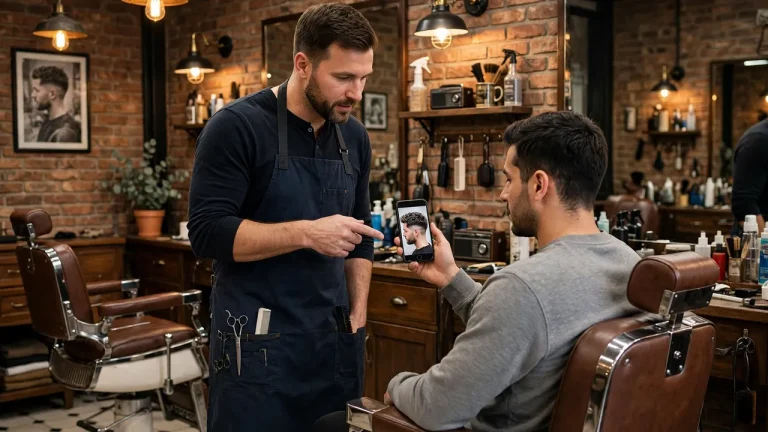
Most guys walk into the shop with a picture and three words. Short on the sides. That works for a simple trim. It falls apart the moment you want something specific, because short means something different to every barber. The lingo closes that gap. When you can say “number two on the sides, scissor work on top, natural neckline,” your barber hears a blueprint instead of a guess.
Barbering goes back centuries, and the vocabulary built up over that time is genuinely useful rather than decoration. This guide decodes the terms you will actually hear, in the order you are likely to hear them in the chair.
Why Barbershop Lingo Gets You a Better Cut
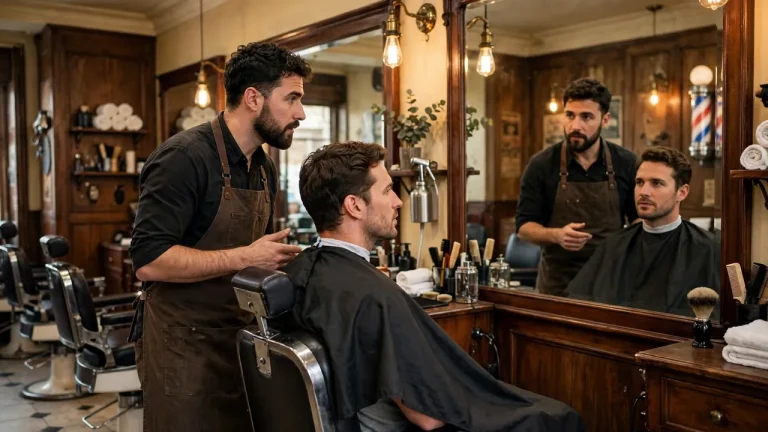
The consultation is the most important two minutes of your haircut, and it is also the part most guys rush. You sit down, the cape goes on, and the barber asks what you want. If your answer is vague, the barber fills in the blanks with habit, and habit produces an average cut.
Terms do two things for you. First, they remove ambiguity. “Low skin fade” leaves far less room for interpretation than “short.” Second, they tell your barber you pay attention, which usually earns you a more careful cut. Barbers consistently do their best work for clients who communicate clearly, because clear clients are easier to satisfy.
You do not need to sound like a trade magazine. You need about twenty words, used correctly. Pair them with one reference photo and you will get closer to the cut in your head than most guys ever do. If you want a full walkthrough of that first conversation, read our guide to asking your barber for the right cut after this one.
The Length Talk, Guards and Measurements
Length is where most consultations go wrong, and it is also the easiest part to fix. Barbers measure length in two systems, clipper guard numbers for the sides and back, and inches or finger widths for the top. Learn both and you will never again say “just take a bit off” and watch a handful of hair hit the floor.
Clipper Guard Numbers and What They Mean
Clipper guards are numbered attachments that leave a fixed amount of hair. Each number adds one eighth of an inch, so a number one leaves about an eighth of an inch, a number two leaves a quarter inch, a number four leaves half an inch, and a number eight leaves a full inch. When a barber says “a two on the sides,” that is the language. If you want the full breakdown with photos of every guard, our clipper guard numbers guide covers all of them.
A few practical notes. Saying only a number is incomplete, because a number two fade and a number two all over are completely different cuts. Always pair the number with the technique, as in “number two into a low fade” or “number four scissor cut on top, number two on the sides.” And know that how clippers and guards work varies slightly by brand, so a good barber will confirm the length against your head before committing.
How to Ask for Length on Top
The top is usually cut with scissors, so inches and finger widths are the working language. “Take an inch off the top” is clear. “Leave it long enough to push back” is clear. “Short on top” is not, because it could mean anything from a finger length to a buzz.
Two phrases solve most top-length confusion. “Scissor work on top” tells the barber you want the top cut with scissors for a softer, more natural finish rather than clipped short. “Keep the length, just clean it up” means remove the dead ends and bulk while keeping the overall shape. Both give your barber a direction without you needing to know trade jargon.
Fade and Taper, the Two Most Confused Words
No pair of barber terms causes more bad haircuts than fade and taper. Guys use them interchangeably, barbers hear them differently, and the result is a cut that surprises everyone. They are related but they are not the same thing, and knowing the difference is probably the single most useful piece of barber terms lingo you can learn.
Taper vs Fade in Plain English
A taper is a gradual shortening of hair that stays at the edges of the cut, mainly around the sideburns and the neckline. It never has to go down to the skin, and the change from long to short is subtle. A fade is a more dramatic gradient that can run all the way around the head and often drops to bare skin at its shortest point.
The simplest memory aid is that all fades taper, but not all tapers fade. If you want a sharp, high-contrast look with the sides taken very short, ask for a fade. If you want a clean, conservative finish that grows out softly, ask for a taper. Our full taper vs fade breakdown goes deeper with photos, and this walkthrough of common barber phrases shows both techniques in motion.

Low, Mid and High Placement
Both fades and tapers come in low, mid and high versions, and the word describes where the shortest part sits on your head. A low fade or taper keeps the transition near the hairline and ears, leaving plenty of length up top. A mid fade sits around the temple, the classic balanced choice. A high fade pushes the short section well above the ears for a bold, dramatic look.
Always name the placement. “Mid fade” and “low fade” are different haircuts the way a sedan and a truck are different vehicles. If you skip the placement word, your barber picks one for you, and you might not agree with the choice.
| Aspect | Taper | Fade |
|---|---|---|
| Shortest point | Usually keeps some hair, rarely skin | Often goes to bare skin |
| Placement | Stays at the edges, sideburns and neckline | Runs around the full head |
| Contrast | Subtle and gradual | Sharp and high contrast |
| Grow out | Soft, stays tidy longer | Shows growth fast, needs frequent touch ups |
| Best for | Office friendly, conservative looks | Bold, modern, statement cuts |
Lineups, Necklines and Sideburns
The edges of a haircut decide whether it looks sharp or unfinished, and barbers have precise words for every edge. This is also the part of the cut you will maintain between visits, so the terms here pay off twice.
What a Lineup Really Is
A lineup, also called an edge up or shape up, is the crisping of your natural hairline with a trimmer, usually at the forehead and temples. It creates those sharp, defined lines you see in photos of fresh cuts. Ask for it by name, as in “clean up the lineup,” and say whether you want it natural, which follows your hairline, or boxed, which squares the corners for a sharper look.
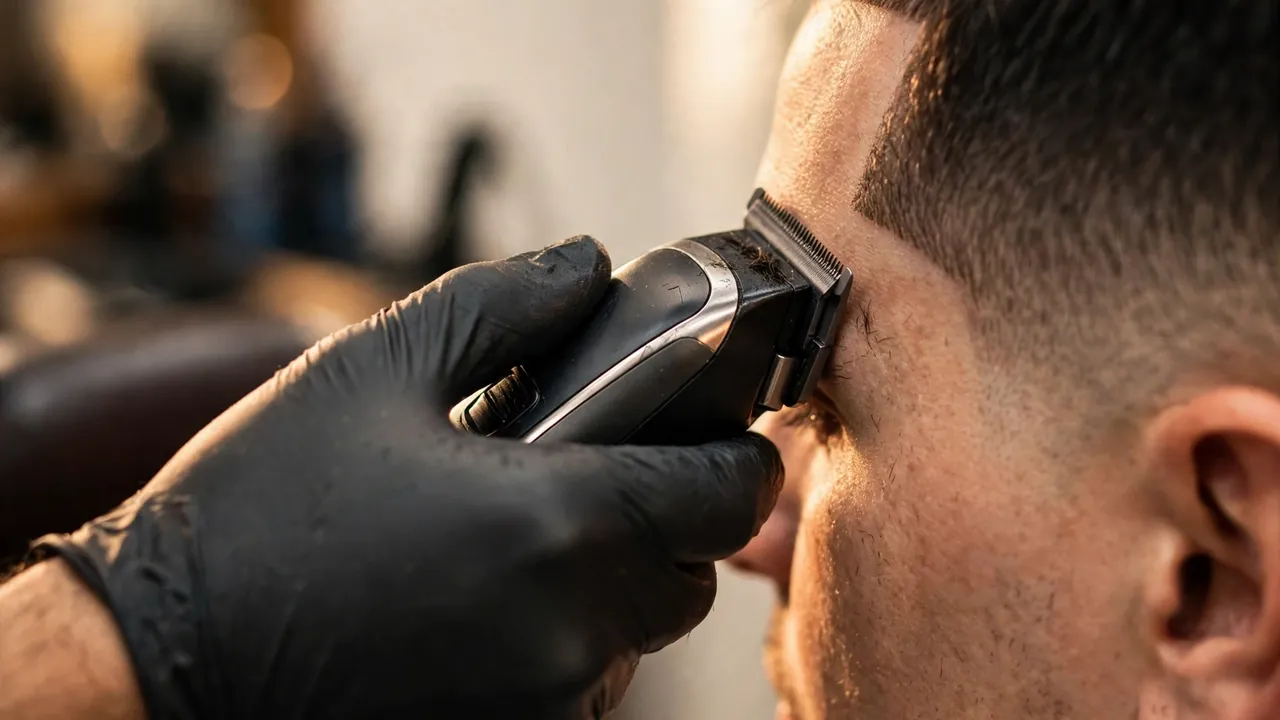
One honest warning. A very sharp, boxed lineup looks great on day one and grows out visibly within days, because stubble breaks the line. Lineups show regrowth quickly, so many guys book a quick touch up between full cuts. If you want to understand the rhythm, read our guide on how often you need a trim.
Your Neckline and Sideburn Options
At the back of your neck, barbers offer three standard finishes. A tapered neckline follows your natural hairline for a soft, natural grow out. A squared or blocked neckline cuts straight across for a crisp, bold line. A rounded neckline softens the corners of the square for something in between. If you never specify, most barbers default to tapered, which is the safest choice.
Sideburns get the same treatment. Name a length, such as “mid ear” or “to the bottom of the ear,” and say whether you want them tapered into the cut or left with a defined edge. “Blend the sideburns in” means no visible line where the sideburn meets the hair above it.
Texture, Layers and Finish Terms
Once the shape is set, barbers talk about how the hair should feel and move. These words describe the interior of the cut rather than its outline, and they are what separate a flat, helmet-like cut from one with life in it.
Texture and Thinning
Texture means cutting the hair so it has movement and separation instead of sitting as one solid mass. A barber creates it with point cutting, where the scissors snip into the ends at an angle, or with a razor. Ask for “texture on top” when your hair looks heavy or sits too flat.
Thinning is different. It removes bulk and weight from thick hair using thinning shears, without changing the length much. If your hair puffs out or feels unmanageable, “thin it out a bit” is the phrase. Be careful with this one on fine or thinning hair, because removing bulk from hair that has none to spare makes it look sparser.
Blended, Choppy and Natural Finishes
Blend is the most overused word in the chair, and it simply means no visible lines between lengths. Every good cut is blended, so saying “blend it” adds little. More useful are the finish words. Choppy means deliberate, piecey separation, the opposite of smooth. Natural means the cut should look like it grew that way, with soft edges everywhere. Disconnected means a deliberate sharp contrast between the top and the sides, as in an undercut, where the two sections are not blended at all.
Layers deserve one clarifying note. In barber terms, layers are shorter pieces cut into longer hair to create shape and movement. If your top looks like a flat sheet, “add some layers” is the fix. It is a scissor technique, not a style name on its own.
More Chair Terms Worth Knowing
The twenty words above cover most consultations, but a few more terms in barber terms lingo come up often enough that they are worth knowing before you hear them mid cut. None of them change the cut on their own, but each one helps you follow what your barber is doing and why.
Taper Lever Open and Closed
Most clippers have a small taper lever on the side, and barbers slide it to fine tune a guard length without swapping guards. Lever closed means the shortest cut that guard gives, while lever open adds roughly half a guard step of length. When a barber says they will finish with the lever open, they are softening a line rather than taking more hair off, and when they close it, they are tightening the blend. It is a small adjustment, and in barber terms lingo it is the difference between a line that disappears and one that stays visible.
Scissor Over Comb and Clipper Over Comb
When the sides are too long for a guard but still need blending, barbers work over a comb. The comb lifts a section of hair to the cutting line, and the scissors or clippers cut along the edge of the comb. Scissor over comb gives a softer, more natural finish, which suits longer tops and grown out sides. Clipper over comb is faster and more even, and it suits shorter sides that still need a smooth blend into the top. If your barber reaches for the comb instead of a guard, they are blending, not starting over.
Grade, the Other Word for Guard Number
Some barbers, especially those trained in the United Kingdom, say grade instead of number. A grade two is the same as a number two guard, a quarter inch of hair, and the scale runs the same way, with lower grades shorter and higher grades longer. If a barber asks what grade you want, answer with the same number you would give for a guard, and add the technique and placement as usual.
A Quick Glossary of Style TermsThese are the style and technique names you will hear most often in the shop. You do not need to memorize them all, but recognizing them keeps you from agreeing to something you did not picture.
| Term | What it means |
|---|---|
| Undercut | Short or faded sides with a much longer top, with a sharp disconnect between them |
| Quiff | Top hair styled up and slightly forward with volume at the front |
| Pompadour | Hair swept up and back with height over the forehead, the quiff’s dressier cousin |
| Crew cut | Short top that is slightly longer at the front, with faded or tapered sides |
| Buzz cut | One guard length all over, the simplest cut in the shop |
| Crop | Short textured top with a forward fringe, often paired with a fade |
| Temple fade | A small fade placed only at the temples, also called a Brooklyn fade |
| Hard part | A shaved line that defines the part, so the style holds without daily work |
| Blowout | Volume blown upward and outward, often with a taper on the sides |
| Crown | The swirl point at the back top of your head, where growth direction changes |
The Word for Word Script to Use in the Chair
Terms are only useful if you can string them into a sentence under pressure. Here is a script template that covers a complete consultation. Fill in the brackets with your choices and read it out the first few times until it feels natural.
“I want [guard number or length] on the sides, [low, mid or high] [fade or taper]. On top, [scissor or clipper], take [amount] off and [add texture or keep it smooth]. Lineup [natural or boxed], neckline [tapered, squared or rounded], sideburns [length].”
A real example sounds like this. “Number two on the sides into a low taper. Scissor work on top, take about an inch off, add some texture. Natural lineup, tapered neckline, sideburns to mid ear.” That is one sentence, and it tells your barber everything. For help choosing the style itself before you walk in, our guide to matching a haircut to your face shape is the right starting point.
| Situation | What to say |
|---|---|
| First visit to a new barber | Start longer than you think, then go shorter. Say “let us start conservative, I can always take more off” |
| You have a photo | “I want this, but with a lower fade and a natural neckline” names what stays and what changes |
| Mid cut check | “Can I see the back” before the cape comes off. Fixes are free now and impossible later |
| Something looks off | “The blend looks heavy on this side” is specific and fixable. “It looks weird” is not |
| Booking the next visit | “Same as today, just clean up the lineup” keeps a good cut consistent |
Terms Guys Get Wrong Most Often
A few phrases cause a disproportionate share of bad cuts because they sound precise while meaning almost nothing.
“Taper fade” is the biggest offender. It mashes two different techniques into one phrase, and barbers interpret it differently. Pick one word. If you want both qualities, describe them, as in “a taper around the ears with a skin finish at the very bottom.”
“Just a trim” is the vaguest request in the shop. It tells the barber nothing about length, shape or edges, so the result is whatever the barber guesses. Replace it with one length and one edge instruction and your trim stops being a gamble.
“Blend it” gets said in almost every consultation and means nothing on its own, because blending is part of every competent cut. If the sides look stripey or heavy, point at the spot and name it. “This line here needs softening” gives the barber a target.
Bare numbers without context are another trap. “Give me a two” could mean a two all over, a two on the sides with a long top, or a two blended into a fade. The number is only a length. The technique word that follows it is the haircut.
Who Should Skip Memorizing the Lingo
Honesty matters here, so here it is. If you have gone to the same barber for years and they know your cut by heart, you do not need any of this. “The usual” is a complete consultation when the history exists.
The same goes if you always bring the same reference photo and get the same result. The photo is doing the communicating, and it is doing it well. Terms add little when the visual record is already perfect.
One more exception. If you are fixing a genuinely bad cut from another shop, skip the vocabulary lesson and let the barber lead. Describe the problem, as in “the last cut left a shelf at the back,” and let them choose the technique. Correction work needs a professional’s judgment more than your terminology.
Everyone else benefits. New barber, new style, new city, or just a guy who is tired of explaining the same cut three times, the lingo pays for itself the first time you use it.
FAQs
Conclusion
Barber terms lingo is not about sounding like an insider. It is a practical toolkit of about twenty words that turn a vague request into a clear blueprint. Learn the guard numbers, know the difference between a taper and a fade, name your lineup and neckline, and walk in with one good photo. Do that, and the most stressful two minutes of your haircut become the easiest.
The next time you sit in the chair, try the full script once. Number on the sides, placement and technique, length on top, edges named. Your barber will know exactly what to do, and you will walk out with the cut you actually pictured. You can browse every cut guide from the Barbersgrooming homepage when you are ready to pick your next style.