How to Make Thin Hair Look Thicker Without Growing It Out

You can make thin hair look thicker by keeping the sides short, building texture on top, washing with a thickening shampoo, and finishing with matte styling products and a quick blow dry. Done right, the whole routine takes about five minutes and the difference is visible the same morning.
This guide explains how to make thin hair look thicker for men in practical terms. No miracle claims, just the cut, the wash routine, the products, and the exact words to use in the barber chair so you walk out with more volume than you walked in with.
How to Make Thin Hair Look Thicker With the Right Cut
The single biggest mistake men with thin hair make is growing it longer to cover the thin areas. Long thin hair separates under its own weight, and every gap shows scalp. Shorter hair stands up, overlaps, and hides the scalp far better. If your hair is thinning on top, extra length is working against you, not for you.
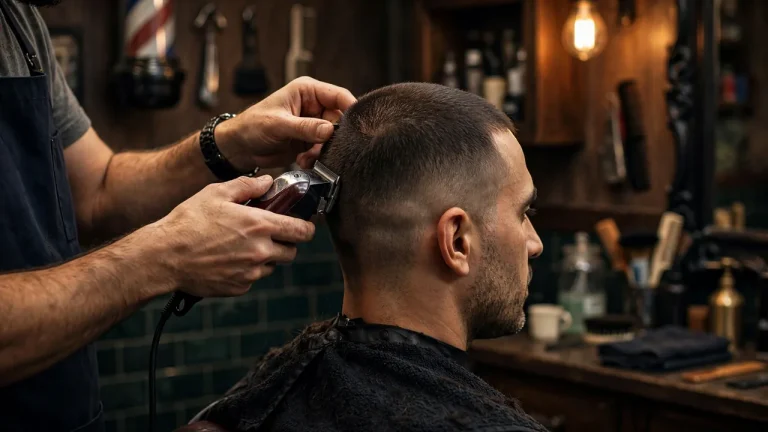
The fix starts with contrast. When the sides are neat and close and the top carries a little length and texture, the eye reads the top as fuller. This is why so many barbers reach for fades and tapers on thinning clients, and why a guide to haircuts for older men with thinning hair starts with the same principle.
Texture is the other half of the equation. Blunt one length cuts lie flat and expose the scalp. Point cutting, choppy layers, and a matte finish break the hair into small pieces that overlap, and overlapping strands read as density. Ask for texture and your barber will know exactly what to do.
Why Shorter Sides Make the Top Look Fuller
Think of it as framing. A tight side puts a clean border around the top, so the top looks like more by comparison. When the sides grow long and wispy, they draw the eye sideways and make the whole head look thinner. A low taper fade keeps the sides tidy without the harshness of a skin fade, which matters because a very high contrast fade next to a thin top can actually highlight the thinness. The goal is neat sides that support the top, not sides that compete with it.
The Cuts Barbers Reach For Most
For a thinning crown or diffuse thinning across the top, barbers tend to recommend the same short list. A textured crop with a forward fringe hides a thinning hairline and gives the front real density. A crew cut with a little length on top is almost foolproof, because the short uniform length evens out density differences. A burst fade works well when the thinning sits more toward the crown, since the rounded shape keeps fullness where you need it. And if the hairline is moving back as well as thinning, styles that soften a receding hairline pair a textured top with a softer, less exposed hairline.
What matters more than the name of the cut is the execution. Scissors on top instead of clippers leave the ends thicker, and point cutting through the top builds the texture that fakes density. Tell your barber you want the top left heavy, not thinned out. Thinning shears on already thin hair are one of the fastest ways to make it look worse.

Wash Smarter With a Thickening Shampoo
Product buildup and natural oil are the enemies of thin hair. Oil glues strands together into clumps, and clumps leave gaps, and gaps show scalp. A proper wash routine lifts oil off the scalp so each strand can stand apart, which is half the battle for fullness.
A thickening shampoo is the best shampoo for thin hair in most cases, not because it grows new hair but because of how it cleans. These formulas use lightweight cleansers plus ingredients like panthenol and rice protein that coat each strand and swell it slightly. The effect washes out, but while it lasts the hair genuinely feels and looks thicker. If you want background on how these formulas are built, the Wikipedia overview of shampoo explains the surfactant chemistry in plain terms.
What Thickening Shampoo Actually Does
It is worth being honest about the limits. No shampoo changes your genetics or regrows hair. What the best thickening shampoo for men does is cosmetic and temporary, and that is fine, because a cosmetic fix is what gets you through the day looking good. Look for words like volumizing, thickening, or bodifying on the label, and avoid heavy moisturizing or smoothing formulas, which are built for thick hair and will flatten yours. Wash with warm water, massage the scalp with your fingertips for a full minute, and rinse thoroughly. Leftover residue weighs hair down as surely as oil does.
How Often Men With Thin Hair Should Wash
Most men with thin hair do best washing every day or every other day. Skipping washes lets oil build up, and oily thin hair looks dramatically thinner than clean thin hair. If daily washing dries your scalp, use a gentle formula and keep the water warm rather than hot. Conditioner is optional and often counterproductive on thin hair. If you use one, keep it off the roots and off the scalp entirely, mid lengths and ends only, and rinse it out completely. A 2 in 1 shampoo and conditioner is usually too heavy for thin hair, so buy them separately and use the conditioner sparingly.
Styling Products That Make Thin Hair Look Thicker
The right styling product can double the visual thickness of thin hair, and the wrong one can ruin a good cut in seconds. The rule is simple. Thin hair needs lightweight products with a matte finish. Anything shiny, wet looking, or heavy pulls strands together and exposes the scalp. The best hair products for men with thin hair all share those two traits, light and matte.
Here is how the main options compare for thin hair.
| Product | What it does | Best for | Finish |
|---|---|---|---|
| Texture powder | Adds grit and instant lift at the roots | Fine flat hair that collapses by midday | Matte |
| Matte clay | Builds piecey separation with firm hold | Short textured cuts | Matte |
| Styling paste | Flexible control with natural movement | Medium length tops | Low shine |
| Sea salt spray | Adds airy texture before heat styling | Pre styler before blow drying | Matte |
| Thickening cream | Light body as a base layer | Very fine hair, under other products | Natural |
Matte Always Beats Shiny on Thin Hair
Shine is the enemy of the illusion. A glossy finish reflects light in a way that separates strands visually and shows the scalp between them. A matte finish absorbs light, so strands blur together and read as one denser mass. This is why gels and high shine pomades are the worst choice for thin hair, even though they offer strong hold. A matte clay or texture powder gives you hold without the giveaway shine. If you already own a shiny product you like, use a tiny amount and finish with a dusting of texture powder to kill the shine.
The 60 Second Blow Dry Routine
A blow dryer is the most underused tool for thin hair. Air drying lets gravity pull everything flat against the scalp. Sixty seconds of blow drying against the direction of growth lifts the roots and locks in volume that lasts all day. Towel dry until damp, apply a pea sized amount of product or a light pre styler, then dry with your fingers lifting at the roots while you point the dryer upward from underneath. Finish with a shot of cool air to set the shape. If you want to see the technique done properly, this video tutorial walks through the whole routine for thinning hair.

What to Tell Your Barber, Word for Word
Most bad thin hair cuts happen because of vague instructions. Here is a script you can use almost word for word at your next appointment.
“I want to keep the top heavy with as much length as we can keep looking neat. Please cut the top with scissors and point cut through it for texture, no thinning shears. On the sides I would like a low taper that stays neat, nothing too high or too skin tight. I want the top to read fuller, so keep the edges soft rather than sharp.”
Then show a photo of the cut you want. Barbers work far better from a picture than from a description, and it removes all guesswork about what textured means to each of you. Book the next appointment before you leave, because thin hair loses its shape faster than thick hair does.
Keep It Looking Full With a Simple Schedule
Thin hair is less forgiving of neglect. A cut that looked full on day one can look stringy by week five, because longer thin hair separates. A simple schedule keeps you ahead of it.
| Task | How often | Why it matters |
|---|---|---|
| Haircut | Every 3 to 4 weeks | Keeps the shape tight before thin ends separate |
| Thickening shampoo | Every wash | Prevents oil from clumping strands together |
| Clarifying wash | Once a month | Removes product buildup that weighs hair down |
| Replace texture powder | Every 2 to 3 months | Old product loses its lifting power |
Match the Trick to Your Hair Type
Thin hair is not one thing. How many strands you have, how thick each strand is, and whether your hair is straight, wavy, or curly all change which trick helps most. The routine above works as a base, but a few adjustments make it fit your hair instead of fighting it.
Thin Is Not the Same as Fine
Thin hair means you have fewer strands. Fine hair means each strand is narrow. Plenty of men have both, but the fix is slightly different for each. If your hair is thin but coarse, texture and a matte clay do most of the work, because each strand already has body and just needs separation. If your hair is fine, weight is the bigger enemy. Skip creams and heavy pastes, lean on texture powder and a light pre styler, and keep conditioner off the roots entirely. Fine hair also shows product buildup faster, so the monthly clarifying wash in the schedule above matters even more for you.
Wavy and Curly Thin Hair
Waves and curls already give you something straight hair does not, natural lift at the root. The mistake is weighing that lift down. Heavy creams and oils pull curls flat and open up gaps at the scalp, which is the opposite of what you want. Use a light sea salt spray or a volumizing mousse on damp hair, scrunch gently, and let the hair dry with as little touching as possible. If you blow dry, use a diffuser on low heat and lift at the roots with your fingers rather than brushing the curl out. Brushing curly thin hair dry is one of the fastest ways to turn texture into frizz and expose the scalp. Keep the cut textured and a little shorter on the sides, just as with straight thin hair, and let the curl do the thickening work on top.
Grey and Light Coloured Thin Hair
Grey hair often feels coarser and drier than the hair it replaces, which changes the routine in two small ways. First, a light conditioner on the ends only becomes worth using, because dry grey ends catch and break, and broken ends make thin hair look thinner. Second, scalp contrast matters more than most men expect. Dark hair against a light scalp shows every gap, while hair close to your skin tone hides them. If your hair is going grey in patches, a matte texture powder in a shade close to your hair colour does double duty here, lifting the roots and softening the contrast at the scalp at the same time. Keep the finish matte either way, since shine on grey hair reads as wiry rather than full.
Who Should Skip These Tricks
Honesty matters here. These techniques create the illusion of thicker hair, and illusions have limits. If your hair loss has progressed to large bald areas or a fully exposed crown, styling tricks start to look like a cover up, and a shorter honest cut almost always looks better. Our guide to cuts that work when the hairline is going as well covers the options that suit advanced thinning without pretending it is not happening.
Also skip heavy layering if your hair is both thin and fine, because too many layers can remove the little bulk you have. And if your thinning came on suddenly or in patches, see a dermatologist before you see a barber. Sudden or patchy loss can signal a scalp condition that no haircut will fix, and catching it early gives you the most options.
FAQs
Conclusion
Thin hair does not need miracle products. It needs a shorter cut with texture, a wash routine that keeps oil off the scalp, matte products that add body, and sixty seconds with a blow dryer. None of these steps is dramatic on its own, but together they change what you see in the mirror. Start with the cut, because everything else works better on the right foundation, and give each change a week before you judge it. Thicker looking hair is a routine, not a rescue. Follow this routine and you will know exactly what to do every morning. For the cut guides that pair with this routine, start at the BarbersGrooming homepage.