Wolf Cut for Women, the Edgy Layered Style Explained
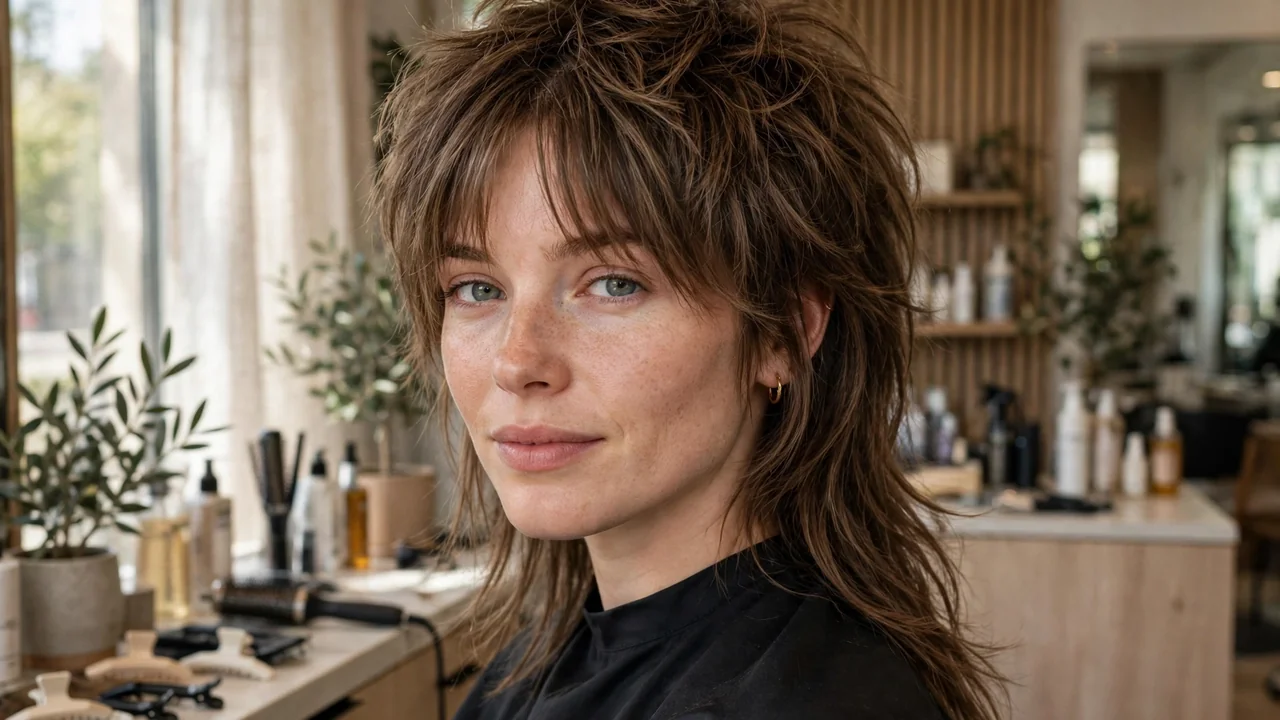
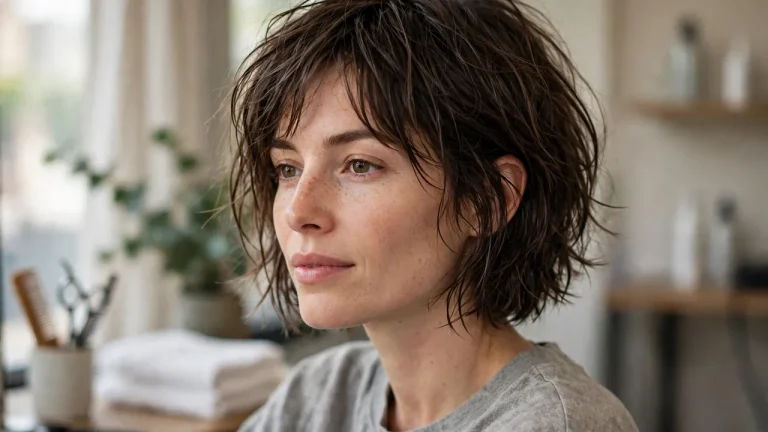
Wolf cut with curtain bangs is a shaggy, heavily layered cut with short layers on top, longer layers underneath and a soft fringe that parts in the middle. It is bold, textured and deliberately messy, and it suits women who want an edgy look without a harsh or severe shape.
What a Wolf Cut Is
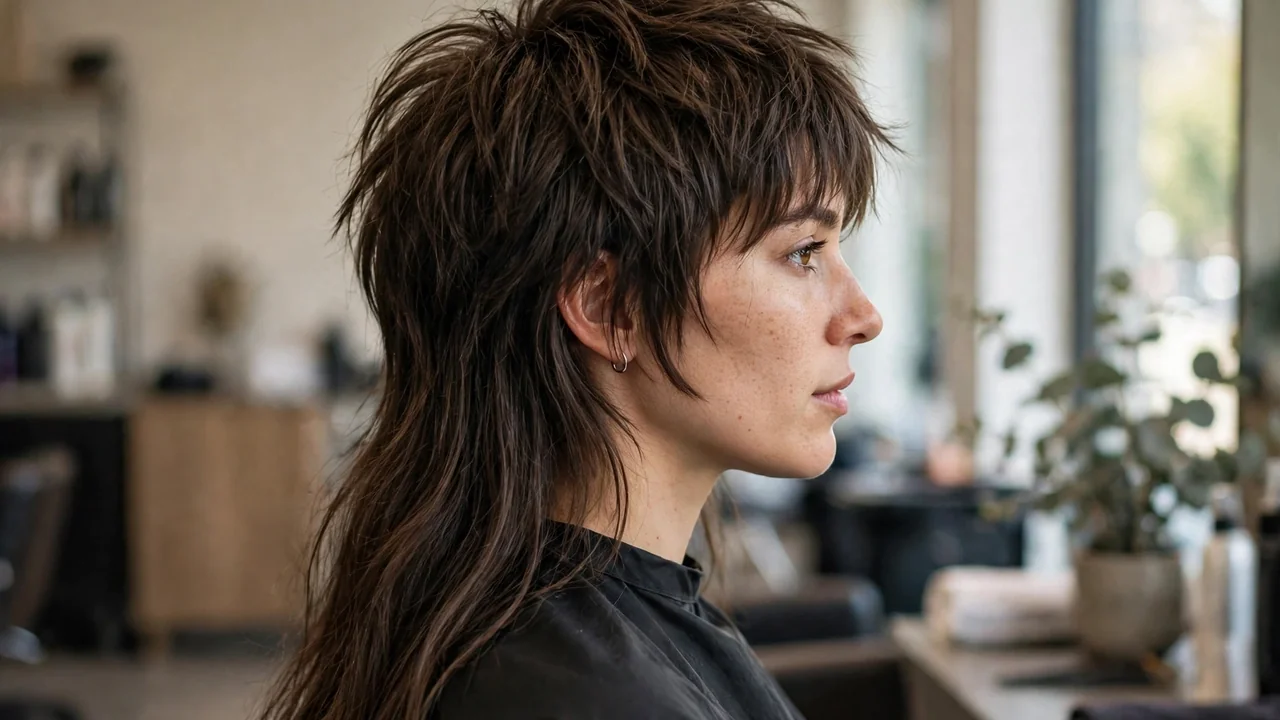
A wolf cut mixes two older styles. Its shag roots are described in the article on the shag, and its longer back comes from the mullet. It takes the short, choppy layers on top from a shag, and the longer length at the back from a mullet, then softens both so the result looks wild but wearable. That longer back shape is also covered in this guide to mullet haircut. A shaggy wolf cut with curtain bangs is the classic version, with piecey ends and a soft fringe that parts in the middle. The top is short and full, the sides are layered and textured, and the back keeps enough length to feel like long hair from behind. The curtain bangs tie it together, sweeping to each side and blending into the shortest layers around the face.
The cut is built on contrast. Short layers on top create volume and lift. Long layers underneath create length and movement. The gap between the two is what gives the wolf cut its shape. If the layers are blended too smoothly, it becomes a regular layered cut. The basic layering method is explained in this guide to layered haircuts. If they are cut too short on top, it becomes a mullet. A good wolf cut sits between those two, with visible texture on top and a clear shape from the front, the side and the back.
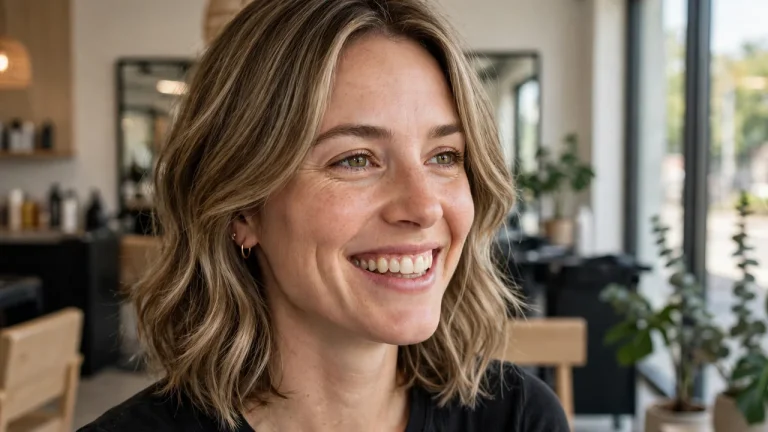
Wolf cut with curtain bangs and layers works on most hair types, but it behaves differently on each one. Straight hair shows the layers clearly and needs product to keep the texture. Wavy hair is the natural match, because the wave gives the layers movement without much styling. Curly hair makes a softer, rounder wolf cut, with the curls filling out the top. Thick hair suits it well, because the layers remove weight. Fine hair needs a lighter version, because too many short layers can make the ends look thin.
How the Curtain Bangs Fit In
Curtain bangs wolf cut is not an add on, it is part of the shape. A wolf cut curtain bangs pairing works because the fringe softens the choppy top layers and gives the eyes a frame. The bangs start around the eyebrows or cheekbones in the centre and get longer toward the sides, where they blend into the face framing layers. Without the bangs, the top of the wolf cut can look disconnected from the face. The same fringe shape is explained in this guide to curtain haircut. With them, the eyes are framed and the short top layers have somewhere to blend into.
The bangs should be cut to match the texture of the rest of the cut. On a shaggy wolf cut, the bangs should be textured and piecey, not blunt and smooth. On a softer wolf cut, the bangs can be longer and smoother, sweeping to the sides like regular curtain bangs. Either way, they should be cut dry or checked dry, because the top layers shrink and lift as they dry, and bangs cut wet can end up shorter than planned.
Butterfly Cut vs Wolf Cut
Butterfly cut vs wolf cut is the comparison most women ask about, because the two cuts look similar in photos and are often confused. They are not the same cut, and the difference matters when you sit in the salon chair.
| Feature | Butterfly cut | Wolf cut | | Top layers | Long and soft, starting at chin or below | Short and choppy, starting at the crown or ears | | Overall shape | Smooth, bouncy, polished | Shaggy, textured, edgy | | Bangs | Long curtain bangs or face framing layers | Shorter curtain bangs that blend into choppy layers | | Volume | Even volume through the lengths | Heavy volume on top, lighter at the ends | | Styling | Blow dry with a round brush for bounce | Rough dry with fingers, texture product for separation | | Grow out | Smooth, layers blend easily | More visible, top layers grow out unevenly | | Best hair type | Straight to wavy, medium to thick | Wavy to curly, medium to thick | | Look | Soft and feminine, salon polished | Wild and relaxed, lived in |
Butterfly vs wolf cut comes down to polish. A butterfly cut is smooth. The layers are long, the ends are bouncy and the whole style looks finished even when it is simply blow dried. A wolf cut is textured. The layers are short on top, the ends are piecey and the style looks best when it is a little messy. If you want a cut that looks good in a work meeting without much effort, the butterfly cut is the safer choice. If you want a cut that looks good when you do almost nothing to it, the wolf cut is the better choice.
Wolf cut vs butterfly cut also differs in upkeep. A butterfly cut grows out smoothly, because the layers are long and the difference between them is small. A wolf cut grows out unevenly, because the short top layers and the long bottom layers grow at the same rate but start at different lengths. A wolf cut needs a trim every six to eight weeks to keep the shape. A butterfly cut can often go eight to ten weeks.
The two cuts also suit different face shapes in slightly different ways. A butterfly cut suits oval and heart shaped faces well, because the long layers frame the face softly. A wolf cut suits round and square faces well, because the height on top lengthens a round face and the texture softens a square jaw. Both can work on any face shape, but the starting point is different.
Butterfly Wolf Cut, the Middle Version
Butterfly wolf cut is a softer wolf cut that borrows the long layers of a butterfly cut and the texture of a wolf cut. The top layers are longer than a true wolf cut, the ends are less choppy and the curtain bangs are longer and smoother. It suits women who like the idea of a wolf cut but want a less extreme version, or women with fine hair who cannot support very short top layers. If you show your stylist a wolf cut photo but say you want it softer, this is usually the version she will cut.
Wolf Cut by Length
Wolf cut with curtain bangs works at short, medium and long lengths, but the shape changes at each one.
Short Wolf Cut With Curtain Bangs
Short wolf cut with curtain bangs ends around the chin or the shoulders. Curtain bangs wolf cut short hair in this length is bold, because the short top layers and the short length together make a very textured shape. It suits wavy and curly hair best, because the natural texture fills out the shape. On straight hair, a short wolf cut needs product every day to keep the pieces separated, or it can fall flat.
Shoulder Length Wolf Cut With Curtain Bangs
Shoulder length wolf cut with curtain bangs is the most wearable version. It is long enough to tie back loosely, short enough that the top layers can lift the roots, and the length at the back keeps the cut from looking too severe. This is the best first wolf cut for most women, because it gives the full effect without the commitment of a very short top or a very long back.
Long Wolf Cut With Curtain Bangs
Long wolf cut with curtain bangs keeps the length at the back past the shoulders while the top stays short and textured. Curtain bangs wolf cut long hair in this version has the most contrast between the top and the bottom, which is the classic wolf cut look. Curtain bangs wolf cut long hair straight needs the most styling, because straight hair shows the contrast clearly and needs texture product to keep the layers separated. On wavy hair, a long wolf cut looks effortless, because the waves do the work.
Wolf Cut by Hair Type
Hair type decides how much texture the cut needs and how much styling it will take each day.
Wavy Hair
Wavy hair is the best match for a wolf cut. The waves give the short top layers natural lift and the long bottom layers natural movement. Styling is simple. Rough dry with your fingers, add a little sea salt spray or texture cream, and scrunch the ends. The cut looks better slightly messy, so there is no need for a perfect blow dry.
Straight Hair
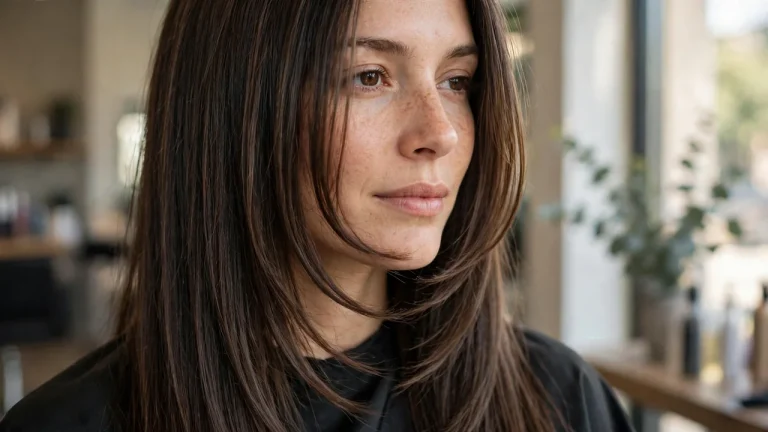
Straight hair shows every layer of a wolf cut, which can look sharp and graphic. It also needs more styling, because straight hair does not bend on its own. A round brush on the top layers, or a quick pass with a straightener curving the ends outward, gives the texture that wavy hair gets naturally. Use a light texture spray rather than a heavy wax, which can make straight hair look greasy. A similar approach to adding movement is explained in this guide to textured haircuts.
Curly Hair
Curly hair makes a softer wolf cut, with the curls filling out the top and the length at the back. The cut should be done dry or checked dry, because curls shrink as they dry and short top layers can spring up much shorter than planned. Keep the top layers longer than you would on straight hair, and use a curl cream to keep the curls defined. Avoid brushing the cut dry, which breaks the curl pattern.
Thick Hair
Thick hair suits a wolf cut well, because the layers remove the weight that makes thick hair heavy and hot. The stylist should thin the inside of the top layers so the shape does not become too wide. A thick haired wolf cut holds its shape well and needs less product than a fine haired version.
Fine Hair
Fine hair needs the lightest wolf cut. The top layers should stay longer, the texture should be light and the ends should be kept blunt enough that they still look thick. A very short, heavily textured wolf cut can make fine hair look sparse. A softer version, closer to a butterfly wolf cut, is the safer choice for fine hair.
Styling a Wolf Cut Every Day
A wolf cut is meant to look lived in, so the daily routine is short and forgiving. Wash with a light shampoo, apply a small amount of texture cream or sea salt spray to damp hair, and rough dry with your fingers. Lift the roots at the crown with your fingers as you dry, and scrunch the ends to bring out the texture. Let the curtain bangs fall naturally to each side of the part, and use your fingers to sweep them into place.
The most common styling mistake is over styling. A wolf cut that is blow dried smooth with a round brush loses the texture that makes it a wolf cut. If you want a smooth look, choose a butterfly cut instead. The second mistake is using too much product. A wolf cut needs texture, not hold. A small amount of cream or spray is enough. Too much makes the layers stick together and look greasy.
At night, a loose braid or a high loose bun keeps the shape without flattening the top. In the morning, a mist of water and a quick scrunch is usually enough to bring the texture back. A dry shampoo at the roots on day two adds lift without a full wash.
What to Ask Your Stylist
Say this before the cut starts, and change only the length and the hair type.
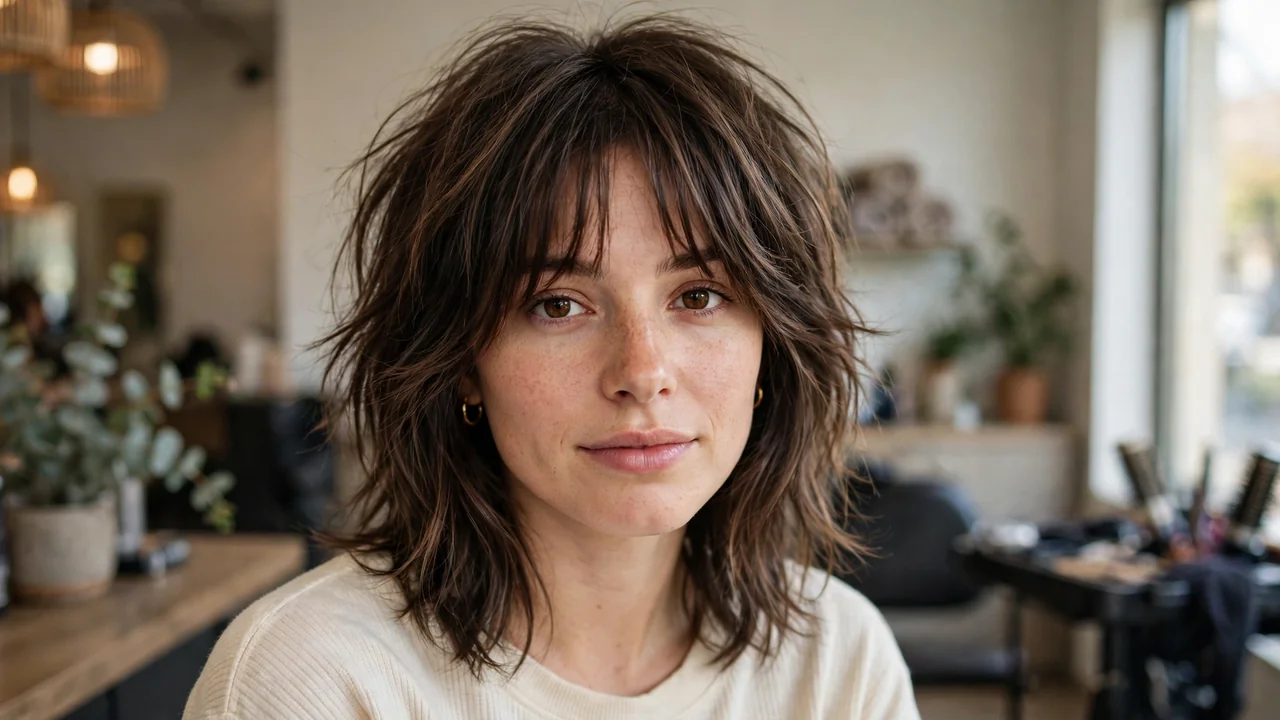
“I would like a wolf cut with curtain bangs. Please keep the top layers short and textured, keep the length at the back past my shoulders, and cut the curtain bangs so they part in the middle and blend into the face framing layers. My hair is wavy, so please cut it to work with my natural wave and show me how to style it with my fingers. I want it to look shaggy and lived in, not smooth and polished.”
If your hair is straight, say “my hair is straight, so please show me how to add texture with a round brush or a straightener.” If your hair is curly, say “my hair is curly, so please cut it dry or check it dry and keep the top layers longer.” If your hair is fine, say “my hair is fine, so please keep the version softer and do not take too much weight from the ends.” Bring two photos, one of a wolf cut and one of a butterfly cut, and say “I want the wolf cut, not the butterfly cut” so she knows which shape you mean.
Ask how often to come back. A wolf cut usually needs a trim every six to eight weeks to keep the top layers in shape. Ask her to show you the styling once, with the exact product amount, so you can copy it at home.
Who Should Skip a Wolf Cut
A wolf cut is not right for everyone, and it is better to know that before the cut than after. Skip a wolf cut if you need a smooth, polished look every day for work and do not want a textured, messy style. A butterfly cut or a long layered cut will suit that routine better.
Skip a very short wolf cut if your hair is very fine and you love a thick blunt edge, because short textured layers can make fine hair look thinner at the ends. Skip a wolf cut if you wear your hair in a tight ponytail every day, because the short top layers will fall out of the tie and need styling anyway. Skip it if you are growing your hair out and want every strand to reach the same length, because the short top layers slow that process down.
Skip a wolf cut if you are not ready for a cut that needs a trim every six to eight weeks. The shape depends on the contrast between the short top and the long bottom, and that contrast fades as the hair grows. If you are unsure, start with a softer butterfly wolf cut at shoulder length. You can go shorter and more textured at the next visit once you know how the shape behaves on your hair.
FAQs
Conclusion
Wolf cut with curtain bangs is a bold cut that works because it is honest about what it is, short textured layers on top, length at the back and a soft fringe that ties the two together. It suits wavy and thick hair best, it needs a trim every six to eight weeks and it looks best when it is styled with fingers rather than smoothed into place. If you want polish, choose a butterfly cut. If you want texture and a lived in shape, choose the wolf cut, start at shoulder length if you are unsure and use the exact words in the stylist section so the cut you describe is the cut you walk out with.