Short Haircuts for Women Over 70 That Are Fresh and Flattering
Short haircuts for women over 70 work best when they add lift at the roots, softness around the face and a shape that needs little daily styling. The right short cut can take years off the look while making thin or grey hair look fuller.
Why Short Hair Suits Women Over 70
Hair changes with age, and the cut should change with it. Hair often becomes finer, drier and less dense after seventy, and grey hair has a different texture from pigmented hair, often coarser and more wiry. Long hair can drag the face down and show thinning more clearly, because the weight pulls the roots flat and the ends look sparse. Short hair does the opposite. It lifts the roots, makes the hair look thicker, and frames the face instead of hiding it.
Short hair is also easier to live with. It dries faster, needs less product, and holds a shape without a long styling routine. For many women over seventy, that ease matters as much as the look, because a cut that needs twenty minutes with a round brush every morning will not get styled that way in real life. A cut that looks good after a quick wash and a finger tousle will.
There is also a confidence factor that matters. A fresh, well shaped short cut changes how a woman carries herself, and that shows in the face more than any single styling trick. The goal is not to look younger by copying a twenty year old cut. The goal is to look like the best version of yourself now, with a cut that suits your hair, your face and your life. These cuts suit women choosing haircuts for 70 year old women just as well as women a decade older, and the same soft pixie or chin length bob works for haircuts for women over 80, with the same lift at the roots and the same five minute styling.
Pixie Haircuts for Women Over 70
Pixie haircuts for women over 70 are the most popular short choice, and for good reason. A pixie lifts the face, opens up the eyes and cheekbones, and needs almost no styling. The key is softness. A harsh, severe pixie can look stark on mature skin, while a soft pixie with textured layers and a wispy fringe looks fresh and kind.
The Soft Textured Pixie
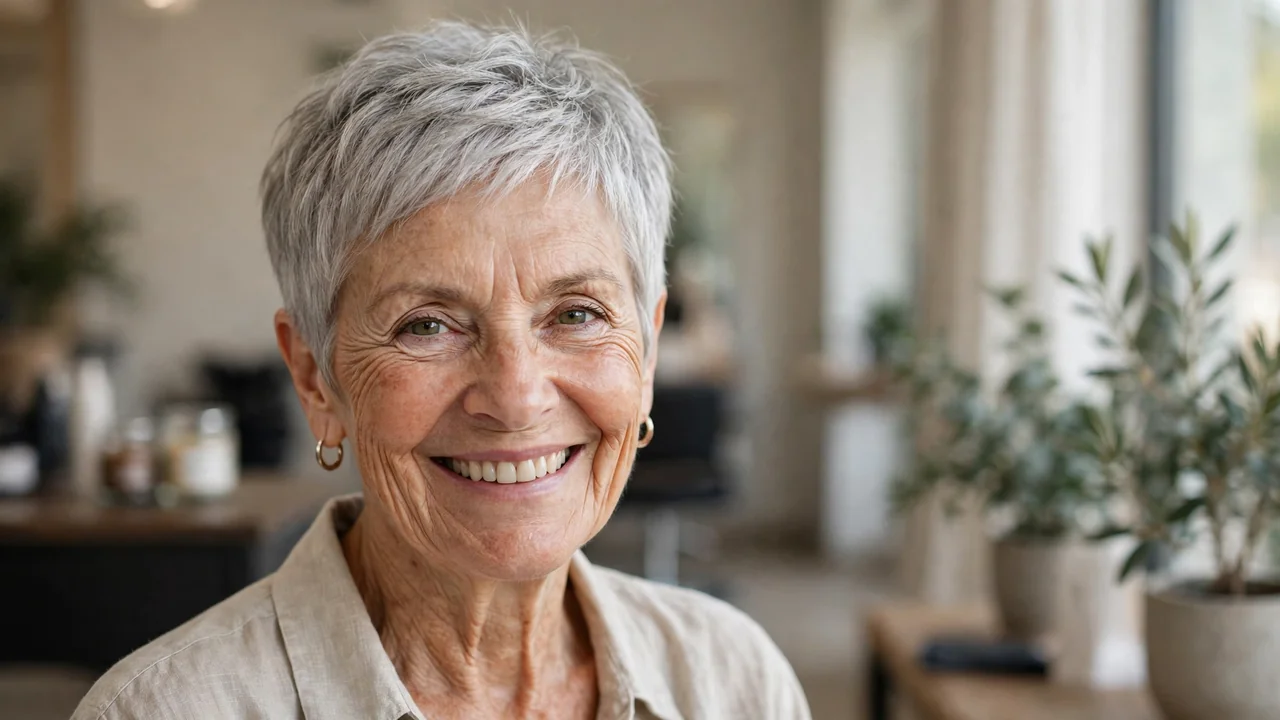
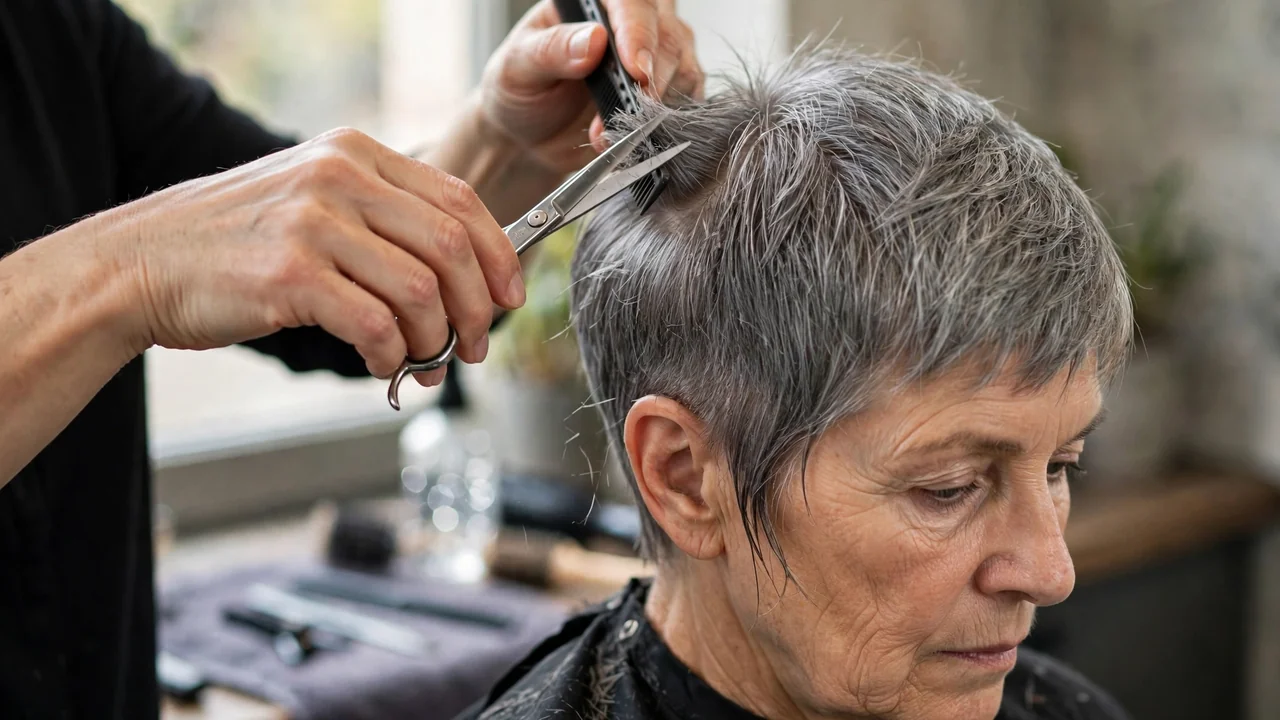
The soft textured pixie keeps length on top, with layers that move and a fringe that falls softly across the forehead. The texture stops the cut from looking flat, and the soft fringe covers forehead lines without hiding the face. Ask for the top to be left long enough to style with fingers, and the sides to be tapered rather than shaved, so the shape stays gentle.
The Pixie with a Side Sweep
A pixie with a deep side sweep adds asymmetry that flatters most face shapes and gives the cut movement. The longer side can be tucked behind the ear or left to fall across the cheek, which gives two looks from one cut. This version suits women with fine hair particularly well, because the side sweep creates the look of fullness across the top.
The Curly Pixie
A curly pixie works beautifully for women whose hair has natural wave or curl, because the texture does the styling. Keep the top long enough for the curls to form, taper the sides, and let the curls fall naturally. This cut needs the least product of any pixie, usually just a small amount of curl cream on damp hair.
A pixie needs a trim every four to six weeks to keep its shape, which is more frequent than longer cuts. That is the real cost of a pixie, and it is worth knowing before you commit. If you cannot visit the salon that often, a slightly longer pixie bob will hold its shape for six to eight weeks instead.
Short Bobs and Layered Cuts After 70
Not every woman wants a pixie, and a short bob is the best alternative. A bob gives more coverage around the face and neck, more styling options, and a longer gap between trims.
The Chin Length Bob
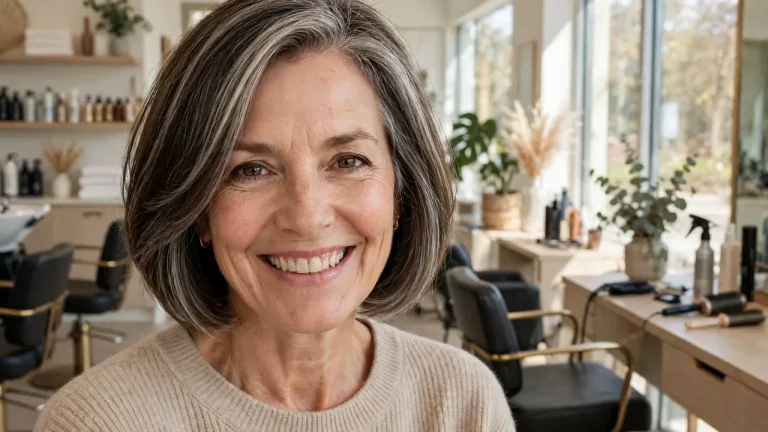
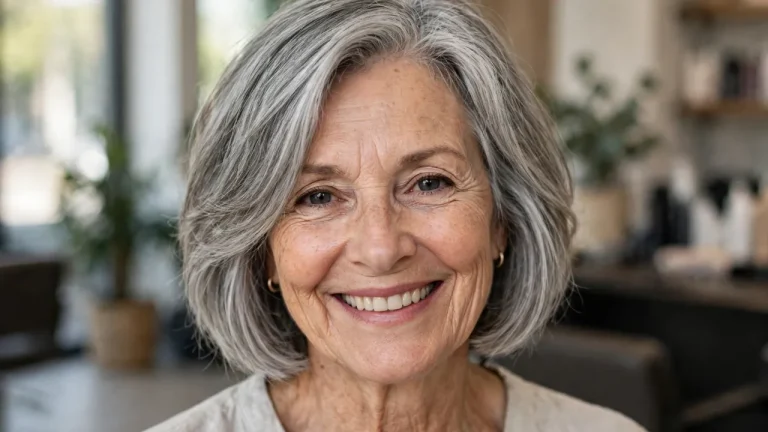
A chin length bob with soft layers is a classic for a reason. It frames the face, covers the neck, and looks polished with almost no effort. Ask for the ends to be textured rather than blunt, so the cut does not form a hard line, and for a side part that adds a little asymmetry. This cut suits straight and wavy hair, and it works well with glasses, because the length sits clear of the frames.
The Layered Bob
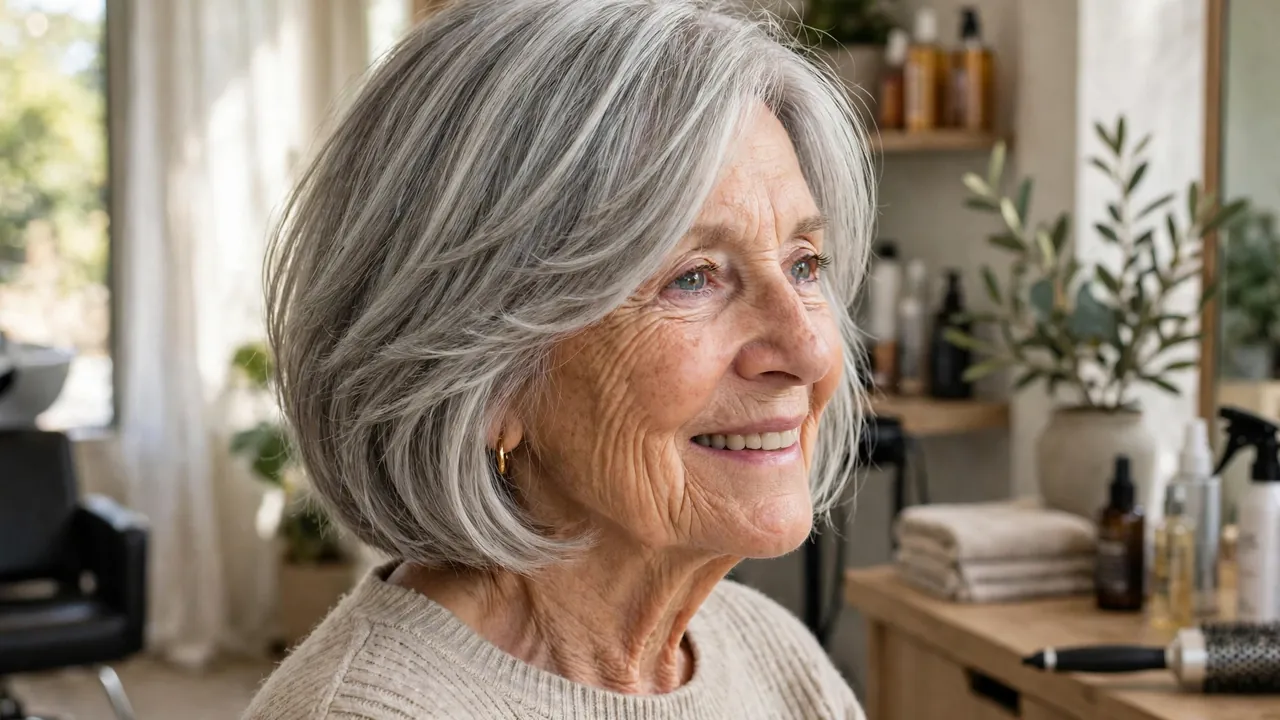
A layered bob adds movement and lift, which is exactly what fine hair needs. Layers through the crown create volume at the top, while the length around the face keeps the shape soft. The layers should be long and soft, not short and choppy, because short layers can make fine hair look thinner, so ask for the layers to sit at the crown and through the top, with the length around the face kept soft.
The Short Shag
A short shag with feathered layers is a good choice for women who want texture and movement without a severe shape. The feathered ends soften the outline, the layers add lift, and the cut grows out gracefully. It suits wavy hair best, and it is one of the easiest cuts to style with fingers alone.
| Cut | Trim frequency | Daily styling | Best for | Watch out for |
|---|---|---|---|---|
| Soft textured pixie | 4 to 6 weeks | 2 to 5 minutes | Fine hair, oval and round faces | Needs frequent trims |
| Pixie with side sweep | 4 to 6 weeks | 2 to 5 minutes | Fine hair, glasses wearers | Fringe grows fast |
| Chin length bob | 6 to 8 weeks | 5 minutes | Straight and wavy hair | Blunt ends look heavy |
| Layered bob | 6 to 8 weeks | 5 minutes | Fine and thinning hair | Short layers thin the ends |
| Short shag | 6 to 8 weeks | 0 to 5 minutes | Wavy hair, low effort | Can look messy if overgrown |
| Short layered crop | 6 to 8 weeks | 5 minutes | Thick hair, strong texture | Needs thinning to avoid bulk |
Short Haircuts for Women Over 70 with Thin Hair
Short haircuts for women over 70 with thin hair need a different approach from cuts for thick hair, because the goal is to create the look of fullness without removing weight the hair cannot spare. Haircuts for women over 70 with thin hair should keep the ends as full as possible, use long layers only, and build volume at the roots rather than through the lengths.
The best cuts for thin hair are a chin length bob with a blunt but softened outline, a layered bob with long layers only, and a pixie with texture on top. Thinning is a common concern with age, and a plain explanation of hair loss helps to separate normal age related change from something worth raising with a doctor. What they share is a full outline at the bottom, because a full outline makes the ends look thicker, and volume created at the roots, where it shows, rather than in the lengths, where it thins the hair out.
Colour can help thin hair look fuller too. A single flat colour can make thin hair look flatter, while subtle lowlights a shade or two darker than the base create depth that makes the hair look denser. Highlights that are too blonde or too contrasted can have the opposite effect, because they show the scalp through the hair more clearly. Talk to your colourist about lowlights rather than highlights if fullness is the goal.
Styling for thin hair is about root lift. Blow dry the roots upwards with a small round brush, or use a volumising powder at the crown, and avoid heavy creams and oils that weigh the hair down. A light mousse applied to damp roots gives lift without weight, and dry shampoo on day two adds texture and grip that makes thin hair easier to style.
Grey Hair, Colour Choices and Texture
Grey hair is not just a colour change, it is a texture change. Grey hair is often coarser, drier and more wiry than pigmented hair, and it can frizz more easily. A cut that works for grey hair needs to account for that texture, with enough layering to control the wiry pieces and a shape that does not depend on smoothness to look good.
Embracing natural grey is a strong choice after seventy, and a good short cut shows it off. Silver and white hair catch the light beautifully in a textured pixie or a layered bob, and the contrast with the skin can be striking in the best way. Keep grey hair moisturised with a good conditioner, because dry grey hair looks dull and wiry, while moisturised grey hair looks bright and soft. A purple shampoo used once a week keeps white and silver hair from turning yellow, but use it sparingly, because overuse can leave a purple tint.
If you prefer to colour your hair, softer is better after seventy. A harsh dark colour can look severe against mature skin, while a softer shade with dimension looks natural and kind. Consider a shade close to your natural colour with some grey blending, rather than a flat dark dye that creates a hard line at the roots as it grows out. Grey blending, where the colourist weaves lighter pieces through the grey, grows out gracefully and needs less frequent touch ups.
The main point is simple. Work with the grey, not against it, and choose a cut and a colour that suit the hair you have now.
Low Maintenance Haircuts for Women Over 70
Low-maintenance haircuts for women over 70 are cuts that look good with a wash and a quick finger style, no round brush, no straightener, no long routine. The soft textured pixie, the chin length bob and the short shag all qualify, because their shapes are built into the cut rather than created by styling.
The routine for a low maintenance cut after seventy should be short. Wash two to three times a week with a gentle shampoo, condition the ends, and let the hair air dry or blow dry on low heat for a few minutes. Apply a small amount of texturising cream or light mousse to damp hair if you want a little hold, and leave it alone after that. A silk pillowcase reduces frizz overnight, and a quick refresh with dry shampoo at the roots on day two is usually enough.
The other part of low maintenance is the salon schedule. A cut that needs a trim every four weeks is not low maintenance, even if the daily styling is easy. If you prefer longer gaps between visits, choose a bob or a pixie bob over a short pixie, because the longer shape holds for six to eight weeks. Tell your stylist how often you can realistically visit, and let that number shape the cut.
Glasses, Face Shape and the Right Cut
Many women over seventy wear glasses, and the cut should work with them, not against them. A fringe that falls into the frames will annoy you every day, so keep the fringe long enough to sit above the glasses or swept to the side clear of the frames. A pixie with a side sweep works well with glasses, because the sweep clears the frames and the open forehead balances the frames. A bob that ends at the chin also works, because it sits clear of the frames and does not compete with them.
Face shape matters too. An oval face suits almost any short cut. A round face needs height on top and slim sides, so a pixie with volume at the crown is better than a rounded bob. A long face needs a little width at the sides and a soft fringe to shorten the forehead. A square face needs softness around the jaw, so a layered bob with face framing pieces works better than a severe pixie. If you are unsure about your face shape, ask your stylist to confirm it before the cut, because the right short cut depends on it.
Neck length also plays a role. A shorter cut with a tapered nape suits a longer neck, while a bob that covers the nape suits a shorter neck and gives more coverage. Talk about this with your stylist, because it is a detail that makes a real difference to how the cut looks from behind.
What to Ask Your Stylist
Bring photos of cuts you like on women close to your age with similar hair texture, not just any short cut. Photos of younger models with thick hair will mislead both you and your stylist, because the hair behaves differently. Be honest about your routine, your hands and your patience, because a cut that needs a round brush every morning will fail if arthritis or a busy schedule makes that hard.
Say this at the salon. “I want short haircuts for women over 70 that are fresh and easy. My hair is fine and I wash it two or three times a week. I want lift at the roots, softness around my face, and a shape I can style with my fingers in five minutes. Please keep the fringe clear of my glasses and give me a cut that still looks good at six weeks.”
Then ask how often you should come back, what the cut will look like as it grows, and which single product you need, if any. A good stylist will give you one product recommendation, not five, and will show you the finger styling technique in the chair so you can repeat it at home. If the stylist suggests a cut that needs daily heat styling, say so and ask for a simpler alternative.
Who Should Skip These Cuts
Short hair is not right for every woman over seventy, and the exceptions are worth naming. If you have very long hair that you love and that is still thick and healthy, there is no rule that says you must cut it short at seventy. Long hair with soft layers can look beautiful at any age, and the decision should be yours, not a rule about age.
If your hair is very curly and you love the length, a short cut can be harder to manage, because short curls need more frequent shaping to keep their form. A medium length may suit you better. If you are growing your hair for a family event, wait until after the event before going short.
Finally, if you have a scalp condition or very sparse hair in places, talk to your stylist about coverage before choosing a short cut. Some short cuts expose the scalp more than longer ones, and a cut with more coverage around the thin areas will look better and feel more comfortable. A good stylist will be honest about this and will suggest a shape that gives you the coverage you want.
FAQs
Conclusion
The best short haircuts for women over 70 are the ones that respect the hair you have now. Choose lift at the roots, softness around the face, and a shape you can style in five minutes. A soft pixie or a layered bob, in a colour that works with your grey, will look fresh, feel easy, and grow out gracefully. Bring photos of women with similar hair, tell your stylist your real routine, and pick the cut that makes you feel like yourself. That is the only test that matters.