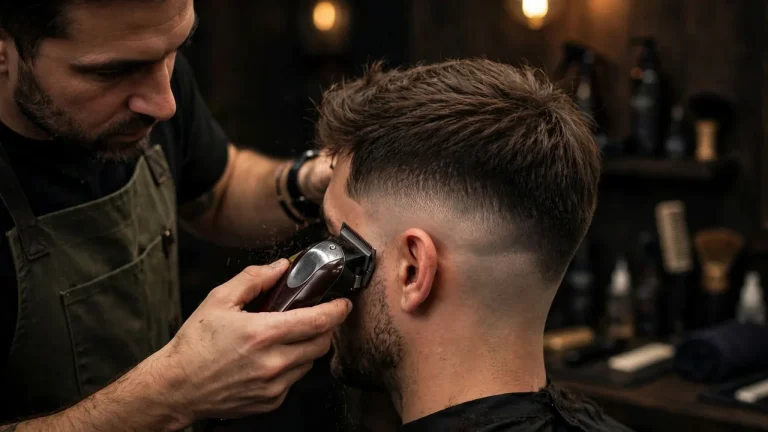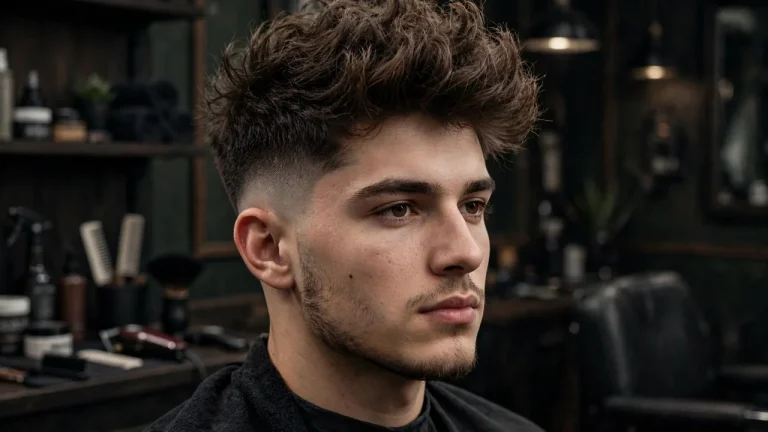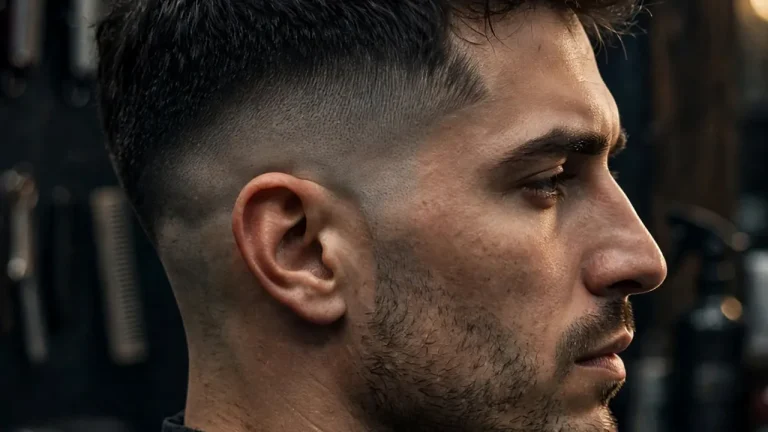
Burst Fade Haircut, Every Version Explained
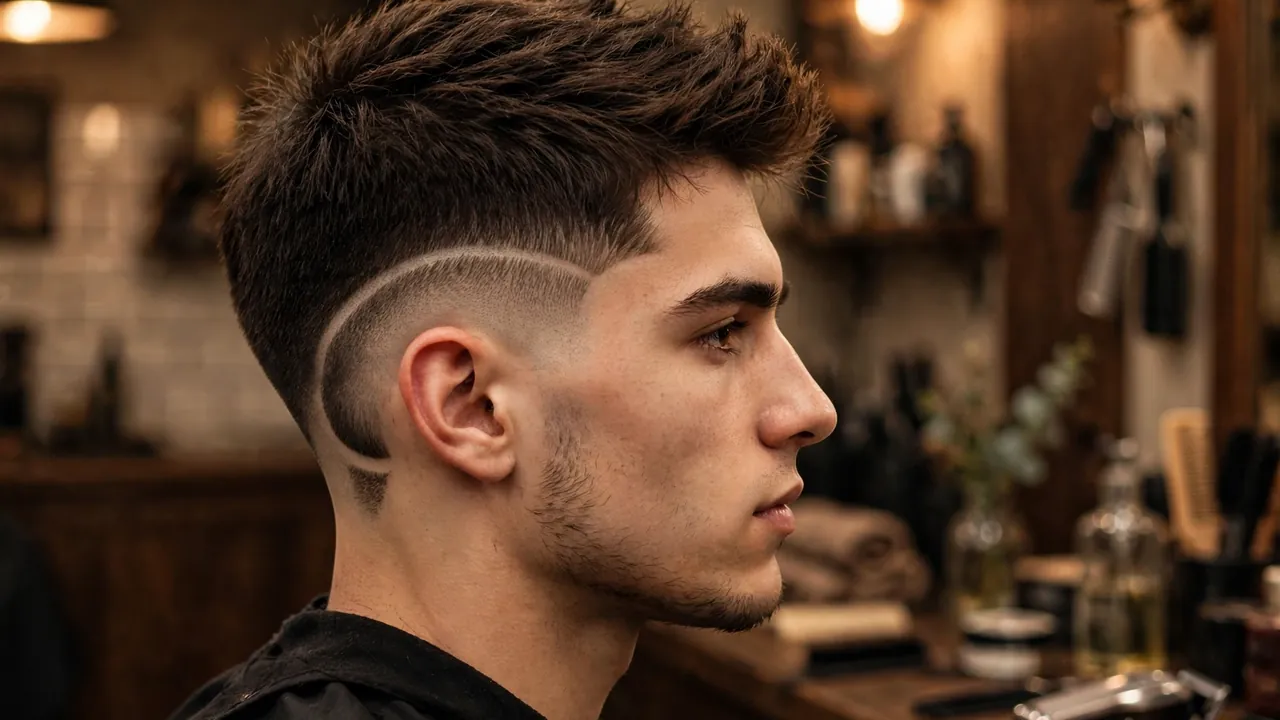
A burst fade is a fade cut in a semicircle around the ear: shortest right behind the ear, with length radiating outward in every direction like a sunburst. Unlike a standard fade that runs straight up the sides, the burst follows a curved arc from the temple down around the ear toward the nape, leaving the hair longer at the back of the neck. In my experience, it is the fade guys pick when they want something with more shape and attitude than a regular taper but less aggression than a skin fade. This guide covers what it actually is, how it differs from similar fades, every major variation, exactly what to tell your barber, and who should skip it.
What Is a Burst Fade
Picture a standard fade, then bend it. Instead of the fade line running horizontally around the head, the burst curves: it starts near the temple, dips in a smooth arc behind the ear, and rises again toward the nape. The shortest point sits directly behind the ear. From there the hair gets longer as it moves outward in all directions, which creates that radiating “burst” effect the cut is named for.
Two things define it. First, the shape: that clean C-curve around the ear is non-negotiable. If the fade runs straight, it is not a burst. Second, the contrast: the burst leaves noticeably longer hair above the curve and at the nape, so the fade reads as a deliberate design element rather than just short sides.
The cut grew out of urban barber culture, where sharp lines and strong gradients are the whole language. It took off because it flatters so many hair types: curly, coily, wavy, and straight hair all take the curve well, and it pairs with almost any top length.
How the Burst Fade Differs from Similar Fades
Three fades get mixed up. Here is the honest breakdown:
| Fade | Shape | Nape | Best for |
|---|---|---|---|
| Burst | Curved semicircle around the ear | Left longer | Guys who want visible shape and contrast |
| Taper fade | Gradual, follows the head shape | Tapered short | Clean, versatile, workplace-safe |
| Drop fade | Drops lower behind the ear | Faded out | Rounder head shapes, deeper contrast |
The simplest test: if the fade curves around the ear like a halo, it is a burst. If it runs straight back, it is something else.
Burst Fade Variations Worth Knowing
The curve is constant, but height, top length, and finish change the whole character. Straight hair takes the burst well too, though it needs texture on top so the longer hair does not lie flat against the fade. (It also pairs with other statement cuts: see our Edgar haircut guide for that version.) Here are the versions that matter. (A YouTube video tutorial on this cut has a large photo gallery of variations.)
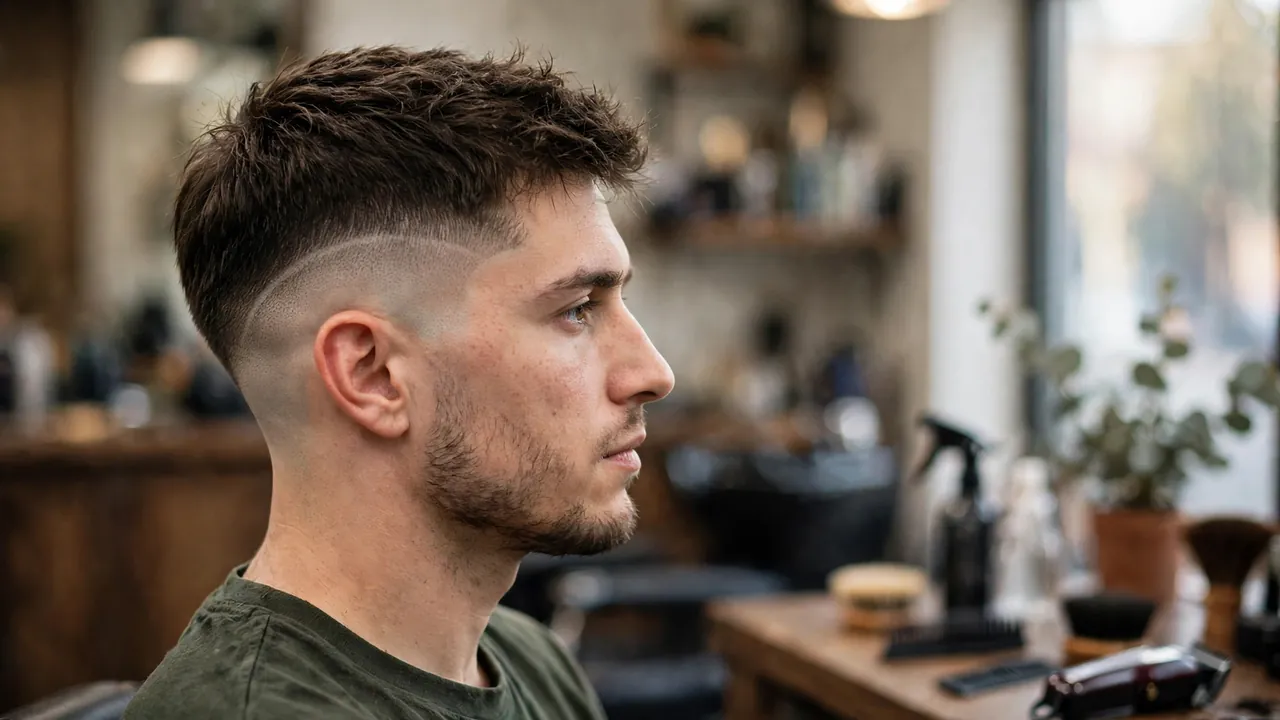
The Low Burst
The fade sits just above the ear, subtle and clean. This is the entry-level burst: visible shape without drama. It pairs well with short to medium tops and works in settings where a high fade would draw stares. If you are trying the burst for the first time, start here.
The Mid Burst
Starts around the temple for stronger contrast and a more sculpted look. The curve becomes a real design feature at this height. Works beautifully with textured or wavy tops where the contrast between the tight curve and the movement above does the talking.
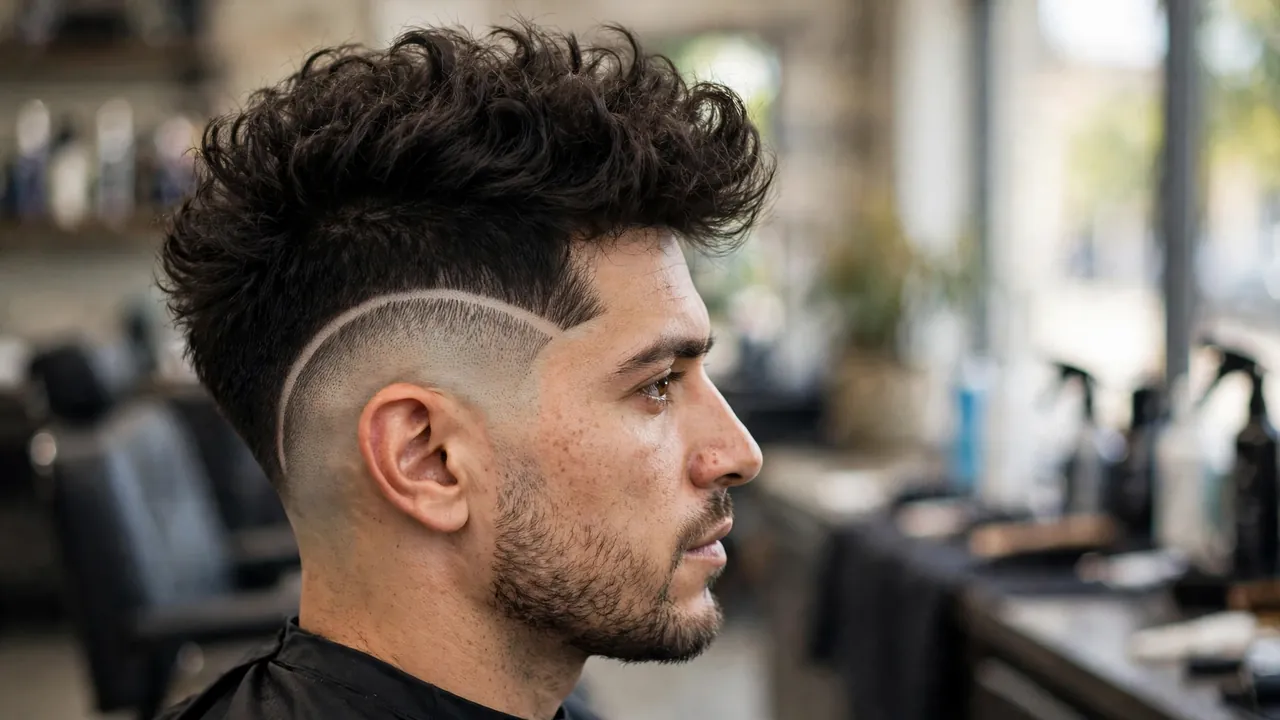
The High Burst
Climbs high with maximum contrast. Bold, graphic, unmissable. This is the version you see in barber Instagram posts because it photographs so well. It demands confidence and a barber with a steady hand, because every millimeter of the curve shows. Rounder faces benefit most from the height, since the lift adds vertical length.
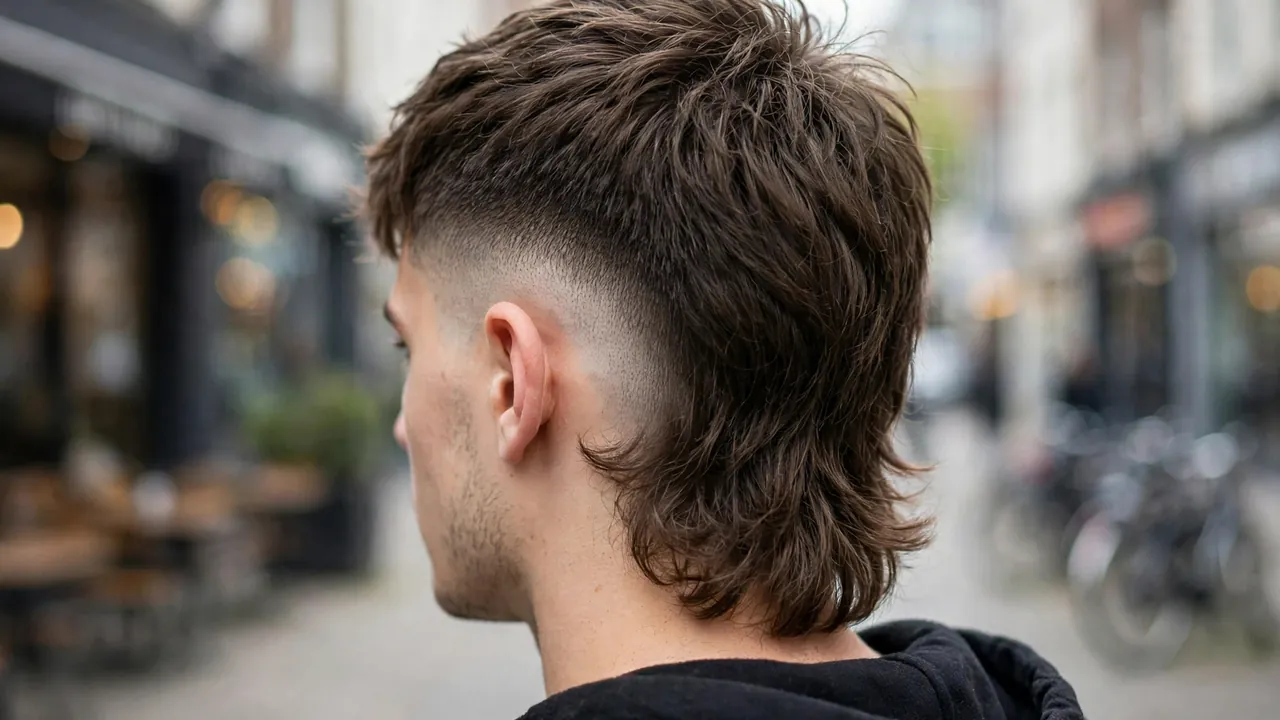
The Burst Mullet
The most searched pairing for a reason. The burst handles the sides while the back grows long, which gives the mullet a modern frame instead of its dated reputation. The curve around the ear connects the short front to the long back, so the whole cut reads intentional. Easily the boldest mainstream option here. (Our mullet guide covers the back length in detail.)
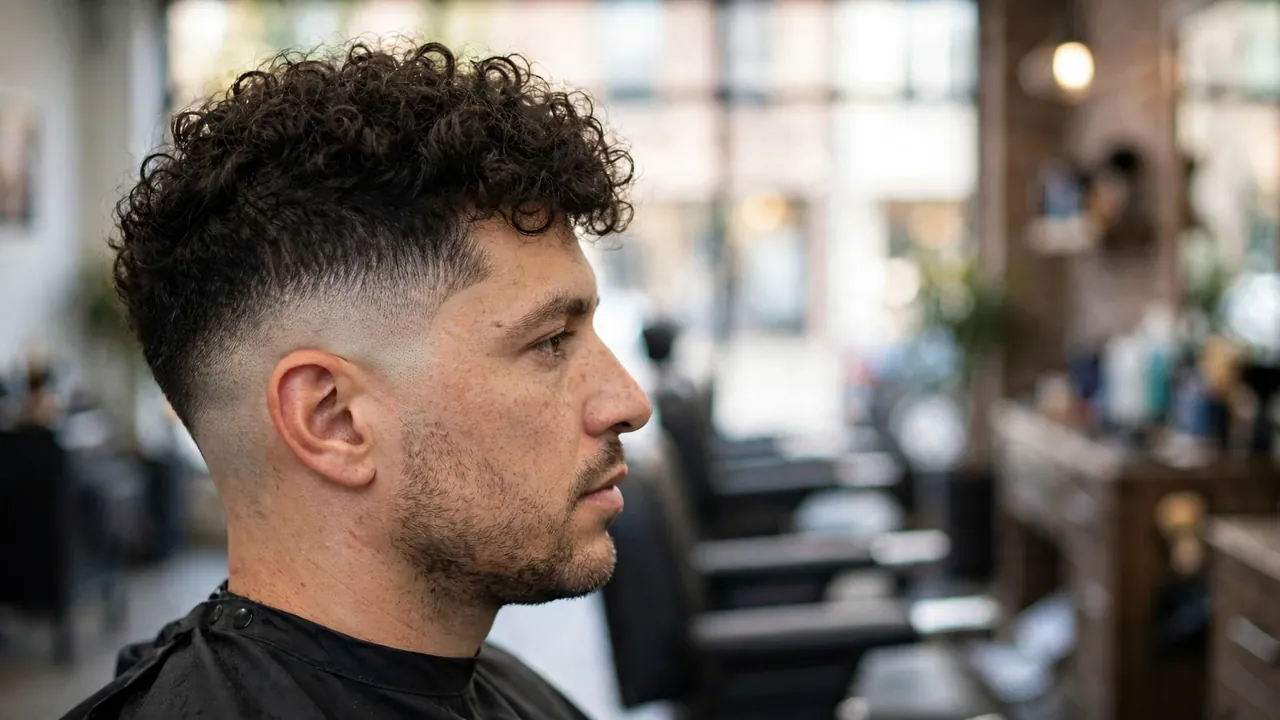
The Curly Burst
Curls and the burst curve were made for each other. The tight fade makes curls on top look even fuller by contrast, and the curve gives coily and curly textures a clean frame. It is a strong pick for Black men with tight coils, where the curve frames dense texture cleanly and the soft transition keeps shrinkage from exposing a harsh line. Ask your barber to keep the transition soft rather than harsh, so the curls melt into the fade instead of hitting a wall.

The Burst Buzz Cut
Short all over with the burst carved around the ears. Minimal styling, maximum shape. This is the lowest-maintenance way to wear the cut: the fade does all the visual work, so the top needs nothing. A strong pick for guys who want edge without a morning routine.

The Taper Burst
A softer hybrid: the burst curve is there, but the fade stays longer and more gradual instead of dropping to skin. Less contrast, more wearable. Think of it as the burst for guys who like the shape but not the drama.
The Burst with a Beard
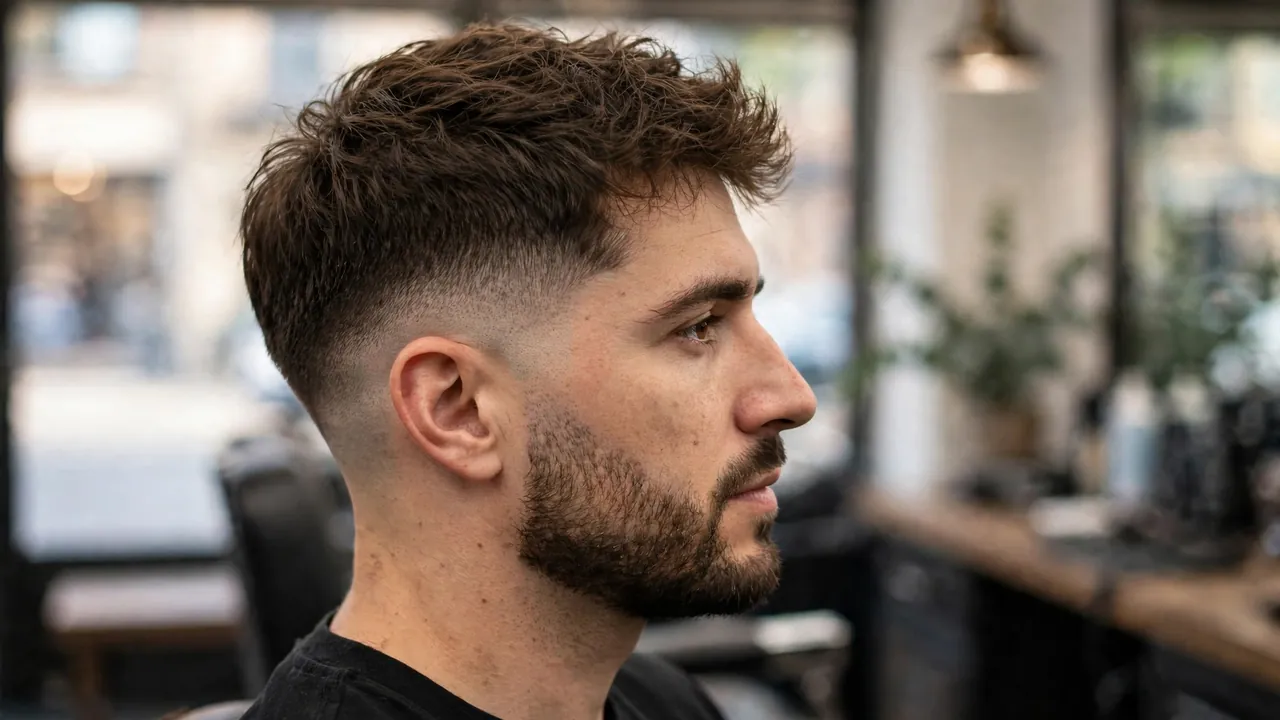
The burst pairs well with a beard, because the fade around the ear can continue into the beard line for one unbroken blend. Ask your barber to fade the sideburn into the beard rather than cutting a hard line between them, so the curve and the jawline read as one shape. Keep the beard medium or shorter, since a very long beard against a tight burst can look disconnected.
What to Ask Your Barber
Say “burst fade” and most barbers will know the curve, but the phrase alone does not specify height, top length, or how tight the fade goes. Be specific:
“I want a burst fade. Curve it around the ear in a clean semicircle, shortest right behind the ear. I want a [low / mid / high] burst, faded to [a #1 / skin] at the shortest point. Keep the top [length] and leave the nape longer. Clean up the line around the curve, but keep the transition smooth.”
Three things that keep the appointment on track:
Point to the Curve, Not Just the Fade
Bring a side-profile photo. The burst lives or dies on the shape of that arc, and a front photo does not show it. Your barber needs to see the exact curve you want from the side.
Agree on the Shortest Point
“How short at the tightest part?” is the question that prevents surprises. Skin, #0, #1, these look very different on the curve. Decide before the clippers touch your head.
Ask Them to Show You the Arc Before Detailing
A good barber will rough in the curve and check it with you before refining. The arc is hard to move once the detail work starts, so confirm the shape early.
How to Style It at Home
The fade needs no daily work. The top does. Match your routine to your top length:
- Short tops (buzz to 2 inches). Almost nothing. A little matte product if you want texture, or nothing at all. The burst carries the cut.
- Medium textured tops. Sea salt spray or texture powder on damp hair, then fingers or a quick blow-dry. The contrast between the messy top and the clean curve is the whole point. (For tops that need real volume, see our blowout taper styling guide.)
- Curly tops. Curl cream on damp hair, then leave it alone or diffuse. Do not brush curls dry; it breaks the pattern and fights the clean frame the burst creates.
- Longer tops (mullet, mohawk). These need real styling. Pomade or strong-hold product, and actual time in the mirror. The burst keeps the sides sharp while you handle the length.
One rule for all of them: keep product off the faded curve. Product on skin-faded areas looks greasy and ruins the clean gradient.
How Often to Get It Trimmed
The curve blurs first. Around week two to three the arc loses its edge, and a blurry burst just looks like a grown-out fade. Stay ahead of it:
| Service | Frequency | Notes |
|---|---|---|
| Burst line cleanup | Every 2–3 weeks | Keeps the arc sharp; quick appointment |
| Full cut | Every 3–4 weeks | Reshape top and re-cut the curve |
| At-home neckline touch-up | Weekly if needed | Trimmers on the nape only, never the curve |
Do not touch the curve yourself between visits. The arc is the hardest part to cut and the easiest to ruin. Leave it to the barber.
Who Should Skip It
Strong cut, but honest exclusions:
You Need the Most Conservative Cut Possible
Even the low burst has visible shape and attitude. In the strictest corporate or formal settings, a plain taper reads safer. Know your room.
Your Barber Struggles with Curves
This sounds harsh, but the burst is a technical cut. If your barber’s fades are decent but their designs and curves are shaky, do not make the burst their practice piece. The arc shows everything.
You Have Significant Thinning on Top
The burst draws the eye with its strong curve, and then the eye travels up to the top. If the top is thinning, the contrast works against you. A uniform short cut keeps the focus even.
You Will Not Maintain It
A blurry burst looks worse than a blurry regular fade, because the shape is the whole point. If you will not see your barber every few weeks, pick a fade that degrades gracefully.
FAQs
Conclusion
The burst earns its hype. That curved arc around the ear gives a regular fade something it usually lacks: real shape. It works across hair types, pairs with everything from a buzz cut to a mullet, and photographs as well as any cut in the shop. But it is a technical cut that punishes a shaky hand and a lazy maintenance schedule. Pick your height, bring a side photo, confirm the curve before the detail work, and keep the appointments every few weeks. Do that and the burst will do the rest. (This step-by-step video tutorial shows the full cut from the barber’s chair.)
For more on fades with volume up top, see our guides to the drop fade haircut and the high taper fade haircut, or browse the full library of haircut guides on our homepage.