Widow’s Peak Hairstyles That Turn the V Into a Style Advantage
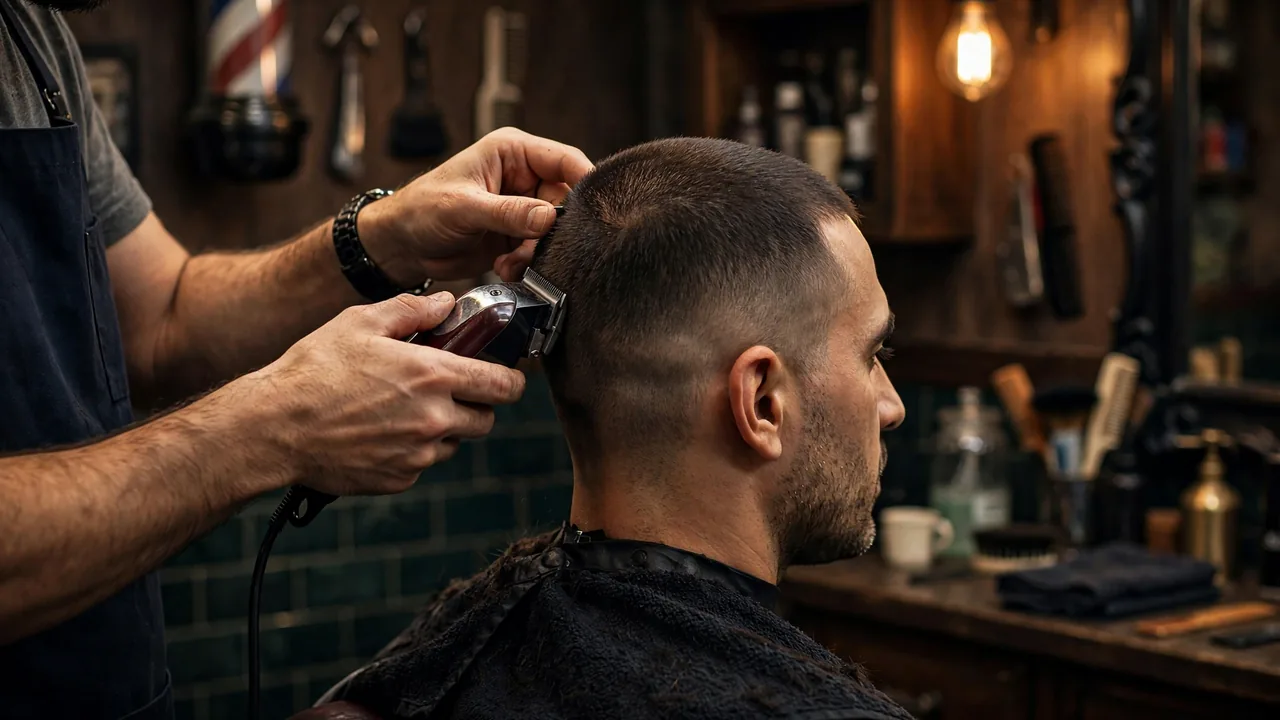
The best widow’s peak hairstyles for men work with the V-shaped hairline instead of fighting it. Buzz cuts, textured crops, side parts and quiffs all turn the peak into a feature, while smart part placement keeps the V from dominating the look.
These are the cuts men search for when they want the V to look intentional. Each of the widows peak hairstyles men will find below comes with styling notes, so bring your favorite to your next appointment. If you are still weighing cut families, the guides on our homepage cover every major style in one place.
A widow’s peak is simply the point where your hairline dips down in the center of your forehead. Many men are born with it, and it has nothing to do with going bald. Once you stop treating it as damage to hide, the styling choices get much easier.
This guide covers the haircuts that suit a widow’s peak, the exact words to use with your barber, a maintenance schedule, the styles to avoid, and an honest take on reshaping the hairline.
What a Widow’s Peak Actually Is (And What It Is Not)
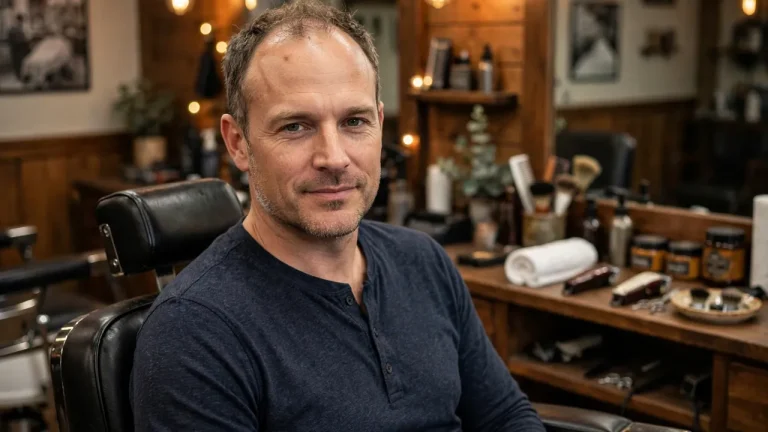
A widow’s peak is a natural V-shaped point at the center of the hairline, usually a genetic trait you are born with. If childhood photos show the same point, that is your natural hairline, not hair loss in progress. The widow’s peak entry on Wikipedia describes it as a distinct, inherited hairline shape.
This matters because the styling advice for a genetic widow’s peak and the advice for a receding hairline are almost opposites. A peak you were born with stays put, so you can build a long-term style around it. A hairline that is actively moving back needs cuts that plan for change.
How to Tell a Widow’s Peak From a Receding Hairline
Compare old photos. A widow’s peak looks the same at twenty as at fifteen: a clean V in the center with solid hair on either side. A receding hairline creeps back at the temples first, forming an M shape that keeps moving. If your temples are thinning, you are likely dealing with recession, and our guide to haircuts for a receding hairline is the better starting point.
| Feature | Widow’s Peak | Receding Hairline |
|---|---|---|
| Shape | V point at the center of the forehead | M shape, thinning first at the temples |
| Onset | Present from a young age, often since childhood | Develops gradually over time |
| Progression | Stays in place year after year | Keeps moving back, sometimes unevenly |
| Symmetry | Usually even on both sides | Often uneven, one temple recedes faster |
| Best response | Style with it, show it or soften it | Cuts that disguise thinning and plan for change |
Some men have both: a natural peak plus temple recession on top. Then the peak sharpens as surrounding hair thins. Treat the recession as the main problem and the peak as a detail.
The Best Widows Peak Hairstyles Men Can Try
Every good widow’s peak cut follows one of two philosophies. Either you show the peak and make it look intentional, or you soften it so the eye never lands on the V first. The right choice depends on how sharp your peak is, how thick your hair is, and how much morning effort you will spend.
The Buzz Cut Approach
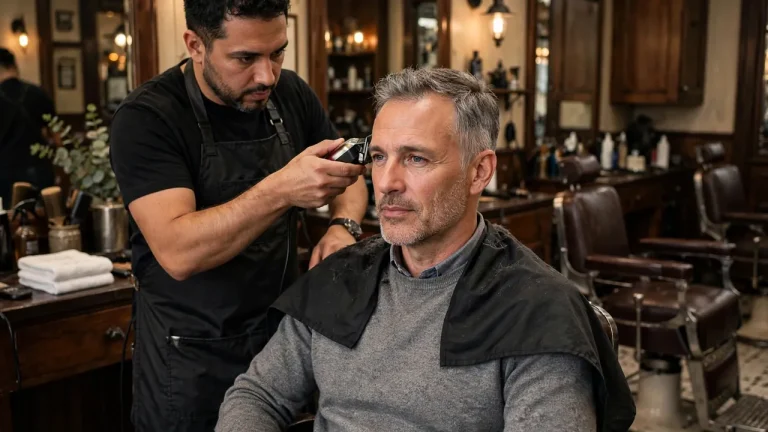
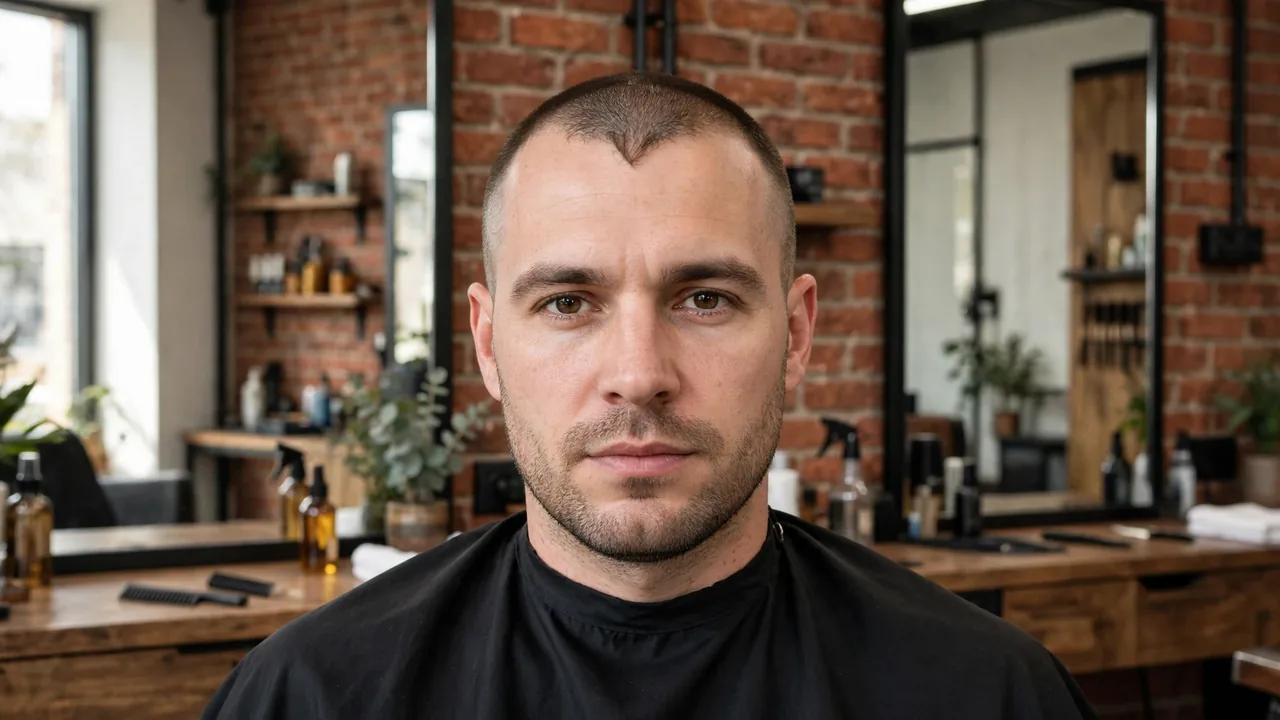
The buzz cut is the boldest way to own a widow’s peak. One short, even length removes the contrast between the peak and the surrounding hair, so the V reads as a clean hairline detail. A number two or three guard keeps enough coverage to look deliberate.
Ask your barber to follow the natural V with the trimmers instead of trying to round it off or straighten it. Forcing a straight line across a pointed hairline grows out badly within days. Keeping the edges clean every two weeks is what makes this look sharp. With more scalp showing, sunscreen on sunny days is worth adding to the routine.
Textured Crop and Fringe
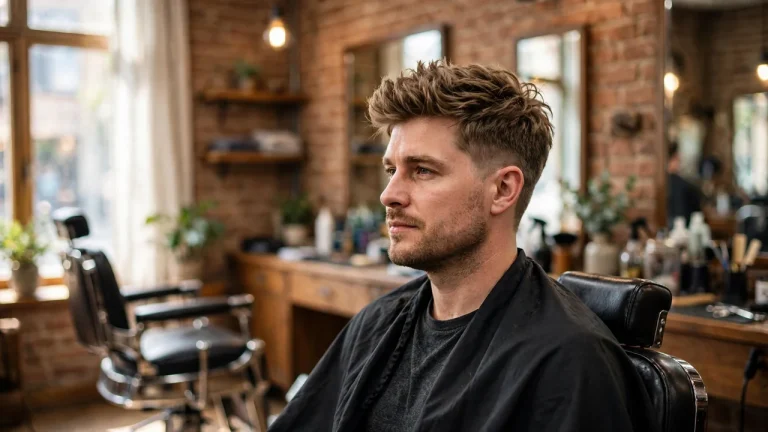
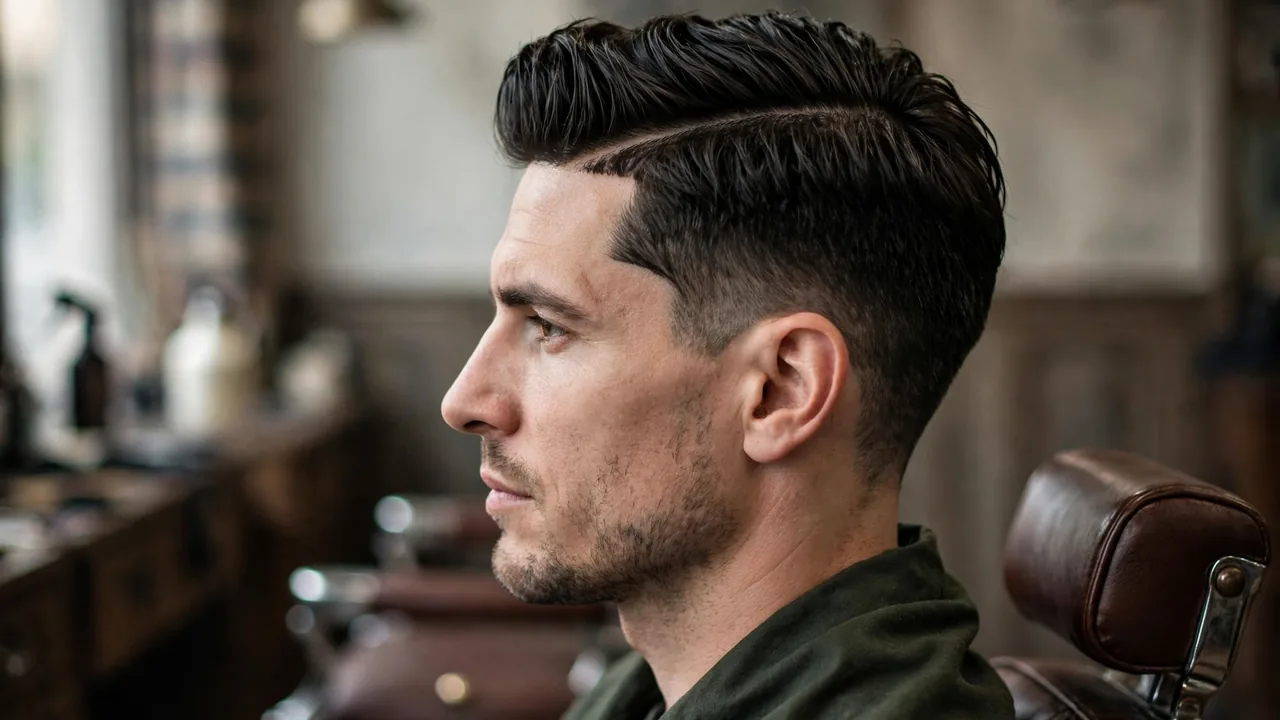
A textured crop brushed forward is the best softener in the book. The fringe falls over the forehead and blurs the point of the V, while choppy texture breaks up the hard line. It works especially well on deep or sharp peaks, because the extra coverage takes the edge off without looking like a cover-up.
Keep the fringe long enough to sit on the forehead, roughly two to three inches, and ask for point cutting through the ends so it falls in pieces. Our textured fringe guide covers the full routine, with one extra rule for a widow’s peak: blow-dry the fringe slightly off-center so it does not split at the point of the V.

Side Part and Comb Over
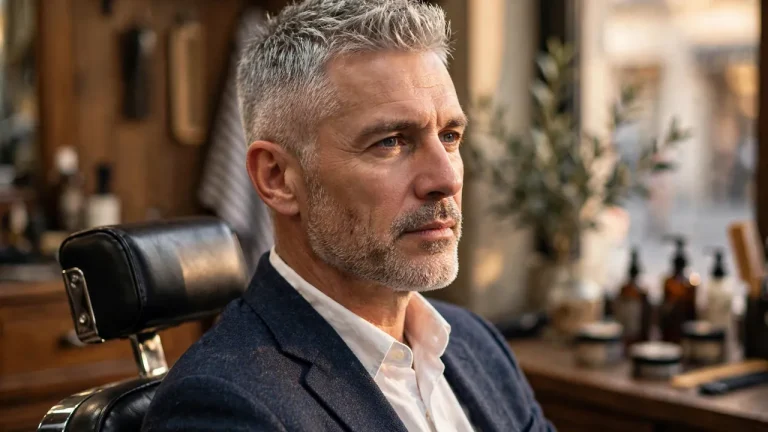
A side part is the classic widow’s peak move because it shifts focus sideways, away from the center of the forehead. Part the hair a finger or two off-center on the side it naturally falls. The classic side part pairs well with tapered sides, which keep the outline tidy.
A modern comb over works on the same principle, with one hard rule: sweep the hair diagonally across the forehead, never straight over the peak. Combing directly over the V leaves a thin patch that draws more attention than the peak ever did.
Quiff and Pompadour Styles
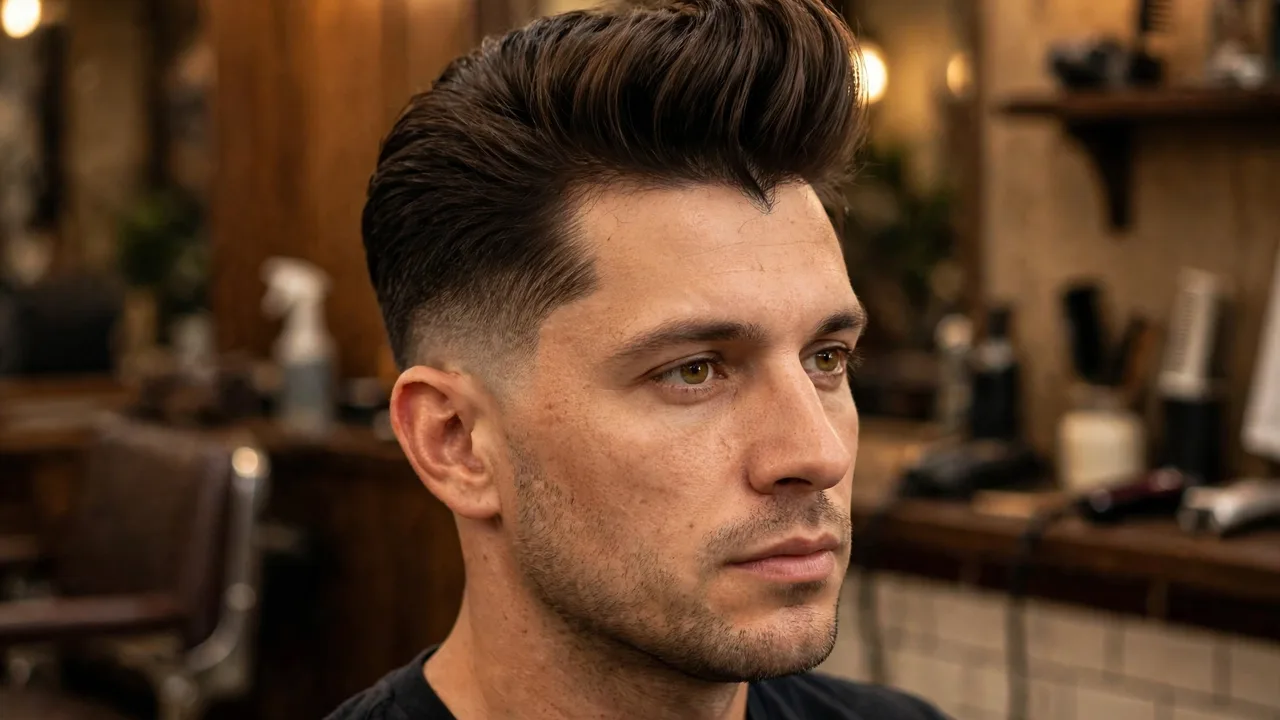
Height is the peak’s best friend. A quiff or pompadour pulls the eye upward, and the widow’s peak becomes the launch point for the style. The V helps here, giving the front a natural center to build around.
You need three to four inches on top. Blow-dry the front up and back, working a matte clay or medium-hold pomade through the roots for lift. Wavy hair may need a stronger product to keep the front from collapsing by midday.
Hair Type, Fade Height, and Beard Pairing
Your hair type changes which version of these cuts works best. Curly and coily hair softens a sharp V on its own, because the curl breaks up the hard line, so a textured crop or a short curl on top needs only a curl cream and a light hand with product. Thin hair suits the same short, even lengths as the buzz section, with matte clay or texture powder adding the look of density, while heavy pomade flattens it and makes the peak stand out more. Thick hair needs the opposite treatment, with layers and texture taken through the top so bulk does not bury the shape. Fade height matters just as much. A low taper is the safest choice when you want to soften the V, a mid fade gives a balanced modern outline, and a high skin fade sharpens the peak, so pick it only if you want the V on show.
Two more styles sit between the sections above and are worth knowing. A crew cut is the middle ground between a buzz and a crop, with short sides and about an inch to an inch and a half on top that can be pushed slightly to one side. A slick back is the deliberate show-it option, and it needs three to four inches on top plus a water-based pomade, blow-dried up and back so the V becomes the starting point of the style rather than something to hide. A short boxed beard or neat stubble balances the whole look, as long as the cheek line stays clean so the beard and the peak are not competing for attention.
How to Style a Widow’s Peak at Home
The daily routine is simpler than most men expect. Start with damp hair, because dry hair around the peak springs back to its natural direction. Blow-dry the front where you want it to sit, pushing the hair away from the part with your fingers or a vent brush. Add product once the shape is set, working a pea-sized amount from mid-length to ends.
The Exact Barber Script for a Widow’s Peak
Use these words in the chair and you will skip the most common miscommunication. Say: I have a widow’s peak and I want to work with it, not against it. Please keep the peak defined rather than rounding it off, and use the point of the V as the reference for where my hair starts. On the sides I want a [taper, fade or undercut], and on top I want [your chosen style] with enough length to [sweep back, push forward or part to the side].
Then add the one constraint that matters most. For example: I want to show the peak, so keep the front clean, or: I want to soften it, so leave the fringe long enough to cover the point. End with a check: does that plan suit my hairline? A good barber will adjust on the spot.
A Simple Morning Routine
Dampen the front if it dried overnight into an awkward split, because fixing the ends without resetting the roots never holds. Blow-dry the fringe first, directing it where you want it to live for the day. Work in a small amount of product, matte clay for texture or cream for a natural finish. The routine takes five to ten minutes once the cut is right.
Maintenance Schedule for Widow’s Peak Styles
A widow’s peak only looks intentional when the edges stay clean. The moment the outline goes fuzzy, the V starts reading as neglect instead of style. Use this schedule to stay ahead of it.
| Style | Trim every | Daily styling time | Go-to product |
|---|---|---|---|
| Buzz cut | 2 weeks | None | Light moisturizer for the scalp |
| Textured crop | 3 to 4 weeks | About 5 minutes | Matte clay |
| Side part | 3 to 4 weeks | About 10 minutes | Pomade or styling cream |
| Quiff or pompadour | 4 weeks | About 15 minutes | Blow dryer plus pomade |
| Slick back | 4 weeks | About 10 minutes | Water-based pomade |
Between appointments, clean up the neckline with a trimmer if you own one, but leave the peak itself alone. Redrawing the V at home is how men end up with a crooked hairline. Let the barber handle the point.
Styles to Avoid With a Widow’s Peak
A center part is the biggest mistake. It draws a straight line from the crown right down to the peak, making the V the single focal point of the whole head. An off-center part always looks better, even if it sits only slightly to one side.
Combing the hair straight forward over the peak is the second trap. The hair thins out right at the point and the result reads as a sparse patch. If you want forward coverage, a textured fringe with real density is the fix.
Very long, one-length hair without layers can also work against you, because the weight pulls it flat and the peak stands out. If you want length, ask for layers through the front. Heavy, wet-look gels cause the same flattening, so stick with matte or natural-finish products.
Who Should Consider Reshaping or Removing It
Here is the honest answer: most men should not. A natural widow’s peak is a normal hairline, and the styling options above handle it well. But if the peak still bothers you after trying these cuts, options range from temporary to permanent.
The low-commitment route is styling first. Beyond that, tweezing or waxing can soften the point but needs regular upkeep. For a long-term change, laser hair removal or electrolysis can reshape the hairline, and that is a conversation for a dermatologist rather than a barber, since a bad reshape looks worse than any peak. This step-by-step shaving guide walks through the at-home trimming approach if you want to test a softer hairline first.
One exception: if what you thought was a widow’s peak is actually your temples receding around a central point, styling the peak is the wrong project. If recession is the real story, start with our haircuts for balding men guide instead, since those cuts are designed for hair that keeps changing.
FAQs
Conclusion
A widow’s peak is a hairline feature, not a hairline problem, and the right cut treats it that way. Pick your philosophy, show it or soften it, use the barber script, and keep the edges clean on schedule. Do that and the V becomes part of a style that looks deliberate. These widows peak hairstyles men try once usually become long-term favorites.