Long Hair with Curtain Bangs and Layers That Move
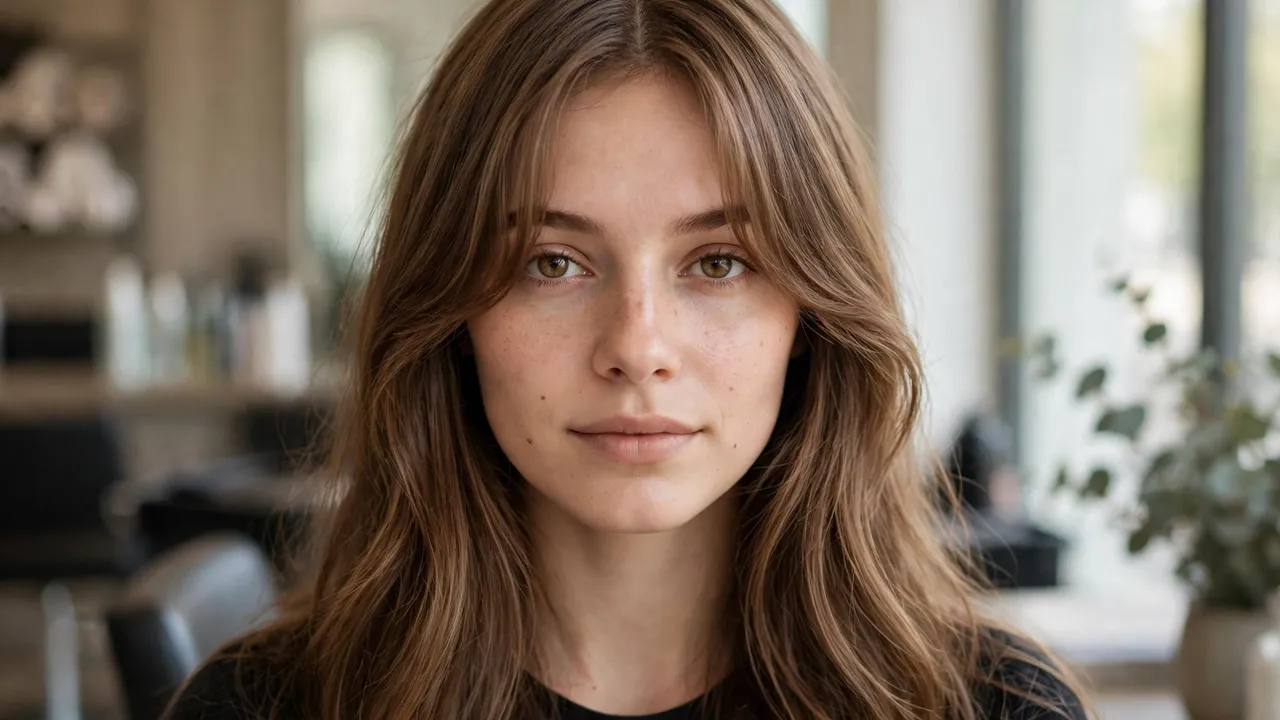
Long curtain bangs are face framing pieces that start around the cheekbone or jaw and blend into the rest of your hair, parted in the middle so they fall to each side. They give long hair shape around the face, keep your length, and grow out into soft layers instead of an awkward fringe stage.
What Long Curtain Bangs Look Like
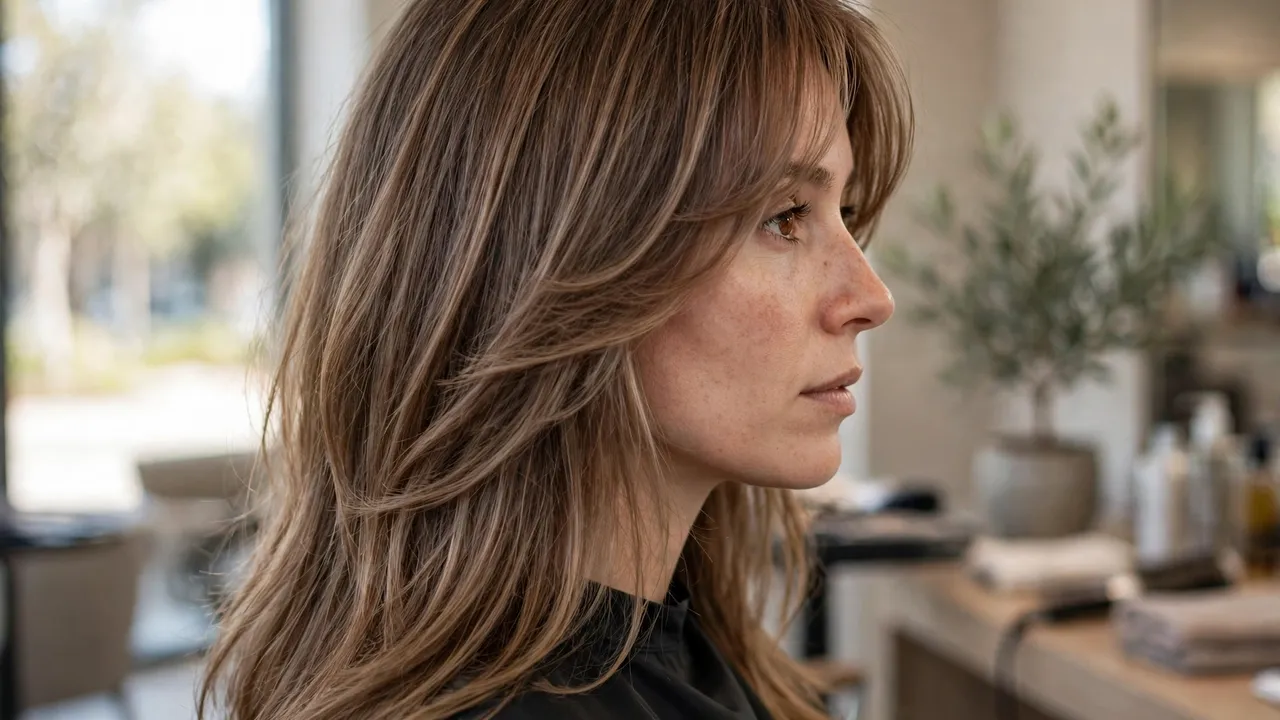
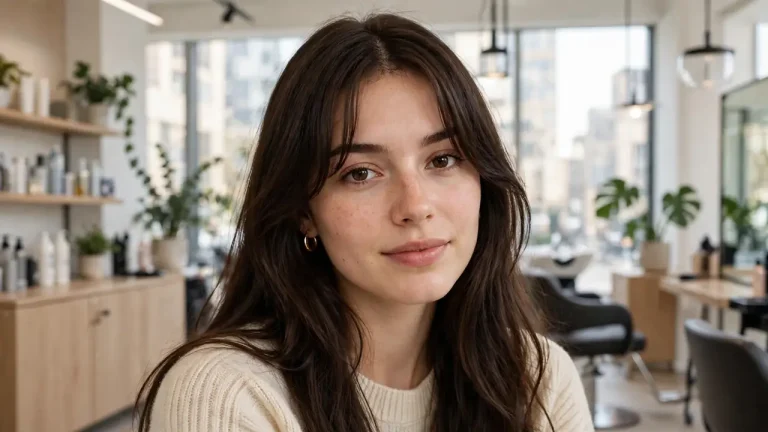
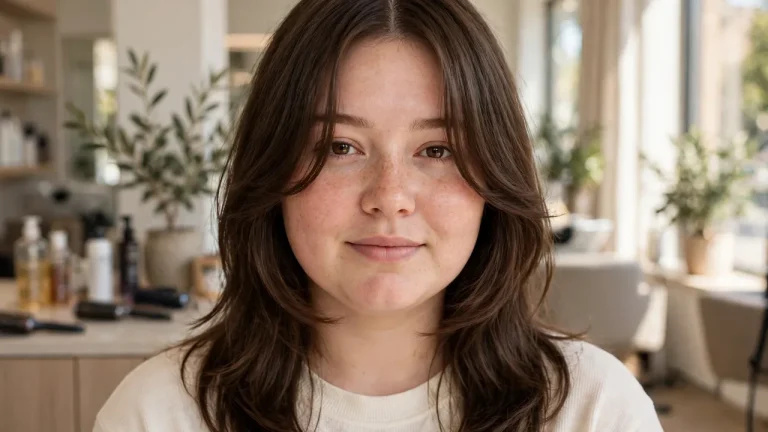
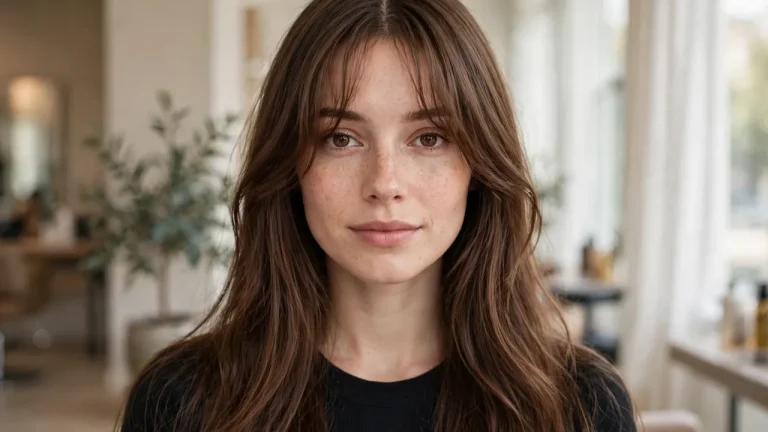
Long curtain bangs are the gentlest version of bangs you can get. The shortest piece sits in the centre, usually around the eyebrows or the cheekbones, and the sides get gradually longer until they blend into the rest of your hair. A centre part opens them up, so your forehead stays partly visible instead of being hidden behind a straight line of fringe. For background on how fringe styles are classified, see the overview of bangs as a hairstyle.
The reason this pairing works so well is balance. Long hair can look heavy and flat when it is all one length, especially if your hair is thick. A curtain fringe breaks up that weight around the face, draws attention to your eyes and cheekbones, and gives the front of your hair a finished shape even on days when you do nothing more than brush it and go. Curtain bangs long hair pairings are the softest version of this style, and long hair curtain bangs keep the fringe light enough that it never hides your face. Because the bangs are long, they blend into layers instead of sitting apart from the rest of the cut, so the whole style reads as one haircut rather than a fringe stuck onto long hair.
This style also suits a wide range of hair textures. Straight hair gets a clean, polished sweep. Wavy hair gets natural bend that makes the bangs look effortless. Curly hair can wear a longer, looser version that opens up the face without shrinking into tight curls, though the cut needs to account for how much your curls spring up when dry. If you have ever wanted bangs but worried about the commitment, long curtain bangs are the gentlest way in, because they grow out into face framing layers instead of an awkward in between stage.
Why Long Hair with Curtain Bangs Works So Well
Curtain bangs on long hair solve the most common complaint about long hair, that it looks the same from every angle. One small change at the front gives the whole cut a shape. You keep every inch of length at the back, but the front now has movement, a parting that frames your eyes, and pieces that catch the light when you turn your head.
The pairing also flatters women who wear their hair up. When you tie long hair into a ponytail or a bun, the bangs and the longer side pieces stay out and frame the face, so the updo looks soft instead of severe. A low ponytail with curtain bangs is a classic for a reason, it looks finished with almost no effort.
There is a practical benefit too. Long curtain bangs are the lowest commitment fringe you can try. A blunt fringe needs trims every three to four weeks and daily styling to sit right. Long curtain bangs need a trim every six to eight weeks, and on a lazy day you can pin them back or tuck them behind your ears and nobody would know they are there. If you try them and decide they are not for you, they simply grow into face framing layers, and within a few months the cut looks like you never had bangs at all.
Long Curtain Bangs on Straight Hair
Long curtain bangs straight hair combinations look clean and deliberate, and they suit women who like a smooth finish. On straight hair the part is crisp, the sweep is visible, and the layers fall in a smooth line, which gives the cut a polished feel even when it is air dried. That smooth face framing curtain long curtain bangs straight hair finish you see in photos comes from soft curved ends and a precise part. The challenge with straight hair is that it shows every uneven edge, so the cut needs to be precise and the grow out needs a trim every six to eight weeks to keep the shape.
If your straight hair is fine, ask for bangs that are not cut too thin, or they will separate into stringy pieces and show too much forehead. A slightly fuller section gives the sweep enough weight to hold its shape. If your straight hair is thick, the bangs can be thinned slightly at the ends so they do not look like a solid wall of hair across the face. A smoothing cream or a light serum on the ends keeps flyaways down without making the hair look greasy.
Fine Straight Hair
Fine straight hair needs a fuller bang section than you might expect. Ask your stylist to take the section a little wider at the front, so the bangs have enough hair to hold their sweep instead of splitting into thin strands. Keep the shortest centre piece at eyebrow length, not shorter, because a short centre on fine hair shows too much forehead and looks sparse. Long layers should start at the cheekbones so the bangs connect to the rest of the cut. For more ideas, see our tips on ways to make thin hair look thicker.
Thick Straight Hair
Thick straight hair holds the sweep well, but it needs weight taken out of the bang section so the fringe does not puff outward. Ask for internal layers or light point cutting through the ends of the bangs, which removes bulk without changing the outline. Keep the layers long, starting at the collarbone or below, so the top stays smooth and the ends keep their length. On humid days, a small amount of anti frizz cream keeps the bangs from expanding.
Wavy Hair with Curtain Bangs
Long curtain bangs wavy hair is the easiest version of this style to live with, because wavy hair already bends in the direction curtain bangs need. The waves give the fringe a soft curve without heat, and the bangs blend straight into the shortest layers, so the whole cut looks like one continuous shape. This is the version most women mean when they show a photo of curtain bangs and say they want it to look natural.
Styling wavy curtain bangs takes only a few minutes. Rough dry with your fingers, then use a round brush or your fingers to sweep each side away from the face. A little sea salt spray or light mousse adds texture without making the hair stiff. If the waves fall flat by midday, a quick scrunch with damp hands brings them back. Avoid heavy oils on wavy bangs, because they weigh the wave down and make the bangs look greasy at the roots.
Air Dry Routine for Wavy Bangs
On wavy hair you can skip heat altogether. Scrunch a little curl cream into damp bangs, part them in the middle, and let them air dry while you gently tuck each side behind your ears for a few minutes. The result is softer and more relaxed, and it suits weekends and days when you want your hair to look natural. A trim every eight to ten weeks is enough to keep the shape, since wavy bangs grow out well.
Blow Dry Routine for Wavy Bangs
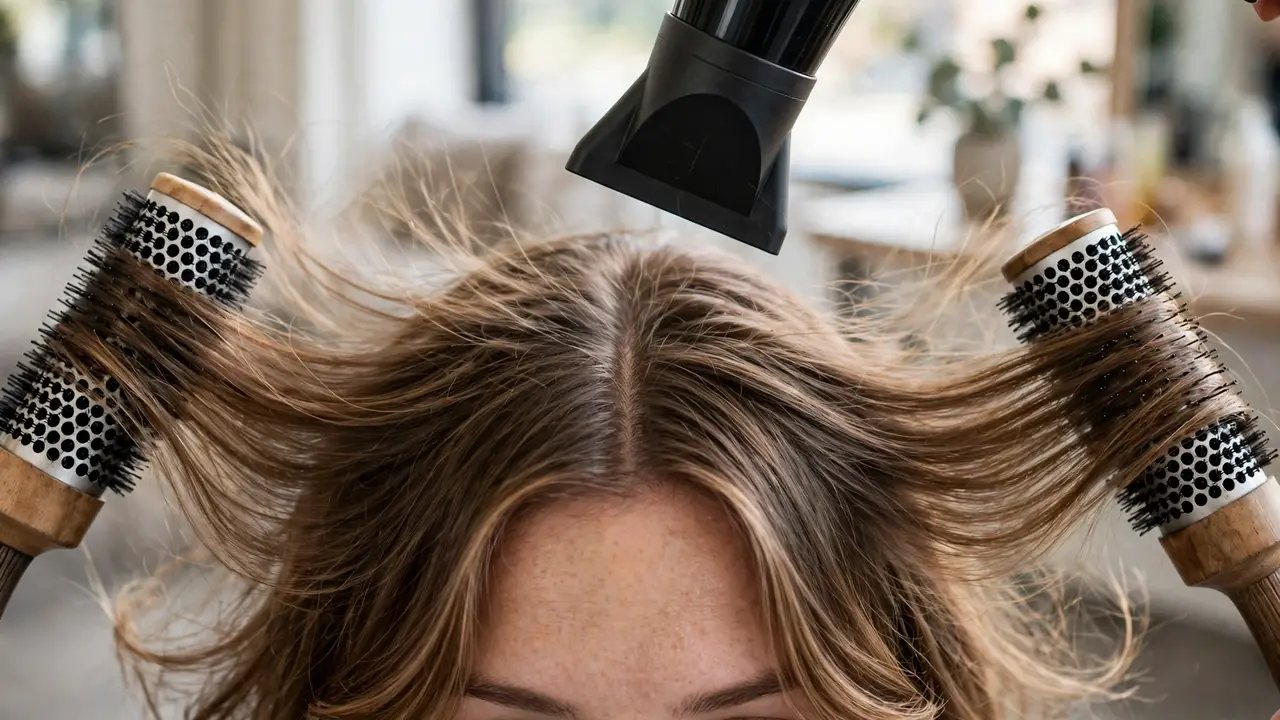
If you want more polish, use a medium round brush. Dry the bangs forward first, then sweep each side outward. Drying forward first stops the bangs from splitting into a hard part, and sweeping outward at the end creates the curtain shape. Finish with a shot of cool air to set the bend. The whole routine takes about three minutes once you know it.
Long Hair with Curtain Bangs and Layers
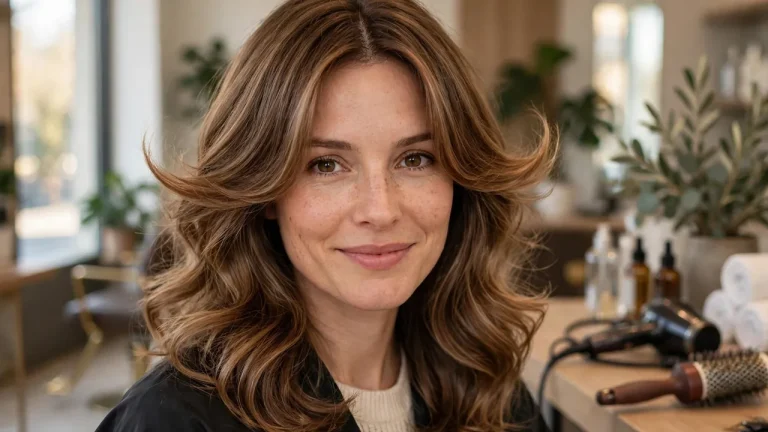
Long hair with curtain bangs and layers is the combination most stylists recommend, and the pairing works because each part does a different job. Layers remove weight from the lengths so the hair moves, while the bangs shape the front. Without layers, long hair with curtain bangs can look like two separate ideas, a fringe at the front and a heavy curtain of hair behind it. With layers, the bangs flow into the sides and the whole cut connects. Long hair layers curtain bangs combinations suit women who want movement without losing length, and curtain bangs with long hair keep the style soft even when the hair is worn down. Our guide to how layers change a haircut explains the layering logic in detail.
The best layer placement depends on your hair. If your hair is thick, longer layers starting at the collarbone or below keep the volume under control without thinning the ends too much. If your hair is fine, soft layers through the mid lengths add the look of fullness and stop the ends from looking stringy. Ask your stylist to keep the layers long and blended rather than short and choppy, because short layers on very long hair can create a shelf effect where the top looks disconnected from the bottom.
Long layers with curtain bangs also make styling easier. Layers give a round brush or a flat iron something to work with, so a quick blow dry creates bend and swing instead of a flat sheet. On air dried hair, layers help waves form instead of sitting straight and heavy. And when you tie your hair up, the layers and bangs leave soft pieces around the face instead of pulling everything back harshly, which is one of the prettiest parts of this cut.
Face Framing Layers That Connect the Bangs
Face framing long hair layered curtain bangs work best when the shortest face framing layer starts exactly where the longest bang piece ends. That overlap is what makes the cut look connected instead of pieced together. Ask your stylist to show you where the first layer will fall before cutting, and to point cut the ends so the line between bangs and layers disappears. Long curtain bangs with face framing layers suit every face shape, because the layers can be placed to lengthen a round face, soften a square jaw, or add width around a narrow chin.
Where Layers Should Start
The starting point of your layers matters more than how many layers you get. On long hair, layers that start at the chin or the cheekbones connect directly to the bangs and give the front of the cut its shape. Layers that start at the collarbone keep the length looking thick while still adding movement through the ends. Layers that start too high on very long hair can look disconnected, so ask for the first layer to sit no higher than your chin unless your hair is very thick and needs the weight removed from the top.
Before and After Long Curtain Bangs
The change from long hair with no fringe to long hair with curtain bangs is bigger than most women expect, because such a small amount of hair around the face changes the whole frame. Before, long straight hair can look like one flat length from root to tip, and the face can get lost behind the hair. After, the face has shape, the eyes stand out, and the lengths move when you turn your head. That change comes from a small amount of hair around the face, which is why so many women try this style and keep it for years.
To judge the before and after honestly, take photos in the same light, from the front and from each side, before your appointment and again a week after, once you have styled the bangs yourself a few times. The first day after a salon cut always looks better than real life, so the one week photo is the true test. If you want to see real results on hair like yours, the community at r/femalehairadvice has plenty of before and after posts from women who cut and style their own curtain bangs.
The before and after also shows in how you wear your hair up. Before the cut, a ponytail pulls everything back and leaves the face bare. After the cut, the same ponytail has soft pieces framing the face, and the style looks intentional instead of rushed. That is the detail most women notice first, and it is the reason long curtain bangs are so popular with women who tie their hair back most days.
Styling Your Curtain Bangs Each Morning
The daily routine is simple once you learn it. The goal is bend and sweep, not curls, so you want the hair to curve away from the face on each side. Pick one method below and practice it for a few days until it becomes habit.
Start with damp, not soaking, bangs. Apply a small amount of heat protectant and a pea sized amount of mousse or styling cream. Use a medium round brush, wrap the bangs forward and under, and dry them forward first, then sweep each side outward. Finish with a shot of cool air to set the bend. This is the most reliable method, and it takes about three minutes once you know it.
If you are short on time, a flat iron works well. Take each side, clamp near the roots, and pull through with a gentle outward bend at the ends. Keep the iron moving so you do not create a hard crease, and keep the heat on a medium setting to avoid damage. A light hairspray on a brush, not sprayed directly onto the fringe, will hold the shape without stiffness.
Curtain bangs sit on your forehead and pick up skin oils faster than the rest of your hair, so they need washing more often. You can wash just the bangs in the sink on days when the rest of your hair is fine, which takes two minutes and saves a full wash. Dry shampoo also works on second day bangs, but use it lightly. Spray it at the roots from a short distance, wait a minute, then brush it through. Too much product makes bangs look dusty and stiff.
Curtain Bangs by Face Shape
There is no single best face shape for curtain bangs, because the cut is adjusted to the face in front of the stylist. That said, some shapes benefit more than others, and knowing your shape helps you ask for the right length. If you are not sure what your face shape is, the steps to find your face shape before your appointment will help you measure and decide.
Round Face
Longer side pieces create vertical lines that make a round face look longer. Ask for bangs that reach at least to the cheekbones, and keep the centre short enough to show some forehead. Short, blunt bangs can make a round face look wider, so the longer curtain style is the safer choice. Avoid bangs that end right at the widest part of the cheek, since that draws attention to the width instead of balancing it. For more on shapes that suit a round face, see our guide to cuts that flatter a round face.
Oval Face
An oval face can carry almost any version of long curtain bangs. The proportions are already balanced, so the bangs are really about style rather than correction. Try a classic length that ends at the cheekbones, or go shorter for a bolder look. If you are unsure, start with a longer version and have it shortened at your next visit.
Square and Heart Faces
A square face has a strong jawline and a broad forehead, and curtain bangs soften both. The side pieces draw the eye toward the cheekbones and away from the corners of the jaw. Ask for soft, feathered ends rather than a sharp, blunt edge, and keep the length at or below the cheekbones. A heart shaped face is wider at the forehead and narrower at the chin, so curtain bangs cover part of the forehead, which balances the wider top half, while the longer side pieces add width around the jaw.
Long Face
A long face benefits from curtain bangs because the fringe shortens the look of the forehead. Ask for a slightly fuller version with the shortest centre pieces sitting at eyebrow level. Avoid very long, wispy bangs that leave most of the forehead bare, since that does the opposite of what you want.
Maintenance and Grow Out
Long curtain bangs need a trim every six to eight weeks to hold their shape, though the grow out is forgiving. When the bangs get too long, they simply become face framing layers, so you are never stuck with an awkward stage. Book a bang trim between full haircuts if your salon offers it, since many do it free or for a small fee, and it keeps the style looking intentional.
| Task | How often | Notes |
|---|---|---|
| Bang trim | Every 6 to 8 weeks | Keeps the centre length at the cheekbones |
| Full haircut and layers | Every 8 to 10 weeks | Half an inch off the ends removes split ends |
| Bang wash | As needed, often every 1 to 2 days | Wash the bangs alone in the sink to save a full wash |
| Deep condition the lengths | Every 2 weeks | Keeps long ends from drying out |
| Heat protectant | Every time you use heat | Protects the fine bang hair from damage |
If you are growing your hair longer, long curtain bangs with layers are a good companion, because the layers keep the ends healthy while the bangs give you a style change without losing length. Regular trims of half an inch every eight to ten weeks remove split ends before they travel up the hair, and that is what keeps long hair looking thick at the bottom. At night, a loose braid or a silk scrunchie keeps the lengths smooth, and the bangs will need only a quick refresh in the morning.
What to Ask Your Stylist
Walk into the salon with a clear request and a photo. Photos remove guesswork. Show your stylist two or three pictures of the exact length and texture you want, and point out what you like in each one. Bring a photo of curtain bangs on your hair type, not only on a different hair type, because the same cut looks different on curly, wavy and straight hair.
Say this at the salon. “I would like long curtain bangs, parted in the middle, with the shortest pieces at my cheekbones and the longest pieces blending into my layers at my jaw. I want them soft and feathered at the ends, not blunt. Please keep my length, take weight out with long layers starting at my collarbone, and start the bangs at my cheekbone so they connect to the layers.”
Then add the details that matter for you. If your hair is fine, say “Please take a full enough section so the bangs do not separate into stringy pieces.” If your hair is thick, say “Please thin the ends a little so the bangs do not puff out.” If your hair is wavy, say “Please cut them dry or check them dry, so we can see where the waves actually fall.” If you have a round face, say “Please keep the side pieces long enough to reach my cheekbones, so they lengthen my face.”
Ask these three questions before the scissors come out. First, how short will the centre be when dry. Second, how will the bangs connect to my layers. Third, how often will I need a trim. A good stylist will answer all three without hesitation. Ask her to show you the styling once, with the exact brush or product she uses, so you can copy it at home.
Who Should Skip This Style
Long curtain bangs are not for everyone, and an honest guide should say so. If your hair is very short, there may not be enough length for the bangs to blend into, and the style can look disconnected. Wait until the front has enough length to sweep to the sides before you add a curtain fringe.
If you have a very low hairline, the bang section may be too small to create the curtain shape. Your stylist can tell you in seconds by checking where your hairline sits. Very tight curls can also be tricky, because the bangs may shrink up much shorter than expected once dry. That does not rule the style out, but it means you need a stylist who is confident cutting curly hair dry, and you need to keep the bangs at cheekbone length or below.
If you have a very strong cowlick at the front, long curtain bangs may split in a place you did not plan, and they may need daily heat to sit the way you want. A stylist can check your hairline before cutting and tell you whether the cowlick will win. If you wear your hair pulled back tightly every day and never wear it down, the bangs will fall out of the tie and need styling anyway.
Women who hate styling their hair in the morning should think twice. Long curtain bangs are low maintenance compared with blunt bangs, but they are not zero maintenance. If you never use a dryer or a brush, the bangs may fall flat or split in odd places. If you work out daily and sweat heavily, or you live somewhere very humid, bangs will need more washing and more styling than the rest of your hair.
The same honesty applies to cutting your own bangs. If you are not patient with small steps, home cutting will frustrate you, since the whole method depends on cutting a tiny amount, checking, and stopping. If you have never cut any hair before and you want a dramatic fringe change, start with a stylist, learn the shape from a professional cut, and then maintain it at home later. Our guide to trimming your own hair at home covers the same slow and small approach.
FAQs
Conclusion
Long curtain bangs are the easiest way to refresh long hair without losing length. They soften the forehead, frame the cheekbones, add movement to the lengths and grow out without drama. The version you choose matters more than the trend itself, so match the length and the layer placement to your hair type and face shape, bring photos to your stylist, and use the exact wording in this guide. Start a little longer than you think you want, since you can always go shorter next time. Done right, long curtain bangs are one of the simplest ways to make long hair look styled on the days you do almost nothing to it.