Textured Fringe Haircut for Men, 4 Fade Pairings and Styling Guide
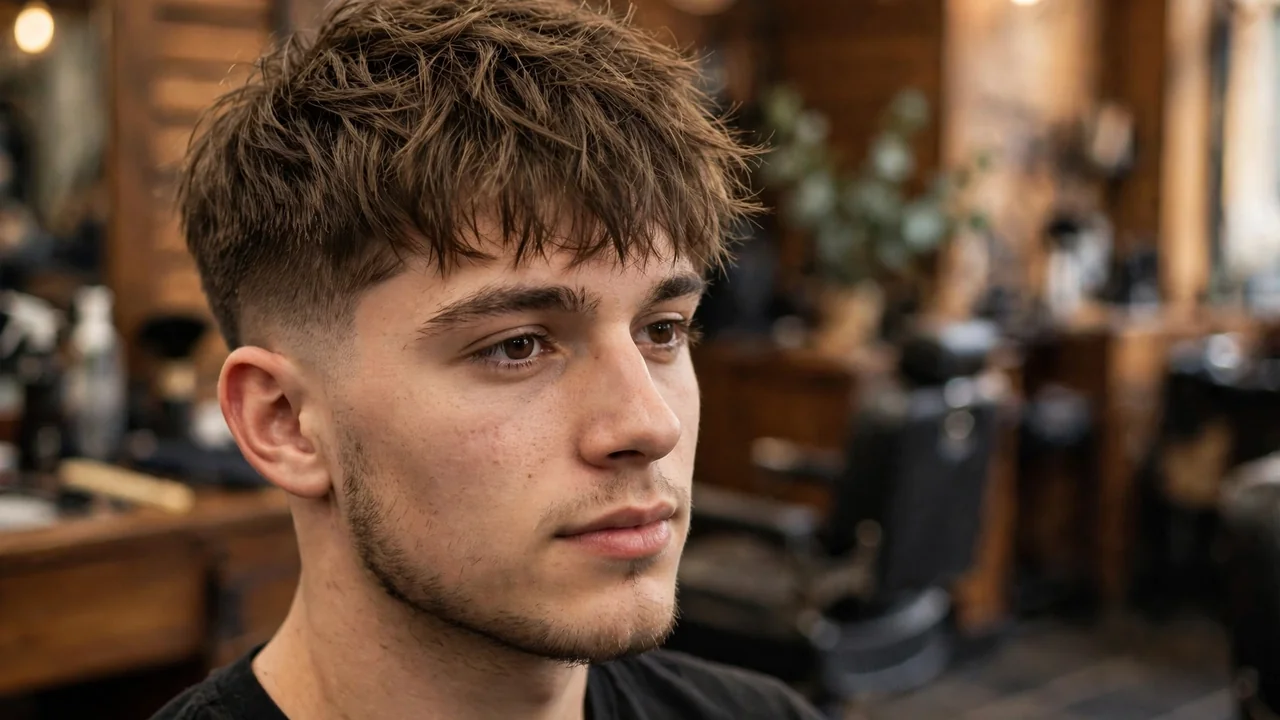
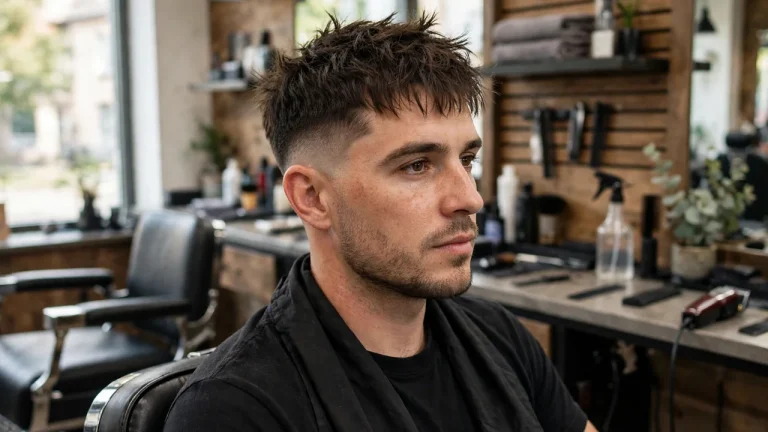
The textured fringe men are asking for in 2026 is the most requested fringe in barbershops right now. It keeps hair forward and piecey across the forehead, with point-cut ends that break up the hard blunt line, while the sides stay clean with a taper or fade. It works on straight, wavy and curly hair, flatters most face shapes, and needs about five minutes of styling each morning.
This guide covers the four fade pairings worth asking for, styling for every hair type, a maintenance table, honest guidance on who should skip it, and the exact words to say to your barber.
What a Textured Fringe Actually Is
A textured fringe is hair cut forward over the forehead, then broken up with layering and point cutting so the ends separate into pieces instead of falling as one solid sheet. A blunt fringe makes a hard horizontal line across the forehead. A textured fringe softens that edge so the forehead is framed rather than fenced off.
The cut sits on a simple idea that goes back centuries. Bangs, known as a fringe in British English, are hair that falls over the front hairline, and the textured version is simply the modern answer to the old blunt cut. What changed is the technique: thinning shears, point cutting and slide cutting remove weight in stages instead of chopping one straight line.
Length sets the tone. Short ends an inch or two above the eyebrows and reads sharp. Medium sits at the eyebrows with the most styling options. Long pushes past the eyebrows into the shaggy looks dominating 2026, and a messy textured fringe tutorial shows how the longer versions move on camera. Pick the length by your face shape and styling tolerance, not the trend photo alone.
For face shapes, the rules are simple. Round faces do best with an angular fringe a few inches long and a low taper, which pulls the eye upward. Square faces suit a softer, piecey fringe that eases a strong jaw. Oblong faces want a heavier fringe sitting at the brow to shorten the face visually, while heart shaped faces should skip a heavy straight fringe that narrows the chin further.
Textured Fringe Fade Pairings
The sides decide the personality of the cut. Pick the side treatment first and the fringe second. If you want even more contrast than these four, textured fringe men chasing sharper edges can ask for a high fade or skin fade instead, it just needs cleanup every two weeks to stay crisp.
Low Taper Fade Fringe
The low taper fade fringe is the most requested pairing, and it wins because it is the most wearable. The taper stays low around the ears and neckline, keeps your natural hairline intact, and gradually blends into the longer top. The contrast between the clean sides and the piecey fringe looks sharp without looking aggressive.
This is the office safe version. It grows out gracefully and needs cleanup only every 3 to 4 weeks. Our low taper fade guide shows exactly where the blend sits.

Blowout Taper With Textured Fringe
The blowout taper with textured fringe is the boldest pairing on this list. The taper blows out full and rounded around the ears while the fringe sits textured and forward on top, which creates a strong rounded silhouette from every angle. It needs thick hair to look right, because the blowout shape depends on volume through the sides.
Ask for this when you want the 2026 streetwear version. The styling load is higher, because the blowout sides need a blow dryer to hold their shape. The blowout taper guide covers the volume requirements in detail.
Mid Taper Fade With Textured Fringe
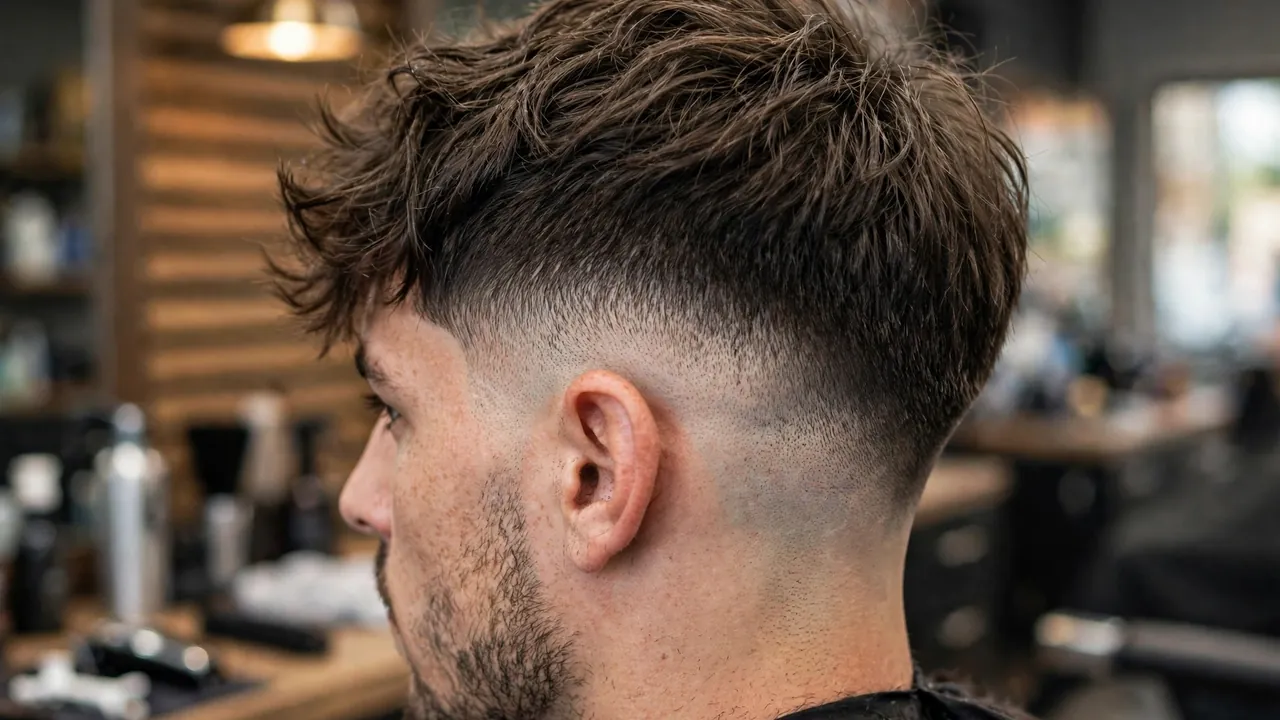
The mid taper fade with textured fringe sits between the subtle low taper and the bold blowout. The taper climbs to the middle of the sides, which frames the fringe with a cleaner border and gives the cut more structure. It suits guys who found the low taper too quiet but do not want the full volume of a blowout.
The mid taper adds visual height at the sides, so it balances rounder faces, while very long faces may prefer the low taper. The mid taper fade breakdown explains the placement differences.
Burst Fade With Textured Fringe
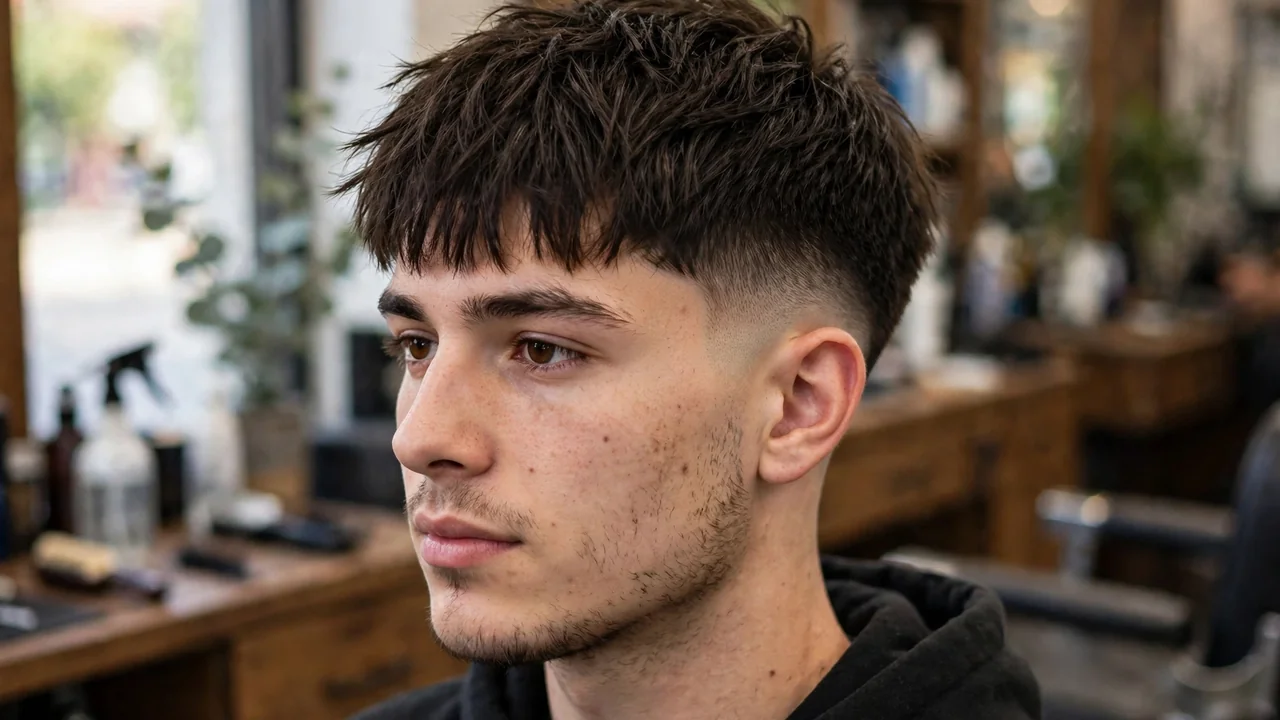
The burst fade with textured fringe curves around the ear in a semicircular arc, which turns the side of the head into a design feature. The arc draws the eye from the fringe down around the ear and back up, so the whole cut reads as one continuous shape. It is the most fashion forward pairing here and the least conservative.
The curved fade line blurs fast, so this version needs cleanup every 2 to 3 weeks or the arc softens. Our burst fade haircut guide explains how the curve is built.
Textured Fringe for Every Hair Type
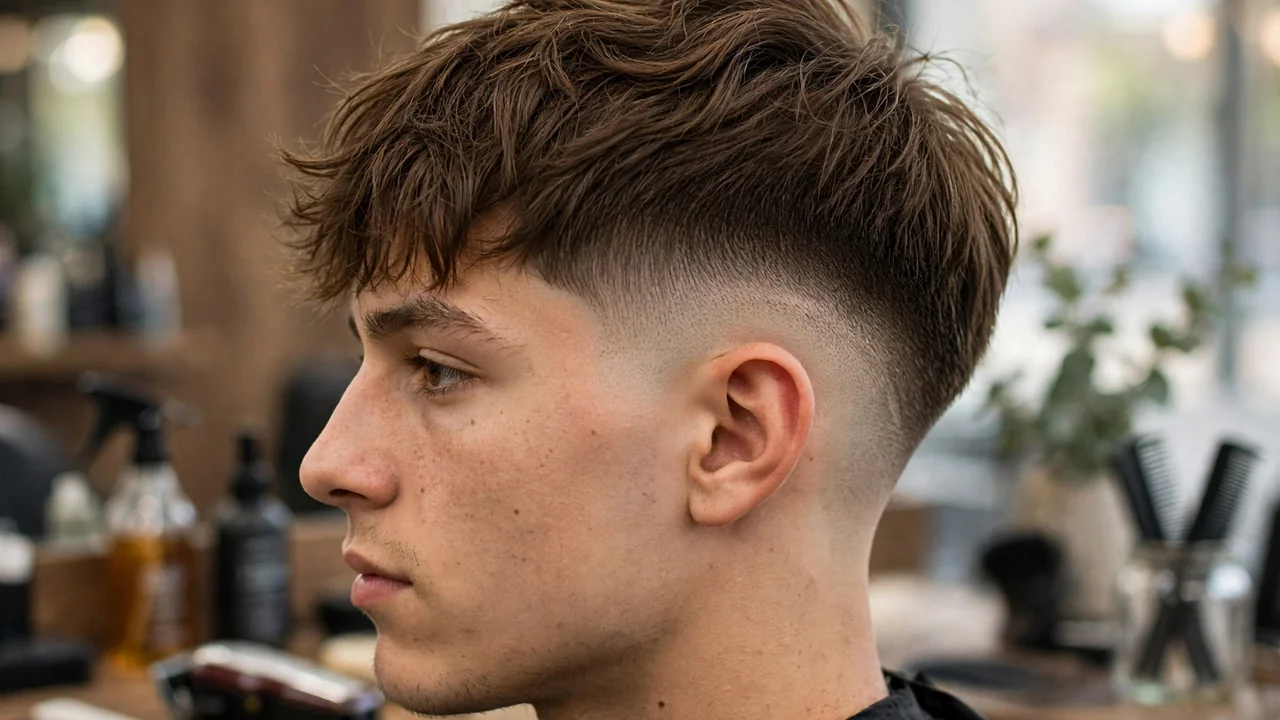
The same fringe behaves differently on different hair, so the approach has to match your texture.
Straight Hair
Straight hair is the version men with straight hair ask for most, and it needs the most cutting work. Straight strands fall in one flat sheet, so the barber has to create the texture artificially with point cutting, thinning shears and slide cutting through the fringe. Without that work, straight hair turns the fringe into a curtain of flat hair.
A matte clay or paste worked through dry hair creates the separation the cut alone cannot fully build. The textured cutting techniques in our textured haircuts roundup explain the point cutting method behind it.
Wavy Hair
Wavy hair is the easiest canvas for a textured fringe. The natural wave creates separation on its own, so the barber needs less point cutting and the daily routine is shorter. A light cream or sea salt spray is usually enough.
The watch point is bulk. Wavy hair expands as it grows, so the fringe can puff sideways past eyebrow length. Ask the barber to thin the underside of the fringe slightly.
Curly Hair
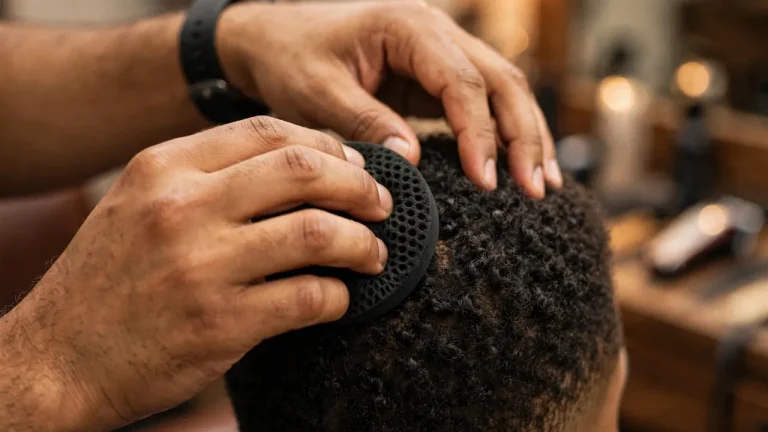
Curly hair gets the best version of this cut for free. Curls separate naturally, so the fringe looks textured with almost no product. The barber should cut the fringe dry or nearly dry, because curly hair shrinks as it dries and a wet cut can spring up far shorter than planned.
Curly fringe needs 2 to 3 inches so the weight pulls the curls forward instead of letting them spring upward. A curl cream replaces heavier waxes, which weigh curls down and make them look stringy.

Textured Fringe vs French Crop vs Curtain Fringe
These three get mixed up in barbershop conversations because all of them involve hair falling forward. The differences are in length, texture and the side treatment.
| Feature | Textured Fringe | French Crop | Curtain Fringe |
|---|---|---|---|
| Fringe length | Short to long, your choice | Short, above the eyebrows | Long, split down the middle |
| Texture | Piecey and separated | Compact and defined | Soft and flowing |
| Typical sides | Taper or fade | High fade or short back and sides | Longer, often grown out |
| Daily styling | About 5 minutes | 2 to 3 minutes | 5 to 10 minutes |
| Face shapes | Most, with length adjusted | Oval and square | Oval, oblong and diamond |
| Grow out | Graceful, trims every 3 to 4 weeks | Loses shape fast, trims every 2 to 3 weeks | Grows into longer styles easily |
Want the shortest, sharpest version with the least daily effort? That is the French crop. Hair parted and flowing to the sides? That is the curtain fringe. The textured fringe is the middle ground.
How to Style a Textured Fringe
Most textured fringe men style it in about five minutes. Start with dry or nearly dry hair. Blow drying the fringe forward first gives it more lift and separation.
Warm a fingertip sized amount of matte clay or paste between your palms until it disappears, then work it through the fringe from roots to ends. Push the hair forward toward the forehead with your fingers, then pinch small sections to separate the pieces. That pinching motion is what creates the texture, so do not skip it. Leave the sides alone or smooth them with whatever product remains on your hands.
Using too much product is the classic mistake. Heavy product clumps the fringe into wet looking spikes instead of soft pieces. Start with less than you think you need and add more only where pieces fall flat. On fine hair, a pinch of texture powder at the roots adds grip before the clay goes on, and a light mist of sea salt spray on damp hair gives the fringe separation before you even pick up the dryer. A step by step mid taper textured fringe tutorial shows the product work clearly.
The Exact Barber Script
Walk in and say this, adjusting the bracketed parts to your version:
“Give me a textured fringe with a [low taper / mid taper / blowout taper / burst fade] on the sides. Keep [2 to 3] inches through the front, point cut and layered so it separates, and blend the sides into the top so nothing looks disconnected. Finish it with a [matte clay / light paste] so I can see the texture before I leave.”
Three phrases do the heavy lifting. “Textured fringe” tells the barber the front is the point of the cut. “Point cut and layered” separates your request from a blunt fringe. The fade choice tells them how the sides should behave. Bring a photo, because fringe means different lengths to different barbers, and most textured fringe men find the photo does more talking than the terminology.
Maintenance and Trim Frequency
The fringe grows into your eyes faster than the sides grow out of shape, so the trim schedule follows the fringe.
| Pairing | Fringe trim | Sides cleanup | Full cut |
|---|---|---|---|
| Low taper fade fringe | Every 3 to 4 weeks | Every 3 to 4 weeks | Every 5 to 6 weeks |
| Blowout taper fringe | Every 3 to 4 weeks | Every 2 to 3 weeks | Every 4 to 5 weeks |
| Mid taper fade fringe | Every 3 to 4 weeks | Every 3 weeks | Every 4 to 6 weeks |
| Burst fade fringe | Every 3 to 4 weeks | Every 2 to 3 weeks | Every 4 weeks |
Who Should Skip the Textured Fringe
The textured fringe suits most guys, but the exceptions matter. Skip it if your hairline is receding strongly at the temples, because a fringe draws the eye straight to the forehead and frames the area you want to downplay.
Skip it if you have very tight curls and will not keep at least 2 to 3 inches of fringe length, because short tight curls spring upward instead of falling forward. Skip it too if you will not spend five minutes styling, since an unstyled textured fringe just looks like hair that needs a cut. And if your workplace enforces a strict dress code, pick the short fringe with a low taper or choose a different cut.
FAQs
Conclusion
The textured fringe earned its place as the most requested fringe of 2026 because it frames the forehead, works on every hair type, pairs with any taper or fade, and asks for five minutes of styling in return. Pick the side pairing that matches your lifestyle, low taper for easy maintenance or burst fade for maximum edge. Whichever pairing you choose, textured fringe men get the most out of the cut by booking the fringe trim on schedule.
Book with the script above, bring a reference photo, and tell your barber how much daily styling you actually do. The right fringe is the one you will style every morning. For your next cut, the barbersgrooming.com homepage has every haircut guide in one place.