Curly Top Fade, What to Ask Your Barber and How to Style It
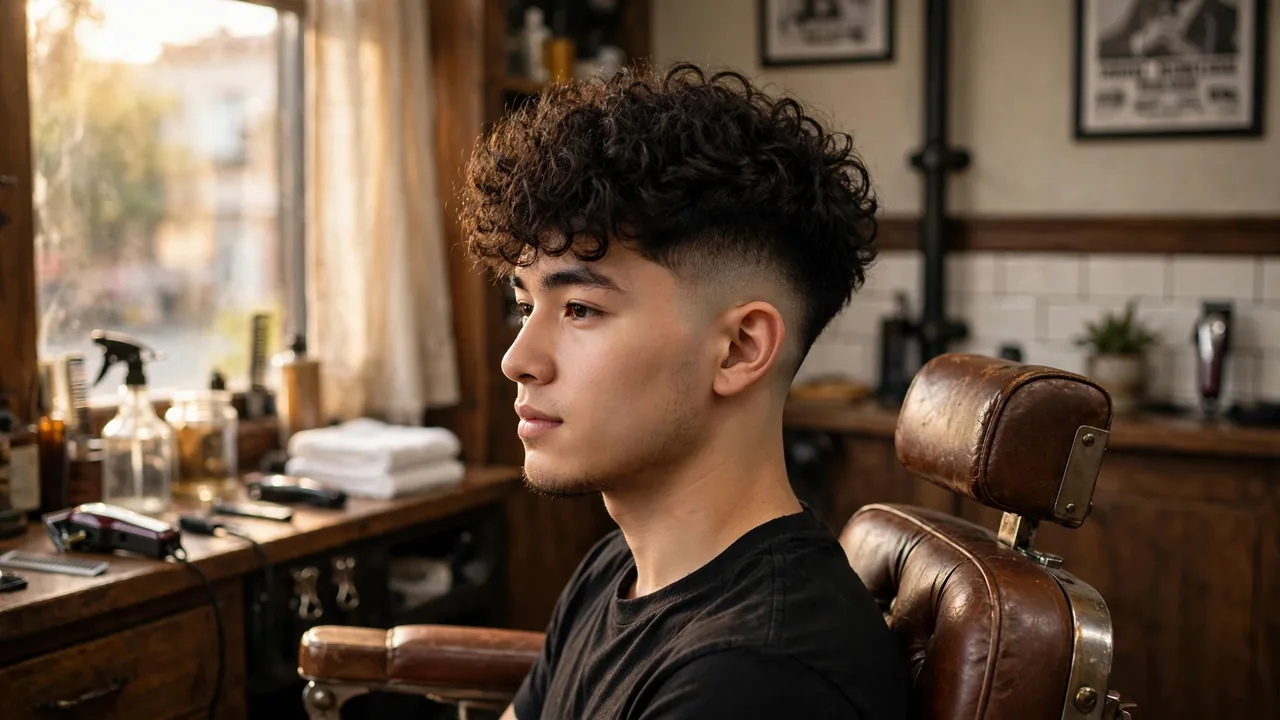
A curly top fade is a men’s haircut that keeps the curls long and full on top while the sides and back are faded down to short, blended lengths. It suits most curl types, from loose waves to tight coils, because the clean sides remove bulk around the ears and neck and let the natural texture on top become the focus of the whole cut. If you are still deciding how much length to keep, our guide to curly hairstyles for men walks through the longer options first.
What This Cut Actually Is
Strip the cut down to its two parts and the name explains itself. The curly top is exactly that, enough length on top for curls to form their natural pattern. The fade is the gradual transition on the sides and back from longer hair near the top down to very short hair near the skin, a technique with a long history in barbering (see the fade haircut article for the full background).
Curls need weight to look good. Cut them too short all over and they lose their shape. Leave them long all over and the sides puff out into a triangle. This cut solves both problems at once. The sides get structure from the fade while the top keeps the weight that curls need to coil, clump, and hold their pattern through the day.
That is also why this cut photographs so well. The contrast between the tight sides and the full top gives the hair a clear silhouette, which is why you see it on everyone from college athletes to musicians. It reads as intentional rather than overgrown, even on day three without a wash.
Curly Top Fade vs Curly Taper Fade
These two terms get mixed up constantly, so here is the clean difference. A fade takes the sides down close to the skin and runs the transition over a larger area of the head. A taper stays more conservative. It shortens gradually around the neckline, sideburns, and temples without ever going fully to the skin, and the transition zone is shorter. Both remove bulk from curly sides, but they read very differently.
| Point of comparison | Curly top fade | Curly taper fade |
|---|---|---|
| Skin exposure | Goes close to the skin at the bottom of the fade | Never fully reaches the skin |
| Transition area | Longer, runs higher up the sides of the head | Shorter, concentrated near the edges |
| Contrast | Bold, the curls pop hard against the short sides | Softer, more natural looking grow-in |
| Upkeep | Needs a touch-up every two to three weeks | Stretches longer between visits |
| Best for | Making a statement and showing off curl shape | Offices, first fades, and low-key looks |
If the softer route sounds more like you, the blowout taper fade is the closest cousin on this site, with the taper concentrated at the neckline. You can also watch how the blending works in this mid taper fade tutorial to see the guard work up close before your appointment.
One more practical note. Because a true fade goes shorter, mistakes show faster. If your barber is new to curly hair, the taper version is the safer first visit. You can always go shorter next time once you trust the hands.
Picking the Right Fade Height for Your Curl Type
Fade height is the single biggest decision in this cut. It changes the silhouette more than anything else, and the right height depends on how your curls behave. Looser curls fall outward and downward, so they pair well with lower fades. Tighter coils build upward, so they can carry a higher fade without looking top-heavy.
Knowing your curl type makes the choice easier. Loose waves and soft 3A curls fall outward, so they sit best with a low or mid fade that keeps some weight on the sides. Springy 3B and tighter 3C curls build more height, so they can carry a mid or high fade without looking top-heavy. Coily 4A to 4C hair grows upward and outward, which is why a high or burst fade frames it so well. Whatever your type, remember that curls shrink as they dry, so the dry length in the barber script matters more than the wet length you see in the chair.
Low Fade With a Curly Top
The low fade starts just above the ear and keeps the most hair on the sides. It is the most conservative version and the easiest grow-out, which makes it the best pick for a first curly fade. Loose waves and soft curls look best here because the sides keep enough weight to balance the top. You can stretch three to four weeks between touch-ups without the cut looking tired.
Mid Fade With a Curly Top
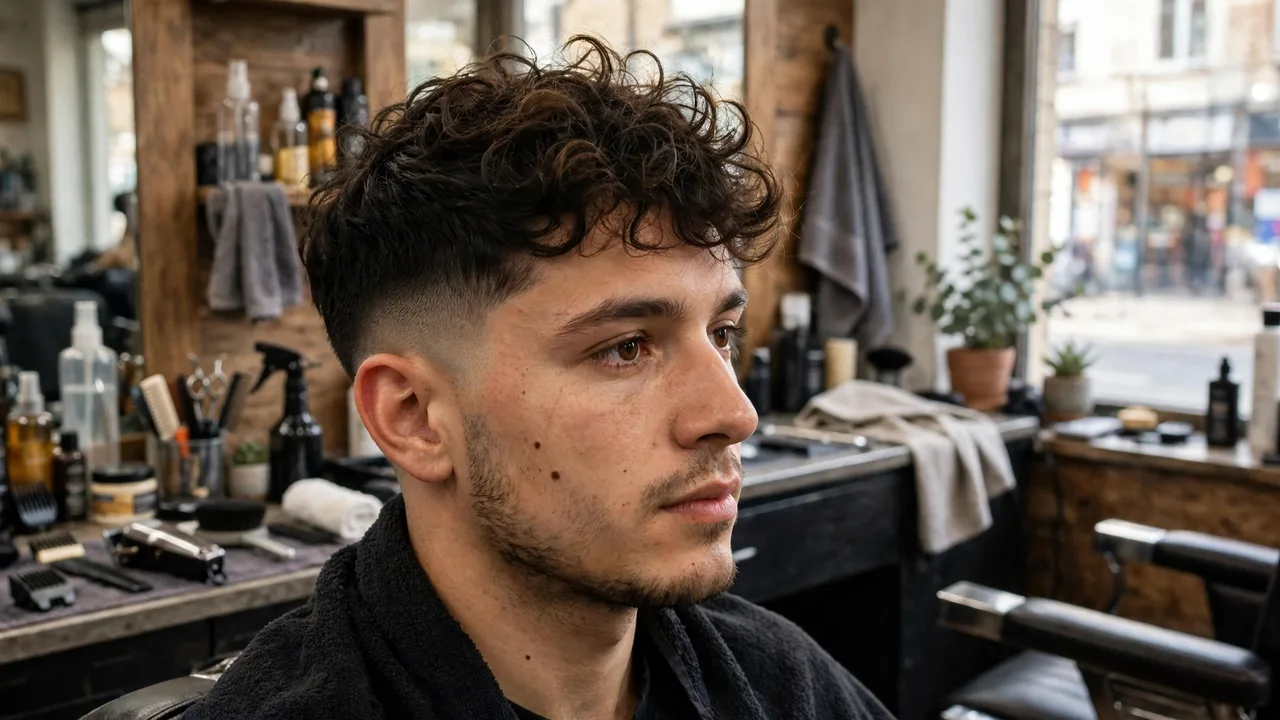
The mid fade starts around temple level and hits the middle ground between subtle and bold. It works across the widest range of curl types, which is why barbers suggest it most often. The transition sits high enough to show off the curl shape but low enough that the grow-out stays graceful. If you walked in with no preference, most good barbers would land you here.

High Fade and Burst Fade With a Curly Top
The high fade starts above the temples and creates the strongest contrast. Tight coils carry it best because the upward volume balances the bare sides. The burst fade is the wilder cousin. Instead of fading straight around the head, it arches around the ear and drops toward the nape, which frames the curls in a rounded shape. If you are torn between a burst fade or a drop fade, that comparison breaks down exactly how each one sits on curly hair.
High and burst fades demand the most upkeep. The contrast looks sharpest in week one and softens fast, so plan on a touch-up every two weeks if you want it crisp. A skin-fade version takes the very bottom down to bare skin for the sharpest contrast of all.

The Exact Barber Script
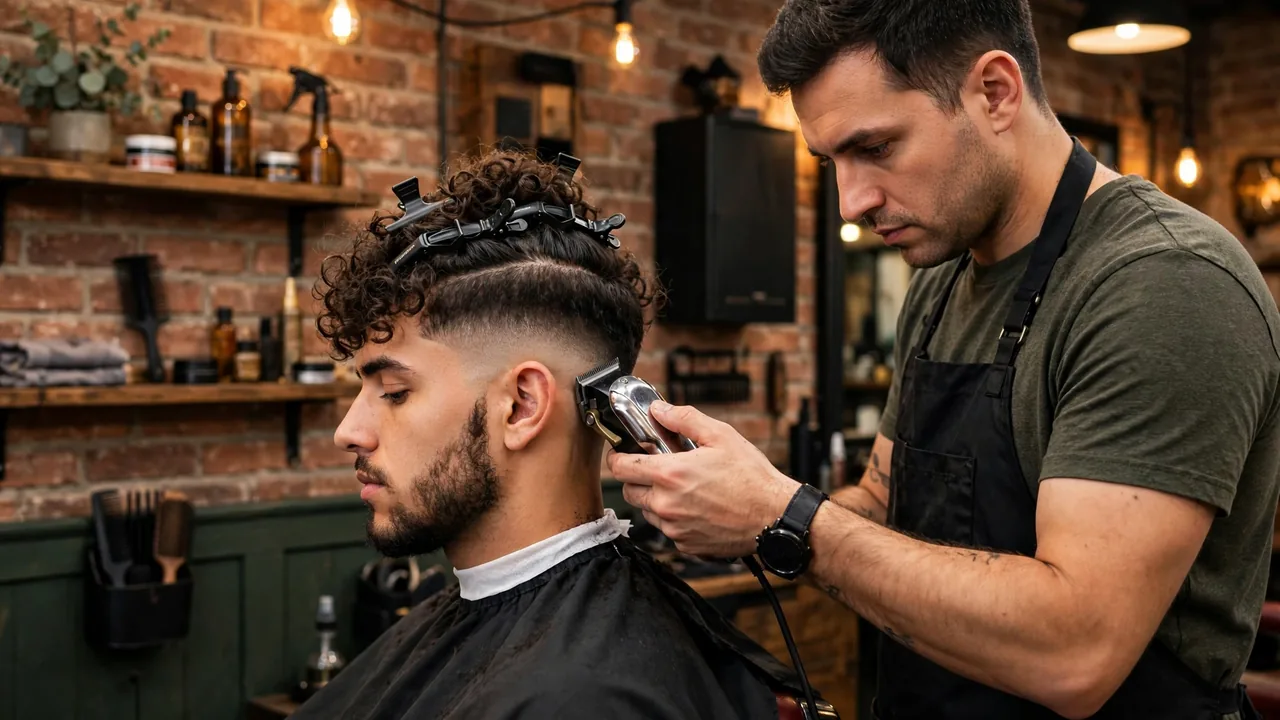
Walk in with this script and you will get the cut you pictured. Fill in the brackets before you sit down.
“I want a [low / mid / high] fade on the sides and back. Keep the top [three to five inches] measured dry, not wet, since my curls shrink as they dry. Cut the top with scissors, not clippers, and point-cut the ends so the curl pattern stays intact. Blend the transition with clipper-over-comb so there is no hard line where the curls meet the fade. Keep my natural hairline and just clean up the neckline.”
The dry-measurement line matters most. Curls look much longer wet than dry, and a barber who cuts to a wet length will take off more than you asked for. The scissors line matters second. Clippers on curly tops chew through the curl pattern and leave the ends blunt, which kills definition.
How to Style It Every Day
Wash Day the Right Way
Wash two to three times a week at most. Curly hair dries out faster than straight hair because the natural oils take longer to travel down each curl, and daily shampooing strips what little moisture reaches the ends. Conditioner goes on every wash. Detangle only when the hair is damp, using your fingers or a wide-tooth comb, and never drag a brush through dry curls unless you want frizz.
Products That Actually Work on Curls
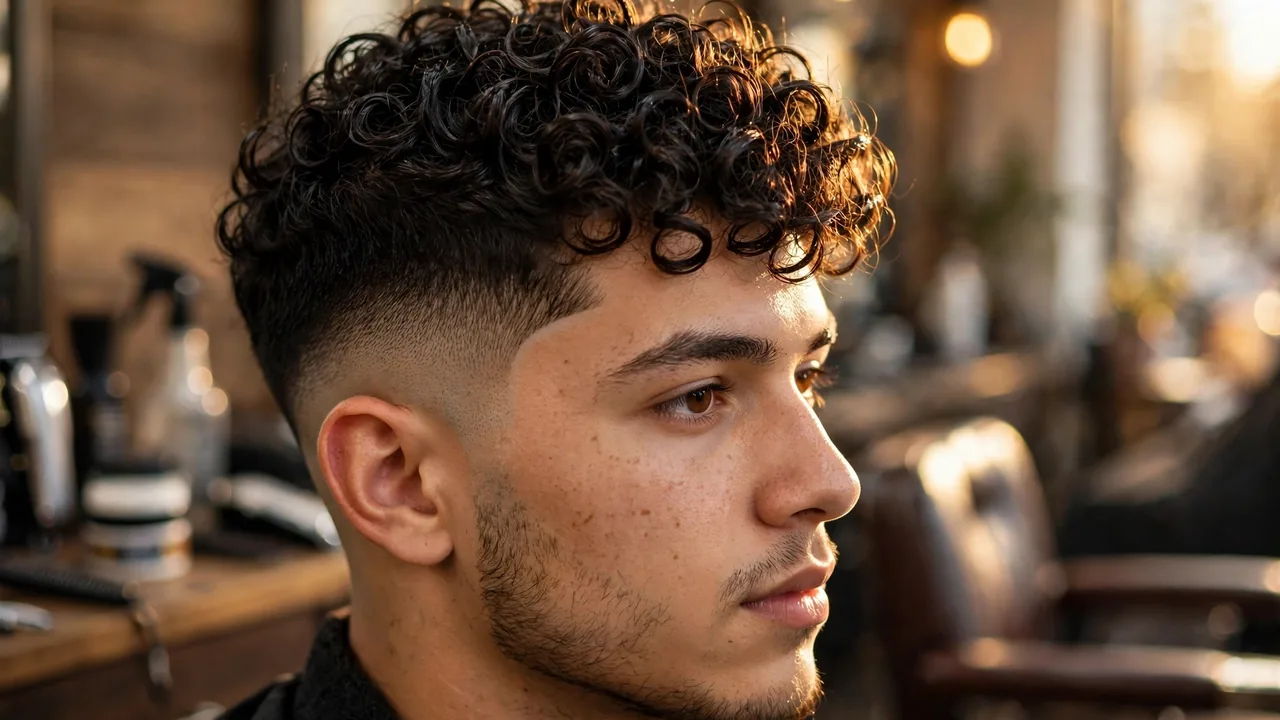
You need three things and nothing more to start. A leave-in conditioner for moisture, a curl cream for definition, and a light-hold gel to lock the pattern in place. Work the products through damp hair from roots to ends, then let it air dry or use a diffuser on medium heat. Scrunch the curls upward as they dry instead of pulling them down. Finish by scrunching out any crunch from the gel once the hair is fully dry, which leaves soft, defined curls. This video walkthrough of a curly haircut and styling session shows the whole routine on a real head of curls. And if you ever want to grow the texture out longer, our guide to textured haircuts covers the longer side of the family.
How Often to Trim It
Curls hide grow-out well on top, but the fade does not. Here is the schedule that keeps the cut looking intentional instead of accidental.
| Task | How often | Why it matters |
|---|---|---|
| Fade touch-up on the sides | Every two to three weeks | The blend softens fast, and the contrast is the point of the cut |
| Trim on top | Every six to eight weeks | Removes dry ends and keeps the curl shape from going triangular |
| Neckline cleanup | With each touch-up | A fuzzy neckline ruins an otherwise sharp fade |
| Deep conditioning mask | Once a week | The top needs steady moisture to keep curls defined |
Lineup, Beard, and Night Care for This Cut
The fade gets you the shape, but three small habits keep it looking fresh between visits. None of them take more than a few minutes, and together they are the difference between a cut that lasts two weeks and one that still looks sharp at three.
Keep the Lineup Sharp Between Fades
A lineup, also called a shape-up, is the crisp edge your barber draws along your hairline, temples, and neckline. It is the first thing to soften as the hair grows, usually within two weeks, and a fuzzy edge makes the whole cut look older than it is. Book a lineup-only visit between full cuts if your barber offers one. It takes a few minutes, it usually costs less than a full cut, and it resets the frame around the curls without touching the top. If you tidy the neckline yourself, use a trimmer with a guard and stop at the natural neckline. Pushing the line up or into the fade blend is the fastest way to ruin a good cut at home. If you are growing the top out, a tidy lineup and neckline are what keep the grow-out looking like a choice instead of neglect.
Pairing the Fade With a Beard
A fade and a beard can either blend into each other or sit apart, and both look good when the choice is deliberate. A blended beard fades the cheek line down gradually so the beard flows out of the cut. A disconnected beard keeps a clean gap between the fade and the beard, which suits thicker beards and sharper jawlines. Tell your barber which one you want before the clippers come out, because fixing it after means growing one side back. Beard oil matters here too. Dry beard hair curls and frizzes against the fade line, while a few drops of oil after a shower keep the edge lying flat and the skin underneath from flaking.
Night Care That Protects the Curls
Cotton pillowcases pull moisture out of curls overnight and leave them frizzy by morning. A satin pillowcase or a satin bonnet lets the curls slide instead of catching, which keeps the pattern intact and the fade line clean. If your top is long enough, gather the curls loosely on top of your head before bed, a trick often called pineappling, and let them down in the morning with a light mist of water and a scrunch of curl cream. Never sleep on soaking wet curls. Wet curls dry flattened on one side, and no amount of morning scrunching fully brings the shape back.
Who Should Skip This Cut
Honest answer first. If your curls are very fine and thin, this cut will not manufacture volume that is not there. The fade removes the little density you have on the sides, and fine curls on top can end up looking sparse instead of full. Shorter, even-length cuts flatter fine hair more.
Skip it too if you will not spend five minutes on your hair in the morning. This cut without product and a quick refresh looks messy rather than effortless. Curls need a little daily attention, and this cut puts them on display.
Face shape matters as well. Very round faces can look wider when a high fade adds volume at the sides of the top. A low fade keeps the silhouette narrower and flatters round faces more. And if what you really want is length all over with texture, the wolf cut keeps the back long instead of fading it, which is a completely different silhouette worth considering first.
FAQs
Conclusion
The curly top fade earns its popularity honestly. It gives curls the length they need on top, removes the bulk they do not need on the sides, and the contrast between the two does most of the styling work for you. Pick your fade height for your curl type, walk in with the barber script, and keep the sides touched up every few weeks. Do that and the cut basically maintains itself, which is more than most hairstyles can say. You can browse the rest of our fade and curl guides from the barbersgrooming.com homepage.