The Best Dreadlock Styles for Men and How to Keep Them Clean

The dreadlock styles for men that look best share one thing, a shape that fits your hair and a maintenance plan you will actually follow. This guide covers classic locs, two-strand twists, fade combos like taper fade dreads, and ponytail styles, plus the exact retwist schedule and what to say to your loctician.
Classic Dreadlock Styles for Men That Never Age
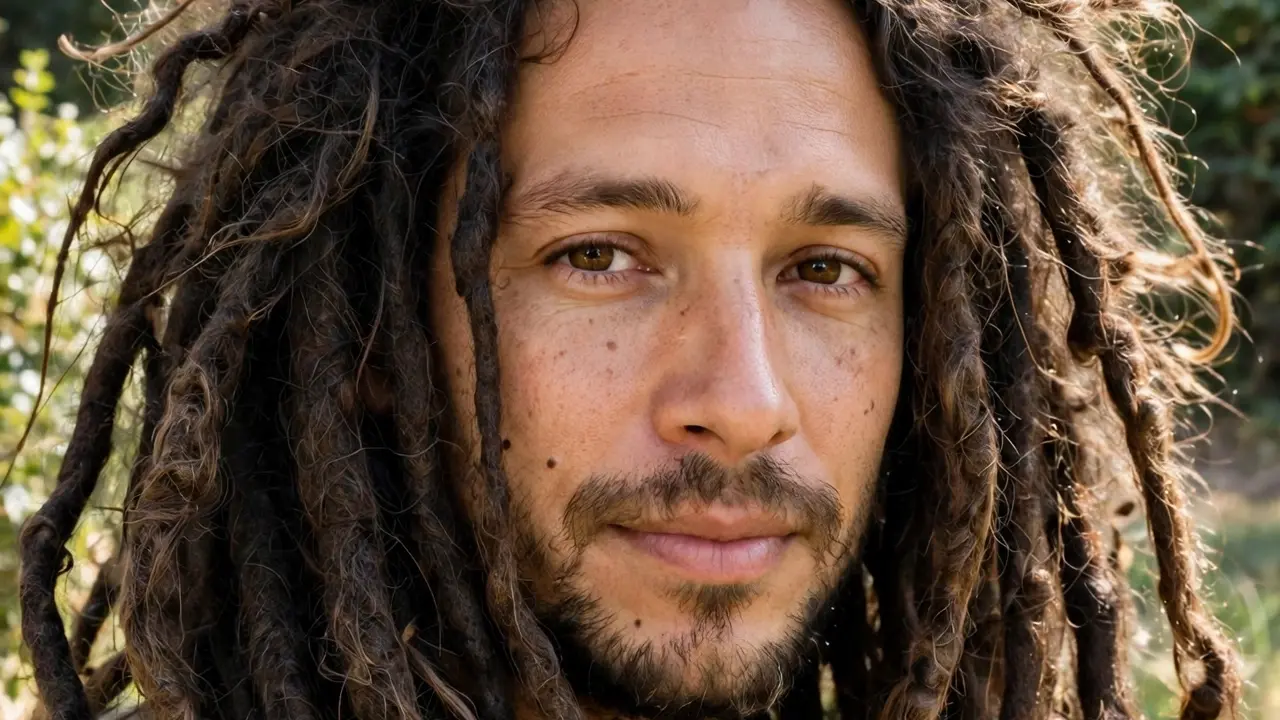
Classic thick locs are the foundation every other dreadlock style builds on. They are medium to large sections of hair locked from root to tip, usually worn past the ears or to the shoulders, with a natural parting pattern and clean roots after each retwist. The look reads confident without trying hard, and it suits round, square, and oval faces because the vertical length balances width. Dreadlocks carry deep cultural roots across many communities, and the history of dreadlocks is worth a few minutes of your time before you commit to the journey.
Getting there takes patience. Starter locs need about 3 to 6 inches of hair, and most men see real definition around month six with mature locs near the one year mark. The awkward budding phase in months three to five is when most men quit, so expect it and push through.
Thickness is the main decision at install. Pencil-width locs give the most styling options later, while thicker locs make a bolder statement. Use a square parting pattern for the neatest look, and avoid going too thin, since thin locs can break under the weight of long hair.
Two-Strand Twist Dreads
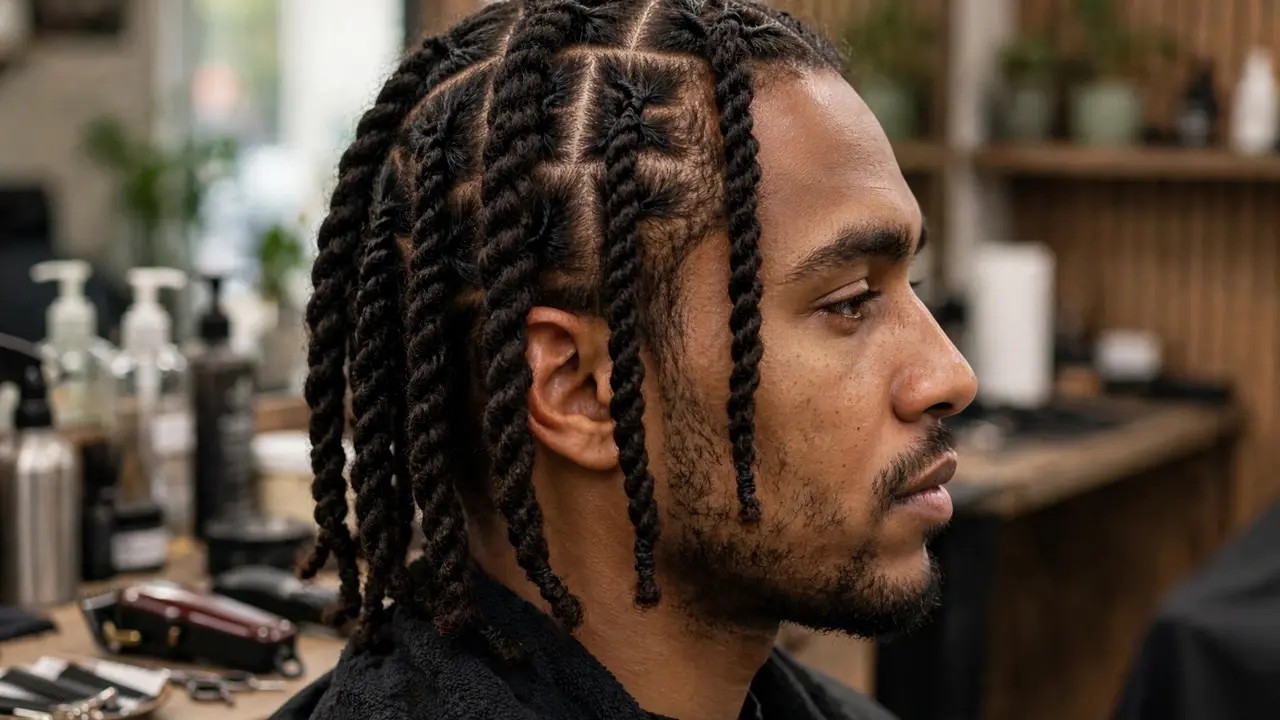
Two-strand twist dreads start exactly how they sound. Your loctician twists two sections of hair around each other from root to tip, and over months the twists lock into permanent dreads. This is the most popular starting method for men because it gives you a finished look on day one instead of months of frizz, and the rope-like texture it leaves behind is genuinely attractive even before the locs mature.
This method suits coily and curly textures best, and it works with your natural curl pattern rather than against it, the same principle that makes curly hairstyles for men look effortless when the cut respects the texture. If your hair is on the straighter side, be honest with your loctician. Two-strand twists can still lock on wavy hair, but the process takes longer and needs more maintenance visits in the first year.
Two-strand twist dreads also unravel more easily than palm-rolled locs in the first few months, so your loctician may use small bands at the roots or schedule the first retwist sooner. Treat the starter phase gently, with no tight styles and no swimming without protection, and sleep with your hair covered.
Starter Methods Compared, Interlocking and Palm Rolling
Two-strand twists are not the only way to start locs. Interlocking pulls the end of each section through the root with a latch tool, which creates a firm base that holds through washing and workouts. Maintenance stretches to about every 6 to 8 weeks instead of every 4 to 6, so it suits swimmers, gym goers, and men with softer or straighter hair that unravels easily. The trade off is patience, since interlocked locs take longer to look mature, and over tightening at the root can thin the hairline, so the technique must stay gentle.
Palm rolling sits at the other end of the scale. Your loctician rolls each section between the palms to form a smooth cylinder, which gives a neat look fast but needs frequent upkeep on its own. It works best as a finishing step after twists or interlocking rather than as the only method, and it suits fine hair that needs help holding shape. Ask your loctician which combination fits your texture before you commit, because the starter method sets the maintenance rhythm for the first year.
Fade Dreadlock Styles for Men That Stay Sharp
The smartest upgrade to classic locs is a fade on the sides and back. Fade dread combos keep the bulk of locs on top while the sides stay crisp, so the style looks intentional even between retwists. Your barber can touch up the fade between loctician visits, so the cut never fully grows out.
High Taper Fade Dreads
High taper fade dreads take the taper up to the temples, leaving a clear frame around a full head of locs. Ask for the taper to end in a zero or skin fade at the bottom so the transition melts into the skin. If the terminology confuses you, a quick read on taper vs fade differences will make the barber conversation easier.
Low and Mid Taper Fade Dreads
Low taper fade dreads keep the taper tight around the ears and neckline with a short, soft transition, which is the most office-friendly version. Mid taper fade dreads sit between the two, with the blend visible around the middle of the sides. Both grow out gracefully, so you get a longer runway between barber visits.
Temp, Drop and Burst Fade Dreads
Temp fade dreads sharpen the hairline and temples only, leaving the back and sides fuller, which frames the face without committing to a full fade. Drop fade dreads follow the natural curve of the head downward behind the ear, giving the cut a rounded, sculpted feel that suits longer locs. Burst fade dreads arc around the ear in a semicircle and pair best with medium locs pulled back, since the fade draws the eye to the shape. A curly top fade uses the same contrast logic, short crisp sides against textured length on top, so if you like one you will like the other.

Dread Ponytail Styles for Men
Once your locs reach shoulder length, the ponytail becomes your most useful style. It keeps hair off your face at the gym, looks sharp at work, and takes about thirty seconds in the morning. Dread ponytail styles for men work best with medium thickness locs, and the key detail is where you place the tie.
The Classic Dread Ponytail
The classic dread ponytail gathers all the locs at the back of the head and secures them with a snag-free band. Use a fabric-covered elastic or a loc tie, never a rubber band, because rubber catches and snaps hairs. Keep the ponytail snug but not tight, since constant tension on the hairline causes traction alopecia over time.
The High Loc Bun
The high loc bun wraps the ponytail into a knot on top of the head, the cleanest way to wear long locs in warm weather or at formal events. Do not wrap it drum tight every day, because daily tight buns thin the hairline. Alternate between the bun, the ponytail, and wearing your locs down so no single area takes all the stress.

Short Dreads for Low Maintenance Days
Short dreads are the underrated option. Locs that sit above the ears need less product, dry faster after washing, and look neat with almost no styling. If you are unsure about the commitment, beginning with short locs lets you test the lifestyle before the hair gets long and heavy.
Short locs also transition well from other cuts. If you have been wearing textured haircuts and want to try locs, your loctician can start the locking process on your existing length without a big chop. The style works especially well with a taper or a low fade on the sides, since the contrast between short locs and faded sides keeps the silhouette interesting.

Freeform Dreads
Freeform dreads are the purest version of the style. You let the hair mat and lock on its own with minimal sectioning and no regular retwists, which produces locs of different sizes that look organic and one of a kind. This method takes the longest, often twice as long as maintained locs to mature, and the first year looks wild. That is the point. In the early months the silhouette sits close to classic afro styles, which makes a good fallback look while the locs mature.
Freeform is not the same as neglect. You still wash regularly, you still separate locs that try to merge at the roots, and you still protect your hair at night. What you skip is the scheduled retwisting and the perfect parting grid. The r/Dreadlocks community is full of honest progress photos from freeform journeys, which is the best way to set realistic expectations.
What to Tell Your Loctician, the Exact Script
Walking in with clear language gets you a better result than showing five photos and saying do something like this. Photos help, but the script below covers the technical decisions your loctician needs. Adjust the bracketed parts to your preference.
Say this. I want starter locs in medium thickness, about pencil width, with a neat square parting pattern. I want to keep my hairline natural with no thinning at the edges. Give me a low taper on the sides and back so it stays neat while the locs grow. I want enough length on top to pull into a ponytail within a year. Set my retwist schedule at every five weeks and show me how to moisturize between visits.
Three things to settle before you sit down. First, the method, two-strand twists for a finished look from day one or comb coils for smaller sections. Second, the parting, square for the cleanest look. Third, the edges, because once a loctician thins your hairline with too much tension, growing it back takes months.
Retwist and Wash Schedule That Keeps Locs Healthy
Healthy locs run on a routine, not on guesswork. Retwist every 4 to 6 weeks, wash every 1 to 2 weeks with a residue-free shampoo, moisturize with a light oil between washes, and sleep with a satin bonnet or durag. This retwist tutorial from a professional loctician shows the full process step by step.
| Task | How often | Notes |
|---|---|---|
| Retwist | Every 4 to 6 weeks | Sooner thins the roots, later lets locs merge |
| Wash | Every 1 to 2 weeks | Use residue-free shampoo and dry fully |
| Moisturize | 2 to 3 times a week | Light oils or rosewater, never heavy wax |
| Barber lineup or fade refresh | Every 2 to 3 weeks | Keeps fade combos sharp between retwists |
| Deep cleanse | Every 2 to 3 months | Apple cider vinegar rinse removes deep buildup |
| Night protection | Every night | Satin bonnet or durag, non negotiable |
Every Dreadlock Style Compared
Match a style to your patience level and your calendar with this table. Fade styles need the most barber visits but look the sharpest day to day.
| Style | Best starting length | Upkeep level | Best for |
|---|---|---|---|
| Classic thick locs | 3 to 6 inches | Medium | Men who want the timeless look |
| Two-strand twist dreads | 3 to 5 inches | Medium | Starters who want instant shape |
| Taper fade dreads | 4 inches on top | High | Men who want sharp edges always |
| Burst or drop fade dreads | 4 to 6 inches on top | High | Statement cuts with sculpted sides |
| Dread ponytail and bun | Shoulder length | Low | Active men and professionals |
| Short dreads | 2 to 4 inches | Low | Low commitment first timers |
| Freeform dreads | 4 inches or more | Low appointments, high patience | Men who want the organic look |
Who Should Skip Dreads, Honest Talk
Dreads are not for everyone and saying so upfront saves you a year of regret. Skip them if you cannot commit to the maintenance schedule, because neglected locs do not look rugged, they look unkempt and they develop odor and buildup that is hard to reverse. Skip them if your job has a strict grooming code you cannot negotiate around, since even neat locs read as unconventional in conservative workplaces. Skip the long versions if you have a sensitive scalp or fine hair that breaks easily, because the weight of long locs pulls constantly and thinning at the crown is a real risk.
Also skip them if you are starting purely because of a trend. The budding phase tests everyone, and men who started for the look but not the lifestyle are the ones who comb their locs out at month four. If you are unsure, start with short locs or a fade combo, both let you experience the routine before the hair gets long.
FAQs
Conclusion
The best dreadlock styles are the ones that match your hair texture, your patience, and your calendar. Classic locs never look wrong, two-strand twists give starters the fastest polished look, and fade combos like taper fade dreads stay sharp between appointments. Use the loctician script at your consultation and follow the retwist schedule without skipping washes. Locs reward consistency more than any product. For more cut and grooming guides, browse the barbersgrooming.com homepage.