Haircuts for Women Over 40 and 50 That Take Years Off
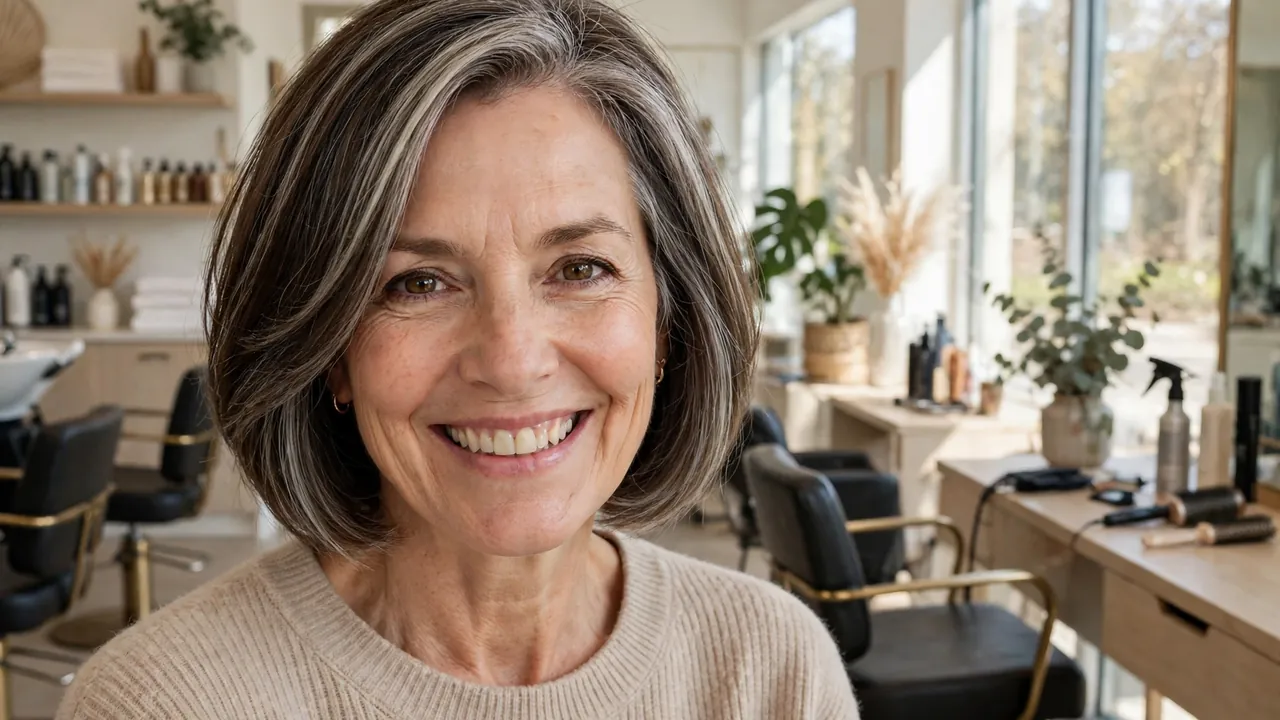
The best haircuts for women over 50 add lift at the roots, softness around the face and shape that holds without daily effort. Short bobs, pixies, shags and shoulder length cuts work best because they give movement and volume where hair naturally starts to thin.
Why Hair Changes After 40 and What a Good Cut Can Do
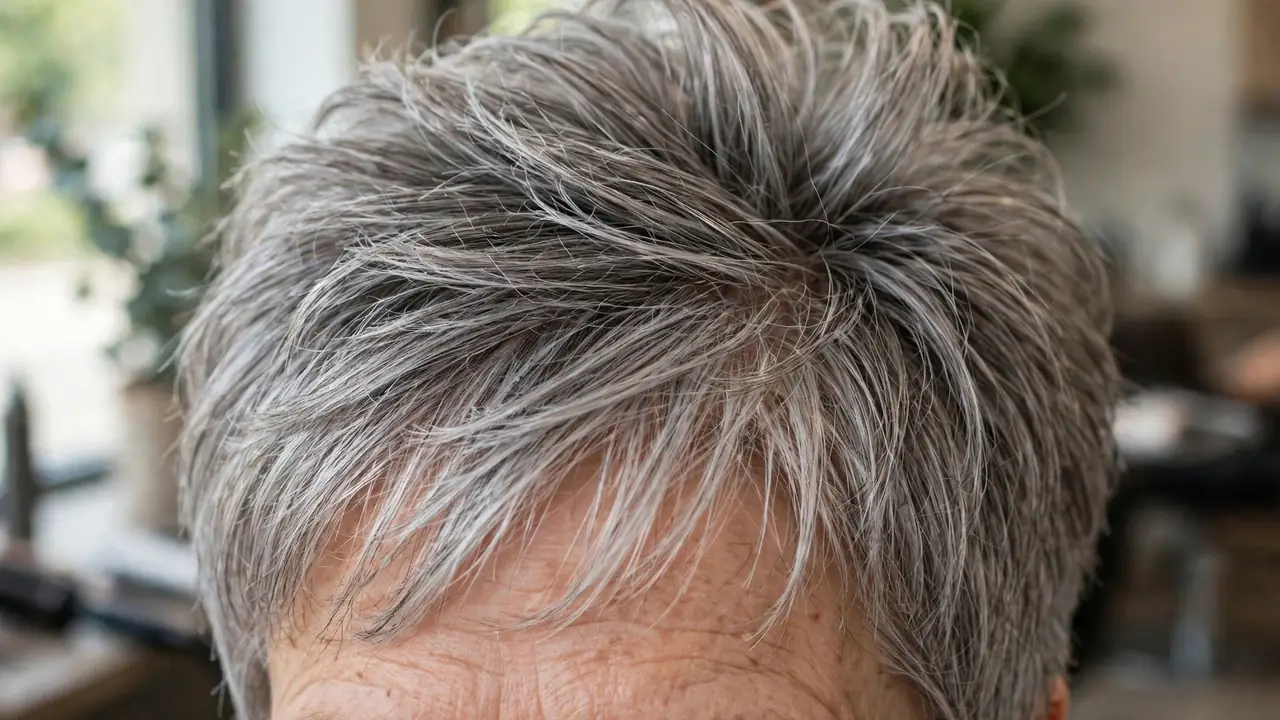
Hair rarely stays the same after 40. It often gets finer, drier and slower to grow. Colour can fade faster, grey can come through in patches, and the texture you had at 30 may feel different now. A cut that worked ten years ago can start to drag the face down, especially if the length is all one level and the ends are thin.
A good cut works with those changes instead of fighting them. Layers remove weight from the bottom and put it back near the crown and cheekbones, where lift makes the biggest difference. A side part can cover a thinning part line. A fringe can soften forehead lines without hiding your face. Shorter lengths can make fine hair look thicker because the ends sit closer together and hold their shape.
The goal is not to look younger by copying a twenty year old style. The goal is a cut that suits your face, your hair texture and the amount of time you want to spend styling it. When those three things line up, the result reads as fresh and confident, and that is what takes years off.
Short Haircuts for Older Women That Flatter Most Faces
Short haircuts for older women are popular for a reason. They are light, they dry fast, and they hold volume better than long hair that pulls itself flat. The trick is to keep enough softness so the cut does not look harsh.
The Soft Pixie
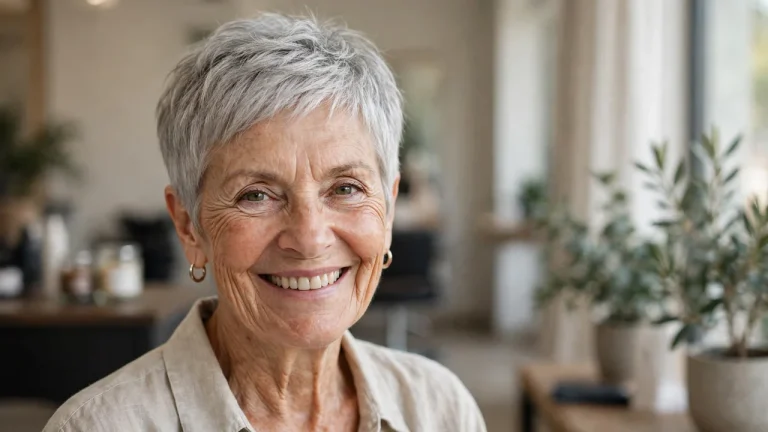
A soft pixie keeps length on top and around the forehead, with tapered sides and a neat nape. It suits straight and wavy hair, and it works well for women who like a wash and go routine. Ask for texture on top rather than a blunt finish, so the hair moves and does not sit like a cap. A little length over the ears keeps it feminine and gives you styling options.
Pixie haircuts for older women also work well with grey hair. Silver and white tones catch the light on a textured top, and the shape stays sharp between cuts. If your hair is very fine, a pixie with a slightly longer fringe can cover the hairline and make the front look fuller.
The Short Bob With Movement
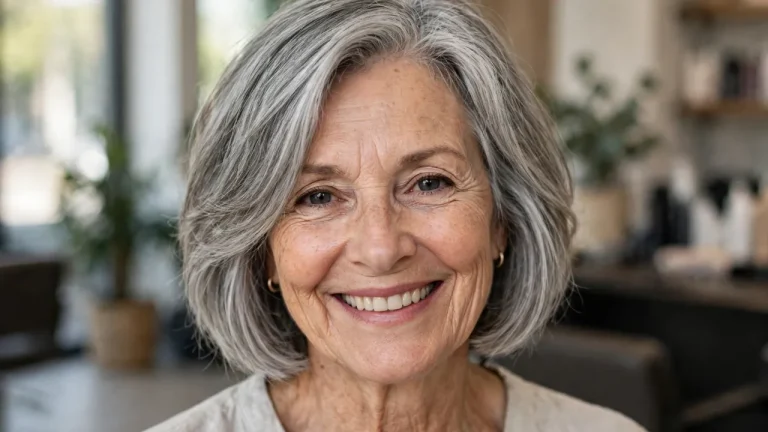
A short bob that ends near the jawline is one of the most forgiving cuts at this age. It frames the jaw, lifts the cheek area and gives the hair a clear shape. Ask for light layering through the back and ends that are textured rather than cut straight across. That stops the bob from looking heavy or boxy.
Short bob haircuts for older women suit round, oval and square faces. If your face is round, keep the front pieces a little longer than the back. If your face is long, a chin length bob with a side part balances the length. A bob also grows out gracefully, which matters if you only visit the salon every six to eight weeks.
The Short Shag
A short shag adds choppy layers, a soft fringe and a lot of movement. It suits wavy and curly hair best, because the layers let the natural texture do the work. Shag haircuts for women over 50 are a good pick if you want a modern shape without a lot of styling. A little mousse or sea salt spray, a quick scrunch, and the cut holds its shape for the day.
Bob Haircuts for Older Women
Bob haircuts for older women come in more shapes than most people expect, and the right one depends on your face shape and hair thickness. A classic bob ends at the jaw and looks polished. A graduated bob is shorter at the back and longer at the front, which adds lift at the crown. An inverted bob gives the same lift with a cleaner line at the nape.
If your hair is thick, ask your stylist to remove bulk from underneath rather than thinning the top. That keeps the surface smooth while the cut sits closer to the head. If your hair is fine, keep the bob shorter and ask for a blunt base with soft internal layers. That gives the ends a fuller edge.
Bob haircuts for women over 50 also pair well with a fringe. A side swept fringe softens the forehead and draws attention to the eyes. A curtain fringe parts in the middle and blends into the front layers, which suits women who do not want a heavy fringe across the forehead. A full fringe works best on straight hair with a longer face, and it needs trimming every three to four weeks to stay neat.
Colour can help a bob too. Face framing highlights, a soft balayage or a gloss that adds shine can make the cut look richer without a full colour change. Grey blending, where the stylist adds lowlights and highlights to mix grey with your natural colour, is a gentle way to grow out grey without a harsh line.
Medium Haircuts for Women Over 50
Not every woman wants short hair after 50, and there is no rule that says you must cut it off. Medium haircuts for women over 50 keep the length you love while adding shape that stops the hair from looking flat or tired.
Shoulder length haircuts for women over 50 are the most useful middle ground. The length sits at or just below the collarbone, which is long enough to tie back and short enough to hold volume. Ask for long layers through the ends and face framing pieces that start at the cheekbone. That opens up the face and keeps the hair from hanging straight down.
Medium length haircuts for women over 50 also suit women with wavy hair. A few long layers let the wave form without frizz, and the weight of the hair keeps the top smooth. If your hair is curly, keep the layers longer and ask for a cut that respects your curl pattern, so the shape stays balanced as it dries.
The main risk with medium length is split ends and thinning ends. A trim every six to eight weeks keeps the ends thick, and a cut that removes the thinnest inch or two often makes the hair look longer, not shorter, because the ends look healthy.
Low Maintenance Haircuts for Women Over 50
Low maintenance haircuts for women over 50 are about a shape that works with your natural texture and needs little heat styling. If you wash and air dry, tell your stylist that at the start of the appointment. A cut designed for air drying is different from one designed for a blow dry.
Good low maintenance options include a textured pixie, a soft shag, a jaw length bob with light layers, and a shoulder length cut with long layers. All four hold their shape as they dry, and all four can be refreshed with a little product rather than a full restyle.
Here is a simple routine that keeps these cuts looking good between salon visits. Wash two to three times a week with a gentle shampoo, use conditioner mainly on the mid lengths and ends, and let the hair dry mostly on its own before you touch it. A pea sized amount of styling cream on the ends adds polish without weight. For grey hair, a purple shampoo once a week keeps yellow tones away, but do not overuse it or the hair can look dull.
If you colour your hair, a low maintenance cut pairs well with a colour that grows out softly, such as balayage, grey blending or a root shadow. That stretches the time between colour appointments and avoids a hard line at the roots.
Haircuts for Older Women With Thin Hair
Haircuts for older women with thin hair need to create the look of fullness without adding weight. The most common mistake is keeping the hair long and one length, which makes the ends look wispy and the scalp show through at the part.
Shorter cuts help because the hair is lighter and the ends sit closer together. A pixie with texture on top, a bob with a blunt base, or a shag with short layers all make thin hair look thicker. Ask for layers that are kept near the crown and the front, not cut through the ends, so the bottom edge stays solid.
Styling matters just as much as the cut. Blow dry with your head upside down for a minute to lift the roots, or use a round brush at the crown only. A volumising mousse at the roots before drying gives hold without stiffness. Dry shampoo on day two adds grip and lift at the roots. Avoid heavy oils and serums near the scalp, because they flatten fine hair fast.
If your hair is thinning at the part, a side part covers it better than a centre part, and a root shadow or a few lowlights can make the scalp less visible through the hair.
Haircuts for Women Over 40
Haircuts for women over 40 sit in a useful middle place. You may still want longer hair, a bold colour or a trend led cut, and there is no reason to give those up. The change at this age is usually about adding polish and making the cut easier to live with.
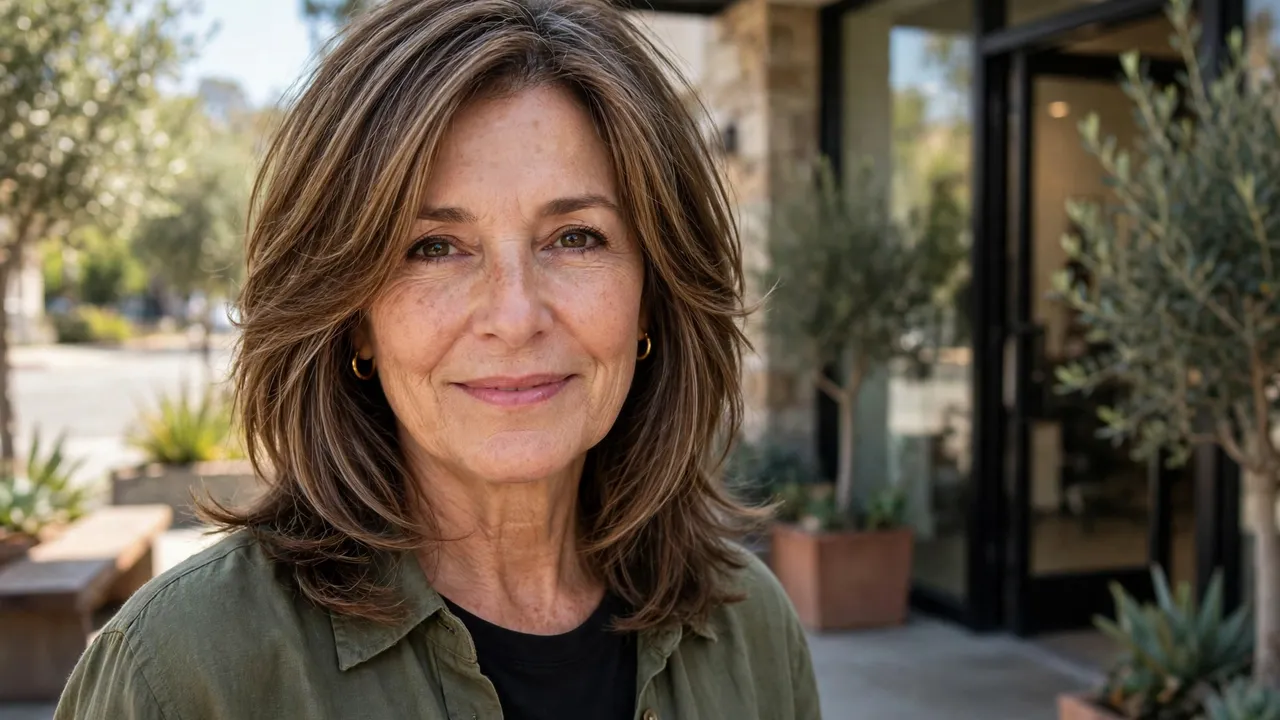
A long bob, a layered shoulder length cut or a soft shag all work well in your forties. They keep length and movement while adding shape around the face. If you have started to see grey, a few face framing highlights can blend it in without a full colour commitment. If your hair is still thick, internal layers remove bulk without losing length.
This is also a good time to rethink your part. A centre part can look severe as the face changes, while a side part adds volume at the crown and softens the hairline. Try both in the mirror at home before your appointment, and bring a photo of the part you prefer.
Grey hair needs a different approach to tone and texture. Silver hair stays bright and healthy with a purple shampoo once a week, a good conditioner to keep it soft, and a cut with texture that works with its coarser feel rather than fighting it.
Short Curly Cuts, Glasses and Keeping Your Length After 50
Short curly hairstyles for women over 50 work best when the layers are kept long enough for the curls to form. Short layers on curly hair can puff up, so ask for layers that follow your curl pattern and a cut that respects shrinkage. A short curly cut with a soft fringe frames the face and needs little styling beyond curl cream on damp hair.
If you wear glasses, bring them to the appointment. Short hairstyles for women over 50 with glasses need a cut that works around the frames, so keep the sides short enough not to clash and sweep the fringe away from the frames. A chin length bob that ends below the frames and a pixie with a side swept fringe both work well with glasses.
You do not have to go short at all. Long haircuts for women over 50 can look fresh when the ends are healthy and the cut has long layers and face framing pieces. Ask for long layered haircuts for women over 50 with the shortest layer at the collarbone, so the hair keeps its length and gains movement. A trim every six to eight weeks keeps the ends thick, which matters more than the length itself.
How to Choose the Right Cut for Your Face and Hair
Start with your hair texture, not a photo of someone else. Straight hair shows a blunt line best, so bobs and pixies look sharp on it. Wavy hair suits shags and layered cuts that let the wave form. Curly hair needs length in the layers and a stylist who cuts curls dry or understands shrinkage. Coarse hair holds a short shape well but needs thinning underneath to sit flat.
Then look at your face shape. A round face benefits from length at the front and height at the crown. A long face benefits from width at the sides and a fringe. A square face benefits from soft layers around the jaw. An oval face suits most cuts, so choose based on your hair and your routine instead.
Then be honest about your routine. If you have ten minutes in the morning, pick a cut that air dries well. If you enjoy blow drying, a bob or a layered medium cut rewards the effort. If you swim, run or work out often, a pixie or a cut that ties back easily will save you time. A cut you cannot maintain will look worse than a simpler cut you can keep up.
Bring photos to your appointment, but bring three. One of the cut you like, one of the length you want, and one of a style you do not want. That gives your stylist a clear range and avoids a misunderstanding over a single photo.
Comparison Table
| Cut | Best hair type | Styling time | Salon visits | Best for |
|---|---|---|---|---|
| Soft pixie | Fine, straight, wavy | 5 minutes | Every 4 to 5 weeks | Low effort, grey hair, volume on top |
| Short bob | Straight, wavy, thick | 10 minutes | Every 6 weeks | Face framing, polished look, easy growth |
| Short shag | Wavy, curly | 5 minutes | Every 6 to 8 weeks | Texture, modern shape, air drying |
| Shoulder length layers | Straight, wavy, curly | 10 to 15 minutes | Every 6 to 8 weeks | Keeping length, tying back, softness |
| Medium bob with fringe | Straight, fine | 10 minutes | Every 5 to 6 weeks | Forehead softening, fuller ends |
Who Should Skip These Styles
Not every cut suits every woman, and an honest stylist will say so. Skip a very short pixie if you are not ready for frequent trims, because it loses its shape fast and needs a cut every four to five weeks to stay neat. Skip a blunt bob if your hair is very thick and curly, because it can puff out into a triangle shape without careful layering underneath.
Skip a heavy full fringe if you have a round face and fine hair, because it can shorten the face and flatten the top. Skip very long one length hair if your ends are thin and split, because the length draws attention to the damage. Skip a shag if you want a sleek, polished finish every day, because a shag is built to look textured and a little undone.
If you are unsure, ask for a cut that can grow into the next style. A bob can grow into shoulder length hair. A pixie can grow into a short bob. A shag can grow into long layers. A cut with a clear grow out plan is safer than a dramatic change you may regret.
What to Ask Your Stylist
Say this at the salon to get the cut you actually want. “I want a cut that lifts my face and adds volume, but I need it to be easy to style at home. My hair is fine and it falls flat by the afternoon, so please keep the layers near the crown and keep the ends solid. I wash my hair three times a week and I air dry most days, so the cut needs to work without a blow dry. I would like a side part and soft pieces around my cheekbones, and I do not want the fringe too short. Can you show me how to style the top with my fingers so I can copy it at home?”
That wording tells your stylist your hair type, your routine, your part, your fringe length and your styling limit in one go. It also asks for a quick styling lesson, which most stylists are glad to give. If the stylist suggests something very different, ask why and what the upkeep would be before you agree.
For background on how haircuts are named and shaped, the Wikipedia page on the bob cut explains the history of the style and its many lengths. If you want to see how other women over 50 style these cuts day to day, the community at r/femalehairadvice has real photos and honest reviews of salon visits.
FAQs
Conclusion
The right haircut after 40 or 50 is the one that lifts your face, suits your hair texture and fits your real routine. Short bobs, soft pixies, shags and shoulder length layers all do that job when they are cut with your face and your styling time in mind. Bring clear photos, tell your stylist how you actually style your hair at home, and choose a shape that grows out well. A good cut should make your mornings easier and your hair look healthier, and that is the change that truly takes years off.