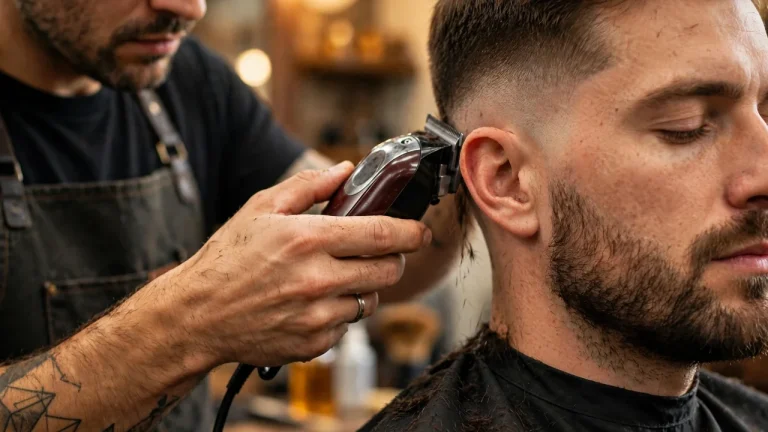
What Every Haircut Number Means, From 0 to 8
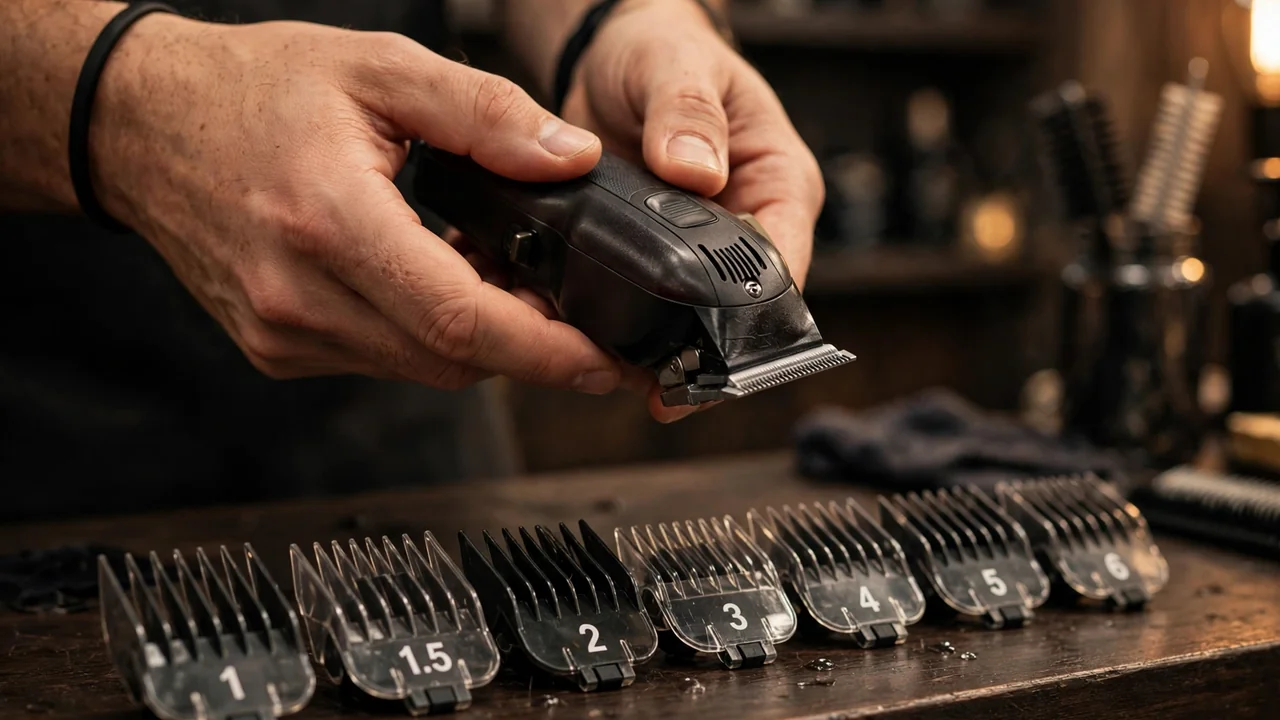
Haircut numbers are the numbered guard sizes that fit on a barber’s clippers, and each number tells you exactly how much hair stays on the head after the cut. A number 1 leaves 1/8 inch of hair, a number 8 leaves a full inch, and every step between the two adds another 1/8 inch. Learn the scale below once and you will never again walk out of the barbershop with the wrong length.
What Haircut Numbers Actually Are
Every electric clipper in a barbershop works with a set of plastic guide combs, usually called guards, that snap over the blade. Each guard is stamped with a number, and that number is the entire language of short haircuts. When a client asks for a number 2 on the sides, the barber is not guessing. The number 2 guard goes on, and the cut comes out the same length it did for the last fifty clients. The system goes back to the early days of electric clippers, and the history of hair clippers explains how the guard system became the industry standard.
The Guard System in Plain English
A haircut number is shorthand for a length, nothing more. On the standard scale, guard 1 leaves 1/8 inch of hair, guard 2 leaves 1/4 inch, and the pattern continues up to guard 8 at a full inch. Each step between numbers adds 1/8 inch. A few brands also make half guards like 0.5 and 1.5 for finer blending work, but the 1 to 8 scale is what you will hear at almost every barbershop. The blade setting matters too. Cutting with no guard at all sits below number 0, which is why a zero and a true skin finish are different requests. If you are weighing clippers against shears for a particular style, our scissor cut vs clipper cut breakdown shows exactly where each tool wins.
Why Numbers Beat Vague Descriptions
Ask for “short on the sides” and you have handed the barber a riddle. Your short and his short can easily differ by two full guard sizes, and you only discover the difference in the mirror at the end. Numbers remove that guesswork completely. A number 3 is a number 3 in any barbershop in any city, which means you can switch barbers or walk into a new shop on a trip and get the same result. Numbers also make the conversation shorter. Instead of a two-minute description of what you liked about last time’s cut, you say “same as last time, number 2 fade into a 4 on top” and the barber nods. Precise language is why we put exact phrasing first in our guide on how to ask your barber for a haircut, because a clear ask is the fastest route to a cut you actually like.
The Complete Haircut Numbers Chart
Bookmark this chart, because it answers the question for every guard you will ever meet. The table below is the standard length chart used by the major clipper brands, shown in inches and millimeters with what each number looks like in real life. Men’s guard charts sometimes disagree by a hair on the millimeter values because brands measure slightly differently, but the inch values are consistent across the industry.
One more thing the standard chart leaves out is guards past 8. Brands sell 10, 12 and even 16 guards, which leave 1.25 inches, 1.5 inches and 2 inches, for trimming longer tops without switching to scissors. They are not part of most home sets, and barbers rarely use them for fades, but they explain why a request for a light cleanup on longer hair can still be answered with a guard number.
| Number | Inches | Millimeters | What It Looks Like | Best For |
|---|---|---|---|---|
| 0 | 1/16 | 1.5 | Barely-there stubble, scalp fully visible | Skin fades, bald fades |
| 1 | 1/8 | 3 | Very short shadow of hair, scalp shows | Buzz cuts, tight fade bottoms |
| 2 | 1/4 | 6 | Short but even coverage across the head | All-over buzz, fade sides |
| 3 | 3/8 | 10 | Neat short cut, scalp mostly hidden | Crew cuts, short fades |
| 4 | 1/2 | 13 | Short with visible texture on top | Textured crops, longer buzz cuts |
| 5 | 5/8 | 16 | Medium short, lies flat, easy to comb | Classic tapers, tidy office cuts |
| 6 | 3/4 | 19 | Fuller short hair with some movement | Brush cuts, thick hair control |
| 7 | 7/8 | 22 | Long short hair, soft natural edges | Crew cuts on thick or wavy hair |
| 8 | 1 | 25 | Longest guard cut, a full inch of hair | Trimming longer tops, light cleanups |
Two details in the chart trip people up. First, number 0 is not the same as no guard. A 0 guard leaves 1.5 mm of stubble, while clippers with no guard cut closer to the skin, and a true skin finish usually adds a foil shaver or razor after the clippers. Second, guards above 8 exist on some sets, but they are rare in barbershops. For anything you would ask a barber to do, the 0 to 8 range covers it.
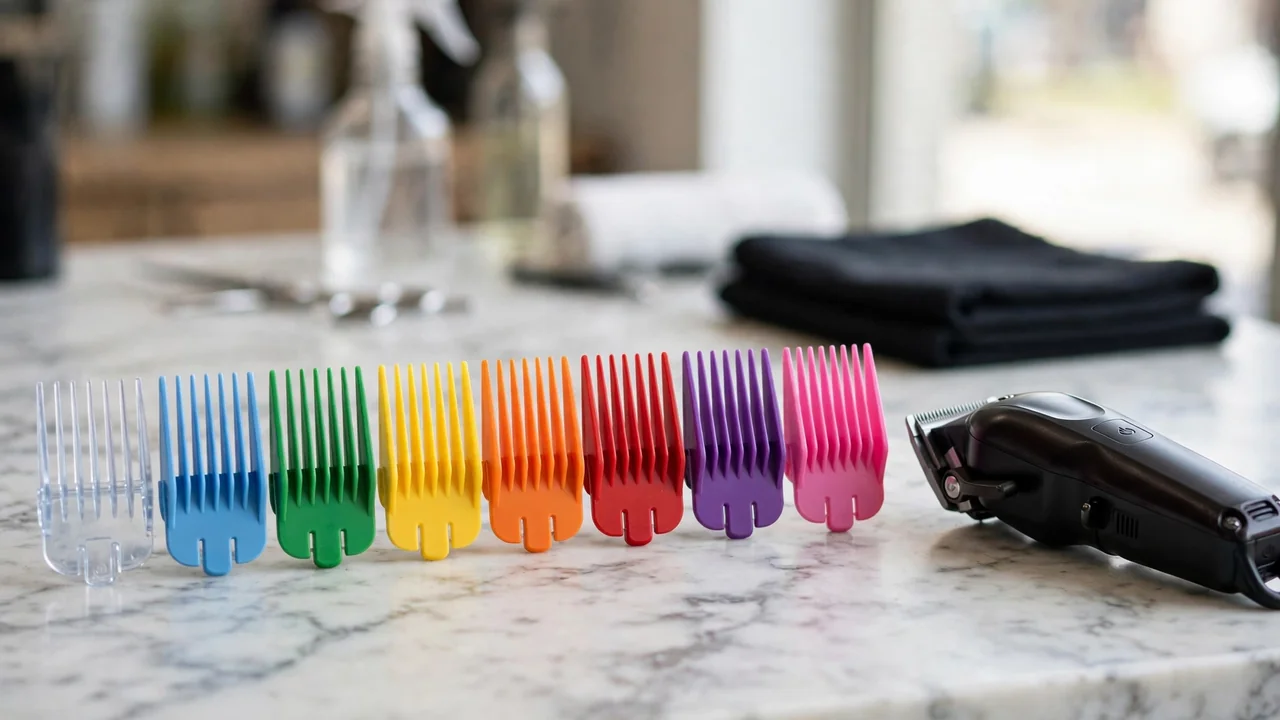
What Each Haircut Number Looks Like on Real Heads
A chart gives you the measurements, but hair does not behave like a ruler. Thick coarse hair makes a number 3 look fuller than the same guard on fine straight hair, and tight curls spring up shorter than the guard length suggests. Treat the descriptions below as what most men see in the mirror. If you want to compare these lengths against full styles, browse the rest of the guides from our homepage.
Numbers 0 to 2, From Skin to Buzz
This is the shortest territory. A number 0 leaves a faint shadow and works as the bottom of a skin fade or a full shaved-head look. A number 1 shows the scalp clearly and suits men who like an aggressive, low-maintenance cut. A number 2 is where coverage starts to look like hair again rather than stubble, which is why it is one of the most requested guards for all-over cuts. Men who wear these lengths usually commit to the look, because there is nothing to style and nowhere to hide an uneven head shape. Our collection of buzz cut hairstyles for men shows how much variety lives inside this short range when you play with fades and lineup edges.
Numbers 3 to 5, Short and Easy
The 3 to 5 range is the comfort zone for most men. A number 3 hides the scalp while staying firmly short, and it is the longest guard most barbers use inside a traditional fade. A number 4 adds enough length for texture, which makes it the classic choice for crew cuts and short crops that you can push around with your fingers. A number 5 starts to look like a genuinely short haircut rather than a clipper cut, and it combs flat for office-friendly styles. If you have never asked for a number before, start here. Going one guard longer than you think you want is always safer, because a barber can take more off in seconds but cannot put it back.
Numbers 6 to 8, the Longer End
Guards 6 through 8 leave real length. A number 6 gives enough hair to show movement and suits thick hair that needs weight to behave. A number 7 works well for longer crew cuts and brush cuts where you want the top to stand with some height. A number 8, the longest standard guard, is mostly a trimming tool. Barbers use it to clean up the ends of longer hair or to take the bulk out of the top before scissor work. Few men ask for a number 8 as the main event of a haircut, but it earns its place as the safe choice when you want the shortest possible change.
How the Numbers Build a Fade
A fade is simply guard lengths stacked in order. The barber starts with a short number at the neckline and sideburns, then steps up through the guards toward the top, blending each transition so no lines show. The classic 3-2-1 pattern is the easiest version to ask for. It means a number 3 higher on the sides, a number 2 through the middle, and a number 1 near the bottom. The taper lever on the clipper fine-tunes the blend between guards, and half guards like 1.5 fill the gaps when the jump between two numbers looks too sharp. Flipping the lever from closed to open adds roughly half a millimeter to a full millimeter without changing the guard, which is how barbers soften a line without swapping combs. This is why fades take skill even though the numbers sound simple. The guards set the lengths, but the blending decides whether the result looks smooth or choppy. For the full breakdown of where each style sits, see our taper vs fade comparison and the low vs mid vs high fade guide, and this clipper blade size guide from LEAFtv walks through the same system from a barber’s point of view.
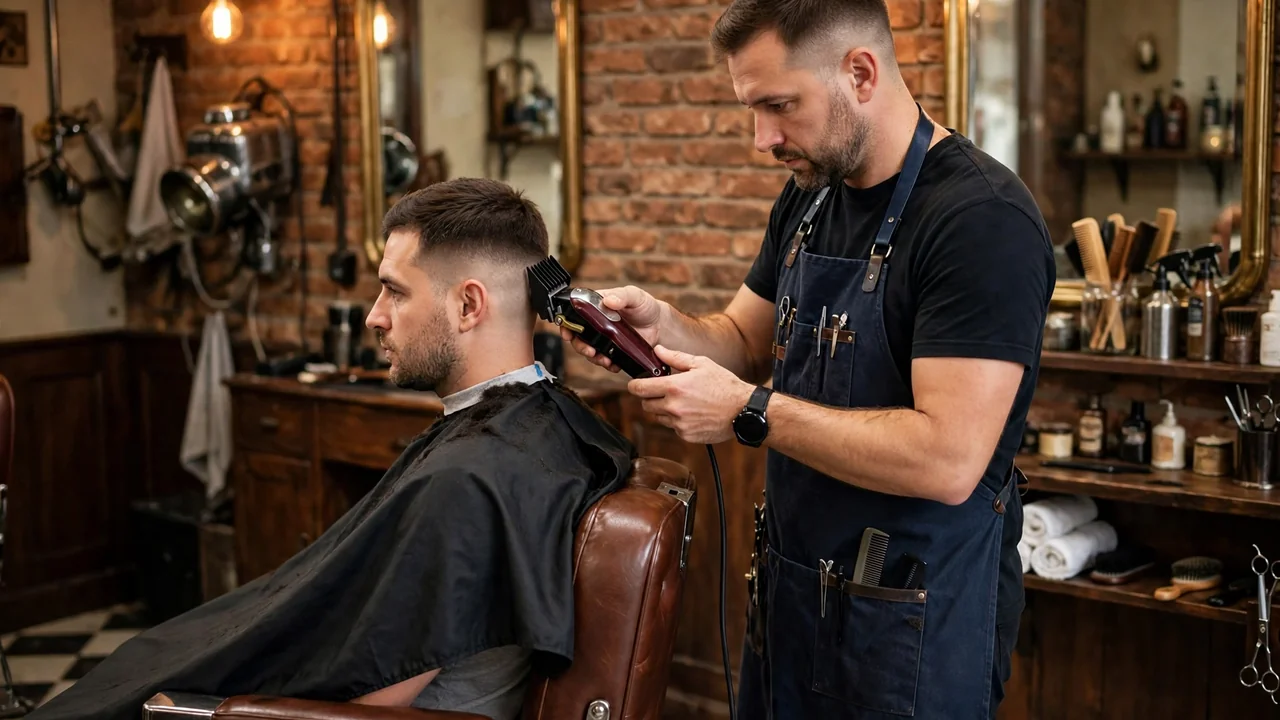
Barber Script, Exactly What to Say at the Chair
Knowing the numbers is only half the job. You still have to say them in the right order at the chair. The script that works every time names the guard for each zone, starting from the sides and ending at the top. Here are three word-for-word examples you can use on your next visit.
All-over buzz. “Number 3 all over, and clean up the neckline and around the ears.” One guard, one cleanup request, done in ten minutes.
Classic fade. “Mid fade, number 1 at the bottom blending up to a number 3, and take the top down with scissors to about two inches.” You named the fade height, the bottom guard, the top guard and the top length. That is everything the barber needs.
Office taper. “Taper the sides from a number 2 to a number 4, keep the top as it is, just tidy the ends.” Short, professional, and impossible to misunderstand.
Add one more sentence if you are trying a new barber. “If the 2 looks too short once you start, switch to a 3.” Barbers respect clients who give them an escape route, and it guarantees you never leave with less hair than you wanted. Bring a photo on your phone as backup. Numbers set the length, a photo sets the shape, and the two together leave nothing to chance.
How Often to Get a Touch-Up
Shorter numbers show regrowth faster, so the guard you wear sets your appointment rhythm. A number 1 grows out of shape in days, while a number 5 still looks tidy after a few weeks. The table below gives you a realistic maintenance schedule for each range. Clipper manufacturers publish their own guidance too, and this clipper guard tutorial walks through the guard sizes on camera if you want to match your home clipper set to the numbers in this article.
| Guard Range | Touch-Up Rhythm | Why |
|---|---|---|
| 0 to 1 | Every one to two weeks | Stubble shows growth almost immediately and fades lose their edge fast |
| 2 to 3 | Every two to three weeks | The neat look holds a while, but the neckline goes fuzzy quickly |
| 4 to 5 | Every three to four weeks | Texture disguises regrowth, so the cut ages gracefully |
| 6 to 8 | Every four to six weeks | Longer lengths blend with new growth and keep their shape |
Between visits, a quick neckline cleanup keeps any number looking fresh. A number 1 or 2 pass on the neckline every week stretches the time between full appointments noticeably.
Who Should Skip the Number System
The number system is the right language for most short cuts, but it is not the right language for every cut. If you are growing your hair long, guards top out at one inch, so numbers stop being useful the moment the scissors take over. Men with very tight curls should also be careful. Curls compress under the guard and spring up shorter than the number promises, so a number 4 can look like a number 2 once the hair dries. In that case, ask the barber to cut by eye and check the length dry. Layered and textured styles that live in the top also run mostly on scissor work, with numbers describing only the sides. And if you are asking for something complex for the first time, a photo plus a conversation beats a string of numbers. The number system is a tool for precision, not a replacement for a barber’s judgment.
FAQs
Conclusion
Haircut numbers turn a vague request into an exact one. Memorize the 0 to 8 scale, remember that each step adds 1/8 inch, and use the chart above whenever you doubt yourself. Name the guard for each zone at the chair, bring a photo for the shape, and keep the maintenance rhythm that matches your number. The system has survived for a century because it works, and now it works for you too.