How to Talk to Your Barber So You Get the Haircut You Picture
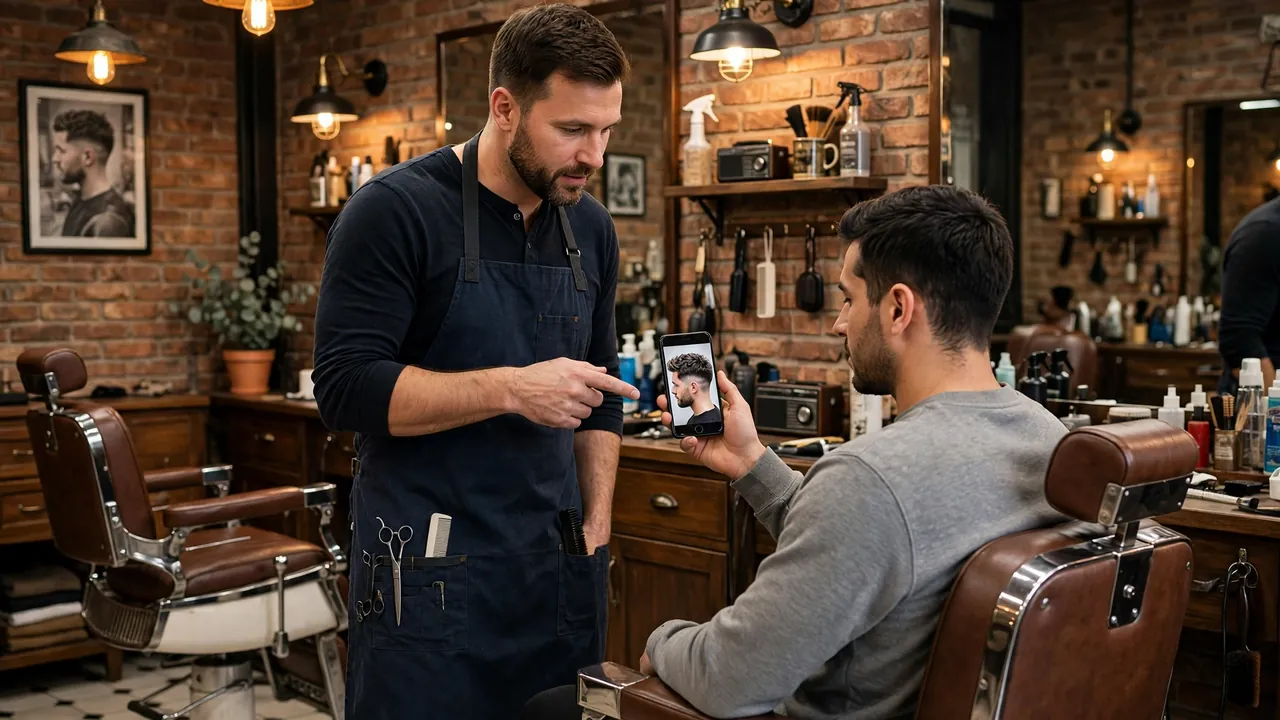
Learning to ask your barber for the cut you pictured is simpler than it looks. The men who always leave the chair happy do three things. They bring a clear reference photo, they describe lengths in inches or clipper guard numbers, and they use a short script that covers the sides, the top, the neckline, and how they style their hair. Do those three things, and the barber has everything needed to give you the cut you pictured instead of a surprise.
Most bad haircuts are not caused by bad barbers. They are caused by vague instructions. “Just clean it up” or “make it look good” leaves the barber guessing, and guessing is where the problems start. Haircut names make it worse. One barber’s “taper” is another barber’s “fade,” and a style that looks one way on thick wavy hair can look completely different on fine straight hair. When you learn to describe what you want in plain, specific terms, you take luck out of the appointment.
The Exact Script for How to Ask Your Barber for a Haircut
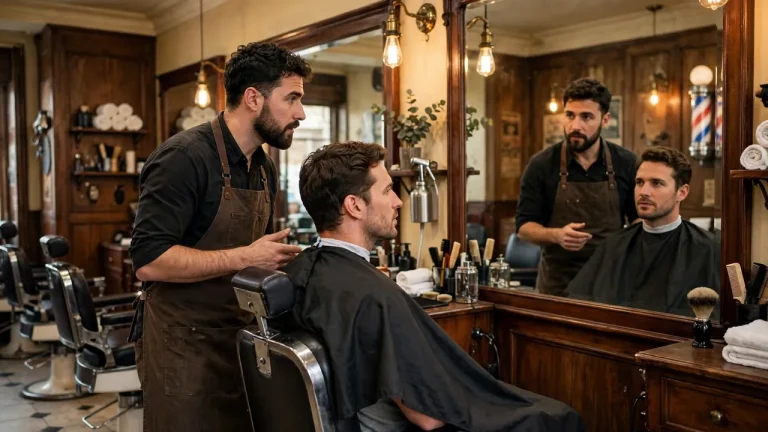
Barbers do their best work when the first thirty seconds of the appointment are clear. Saying everything up front keeps the barber from asking questions mid-cut. Use this script, filling in the bracketed parts with your choices.
“I am going for [general style, like textured crop or side part]. Keep the top about [length in inches]. Clean up the sides with a [low, mid, or high] [taper or fade] down to a [guard number]. Keep the neckline [natural, squared, or rounded]. I want enough texture on top to style it [forward, back, or to the side] with [matte clay or pomade]. If my hair type will not do this, tell me and we will adjust it for my face.”
That last sentence matters more than it looks. It gives the barber permission to push back, and a good barber will. If your hairline or density will fight the style in the photo, you want to hear that before the cutting starts, not after. If you wear a beard, add one line about it here, such as whether the sides should blend into the beard or stop cleanly above it, since a fade that ignores the beard can leave a visible step at the jaw.
One rule for the whole appointment. Speak up early, not late. If the sides are coming up shorter than you wanted, say so the moment you notice. Fixing a cut takes seconds at the start and is close to impossible at the end. Barbers expect this. A helpful walkthrough of the same conversation is available in this YouTube tutorial from TheSalonGuy on what to tell your barber.
Bring the Right Reference Photo, and Show It the Right Way
A photo does what words cannot. It shows proportions, texture, and the overall feel of the cut in a single glance. That is why every barber prefers a client who walks in with a photo over one who tries to describe a style from memory. But not every photo helps. A photo of thick curly hair will not help your barber plan a cut for your fine straight hair, even if you love the style. Pick photos of men with a similar hair type, similar density, and a similar face shape to yours. The closer the hair in the photo matches yours, the closer the result will match the photo.
Bring two or three photos if you can. One should show the front, one the side, and one the back or neckline if that part matters to you. Save them to your phone before the appointment. Show them at the very start, before the barber picks up any tools, with your screen brightness up. Point at the specific parts you like. “I like how the front sits here” tells the barber far more than “I like this.”
When the barber studies the photo, listen to what they say about it. If they tell you your hair type will not hold that style, believe them. The photo is a starting point for a conversation, not a contract. That is the first step in talking to your barber like a regular. If you have a photo of your own last cut that worked, bring that too, since it shows your real hair and growth pattern better than any celebrity photo. It also helps to name one thing you do not want, such as a hard line at the front or a squared neckline, so the barber knows what to avoid as well as what to aim for.
Describe the Sides in Words That Mean the Same Thing to Every Barber
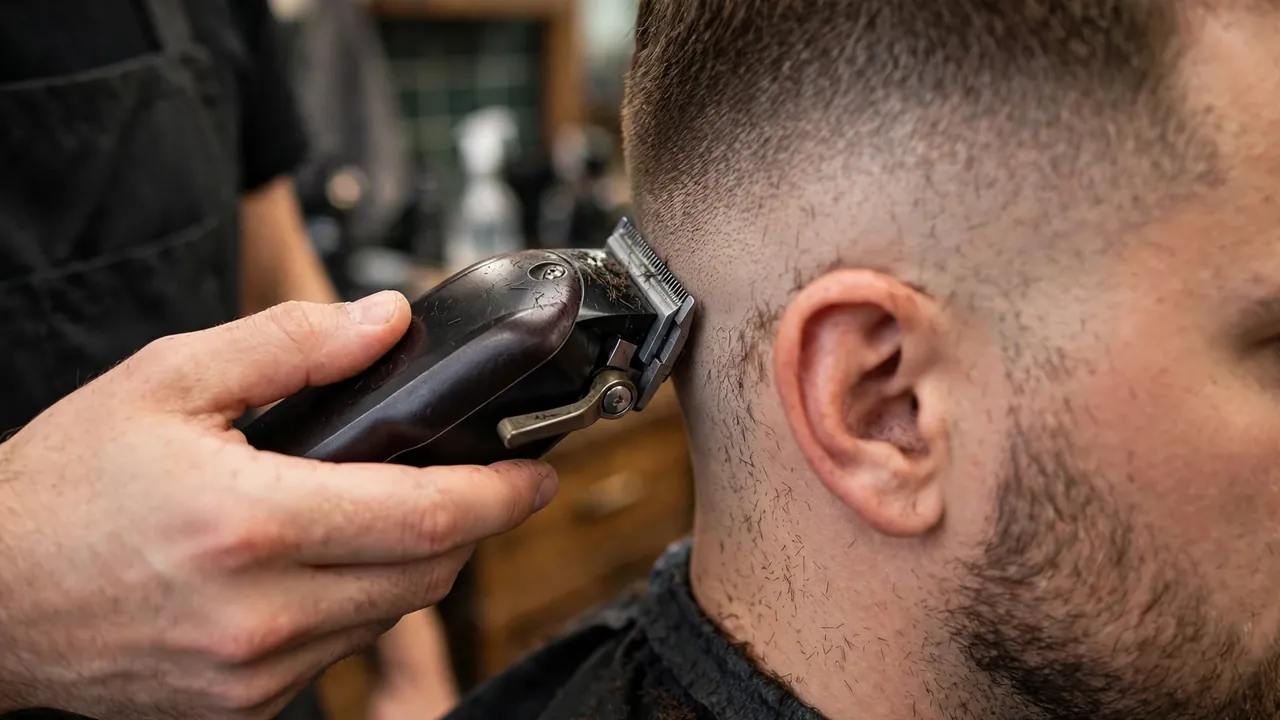
The sides are where most miscommunication happens, because this is where all the jargon lives. Describe them with three facts, and you have handled the hardest part of the conversation.
Clipper Guard Numbers and What They Mean
Clipper guards are numbered by the length they leave. A number 1 leaves about an eighth of an inch, a 2 leaves a quarter inch, a 3 leaves three eighths, and a 4 leaves half an inch. Saying “number 2 on the sides” is the most reliable way to describe side length.
Use a guard number whenever the sides will be short. “Number 2 on the sides, blended into the top” cannot be misread. Not sure which guard matches your photo? Ask the barber to start longer and go shorter, since length is easy to remove and impossible to add back. The scissor cut vs clipper cut choice matters here too, since clipper work gives a crisp blended finish while scissor work keeps the sides softer and longer.
Fade Height, Taper, and Blend Terms
After the guard number, say where the fade starts. A low fade starts just above the ear, a mid fade around the temple, and a high fade up near the crown. Point at your head to show exactly where you want the transition. Our full breakdown of low, mid, or high fade options shows what each height looks like, which helps when you are deciding before the appointment.
Know the difference between a fade and a taper before you ask for one. A fade blends from short to long across the whole side and back. A taper only shortens the hair near the sideburns and neckline. If you are unsure which one is in your photo, say so and let the barber decide. Our guide to taper vs fade walks through both with photos. And if you want a short, neat style with a blended finish, the buzz cut fade shows how guard numbers and fade height work together.
Talk Through the Top, the Neckline, and the Styling
The sides get all the attention, but the top, the neckline, and the styling instructions decide whether you like the haircut a week later. Cover each one in the script and there will be no surprises when you style it yourself.
Top Length and Texture
Describe the top in inches or finger widths, not in vague words. “Take an inch off the top” or “leave about three inches on top” gives the barber a measurement to work with. Say how you want it to sit as well. Flat and neat, pushed forward with texture, swept back, or left messy. These are different cuts, and the barber needs to know which one you are picturing.
Mention texture if you want it. Texture means the ends are cut at varied lengths so the hair separates and moves instead of sitting as one solid block. It is what makes modern cuts look lived in rather than helmet like. For a smooth, classic finish, ask for clean and blended with no texture.
For curly or coily hair, add one more detail. Say whether you want the top cut dry or damp, since curls shrink as they dry and a length that looks right wet can sit much shorter once it dries. Ask the barber to cut curl by curl if the top will stay long, and mention whether you want the curl pattern left natural or stretched out, since that changes how much length stays on top.
Neckline and Sideburns
The neckline shapes how the cut looks from behind and how it grows out. A natural neckline follows your hairline and grows out softly. A squared neckline is cut straight across for a sharp edge. A rounded neckline is curved for a softer finish. Pick one and say it by name.
Sideburns get the same treatment. Say whether you want them kept, shortened, or blended into the fade. This takes five seconds to mention and is one of the most commonly skipped details.
How You Will Style It Every Morning
Tell the barber how much effort you will put into styling. “I style it every morning with clay” and “I just run my hands through it and leave” lead to very different cuts. A barber who knows you want a wash and go style will leave more forgiving length. Be honest about your routine. The best cut is the one you will actually maintain.
Also mention the product you use, or ask what the barber recommends. The Art of Manliness has a classic guide on this whole conversation, including a video on how to talk to your barber from a master barber, plus their written breakdown at artofmanliness.com.
What to Say When You Do Not Know What You Want
Sometimes you walk in with no photo and no style in mind. That is fine, and it is far better than pretending you know what you want. Be direct. Say “I am not sure what I want, but here is what I do not like about my current cut,” and describe the problem. Problems are specific, and a barber can solve a specific problem.
Then give the barber the raw material to work with. Mention your hair type, your daily routine, and your workplace dress code. A barber who knows you work in a formal office and spend two minutes on your hair will not suggest a high maintenance style. Ask one question at the end. “What would you do with my hair?” The good ones light up when a client actually wants their opinion.
It also helps to know your face shape before this conversation, because it shapes what the barber will suggest. Take a minute to figure out your face shape before your next visit, and you can walk in saying “I have a round face and I want something that adds some height on top,” which is a brief any barber can work with immediately.
Barber Terms Worth Knowing
You do not need to speak fluent barber to get a good cut, but knowing a handful of terms stops you from agreeing to something you do not understand.
| Term | What it means | When to use it |
|---|---|---|
| Fade | Hair blended from very short at the bottom to longer at the top, across the sides and back | When you want a clean, graduated finish on the sides |
| Taper | Hair shortened gradually near the sideburns and neckline only, keeping more length elsewhere | When you want a neat edge without a full fade |
| Skin fade, bald fade | The fade goes all the way down to bare scalp at its shortest point | When you want maximum contrast and sharpness |
| Low, mid, high fade | Where the fade transition starts, near the ear, at the temple, or up near the crown | Always pair with one of these so the barber knows the height |
| Guard number | The clipper attachment size, 1 is about an eighth of an inch, 4 is half an inch | When you want a specific, measurable side length |
| Texture | Ends cut at varied lengths so hair separates and moves | When you want a modern, lived in finish on top |
| Neckline, natural, squared, rounded | How the back hairline is finished, following its shape, cut straight, or curved | Name one at every appointment |
| Blend | A smooth transition with no visible lines between lengths | When you want the sides to melt into the top |
How Often to Book So the Cut Keeps Looking Sharp
A great appointment only lasts as long as the cut holds its shape, and every style has its own timeline. Fades lose their edge first because the blend depends on exact lengths. Longer styles forgive weeks of growth.
At each visit, repeat the key facts from your script. Guard number, fade height, top length, neckline. Do not assume the barber remembers your exact numbers from last time. Saying “number 2, mid fade, inch off the top, natural neckline” works every time with everyone.
| Cut type | Booking rhythm | What to say at the visit |
|---|---|---|
| Skin or high fade | Every two to three weeks | “Refresh the fade, same guard and height” |
| Mid fade or taper | Every three to four weeks | “Clean up the blend, keep the length” |
| Short classic cuts | Every three to five weeks | “Same shape, tidy the edges” |
| Medium length | Every five to seven weeks | “Maintain the shape, take the weight out” |
| Long hair | Every eight to ten weeks | “Trim the ends, keep all the length” |
Who Should Skip This Script
This script is built for men who want a specific result and are willing to spend two minutes describing it. Not everyone needs it. If you have been seeing the same barber for a year and they know your numbers and your routine, the full script is overkill. A simple “same as usual, maybe a touch shorter on top” is enough.
Skip it too if you are going in for a full transformation and you trust the barber’s judgment more than your own. Some of the best haircuts come from saying “I want a change, what would you do?” and letting a skilled barber design something around your hair type and face. That is a different kind of appointment, and it works when you pick the barber carefully and give them real creative room.
Finally, the script does not replace finding the right barber. No amount of clear communication fixes a barber whose work you have never liked. If you have given three clear briefs and walked out unhappy three times, the problem is not your vocabulary. It is time to try a different chair.

Check the Back in the Mirror Before You Leave
Do not judge the cut from the front mirror alone. Before the cape comes off, ask the barber to hold up a hand mirror so you can see the back and both sides. Check the neckline shape, the blend on each side, and that the sideburns match. Compare it with your reference photo one more time. Small fixes, such as softening a line or taking a little more weight out of one side, take seconds while you are still in the chair and are far harder once you have paid and left. If everything matches, take a photo of the finished cut from the front, side, and back, and bring those photos to your next appointment, since they show your real hair better than any photo you found online.
FAQs
Conclusion
A good haircut is a team effort, and your half of the work takes about two minutes. Bring a photo that matches your hair type, describe the sides with guard numbers and a fade height, cover the top, neckline, and styling in one short script, and give the barber room to adjust the plan to your face. For more cut guides to pair with this script, start at the BarbersGrooming homepage. The next time you sit in the chair, the cut you walk out with will match the one you pictured. That is how to ask your barber for a haircut and actually get it.