Curtain Haircut for Men, 7 Styles and Easy Styling Guide
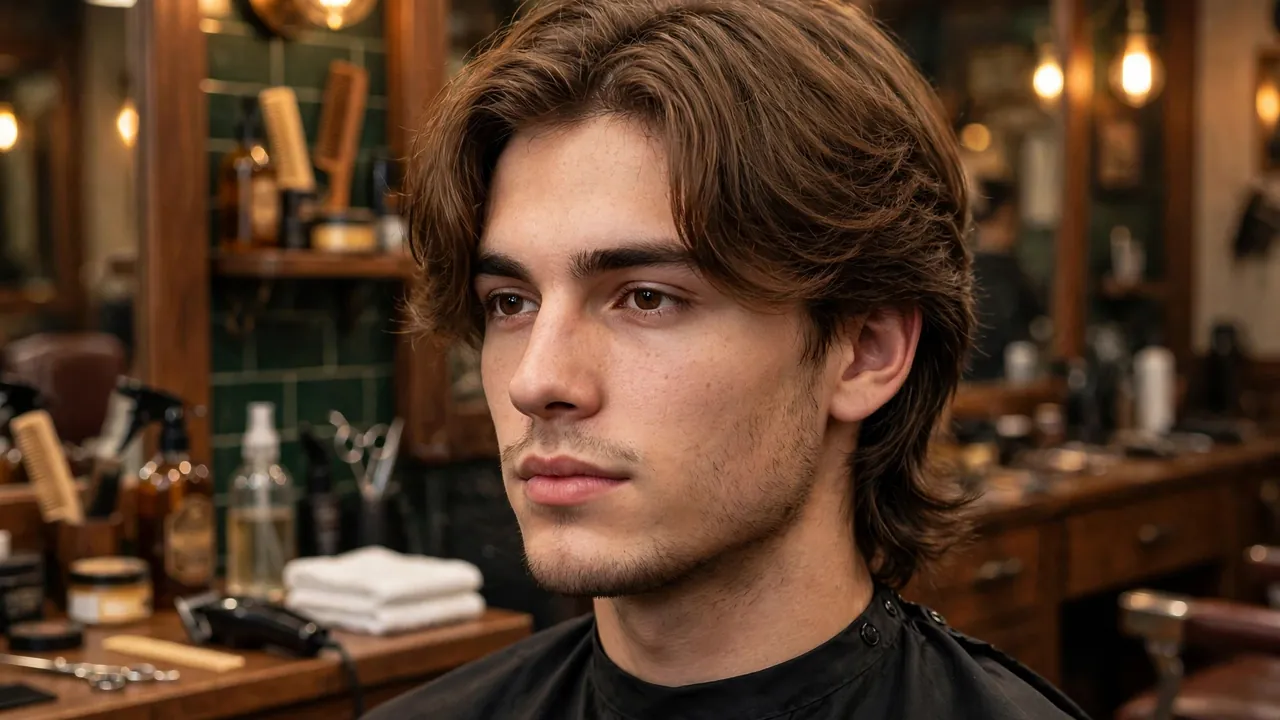
A curtain haircut men are asking for everywhere right now is a medium-length cut with a middle or slightly off-center part, where the longer front sections fall to either side of the face like curtains. The style defined 90s icons and has come back hard thanks to TikTok and the broader 90s revival in men’s fashion. In my experience, it is the most forgiving medium-length cut a guy can get: it works on straight, wavy, and curly hair, flatters most face shapes, and looks intentional even when you do almost nothing to it. This guide covers how the cut actually works, the versions worth knowing (including the middle part taper fade), exactly what to tell your barber, and who should skip it.
What Is a Curtain Haircut
The formula is simple: longer hair at the front, a visible part, and natural movement. The top is kept at medium length (usually 3 to 5 inches), the sides are left medium for the classic look or tapered for the modern one, and the front falls in two sections that frame the forehead.
Unlike sharp fades or structured crops, the curtain haircut men choose does not need to look perfect. A little natural texture actually improves it. That is the secret of its popularity: it is a low-effort cut that reads as high-style, because the part and the framing do all the visual work.
The part placement matters more than anything. A dead-center part gives the classic symmetrical look. A slightly off-center part feels more modern and relaxed. Your barber should find your natural parting point and work with it, not against it.
The cut has famous fans on both sides of its history. The 90s version belonged to heartthrobs like Leonardo DiCaprio, and the modern revival has been carried by actors like Timothée Chalamet and Jacob Elordi, whose red-carpet curtains made the middle part fashionable again. If you are showing your barber a reference photo, theirs are the ones most barbers recognize instantly.
Curtain Haircut Variations Worth Knowing
The curtain is a framework, not a single cut. Here are the versions that matter.
The Classic Curtain Haircut Men Love
The 90s blueprint: symmetrical, medium-length all around, air-dried. Works best on straight or slightly wavy hair where the length has enough weight to hold the part. Keep the styling minimal: this version is about restraint. Our messy hairstyles guide covers the undone finish in detail.
The Middle Part Taper Fade
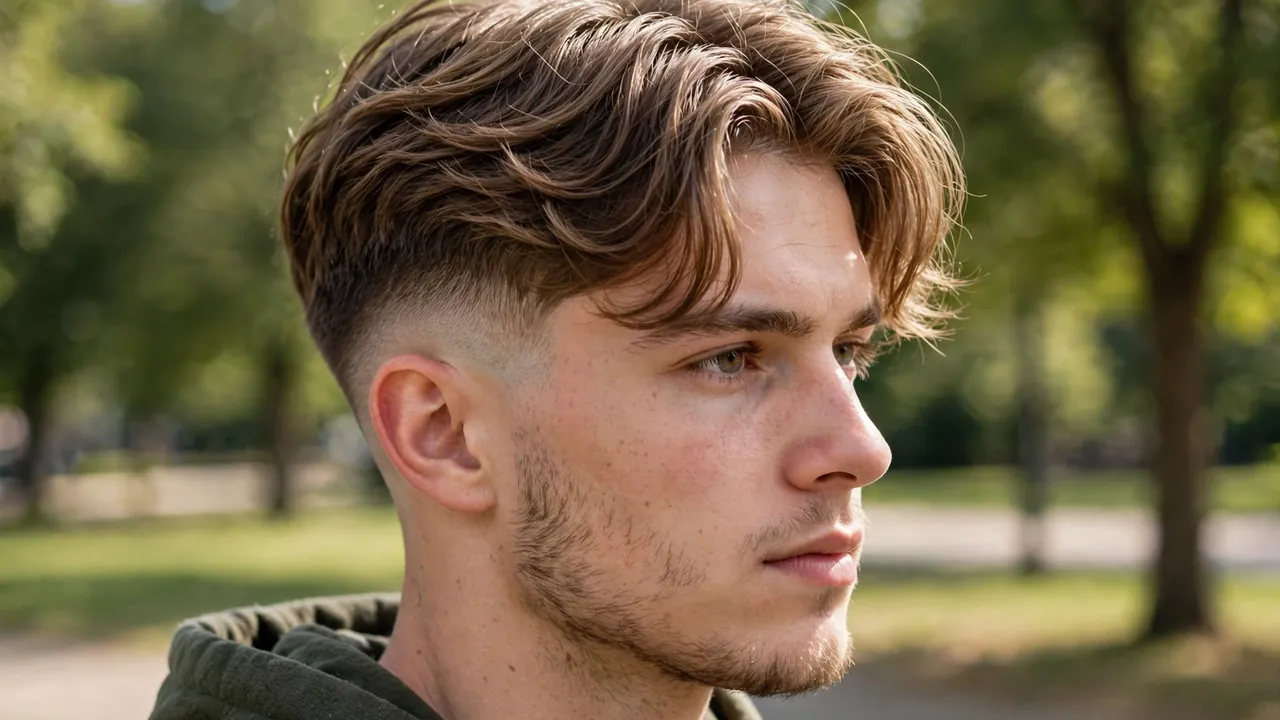
The modern update. The curtains stay long on top, but the sides get a clean low or mid taper instead of bulk. This is the version for guys who want the 90s look without the 90s shapelessness around the ears. It is also the most office-friendly curtain, because the taper keeps the silhouette tidy. See our low taper fade guide for the technique.
The Middle Part Wolf Cut
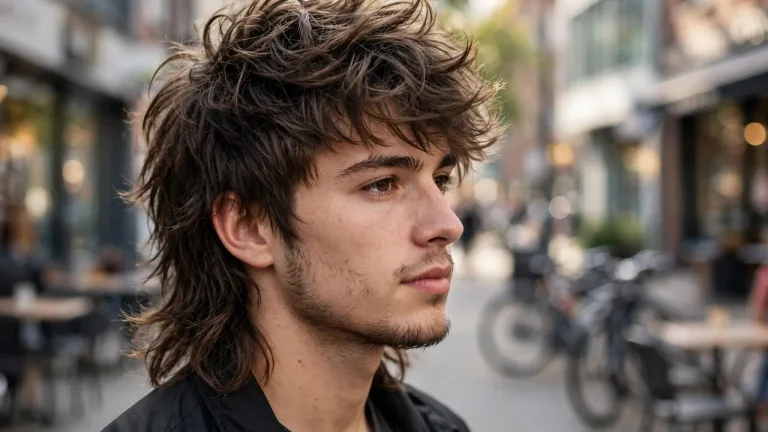
Shaggy layers meet the curtain part. The wolf cut’s choppy, textured layers give the curtains movement and edge, popular with younger guys and the streetwear crowd. It needs more layering work from your barber than the classic version, but the payoff is a cut with real character.

The Curly Curtain Haircut
Curls parted down the middle and left to fall naturally. The curls do the framing work, so the cut is mostly about managing bulk and shape. Our curly hairstyle guide covers the products and routine that keep this version defined instead of frizzy.

The Textured Curtain
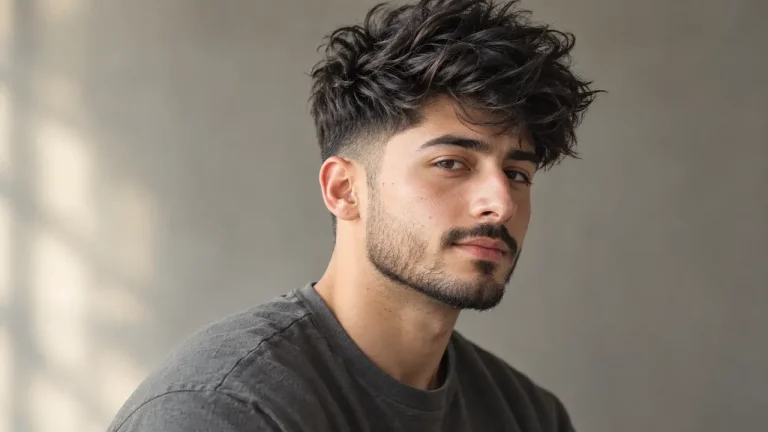
Point-cut or razor-cut layers through the top for a piecey, lived-in finish. The texture keeps thick hair from sitting like a helmet and gives fine hair the illusion of fullness. A textured cut pairs naturally with the curtain framework.

The Asymmetric Curtain
The 2026 twist on the classic: instead of a centered part, the hair is parted deep on one side so one curtain falls longer and heavier than the other. The imbalance gives the cut an editorial edge and photographs well, which is why it shows up so much in fashion shoots. It suits guys who find the symmetrical version a little too neat. Ask your barber to cut the part where your hair naturally wants to split, then build the longer side with extra length through the front.

The Burst Fade Middle Part
A burst fade curves around the ear in a semicircle while the top stays long enough to part down the middle. It is the boldest curtain pairing: the fade keeps the sides sharp and compact while the curtains keep the top soft. This version works best on straight or wavy hair with enough density on top to hold the part, and it answers the guys who want edge without giving up length.

How Curtains Differ from Similar Medium Cuts
The curtain gets confused with a few neighboring styles. Quick clarity:
| Cut | Part | Framing | Vibe |
|---|---|---|---|
| Curtain haircut | Middle or off-center | Both sides of the face | 90s revival, relaxed polish |
| Bro flow | None or loose | Swept back | Surfer length, no structure |
| E-boy middle part | Dead center | Flat against the face | Sleeker, more styled |
What to Ask Your Barber
The curtain cut lives or dies on the consultation. Say this:
“I want a curtain cut with a [middle / slightly off-center] part. Keep 3 to 5 inches on top with the front longest, and [leave the sides medium / taper the sides with a low taper]. Add [soft layers / texture] so it moves naturally. Find my natural part and cut to it.”
Three things that keep the appointment on track:
Bring a Photo of Your Hair Type
A curtain cut on straight hair looks nothing like one on curly hair. Show your barber a photo of someone with your hair texture, not just the cut you want. The barber needs to see how the length behaves on your hair type.
Decide the Sides Before You Sit Down
Medium sides (classic) and tapered sides (modern) are two different cuts. If you are unsure, start with medium sides: your barber can always taper them later, but growing tapered sides back out takes weeks.
Talk About the Grow-Out
Curtains grow out well, which is part of the appeal, but the part can shift as length changes. Ask your barber where the cut will sit in six weeks and whether the sides will need a trim to keep the shape.
How to Style a Curtain Haircut at Home
This is a low-product cut, which is one reason the curtain haircut men stick with needs so little upkeep. The routine:
- Start damp. Towel-dry after a shower, or mist with water. The cut styles best on slightly damp hair.
- Find the part. Use a comb or your fingers to set the part where your barber cut it. Do not fight your natural parting point.
- Add light product. A small amount of styling cream or sea salt spray, worked through with fingers. Scrunch for texture, smooth for polish.
- Hands off. Let it air-dry. The whole point is natural movement, and over-touching kills it.
Heavy gel and wax are the enemy here. They flatten the movement that makes curtains work. (YouTube curtain fringe tutorial shows how the pros style the 2026 versions.)
Fixing Common Curtain Problems
Three issues come up again and again with this cut, and all three have simple fixes. If a cowlick fights your part, ask your barber to cut that section slightly shorter so it loses its leverage, then train it with a blow dryer pointed in the direction you want it to lie. If the curtains collapse by midday, you are probably using too much product or none at all: a pea-sized amount of styling cream on damp hair gives structure without weight. If the fringe keeps falling into your eyes, the front is simply too long, and a quick fringe trim between full cuts solves it in minutes.
How Often to Get It Trimmed
| Service | Frequency | Notes |
|---|---|---|
| Side cleanup (tapered version) | Every 3–4 weeks | Keeps the silhouette tidy |
| Full cut | Every 6–8 weeks | Reshape layers and the part |
| Fringe trim | As needed | Keep it out of your eyes |
Who Should Skip the Curtain Haircut
Honest exclusions:
Your Hair Is Very Fine and Straight
Curtains need some body to hold the part and frame the face. Very fine, pin-straight hair can go limp and stringy at this length. A mid taper with texture gives more structure on fine hair.
You Will Not Grow It Out
The cut needs 3-plus inches on top to work. If you are starting from a buzz cut, you are looking at months of awkward growing before the curtains exist. Commit to the grow-out or pick a shorter cut.
You Hate Hair on Your Forehead
The whole cut is hair framing your face. If you constantly push hair back and hate anything touching your forehead, the curtain will drive you crazy. A slicked style suits you better.
FAQs
Conclusion
The curtain haircut men keep coming back to earned its comeback. It is the rare medium-length cut that flatters most face shapes, works on every hair texture, and asks almost nothing of you in the morning. The modern versions with tapered sides keep it sharp enough for anywhere, while the classic grows out beautifully. Get the part right, keep the product light, and let the cut do what it was designed to do. (YouTube curtain mullet tutorial is a solid second opinion on the variations.)
If you are still deciding between medium-length cuts, browse the full set of haircut guides on Barbersgrooming before your appointment.