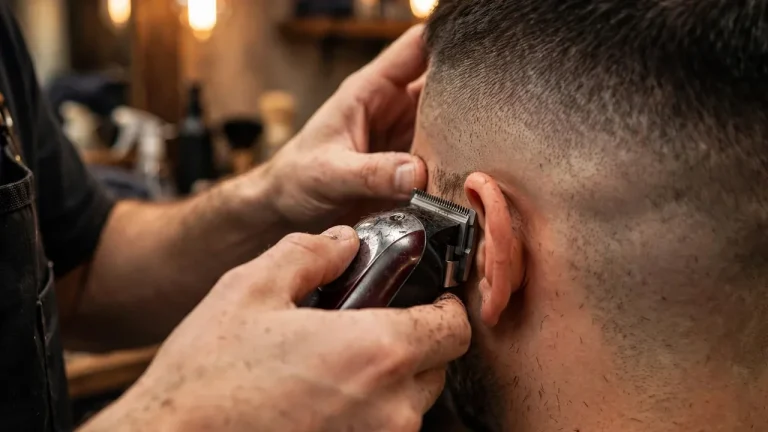
Drop Fade Haircut, How the Drop Works, Every Version
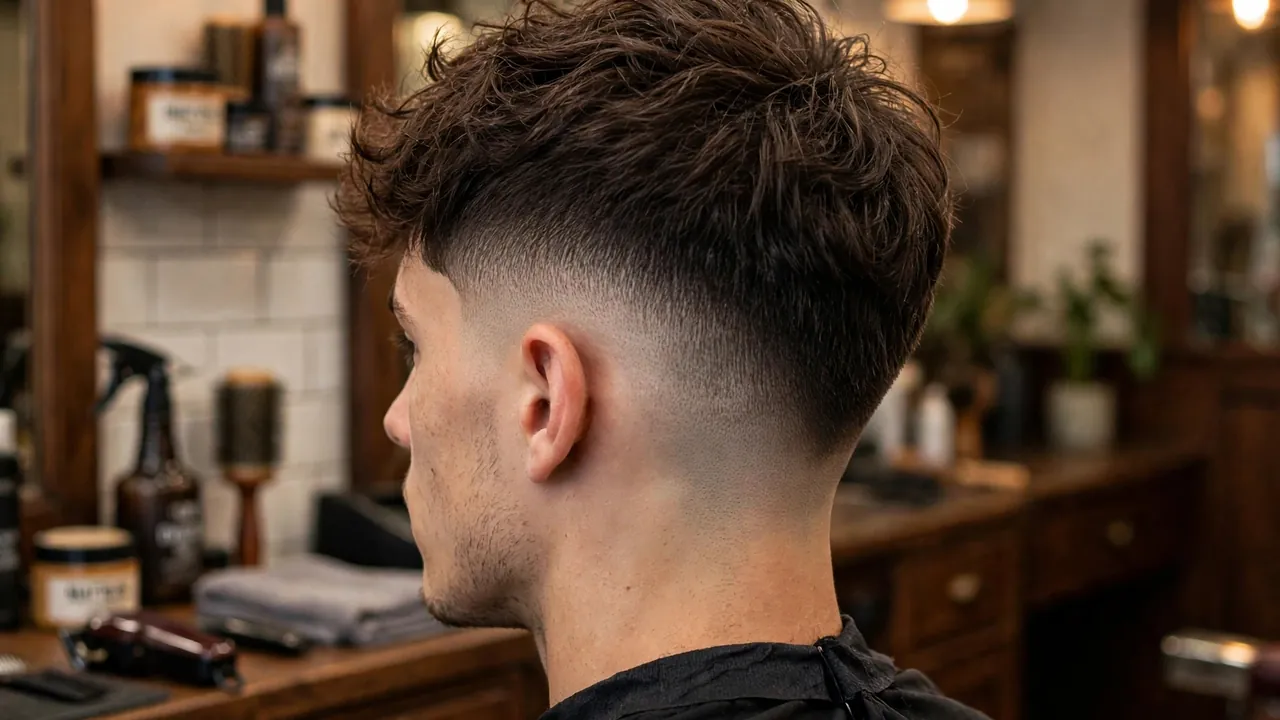
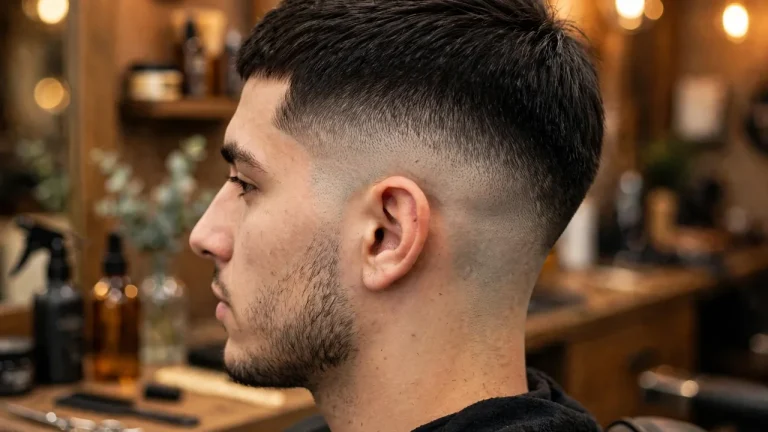
A drop fade is a fade where the fade line drops lower as it moves from the front of the head toward the back, dipping down behind the ear instead of running straight around. The result is a fade that follows the natural curve of the skull, sitting higher at the temples and lower at the nape. In my experience, it is the fade barbers recommend most for guys with a flatter back of the head, because the dropping line adds shape and weight exactly where the head needs it. This guide covers how the drop actually works, how it differs from the burst and taper fades, every major version, exactly what to tell your barber, and who should skip it.
What Is a Drop Fade
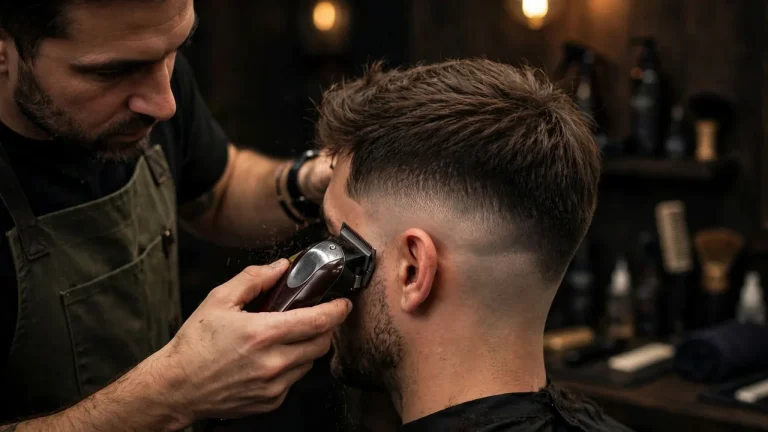
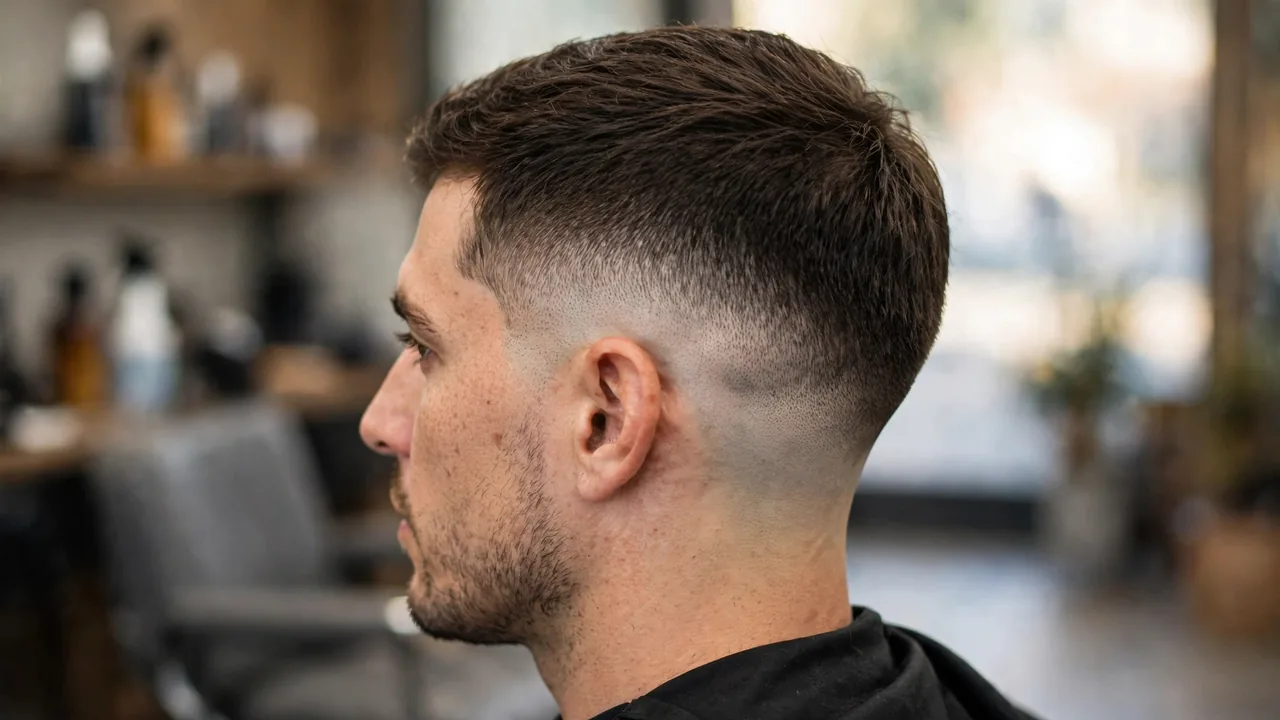
Take a regular fade line and tilt it. On a standard fade, the transition line stays roughly level as it travels around the head. On this cut, that line descends: it starts at its highest point near the temple and drops progressively lower as it rounds the back of the head, ending low near the nape.
This is not a random style choice. The human skull curves inward at the back, and a level fade line can make a flatter occiput look even flatter. By dropping the line to follow the skull’s contour, the cut keeps the back of the head looking full and shaped instead of shelf-like. That is the entire engineering logic of the cut, and it is why barbers reach for it on certain head shapes without being asked.
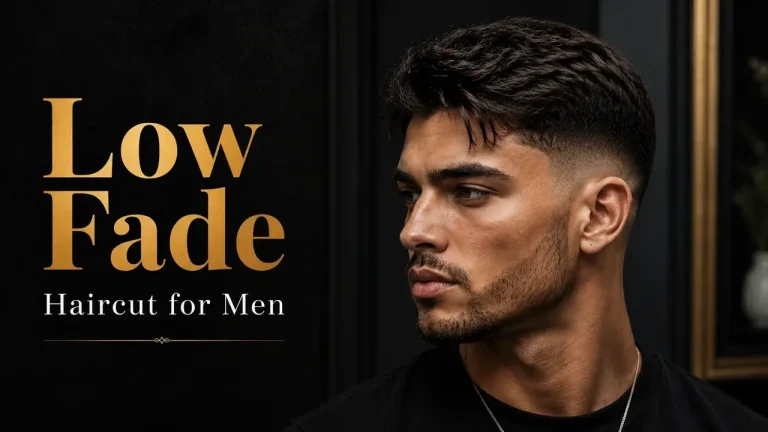
The drop works at any height. A low one barely dips, a mid one shows a clear descending line, and a high one makes the drop dramatic. The mechanism is the same in all three.
How the Drop Fade Differs from Similar Fades
The drop and the burst get confused more than any other pair, so let us settle it:
| Fade | Line shape | Around the ear | Signature |
|---|---|---|---|
| This cut | Descends from temple to nape | Follows the head down | A dropping line that shapes the back of the head |
| Burst fade | Curves in a semicircle | Halo around the ear | A curved arc, shortest behind the ear |
| Taper fade | Stays roughly level | Neat and even | Gradual blend, no dramatic line |
Simple test: if the fade line dives downward as it goes back, it is a drop. If it hooks around the ear in a C-shape, it is a burst. (this YouTube fade tutorial explains all fade heights well.) For the full breakdown of the burst, see our burst fade guide.
Drop Fade Variations Worth Knowing
Height changes everything about how the drop reads. Here are the versions that matter. (this YouTube photo roundup shows 20 photo variations.)
The Low Drop
The fade sits low and the drop is gentle. Clean, subtle, and the easiest to wear anywhere. This is the version for guys who want the head-shaping benefit without an obvious style statement. It grows out gracefully, which makes it the lowest-maintenance drop. (See our low taper fade guide for the closest conservative alternative.)
The Mid Drop
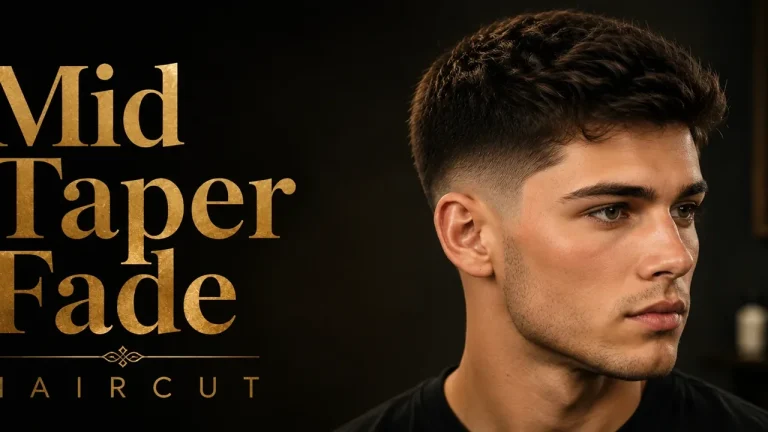
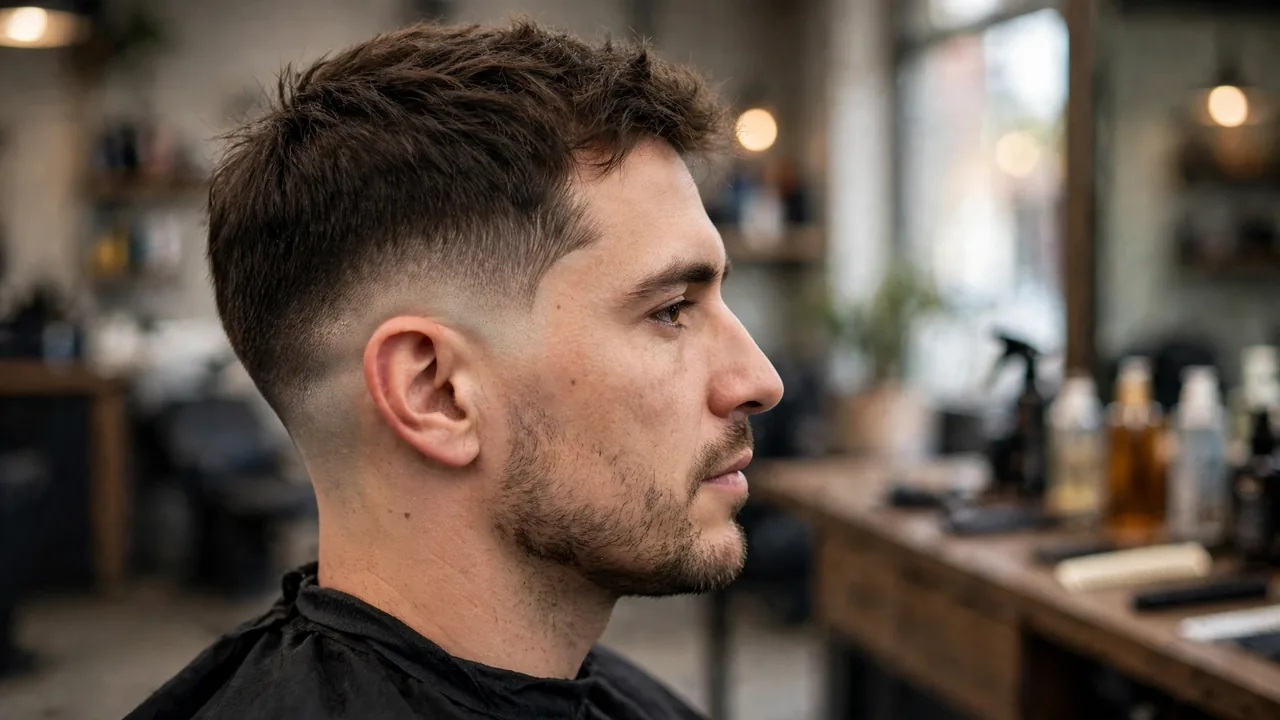
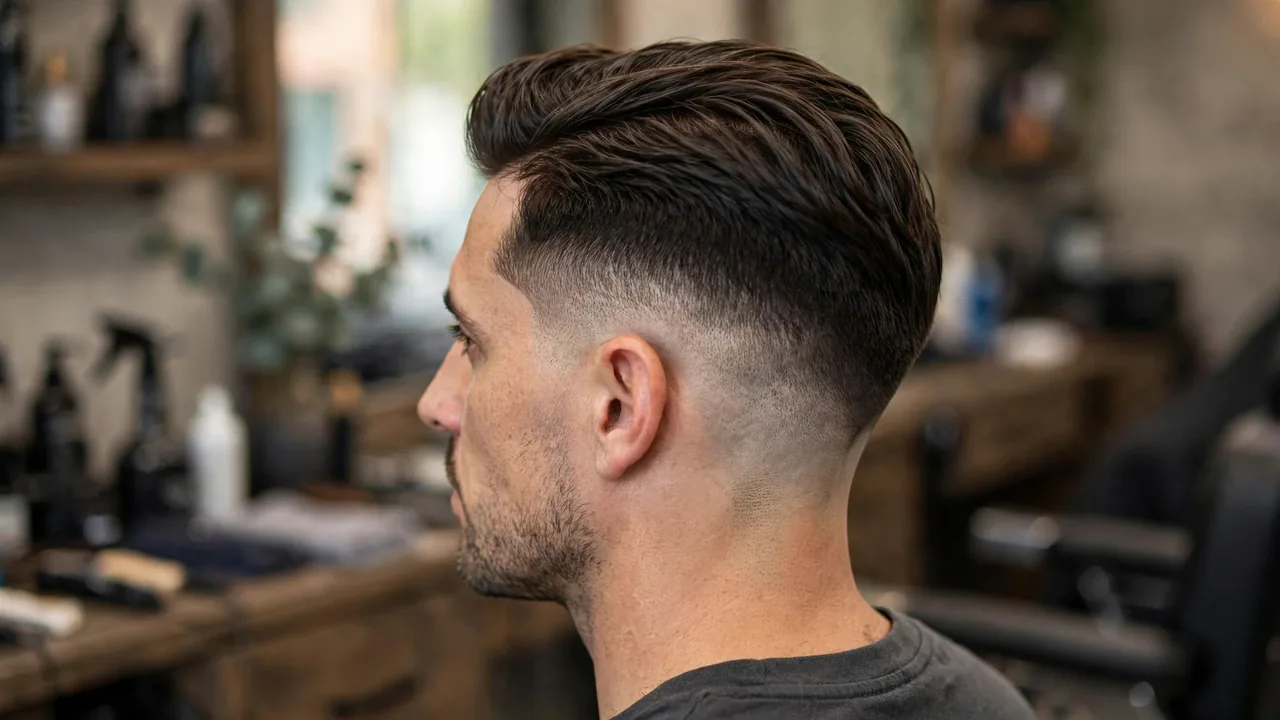
The most popular height. The descending line is clearly visible from the side, giving the cut its characteristic swept look. It balances shape and wearability, and it suits most face shapes because the eye follows the line down instead of across.
The High Drop
Maximum drama. The line starts high at the temple and plunges toward the nape, creating strong contrast and a very sculpted profile. This is a statement cut that needs confidence and regular upkeep, because the line shows everything as it grows.
The Drop with Curls on Top
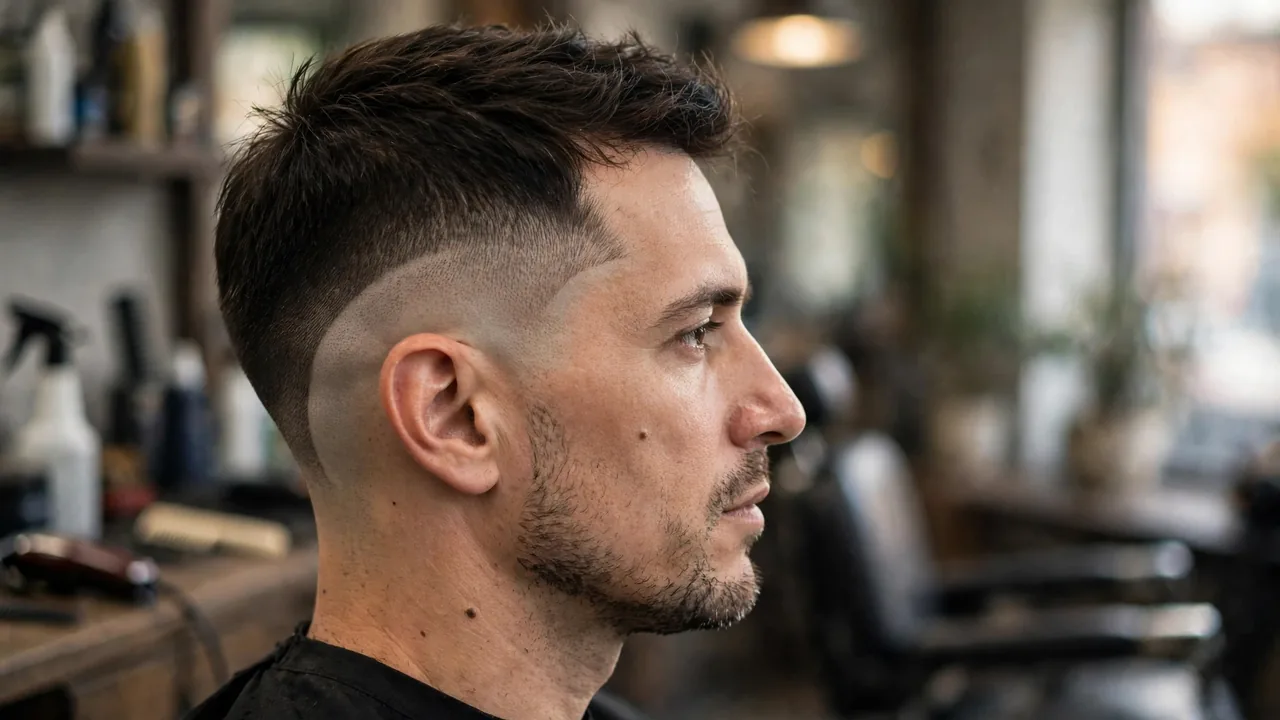
One of the strongest pairings in modern barbering. The drop frames curly and coily tops with a clean descending line while the texture does the talking above. Hugely popular with Black men for good reason: the geometry flatters dense, curly hair types beautifully. Twists and waves pair well with the same descending line. Twists give the cut movement and personality; waves lay clean over the drop as long as the transition stays tight. Keep the transition smooth so the curls flow into the fade. Our curly hairstyle guide covers curl care in depth.
The Drop with a Textured Top
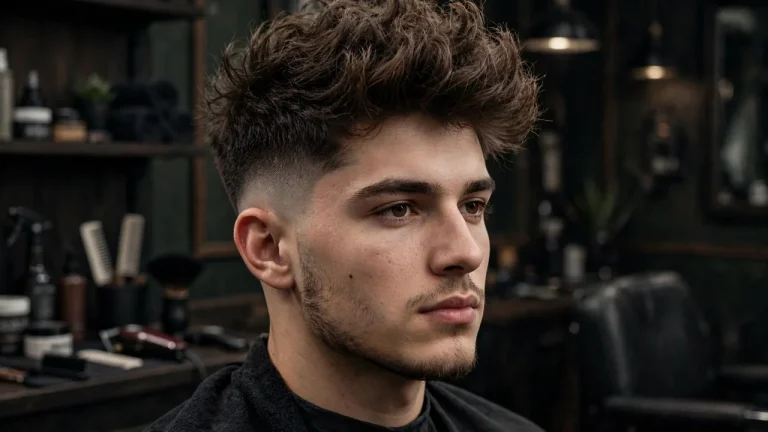
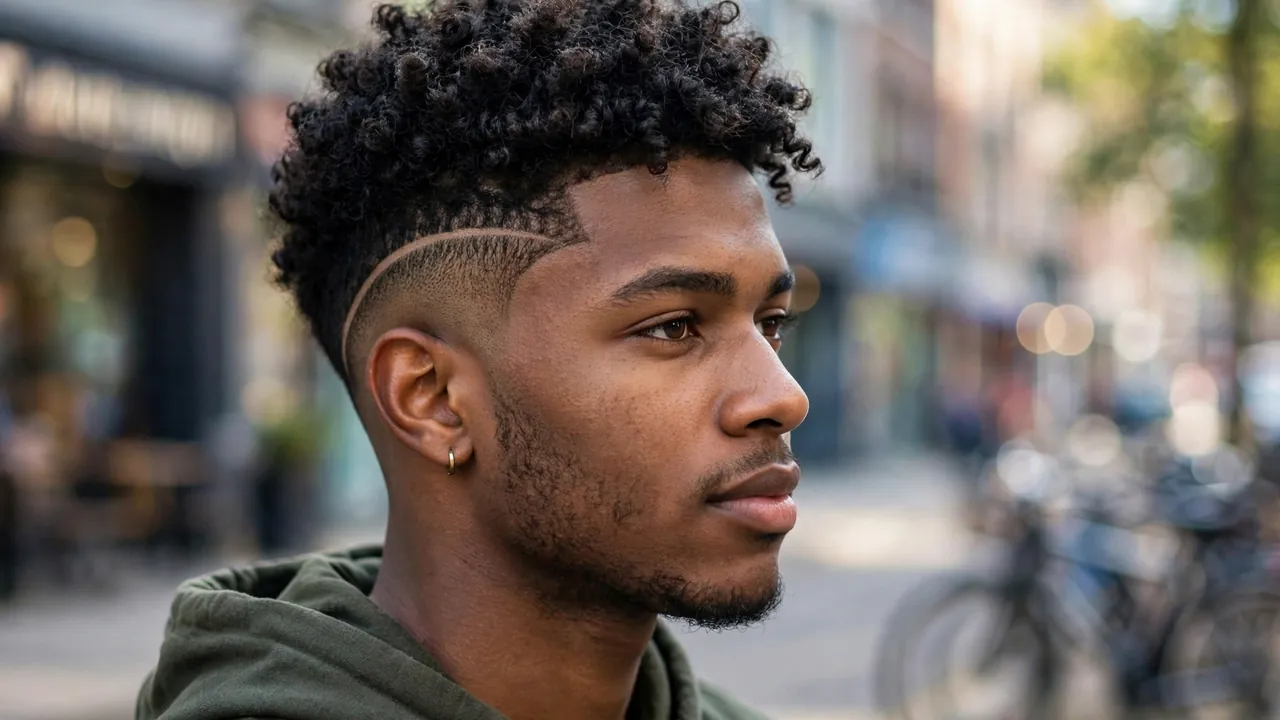
Wavy or textured tops with a mid drop underneath. The movement on top contrasts with the precise descending line for a cut that looks intentional from every angle. Sea salt spray or texture powder is usually all the styling it needs.
The Skin Drop
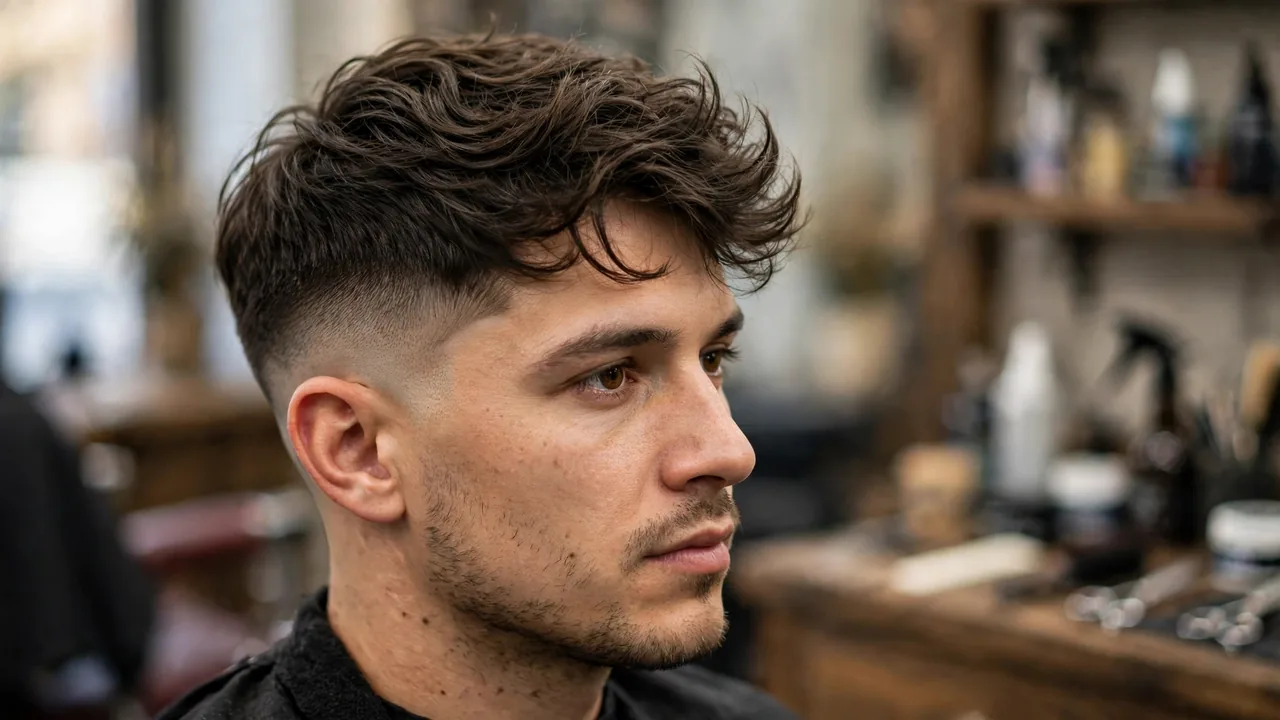
The drop taken down to bare skin at its shortest point. Sharpest version, highest contrast, most upkeep. The skin makes the descending line razor-crisp, which is exactly what you want if the line is the point of the cut.
What to Ask Your Barber
“Drop fade” tells your barber the mechanism, but not the height, the finish, or the top. Specify all three:
“I want a drop fade. Start it [low / mid / high] at the temple and drop the line down as it goes around to the nape, following my head shape. Fade it to [a #1 / skin] at the shortest point. Keep [length] on top, and make the drop smooth, not a hard step.”
Three things that keep the appointment on track:
Say the Word Drop Explicitly
Some barbers default to a level fade unless told otherwise. Saying “drop it in the back” removes all ambiguity. If your barber looks uncertain, that is useful information too.
Show a Back View Photo
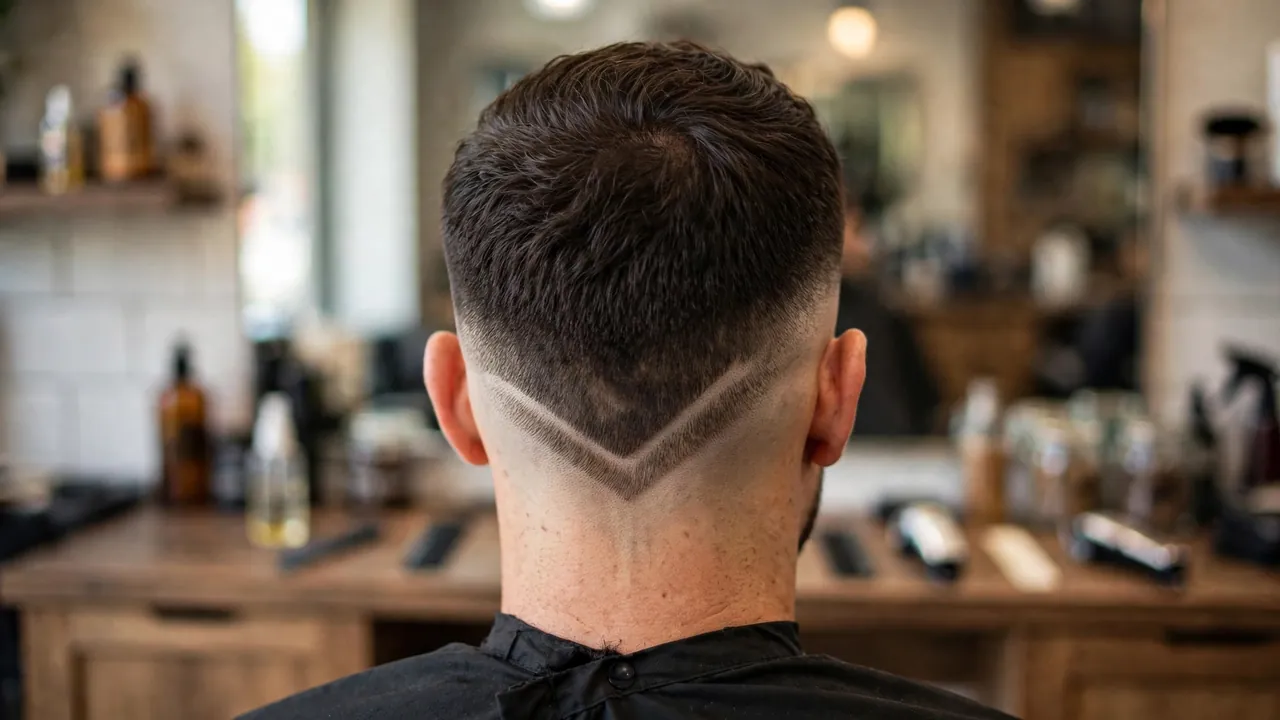
The drop is a back-of-the-head haircut. A front photo does not show the descending line at all. Bring a photo taken from behind or the side-back angle so your barber sees the exact drop you want.
Discuss Your Occiput Honestly
The drop exists to shape the back of the head. Tell your barber if the back of your head is flat, round, or has any bumps or scars you want the cut to work around. A good barber adjusts the drop’s steepness to your skull.
Ask to See the Back Before You Leave
The drop lives at the back of your head, so inspect it there. Ask your barber to hold up the mirror and check four things: the line actually drops from the side toward the nape instead of running level, both sides drop to the same point, the nape is symmetrical left to right, and there is no visible ledge or dark shadow gap where the blend should be smooth. Speak up in the chair. There is no undo button once you leave.
How to Style It at Home
The fade needs nothing daily. Style for the top you chose:
- Short textured tops. Matte clay or paste, worked through dry hair with fingers. Ten seconds, done.
- Curly and coily tops. Curl cream or leave-in on damp hair, then hands off. Let the pattern set; the drop frames it.
- Longer tops. Blow-dry for direction, then product to hold. The drop keeps the sides clean while you manage the length.
Keep the faded areas product-free. Shine on a fresh fade makes it look greasy instead of crisp.
If you wear a beard, have the drop blend into it instead of stopping above it. A sharp fade that ends abruptly at a full beard looks disconnected; the two should melt into each other at the sideburn.
How Often to Get It Trimmed
The descending line softens as it grows, and a soft drop line just looks like an uneven fade. Keep it defined:
| Service | Frequency | Notes |
|---|---|---|
| Drop line cleanup | Every 2–3 weeks | The descending line is the first thing to blur |
| Full cut | Every 3–4 weeks | Reshape top and re-cut the drop |
| Neckline touch-up | Weekly if needed | Trimmers below the drop line only |
Who Should Skip This Cut
Honest exclusions:
You Want a Perfectly Level Fade Line
Some guys love the crisp horizontal line of a classic fade. The drop deliberately breaks that line. If level is your aesthetic, do not get a drop.
Your Head Is Very Round at the Back
The drop adds shape to flatter backs of the head, but on a very round occiput it can exaggerate the curve. A level fade keeps things balanced there.
You Rarely See Your Barber
The descending line needs redefining every few weeks. Stretch it to two months and the drop just looks lopsided. A taper degrades more gracefully if your schedule is loose.
FAQs
Conclusion
This cut is engineering disguised as style. That descending line is not decoration; it is the cut adapting to the shape of your skull. It flatters flatter backs of the head, frames curly tops beautifully, and looks sharp at any height from low to high. But the line is the whole cut, so it needs a barber who understands the drop and appointments every few weeks to keep it. Bring a back-view photo, name your height, and let the line do the work.
For more on curved fades, see our high taper fade guide and our blowout taper guide, or browse every guide from the BarbersGrooming homepage.