Two Block Haircut, the Korean Two-Tier Cut Explained

The two block haircut is a Korean men’s style built from two tiers: a long textured top and sides clipped short underneath. The top falls over the hidden lower block, so you get full volume up top with clean, low-effort sides. It works best on straight and wavy hair with enough density to hold the shape.
This guide breaks down what the two blocks actually are, the taper fade crossover everyone is asking for in 2026, the exact words to say to your barber, a maintenance schedule, and honest guidance on who should skip this cut.
What a Two Block Haircut Actually Looks Like
The cut started in South Korea, where K-pop idols and actors made it the default men’s cut of the 2010s before it spread to barbershops worldwide. Instead of blending the sides into the top like a classic taper, the barber cuts two distinct lengths: a long upper block and a short lower block, with a visible line where they meet. Coverage like this look at how the cut went mainstream shows how far the silhouette has traveled.
The appeal is the contrast: the top carries all the movement and texture while the lower block stays neat, so the cut looks styled even on days you barely touch it.
The Top Block
The top block covers the crown and everything above the parietal ridge, usually left 3 to 6 inches long. Your barber point-cuts the ends for texture and thins underneath if your hair is thick, which stops the top from sitting like a helmet. Wear it pushed forward, swept to one side, parted in the middle, or pushed up with volume. Going too short on top removes most of the cut’s options.
The Bottom Block
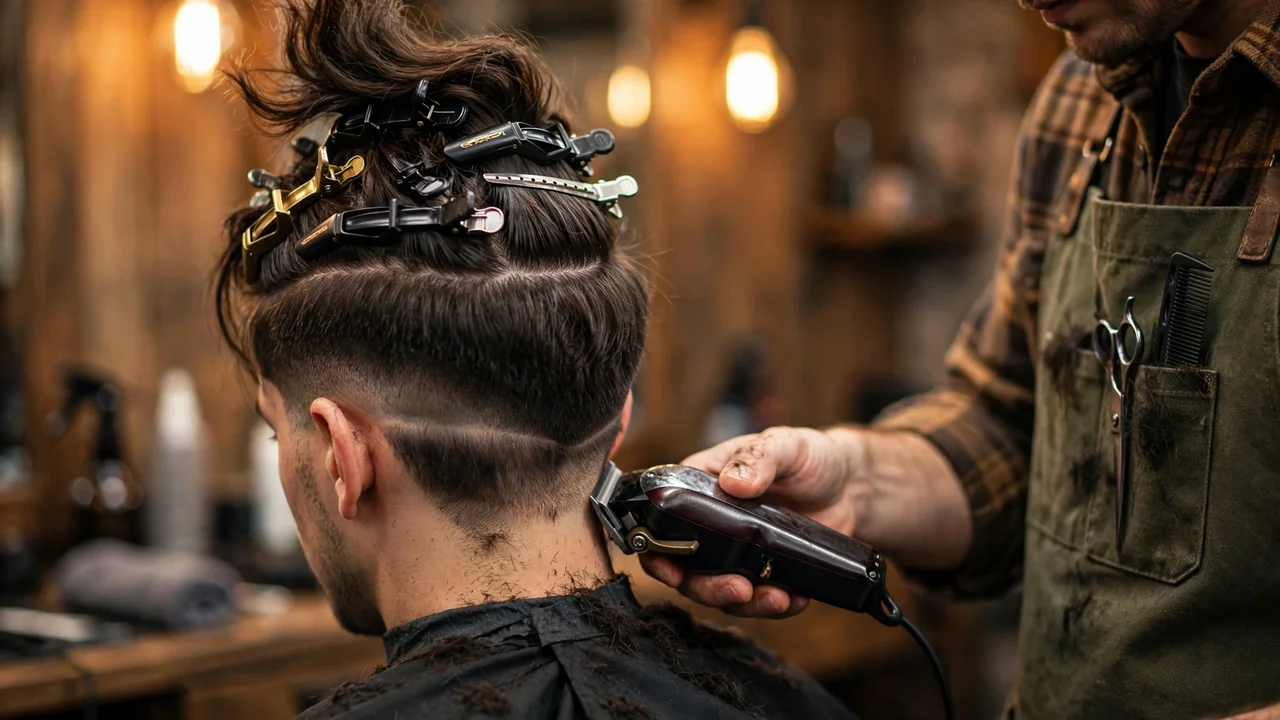
The bottom block is everything below the part line: the sides and the back, clipped short with a number 1 to number 3 guard. In the classic version this short section hides under the longer top, which is why the cut looks longer than it measures. You barely need to style anything below the top layer.
The Disconnection Line
The line where the two blocks meet is the cut’s signature. Kept sharp, it gives the bold contrast that made the style famous. Softened with light blending, it reads more like a modern textured crop and passes easier in conservative offices. Decide before the clippers come out, because fixing a sharp disconnect means taking the whole top shorter.
Two Block Haircut With a Taper Fade
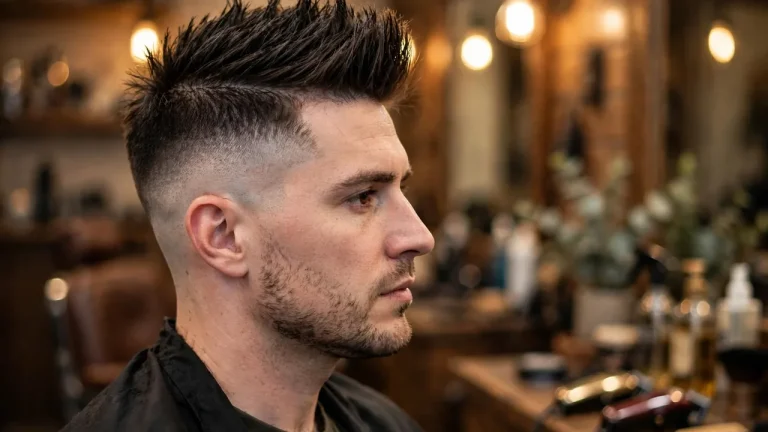
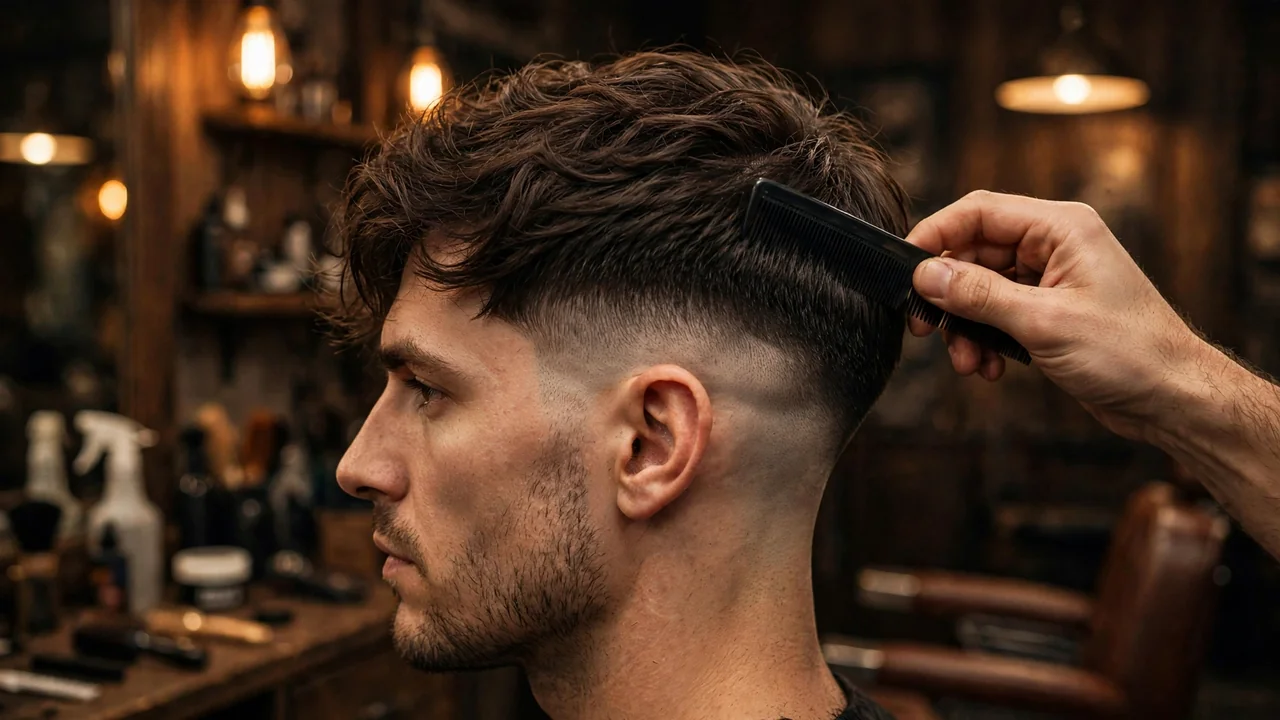
The popular crossover pairs the two block top with a taper fade on the lower block. Instead of hiding the short sides under the top, the taper version reveals them: the perimeter fades toward the skin at the ears and neckline while the disconnect line stays visible above. For the full picture on tapers versus fades, start with our high taper fade guide.
The taper version grows out cleaner than the classic, since a faded edge softens instead of turning into a shelf. It also suits a pushed-back top, because the fade stays visible around the ears.
Classic Hidden Sides
The original keeps the lower block clipped to one even length and lets the top cover it. Ask for this when you want the softest grow-out and the most coverage. It also hides thinning at the temples reasonably well.
Taper Fade Two Block

The taper version keeps the long top but fades the lower block from short at the part line down to skin at the edges. It reads sharper and pairs well with a side part or a pushed-back top. Fades show regrowth sooner than an even clip, so upkeep runs slightly higher.
Skin Fade Two Block

The boldest take drops the lower block to skin with a fast transition. The contrast between the long top and the bare sides is dramatic, which is why it trends on social feeds. It needs the most upkeep, with side cleanups every couple of weeks.
Comma Hair Two Block

The comma hair version styles the front into a soft inward curl shaped like a comma, the signature K-pop take on this cut. It needs 4 to 6 inches up front, plus a flat iron or a light perm on the front section to hold the curve through the day. It suits straight hair and oval or round faces best, and it reads dressier than the textured versions, so it works well for evenings out.
Also worth knowing: the middle part two block, where the top falls in two curtains from a center part. It is a close cousin of the curtain haircut for men and suits oval and longer faces best, since the curtains narrow the face visually.
What to Tell Your Barber
Barbers cut this daily, but the term means slightly different things in different shops, so be specific. Say this:
Two block, please. Keep the top long with texture, about four inches, and clip the sides and back short underneath with a number two guard. Leave the line between the blocks disconnected, and thin the top if it looks heavy.
Then add your lower block preference: hidden sides, a taper fade, or a skin fade. If you want to see the full process before your appointment, this step-by-step two block cutting tutorial on YouTube walks through the sectioning and the disconnection in real time.
Reference Photos Beat Descriptions
Bring two or three photos of the exact top length and side finish you want, ideally on hair similar to yours. A photo ends the most common misunderstanding: you saying long on top and the barber hearing two inches. Show the part line too, since sharp and blended versions look like different haircuts in photos.
Guard Numbers That Work
Most two blocks live between a number 1 and number 3 guard on the lower block. Number 1 shows scalp and maximizes contrast, number 2 stays neat for weeks, and number 3 softens the look for thicker hair that shows lines easily. The top needs at least 3 inches to fall properly over the sides, and 4 to 5 inches gives the most styling range.
Also settle the back finish with your barber: a tapered back blends into the neckline and grows out cleaner, while a blocked back is cut as a straight line that looks retro but needs touch-ups sooner.
Two Block vs Similar Styles
The two block gets confused with the undercut most often. Both keep the top long and the sides short, but an undercut usually disconnects around the whole head with the top worn back, while the two block specifically stacks a long textured top over a short lower tier. The bowl cut looks similar from the front, but it is cut to one even length all around with no short tier underneath, while the two block hides a clipped lower block beneath the top. The faux hawk keeps its energy in a center ridge with faded sides, a different geometry entirely.
| Feature | Two Block | Undercut | Faux Hawk | Curtain Cut |
|---|---|---|---|---|
| Top length | 3 to 6 inches, textured | 3 to 6 inches, often slicked | 2 to 4 inch center ridge | 4 to 6 inches, parted middle |
| Sides | Short lower block, hidden or faded | Clipped short or faded all around | Faded or tapered | Tapered or natural |
| Signature line | Disconnection between blocks | Disconnect around the head | Center ridge | Center part |
| Styling effort | Low to medium | Medium | Medium | Low |
| Best for | Straight to wavy hair | Straight hair, slicked looks | Textured, edgy styling | Oval and long faces |
The two block wins on versatility per minute of styling. The undercut demands product and direction every morning, the faux hawk needs its ridge built, and the curtain cut needs the part trained. The two block top can be scrunched forward with cream and look finished.
How to Style a Two Block Haircut at Home
The sides take care of themselves, so all your effort goes into the top. Towel dry until damp, work a small amount of product through the top only, and shape with your fingers or a blow dryer. That is the whole routine on most days.
One Korean-salon staple is worth knowing about: the down perm. If your sides grow straight out instead of lying flat, the short lower block can poke out sideways no matter how you style it. A down perm chemically flattens the sides so they hug the head, which gives the slim silhouette the cut is known for. Ask for it at a salon experienced with Korean cuts, and skip it if your hair already lies flat.
The Five Minute Morning Routine
Start with damp hair. Blow-dry the top forward or to the side with your fingers for root lift. Warm a pea-sized amount of matte clay between your palms, rake it through the top, and pinch the ends for separation. Push the front slightly forward to cover the part line. The lower block needs nothing.
Products That Work Best
Matte clay or paste gives the textured, piece-y finish most two blocks want, while cream works for the softer look with less hold. Skip heavy waxes on thick hair, since they collapse the volume the cut is built for. A sea salt spray on damp hair adds grip and root lift before the clay goes on, which helps fine hair hold the shape longer. For more ideas on finishing the top, browse these textured haircuts for men; the deliberately undone version borrows its finish from messy hairstyles for men.
Maintenance and Trim Schedule
The two block is honest about its upkeep: the top is forgiving, the lower block is not. Once the short sides grow past about half an inch, the disconnect line disappears and the cut turns into a shaggy grow-out. Book the sides on a shorter cycle than the top and the style stays sharp.
| Task | Every | What happens if you skip it |
|---|---|---|
| Lower block cleanup | 2 to 3 weeks | The disconnect line softens and the sides puff out |
| Top trim and re-texture | 6 to 8 weeks | Ends go stringy and the shape loses its fall |
| Thinning, thick hair only | Every other top trim | The top sits wide like a helmet |
| Neckline tidy | 2 to 3 weeks | The back loses its clean edge |
Keep the sides tight and the top can stretch to eight weeks between trims. Most months you are only really maintaining the lower block.
Who Should Skip This Cut
This cut is not for everyone. Very curly or coily hair fights the design: the top springs outward instead of falling over the sides, and the disconnect line turns into a shelf. A shorter textured version can work, but the classic silhouette needs straight to wavy hair.
Strong growth patterns are the other dealbreaker. Double crowns and stubborn cowlicks at the part line push the top in directions the cut cannot use. As one Quora discussion about double crowns and the Korean two block notes, a skilled barber can sometimes work around them, but get an in-person verdict before committing.
Thinning on top also rules it out, since the style needs density in the upper block to cover the short sides. And if your workplace bans visible disconnections, pick the softly blended version or a taper-based style that keeps neat sides without the disconnect.
FAQs
Conclusion
This cut earns its staying power by being two haircuts in one: a long, expressive top for style and a short, disciplined base for neatness. Pick your lower block finish, learn the five-minute top routine, keep the sides on a two-to-three-week cycle, and the cut largely takes care of itself. If your hair is straight to wavy with decent density on top, it is one of the most forgiving trendy cuts you can ask for in 2026. For more cut guides like this one, browse the BarbersGrooming homepage.