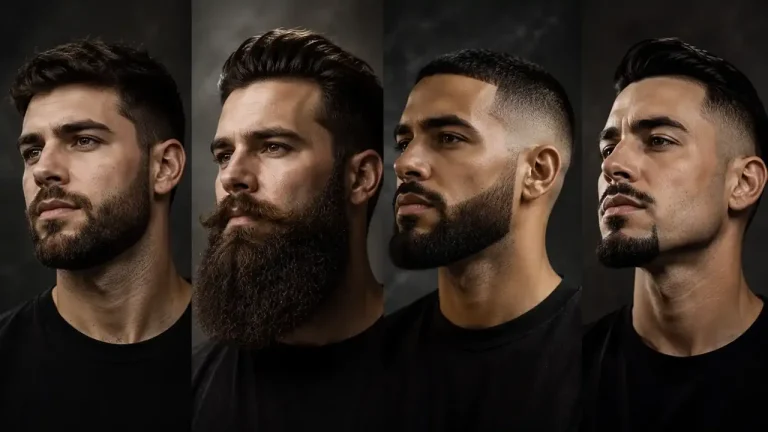
Goatee Styles for Men, How to Pick the Right One for Your Face

A goatee is facial hair grown on the chin with the cheeks shaved clean and a mustache that is either connected to the chin or left off. Of all the goatee styles men wear, the circle beard is the most popular, because the mustache joins the chin hair in a ring that suits almost every face shape.
Men reach for goatee styles when they want definition without the weight of a full beard. A goatee sharpens the chin, adds character to the lower face and suits men who cannot grow thick cheek coverage. Compared with full beard styles for men, it takes less time to grow and less product to keep in shape. This guide walks through nine styles, matches each one to a face shape, gives you the exact words for your barber and shows how to trim and maintain it at home.
What a Goatee Actually Is
The name comes from the tuft of hair on a goat’s chin, and the style is older than modern barber culture suggests. At its core, a goatee keeps hair where the goat keeps it, on the chin, while the cheeks stay clean. What changes between styles is how much of the mouth the hair surrounds, whether the mustache joins the chin hair and how far along the jawline the beard travels. Get those three decisions right and the style almost picks itself.
Goatee vs Circle Beard, the Naming Mix-Up
Strictly speaking, a true goatee is chin hair only, with no mustache at all. But when most men say goatee, they picture the mustache connected to the chin in a full ring, which is technically a circle beard. Barbers hear the word goatee and picture the ring, so you will not be misunderstood in the chair. The distinction matters most when you browse style galleries and wonder why some goatees have a mustache and others do not.
9 Goatee Styles, Explained
Nine styles cover nearly everything men ask for. Read each one as a recipe, note the ones that match your growth pattern and your face, then take the name to your barber so you both mean the same thing.
The Classic Goatee
A patch of hair on the chin, no mustache. This is the original definition and the lowest maintenance of the lot. It suits men who want a clean, minimal statement and works well under a mustache-free dress code. Keep the patch centered and the edges sharp, because a small shape shows sloppy lines faster than a big one.

The Circle Beard
The mustache connects to the chin hair in a neat ring around the mouth. This is the style most people mean when they say goatee, and its popularity is earned. It balances most face shapes, hides a weak chin and reads professional when the lines are crisp. Ask your barber to keep the ring even on both sides of the mouth.
The Van Dyke
A pointed chin beard with a separate, unconnected mustache, named after the seventeenth-century painter Anthony van Dyck. This one has an artistic streak and demands precision, because the gap between the mustache and the chin is the whole point. It suits oval and square faces and men who enjoy detailed grooming.

The Anchor Goatee
The chin hair runs a little way along the jawline in a shape that recalls an anchor, paired with a mustache. It adds vertical length to the lower face, which is why round faces wear it well. The lines need regular touch-ups, since the anchor shape reads as messy the moment the edges blur.

The Balbo
A floating mustache plus a chin beard, with no sideburns connecting anything. Robert Downey Jr.’s Tony Stark made this one famous, and it still reads confident and modern. It needs decent chin coverage to fill out, and it pairs sharply with a faded haircut.
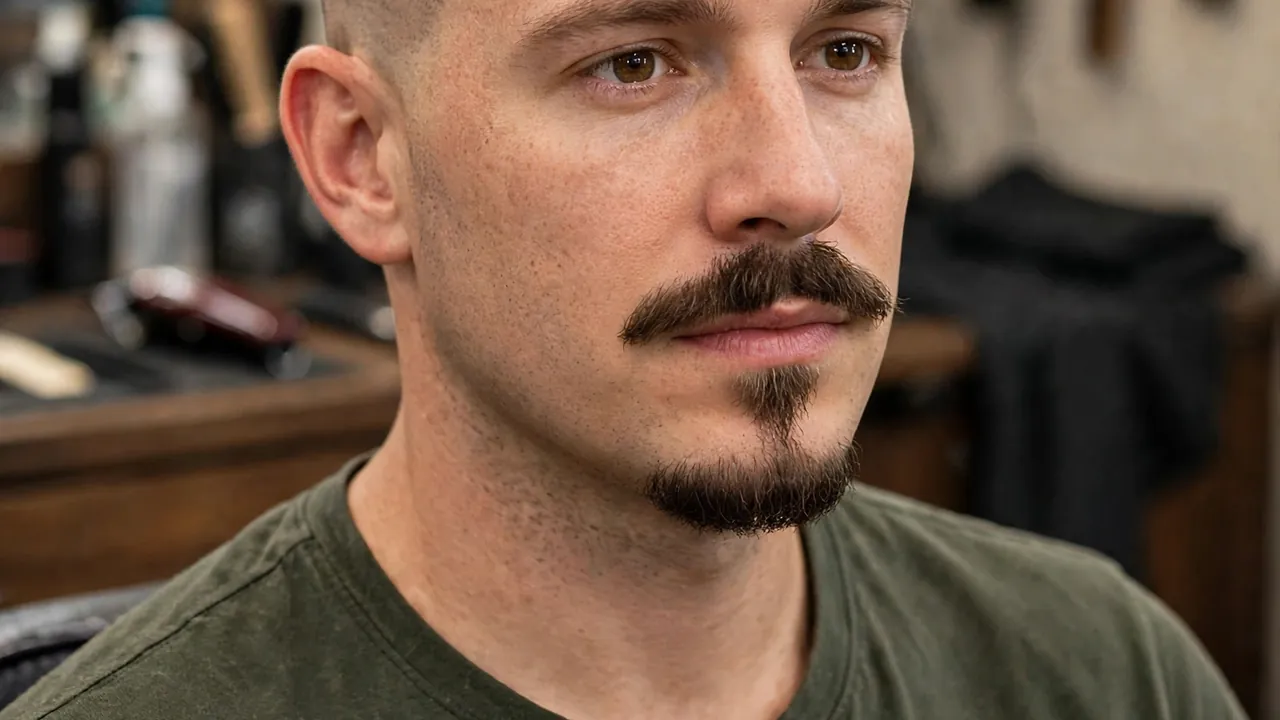
The Extended Goatee (Hollywoodian)
A goatee that travels further along the jawline for broader coverage, still without sideburns. It sits halfway between a goatee and a full beard, which makes it the right pick for men who can grow good jawline hair but not full cheeks. It pairs naturally with a taper fade beard, because the fade and the extended beard meet in a clean line along the jaw.
The Soul Patch
A small patch of hair just below the lower lip, worn alone or as part of a larger goatee. On its own it is the most understated facial hair a man can wear, and it suits men testing the waters before committing to a real style. Keep it centered and tiny, because a drifting soul patch looks accidental.
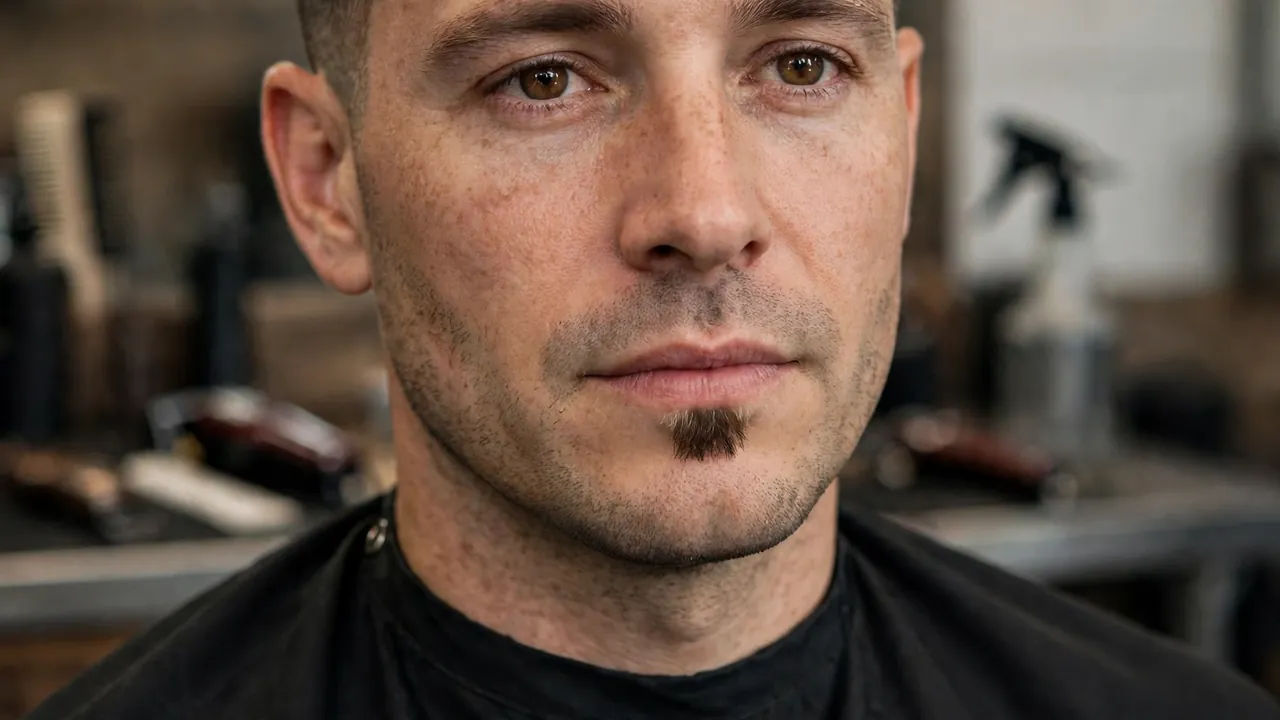
The Stubble Goatee
Everything kept to short stubble, chin and mustache shaped into the goatee outline. The outline needs edging every couple of days, or the stubble creeps outward and the shape disappears.

The Petite Goatee
A small, precise patch on the chin for men who want a hint of style without commitment. Trim it with a detail trimmer rather than a full-size one, since the margins are unforgiving.

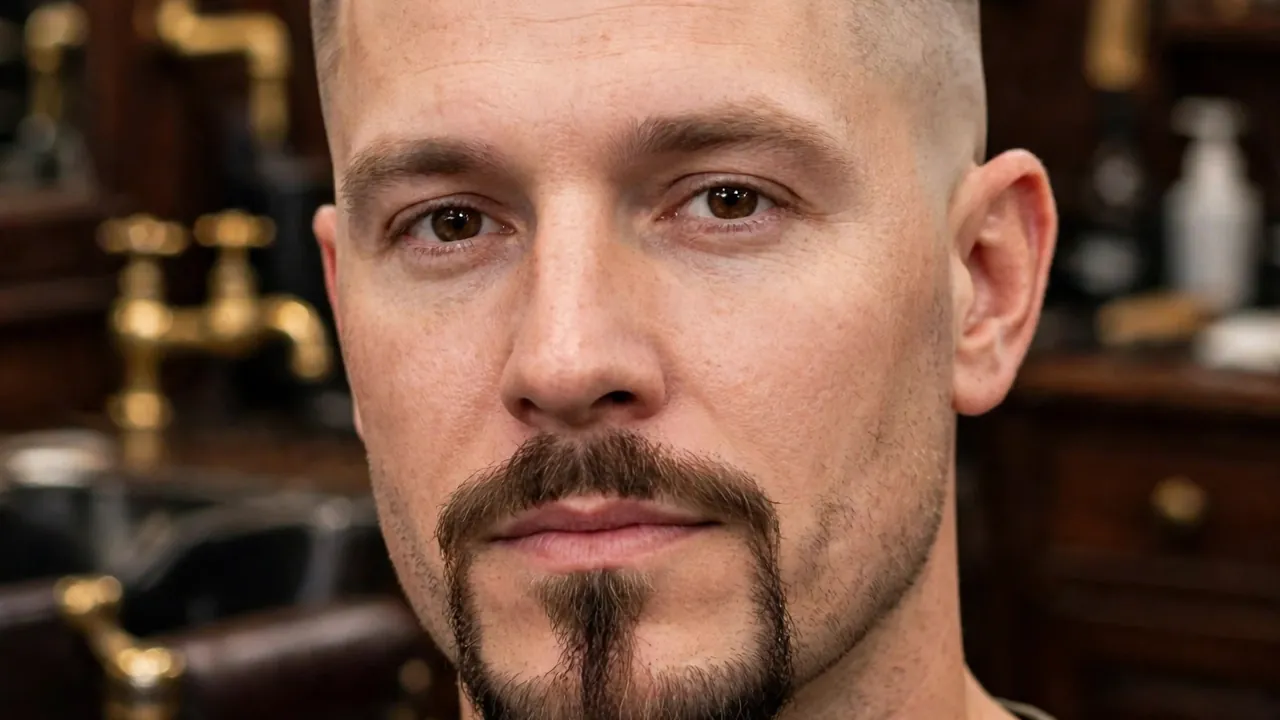
Which Goatee Style Fits Your Face Shape
The style you pick should work with your face, not against it. The table below matches each face shape to the goatee styles that flatter it and the ones that fight it, in line with current shave and haircut trends. Use it as a starting point, then let your barber confirm against your actual growth.
| Face Shape | Best Goatee Styles | What to Avoid |
|---|---|---|
| Round | Anchor goatee, extended goatee | Short, wide circle beards that mirror the roundness |
| Square | Circle beard, Balbo | Overly sharp lines that harden an already strong jaw |
| Oval | Almost any style | Styles that cover the chin so fully the face loses definition |
| Long or rectangular | Short goatee, stubble goatee | Long pointed styles that add more vertical length |
| Heart | Full circle beard, Balbo | Tiny chin patches that leave a wide forehead unbalanced |
Round Faces Need Vertical Length
A round face wants length added to the chin and width kept off the cheeks. The anchor goatee does this by drawing the eye downward, and the extended goatee does it by narrowing the lower face. Keep the chin hair a little longer than you think, and shave the cheeks high so nothing widens the midface.
Square Faces Need Softness
A square jaw is a strong feature, and the goatee should soften it rather than echo it. The circle beard rounds the chin nicely, and the Balbo adds fullness without hard corners. Avoid razor sharp outlines along the jawline, because they double down on the angles you already have.
Long Faces Need Balance
A long face should not get longer. Keep the goatee short and a touch wider, like a neat circle beard or a stubble goatee, and skip the pointed Van Dyke that stretches the chin further down. A mid fade on the sides of the haircut keeps the overall head shape balanced too.
Matching the Goatee to Your Hair Type
The same shape behaves differently on straight, wavy, curly and coily hair. Match the version to your texture before you commit, because a shape that looks crisp on straight hair can turn fuzzy on curls, and a shape that needs length will disappoint on hair that grows slowly.
Curly and Coily Hair
Curl adds width whether you want it or not. Keep a curly goatee shorter than you think, and edge the outline with a detail trimmer rather than a razor, since curly hair cut too close at the edges can curl back under the skin and irritate it. A lineup on the hairline plus a short circle beard is a reliable pairing for Black men, because the sharp hairline frames the face while the short goatee keeps the lower face tidy. Condition the beard the same way you condition the hair on your head, since dry curls frizz outward and blur the outline.
Patchy or Thin Growth
Patchy growth is not a reason to give up, but it is a reason to pick a smaller shape. A petite goatee or a soul patch needs far less coverage than a full circle beard, and both look intentional when the edges are crisp. Judge the coverage only after four to six weeks of untouched growth, because early trimming removes hair you would need to judge the shape. If the mustache will not connect to the chin after that time, wear the Van Dyke on purpose instead of chasing a connection that will not fill in.
Grey Hair
Grey changes the contrast, not the shape. A grey goatee reads intentional when the edges stay crisp, because the light hair against clean skin looks deliberate rather than neglected. Keep the length a touch shorter than a dark goatee, since long grey hair can look wispy at the ends. A drop of beard oil every morning keeps grey hair soft and stops it catching the light in a wiry way.
The Exact Barber Script
Walk in and say this. “I want a circle beard. Keep the mustache connected to the chin, trim the chin hair to about a finger’s width of length, and clean up the cheeks and the neckline. I want crisp lines, not a natural edge.” Then add your variation. “I have a round face, so keep the chin a little longer and run the lines slightly along the jaw.”
Three details make the appointment work. First, bring a reference photo, one from the front and one from the side, because goatee names get mixed up constantly. Second, tell the barber how you maintain it, since a man who edges every two days can handle a sharper outline than a man who visits monthly. Third, mention neck sensitivity if razors irritate your skin, so the neckline gets clipped instead of shaved. Pair the beard with a skin fade and the whole lower face reads sharp from every angle.
How to Trim a Goatee at Home
Watch a goatee trimming tutorial once to see the hand movements, then follow this order. The sequence matters more than the tools, because most home goatees fail from trimming in the wrong order, not from bad clippers.
Grow It Out First
Let the chin and the mustache grow untouched for a few weeks before you shape anything. Trimming too early leaves patchy edges and forces you to work with hair that is not long enough to lie in one direction. Resist the urge to clean up stray hairs during this phase, because you will need that coverage to judge the final shape.
Cut in the Right Order
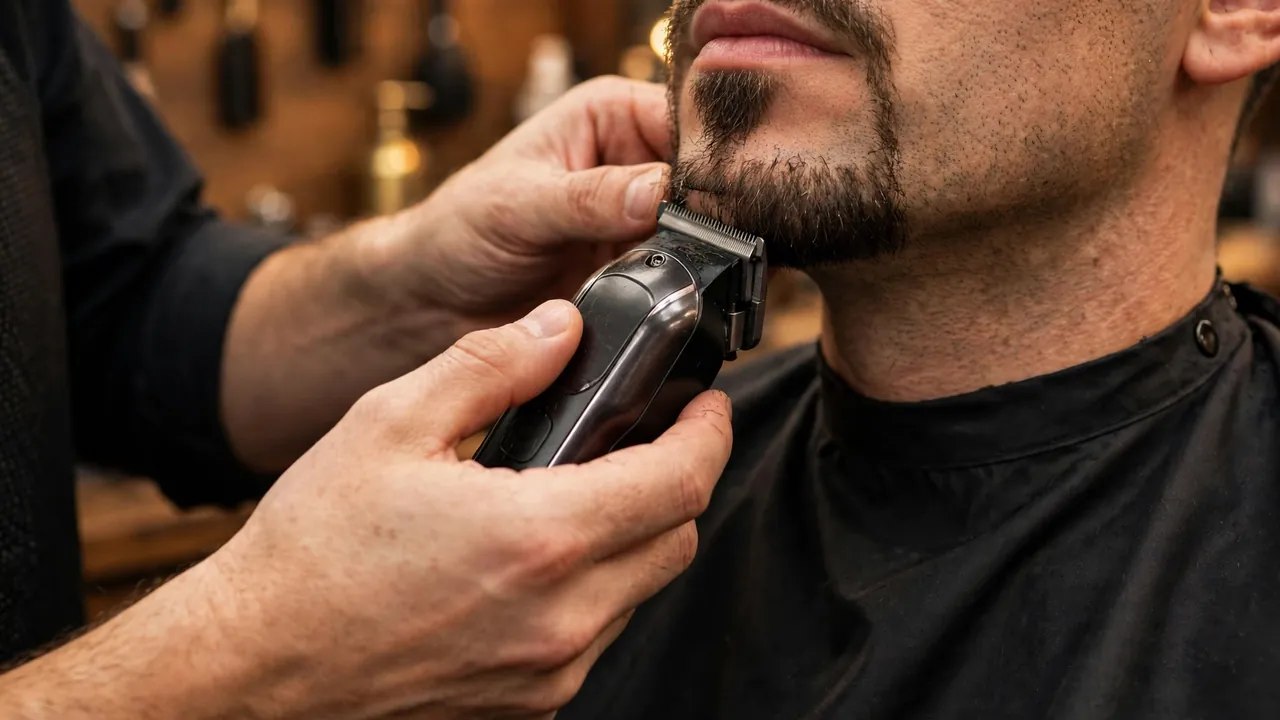
Define the outline first, then reduce the length. Start with a bare blade or a detail trimmer and carve the cheek lines and the neckline, using the corners of your mouth as guides so both sides match. Then take the bulk down with a trimmer guard, working from the outside of the shape inward. Finish with the mustache, trimming along the lip line so no hair hangs over the mouth. Check symmetry in a mirror from straight on, not at an angle, because angled mirrors lie.
Goatee Maintenance Schedule
A goatee shows neglect faster than a full beard, because the clean-shaven areas make every stray hair visible. This schedule keeps the style intentional without turning it into a chore.
| Task | Frequency | Why It Matters |
|---|---|---|
| Define cheek and neck lines | Every 2 to 3 days | Crisp edges are the entire style |
| Reduce bulk with a guard | Once a week | Keeps the density even and the shape visible |
| Check symmetry | Every trim | Goatees drift sideways unnoticed |
| Wash and condition | A few times per week | Soft hair trims cleaner and itches less |
| Apply beard oil or balm | Daily | Tames flyaways and keeps the skin underneath healthy |
| Full barber reshape | Every 3 to 4 weeks | Resets the lines before the shape drifts |
Goatee or a Full Beard, and the Long Goatee
A full beard covers the cheeks, jaw and chin, while a goatee leaves the cheeks clean and puts all the attention on the mouth and chin. Choose the goatee if you want a sharper, lower maintenance shape, if your cheek growth is thin, or if your workplace expects a tidy outline rather than a full beard. Choose the full beard if your chin growth is sparse on its own, because the cheek hair gives the chin hair something to blend into.
The long goatee sits between the two. The chin hair grows longer than a standard goatee, sometimes an inch or more past the chin, while the cheeks stay clean and the sideburns stay off. It suits men with strong chin growth and a longer face that can carry the extra length, and it pairs well with a short haircut so the head does not look top heavy. Trim the length with a guard first, then shape the outline, because cutting the outline on a long goatee before reducing the bulk leaves an uneven edge.
Who Should Skip the Goatee
Honesty first. If your chin growth is patchy and sparse, a goatee will highlight the gaps instead of hiding them, and you will look better with a clean shave or a full beard grown to fill out. If you will not pick up a trimmer every few days, skip it too, because a goatee with blurry edges looks neglected faster than any other facial hair style.
Also think about your routine. Men who swim daily or work in dust and grease will fight the shape constantly. And in workplaces with strict grooming codes, confirm a goatee is acceptable before you grow one, because some uniforms and client facing roles still expect a clean shave. If none of that applies to you, the goatee is one of the easiest styles to start and one of the hardest to get wrong once the shape is set.
FAQs
Conclusion
Goatee styles work because they give the chin a job to do. Pick the version that suits your face shape from the table above, use the barber script word for word on your next visit and keep the edges crisp between appointments. For more cuts, routines and barber scripts, browse the guides on the BarbersGrooming homepage. If you want more inspiration or a second opinion on your shape, the r/beards community has years of real goatee photos from men with every face shape. Start with the circle beard if you are unsure, because it is the most forgiving style to grow into and the easiest one to reshape into anything else later.