Beard Fade Guide, How to Blend Your Beard Into Any Haircut

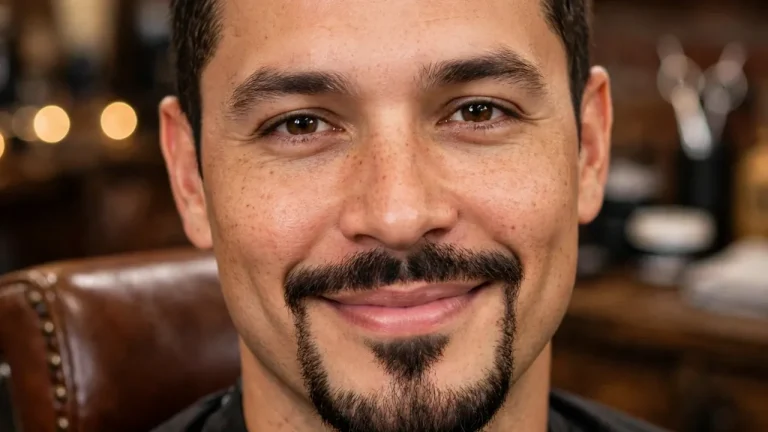
A beard fade is the seamless blend where your beard meets your haircut. Instead of a hard line where the sideburn ends and the hair begins, the length tapers gradually from the full beard up through the sideburns until it disappears into the faded sides of the cut. Done right, the beard and the haircut read as one finished style instead of two separate ideas growing on the same head.
This guide covers the five fade styles barbers cut most, the exact words to use in the chair so you walk out with what you asked for, the guard settings behind a clean blend, a realistic maintenance schedule, and the honest cases where a fade is the wrong call.
Beards have been shaped and blended for centuries, and the history of beard styles on Wikipedia shows the fade is simply the modern version of an old idea. The goal stayed the same. A beard should look intentional, never accidental.
What a Beard Fade Actually Is
It is not a length, it is a transition. The barber works three zones. The sideburns bridge the haircut and the beard, the cheeks carry the visible gradient, and the neckline gets cleaned so the shape has a floor. Ignore any one zone and the result looks unfinished.
Most men discover they need one the first time a barber finishes a great fade on the sides and the beard suddenly looks like it belongs to a different person. The contrast between a skin-tight fade and a blocky, untouched beard is jarring. That blend fixes exactly that, connecting the two lengths so the eye travels smoothly from haircut to chin.
A faded beard and a faded haircut are two separate services that happen to look best together. The effect is strongest when the sides of the haircut are already faded, because the two gradients meet in the middle and reinforce each other.
The 5 Beard Fade Styles Barbers Cut Most
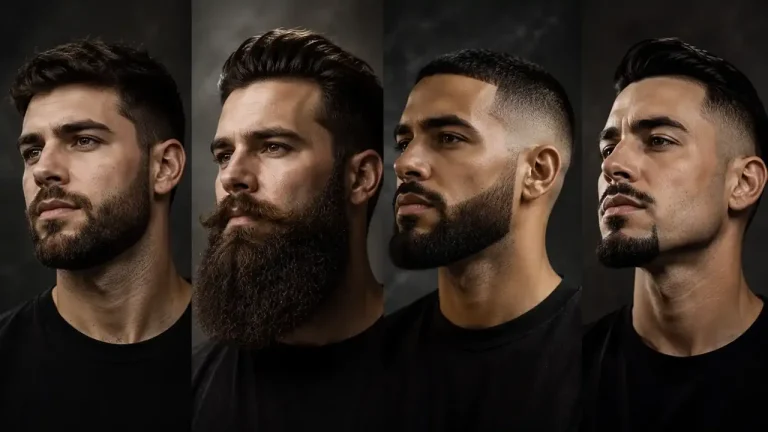
Not every fade looks the same. The right version depends on your beard length, your haircut, and how much upkeep you are willing to do. These are the five barbers are asked for again and again.
1. Stubble Fade
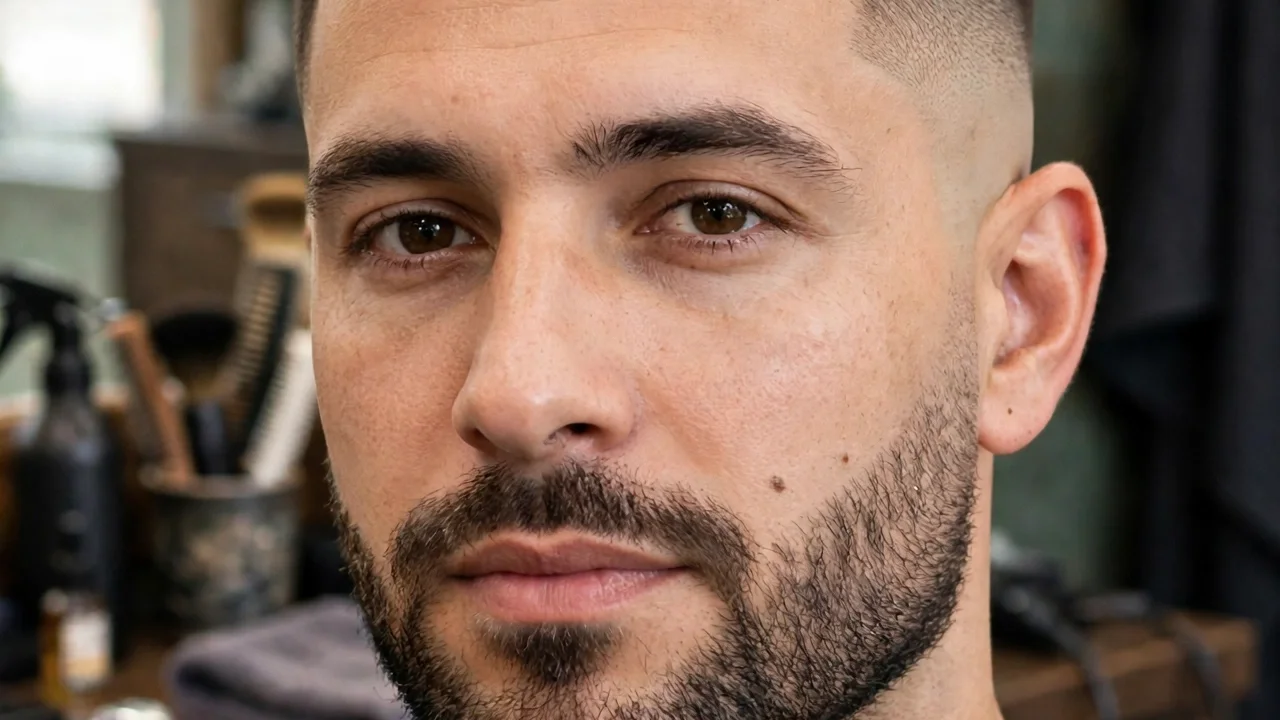
The stubble fade keeps the beard short and even, usually a few millimeters, and fades the sideburns down to the skin. It is the easiest version to wear and to maintain at home, since the fade does most of the visual work. Even a simple stubble pattern looks deliberate once the blend is in.
2. Short Beard With a Skin Fade
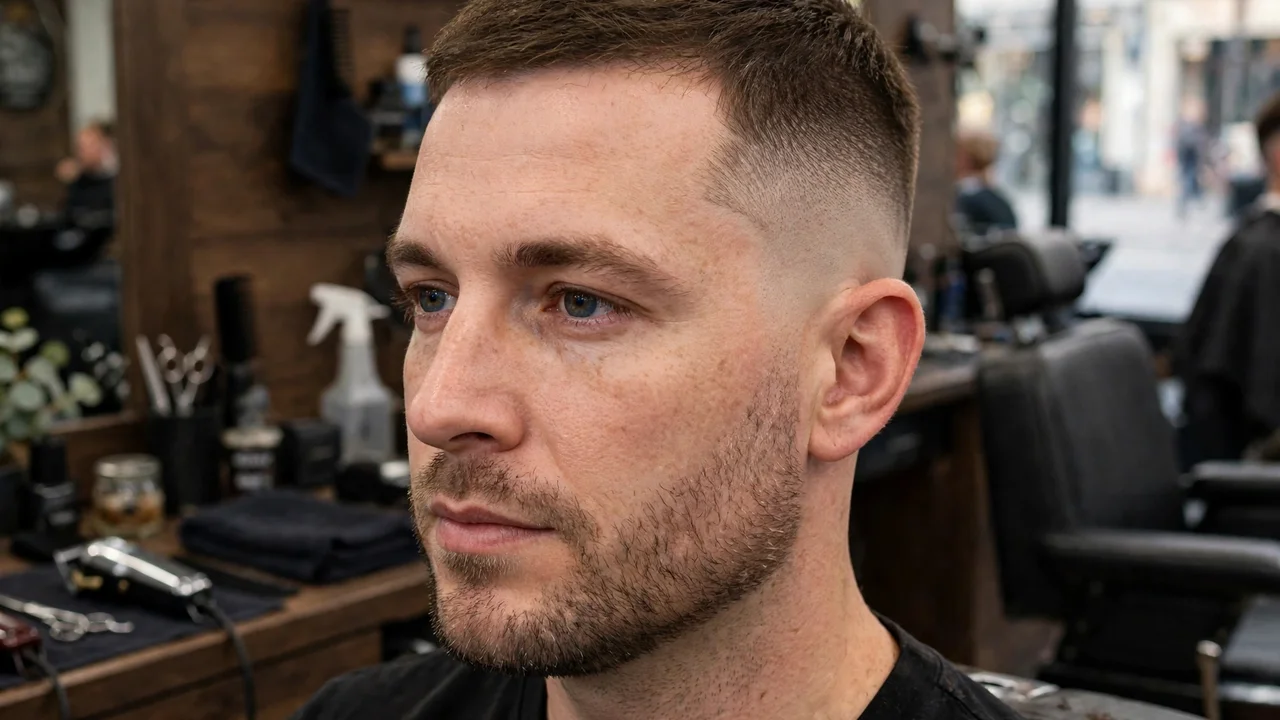
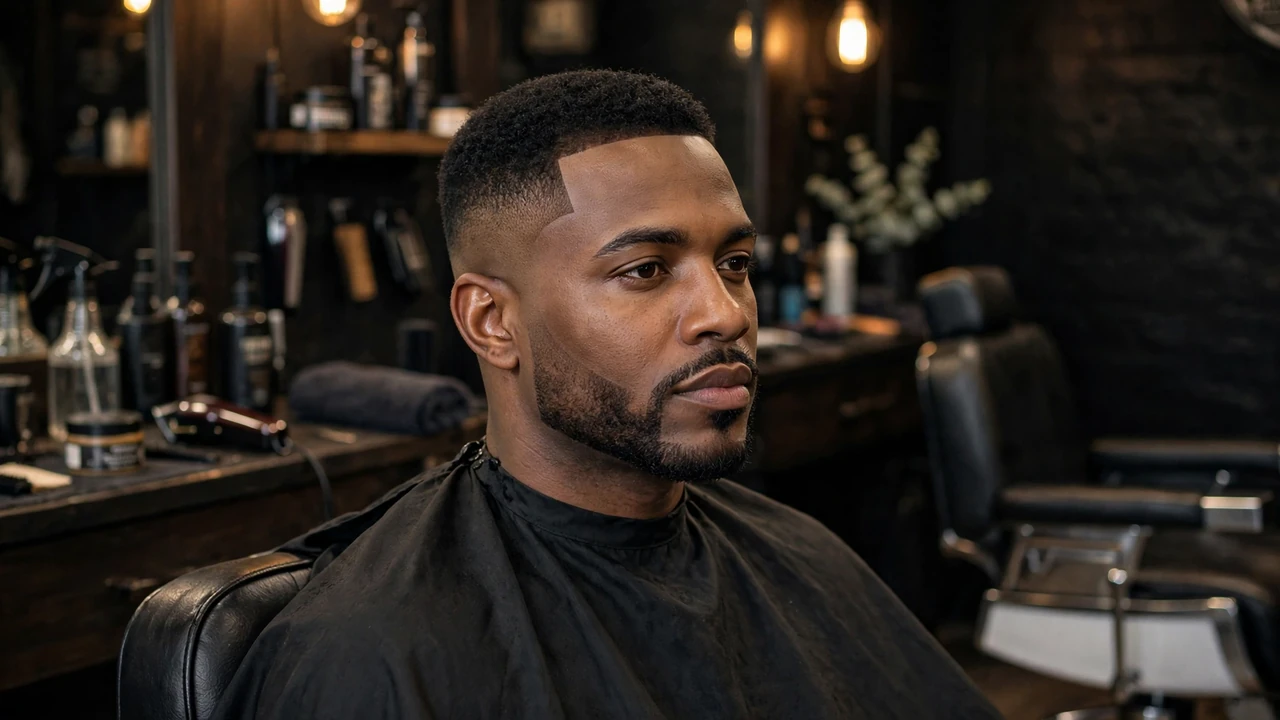
Here the beard stays short and even while the sides of the haircut drop to the skin. The beard fades up through the sideburns into that skin fade, creating the cleanest and most contrast-heavy finish of the five. It suits men who like crisp lines everywhere. The trade-off is upkeep, since a skin fade grows out visibly within days.
3. Full Beard With a Sideburn Taper
The beard keeps its full length on the chin and jaw, and only the sideburns get faded. This is the version for men who spent months growing length and have no intention of sacrificing it. The taper is subtle from the front and shows in profile, where the ear-to-beard transition looks groomed instead of wild. It suits longer beard styles for men that need polish without losing an inch.

4. Sharp Lineup Fade
This combines the fade with a crisp cheek line and a defined neckline. Straight, clean edges frame the gradient and give the face a structured look. Goatee wearers can use it too, since several goatee styles that take a fade well rely on the same cheek-line and sideburn technique around a smaller beard footprint.

5. Buzz Cut With a Fade
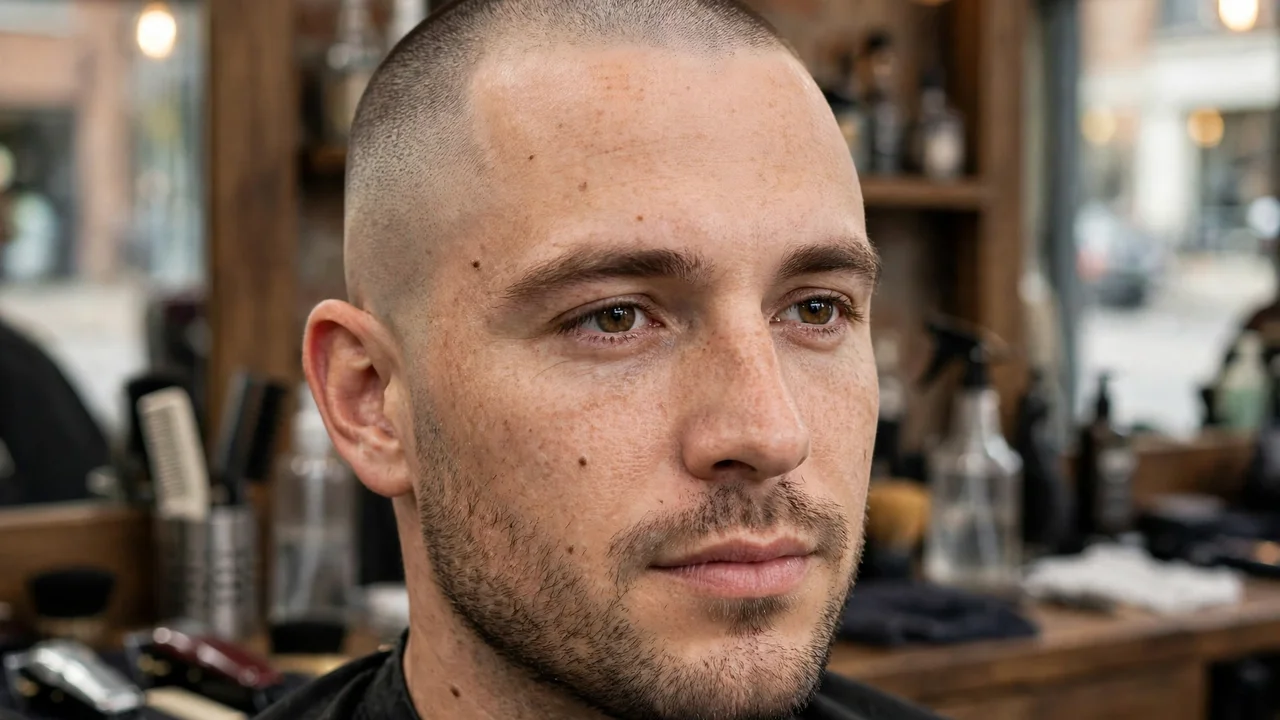
The buzz cut and the fade were made for each other. With the hair already short all over, the buzz cut fade becomes one continuous gradient from the top of the head to the chin. It is a favorite for men who cut their own hair, since the whole look can be maintained with one trimmer and a set of guards.
Full Fade vs Taper Fade Beard, What Is the Difference
The terms get used interchangeably in barbershops, but they describe different amounts of blending. Asking for one when you mean the other is the most common reason men walk out disappointed. This table lays it out.
| Style | What the barber does | Best for |
|---|---|---|
| Beard fade | Blends the full beard up through the sideburns into the haircut with a visible gradient | Men who want the beard and haircut to read as one connected style |
| Taper fade beard | Tapers only the sideburn and temple area while the beard keeps its length and shape | Men with longer beards who want neat edges without losing length |
| Disconnected beard | Leaves a deliberate hard line between the haircut and the beard | Bold, fashion-forward looks, mostly on very short hair |
If you want the gentle version with maximum length kept, ask for a taper fade beard specifically. If you want the full gradient from beard to haircut, say full fade. The words are close, the results are not.
The Exact Barber Script, Word for Word
Most bad fades are communication failures, not skill failures. The barber cannot read your mind, and “just fade the beard” means different things to different barbers. Use this script and there is no room for misunderstanding.
The One Sentence Version
Say this as you sit down. “Can you blend my beard into my haircut with a fade, keep the full length on the chin, and clean up the cheek line and the neckline?” That one sentence covers the goal, the constraint, and the finish. Adjust the middle clause to your situation, swapping in “take the beard down to a short, even length” for a shorter beard or “fade the sideburns only” for the taper version.
The Details That Prevent Mistakes
After the one-liner, add three specifics. Point to where you want the fade to start, usually at the sideburn, and say whether it should drop to the skin or stop at a short guard. State your cheek line preference, natural means the barber only removes strays, sharp means a defined edge. Mention the neckline too. Most barbers set it about a finger or two above the Adam’s apple, but say so if you have a preference.
How a Barber Blends the Fade, Step by Step
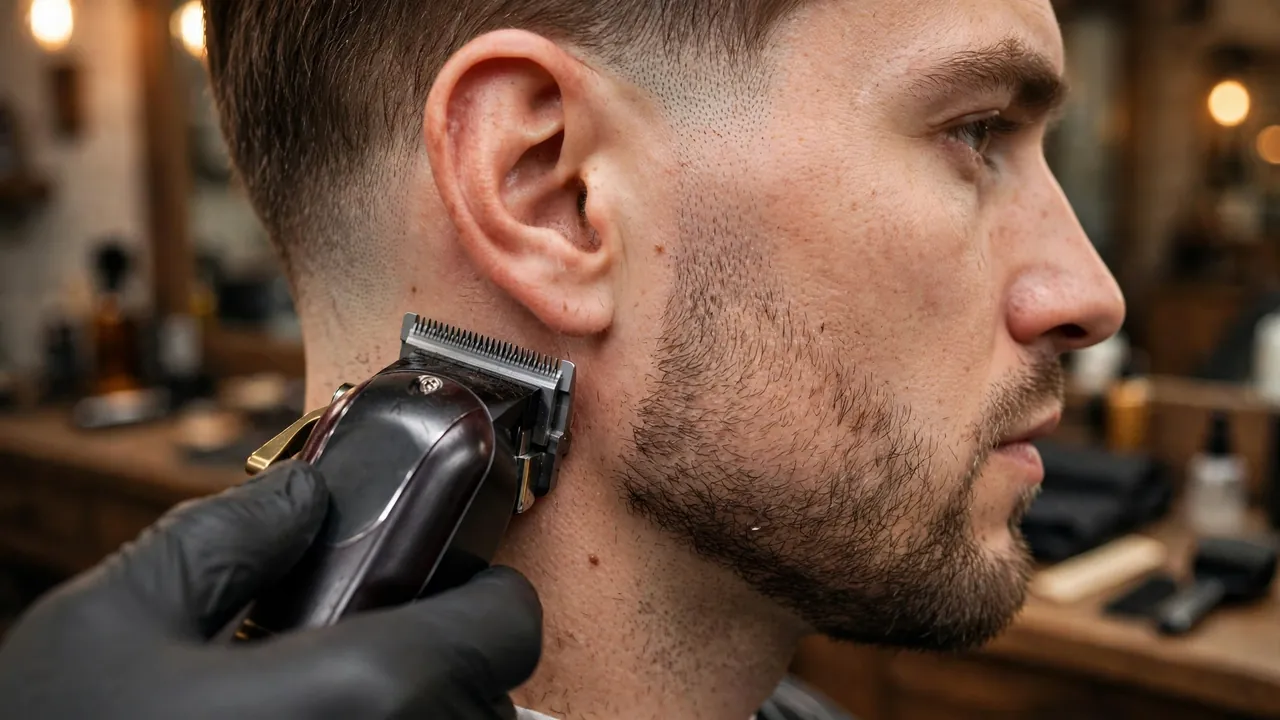
Understanding the process helps you judge the work in the mirror and touch it up at home. A good barber always works from the known lengths toward the unknown ones, never the reverse. If you want to watch the technique first, this step-by-step video tutorial from master barber Matty Conrad walks through every guard change.
Step 1, Set the Beard Length First
The beard gets trimmed to its final length on the cheeks and chin before any fading starts. This sets the darkest, longest point of the gradient, and everything else blends upward from it. Fading first and cutting length second is backwards, and it is how most home attempts go wrong.
Step 2, Work the Sideburns Down Through the Guards
Starting about an inch above the jawline, the barber uses a guard one setting shorter than the beard length and works upward in bands, dropping one guard size per band until the sideburn meets the haircut fade. Short upward strokes, with the clipper flicked out at the top of each pass, keep the bands from forming visible lines.
Step 3, Erase the Weight Line
Between each guard band sits a faint line where the lengths meet. The barber erases these with the clipper lever at its half positions, or with a flicking motion using the corner of the blade. This step takes the most skill. Rushing it leaves stripes, and stripes are the telltale sign of a rushed fade.
Step 4, Line Up the Cheeks and the Neckline
With the blend done, the barber defines the edges. The cheek line is set to your preference, natural or sharp, and the neckline is cut clean below the fade so the beard has a defined bottom edge. A foil shaver or straight razor finishes the skin areas for the crispest result.
Maintenance and Trim Frequency
This is not a cut-and-forget style. The gradient that looks seamless on day one starts to blur as everything grows at once. The good news is that maintenance is mostly small, quick jobs. This table gives you a realistic schedule.
| Task | How often | Notes |
|---|---|---|
| Cheek line cleanup | Every 2 to 3 days | Trimmer with no guard, follow the existing line |
| Neckline cleanup | Every 3 to 4 days | Shave below the set line only |
| Sideburn blend touch-up | Once a week | One guard shorter, light passes over the transition zone |
| Full barber visit | Every 2 to 3 weeks | Skin fades need the shorter end |
| Beard oil or balm | Daily | Keeps hair soft so the gradient reads clean |
At-Home Touch-Ups Between Visits
The golden rule of home maintenance is to refresh, never redesign. Clean the lines your barber set, but do not create new ones. When the sideburn blend grows out, one light pass with a guard one step shorter than your beard length, kept to the transition zone, buys you another week. The moment you want to take the fade higher or the cheek line lower, stop and book the barber instead.
The Products That Keep the Fade Sharp
Three products do nearly all the work. A quality trimmer with sharp blades and a full guard set handles the mechanical side. Beard oil, applied daily to slightly damp hair, keeps the texture soft so the gradient looks smooth rather than bristly. A boar bristle brush trains the cheek hair to lie in the direction of the fade. Everything beyond that is optional.
Matching the Fade to Your Face, Hair Type and Fade Height
A fade is not one fixed height, and the right version changes with your face shape, your hair type, and how bold you want the finish to look. Browse the guides on the BarbersGrooming homepage if you want to compare this against other beard and haircut styles first, then use the three points below to narrow the choice before you sit down.
Low, Mid and High Fade Heights
A low fade starts below the ear and keeps most of the sideburn dark, so it suits offices and first timers. A mid fade starts at ear level and gives the clearest gradient without taking the sides too high. A high fade climbs above the ear and pairs best with short tops and sharp lineups, but it grows out fastest and needs the most upkeep.
Face Shapes That Change the Height
Round faces gain the most from a mid or high fade with length kept on the chin, since the extra height on top and the longer chin balance the width. Long faces should keep the fade low, because height on the sides only stretches the face further. Square jaws carry a sharp cheek line well, and a defined neckline keeps the strong jaw from looking boxy.
Curly, Coily and Grey Beards
Curly and coily hair hides the gradient more than straight hair, so ask the barber to work in smaller bands and check the blend dry, since curls spring up as they dry and can reveal a line that looked smooth when damp. Grey beards take a fade well, because the gradient shows the silver tones instead of hiding them, but keep the cheek line softer if the grey is patchy, so thin silver areas do not stand out. Men with sensitive skin should finish the skin areas with a foil shaver rather than a straight razor, and shave the neckline with the grain to cut down on ingrown hairs.
Who Should Skip the Fade
A faded beard flatters most men, but not all. If your cheek growth is very patchy, a fade draws attention to the thin spots, because the gradient exposes every zone of the beard in sequence. Let the density fill in first, or keep the beard shorter and more uniform while it catches up.
Men growing very long beards should think twice. A full gradient eats length around the sides, and on a beard you have been growing for a year, that feels like a step backward. The taper version is the safer compromise. And if you cannot commit to a trimmer every few days, be honest about it. A grown-out fade looks worse than a simple, unfaded beard that is kept tidy.
FAQs
Conclusion
A beard fade is one of the highest impact, lowest risk upgrades a bearded man can make. It works with nearly every beard length and turns a beard and a haircut into a single intentional look. The difference between a great one and a disappointing one comes down to two things, clear words in the chair and a simple maintenance routine between visits.
Book the appointment, use the script, and keep the trimmer handy for touch-ups.