High and Tight Haircut, the Military Classic Explained
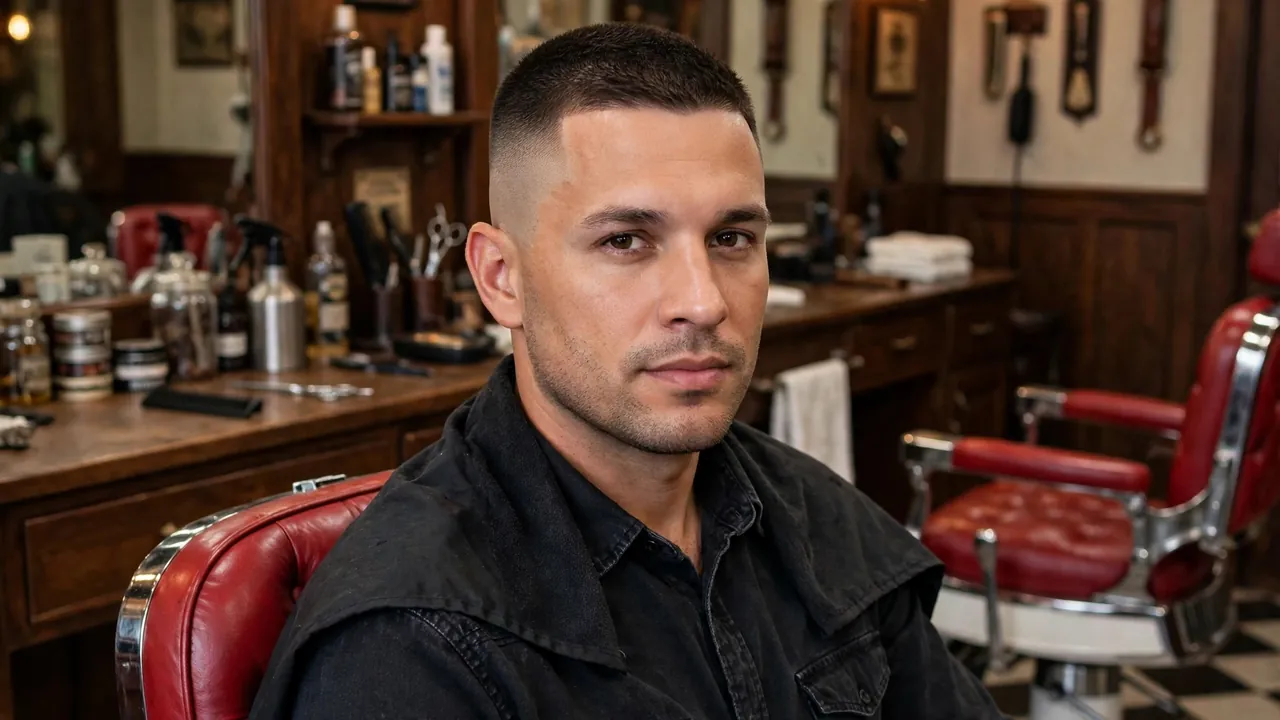
The high and tight haircut is a military style men’s cut with the sides and back clipped very short, the blend set high above the temples, and the top left slightly longer. It stays sharp with almost no styling, suits most hair types and face shapes, and needs a trim every two to three weeks to keep the lines clean. It is one of the few cuts a barber can do in fifteen minutes that still looks intentional from every angle.
What a High and Tight Haircut Actually Looks Like
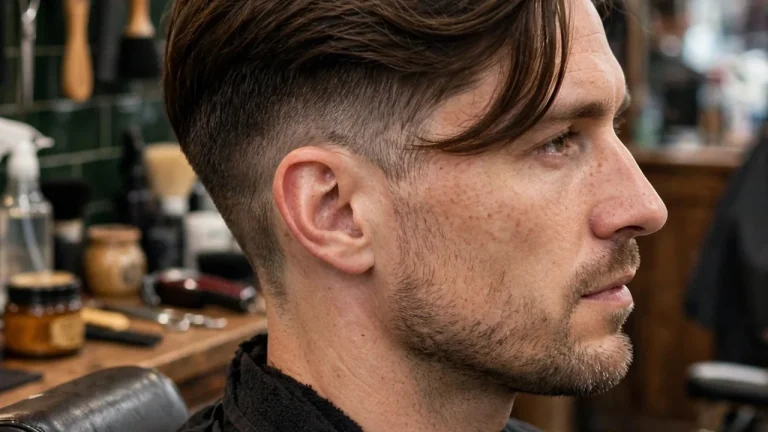
The name is a literal description, which is why the cut is so easy to get right once you understand the two halves. “High” refers to where the sides end: the short hair runs up past the temples, much higher than a regular fade, so the longer top occupies a smaller area of the head. “Tight” refers to the transition, which is a defined line rather than a slow, soft blend. The result is a cut that looks disciplined and crisp instead of relaxed and gradual.
The high and tight began as a military variant of the crew cut, worn by US servicemen because it keeps the head cool, fits under a helmet, and stays regulation sharp for weeks. The history of the high and tight runs back through decades of barracks and boot camps, but the civilian version is more flexible: the top can run from near skin to a full inch, and the sides can fade into skin or stop at a close guard. What never changes is the high blend line and the sharp contrast between sides and top.
Not every branch wears it the same way. The Marine Corps keeps the strictest version, skin sides and a hard, block-shaped line. Army and Navy grooming standards allow a taper with a slightly longer top. As a civilian, you get to pick whichever finish you like, which is why the barber script below asks you to choose the line on purpose.
The High Part of the Cut
On a standard fade, the blend sits around the middle of the head. On a high and tight, the shortest hair climbs to a point above the temples, roughly where the head starts to round at the crown. This high placement is what makes the cut so unforgiving of uneven clipper work and so flattering when it is done well. It exposes the shape of the skull, which is why barbers take their time setting the line even though the rest of the cut is fast.
The Tight Part of the Cut
“Tight” does not mean harsh. It means the sides are cut close to the skin and the boundary between the sides and the top is clearly defined, not melted away over two inches. Traditional versions keep this line hard and visible. Modern versions soften it with a short fade so the transition looks clean without a visible shelf. Ask your barber which one you are getting before the clippers start, because a hard line and a soft blend look like different cuts.
High and Tight Compared to the Cuts Men Mix It Up With
Men ask for a high and tight but describe three different cuts, and they use the three names interchangeably. The differences matter, because each cut flatters different heads and needs different upkeep. The table below settles the confusion.
| Cut | Where the Blend Sits | Top Length | Best For |
|---|---|---|---|
| High and tight | High, above the temples | Quarter to one inch | Men who want maximum sharpness with minimal styling |
| Crew cut | Low to mid, tapered | One to two inches, upright | Men who want short hair that still reads as a style |
| Buzz cut | Even all over, no real blend | Same length as the sides | Men who want the lowest maintenance option that exists |
| High taper fade | High, but tapered at the neckline and edges | Varies, often longer | Men who want the high placement without the military edge |
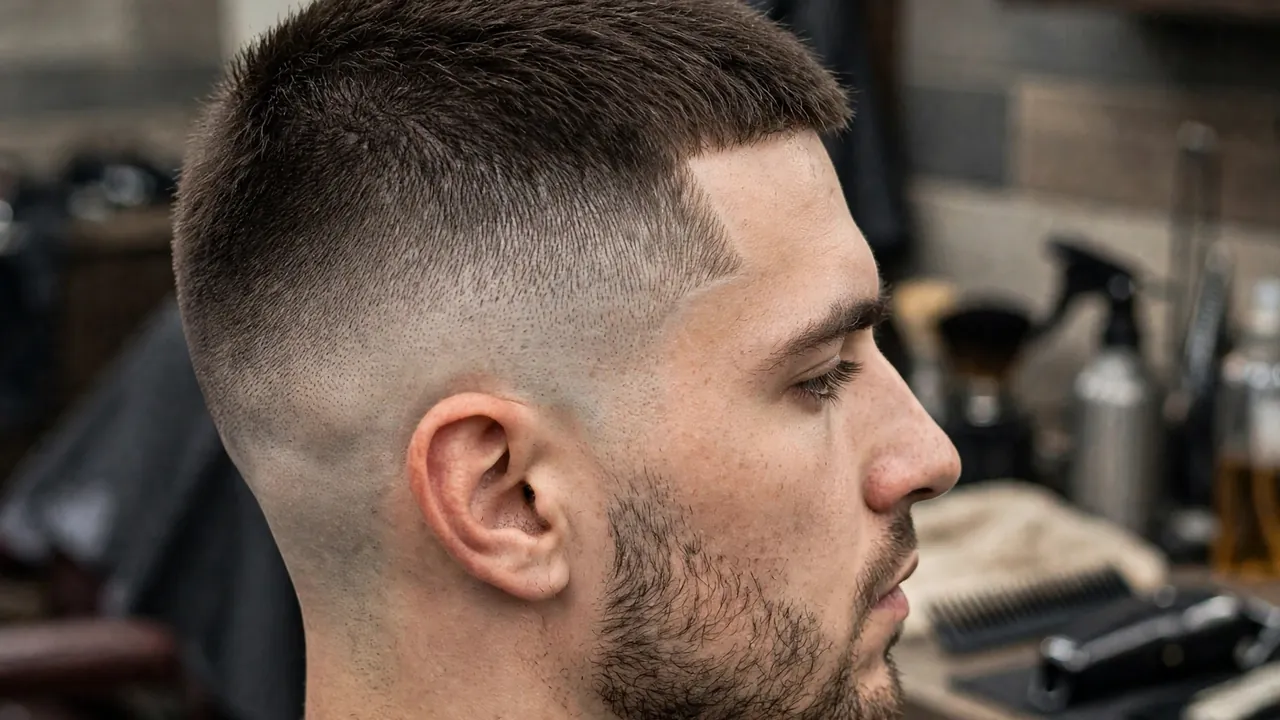
The practical way to read this: a buzz cut is one length everywhere, a crew cut is short with a low taper and a real top, and a high and tight is a crew cut with the sides pushed up high and cut close. If you like the look of a skin fade but want the top longer than a buzz, the high and tight is probably what you are actually describing.
The Main High and Tight Variations
The high and tight is a family, not a single cut. The sides and the blend line stay roughly the same across all of them, while the top and the finish change. Knowing the six main versions saves you from describing your haircut with hand gestures for ten minutes.
The Classic Regulation High and Tight
This is the barracks original. The sides and back are taken down to skin or a zero guard, the top is clipped to a quarter inch or less, and the line between them is hard and visible. It needs no product, no combing, and no thought in the morning. It also grows out fast, because at this length every millimeter of growth changes the look, so it is a cut for men who visit the barber often and like it that way.
The High and Tight Taper Fade
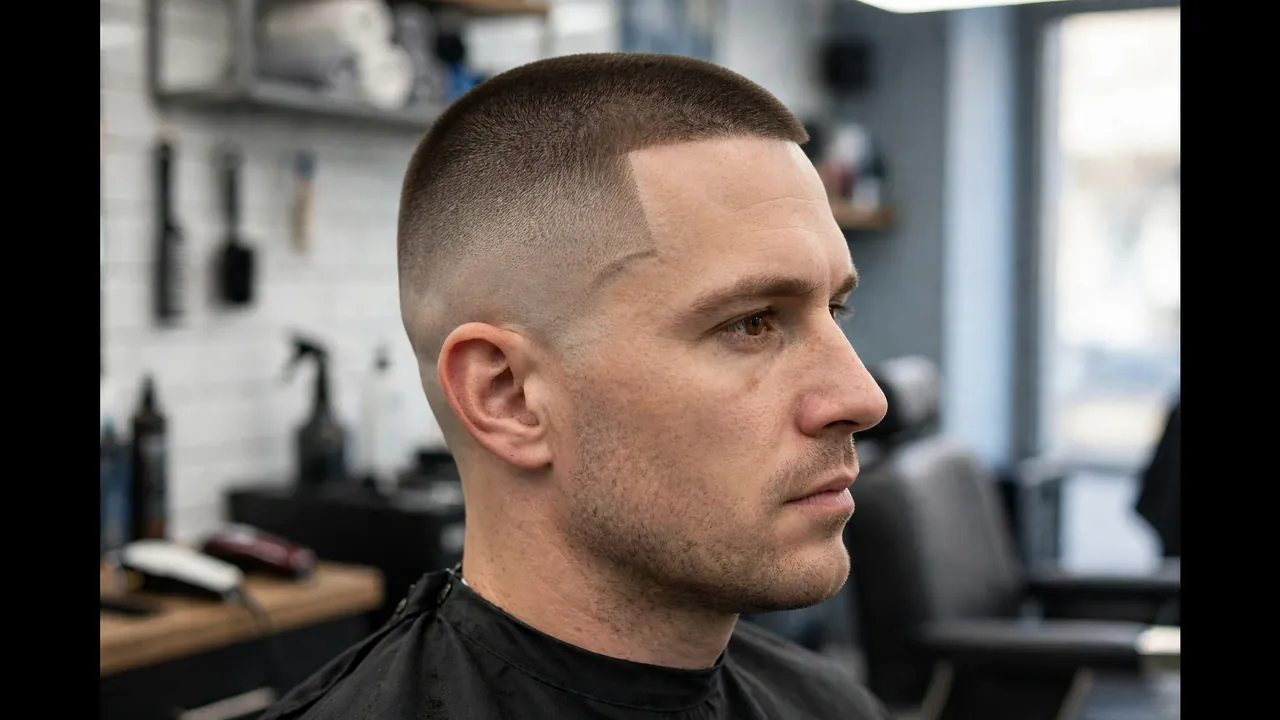
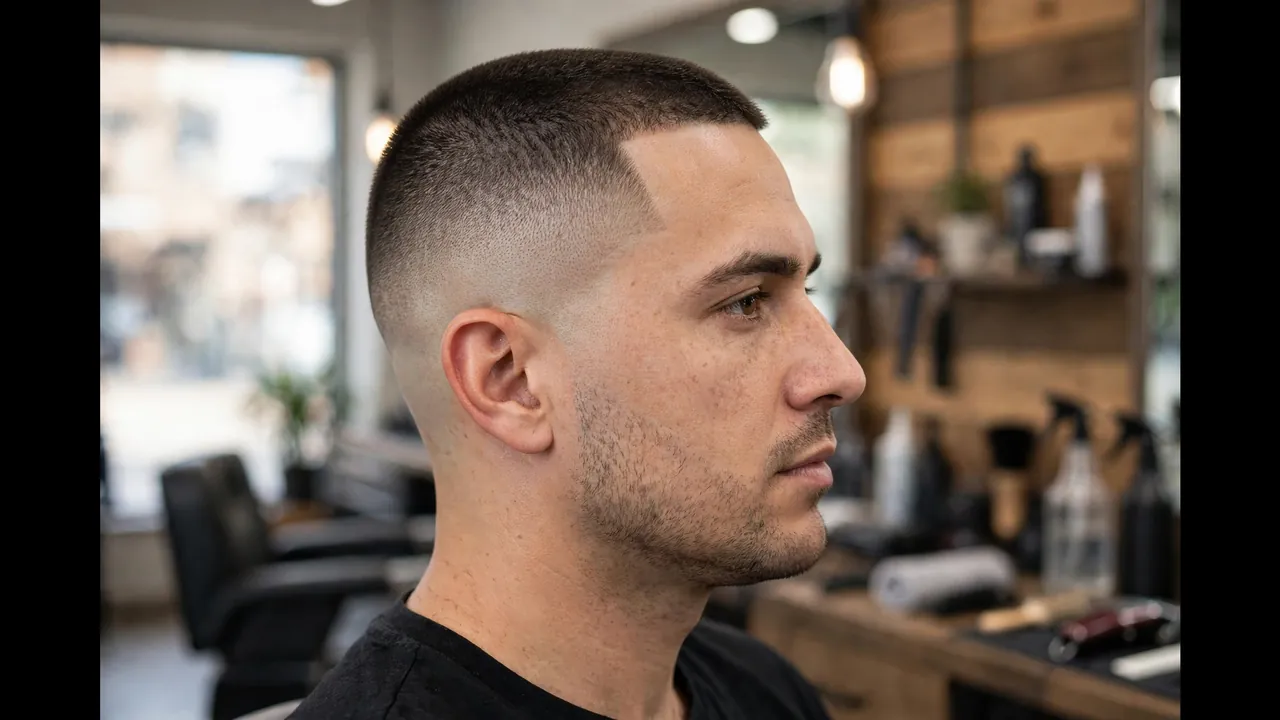
The high and tight taper fade keeps the high placement but replaces the hard line with a short, clean fade. The sides graduate from skin at the bottom up to the top length over a small area, which softens the cut without losing its character. This is the version most civilians wear now, and it pairs well with a high taper fade cleanup between full cuts, which stretches the life of the appointment by a week or more.
The High and Tight Razor Fade
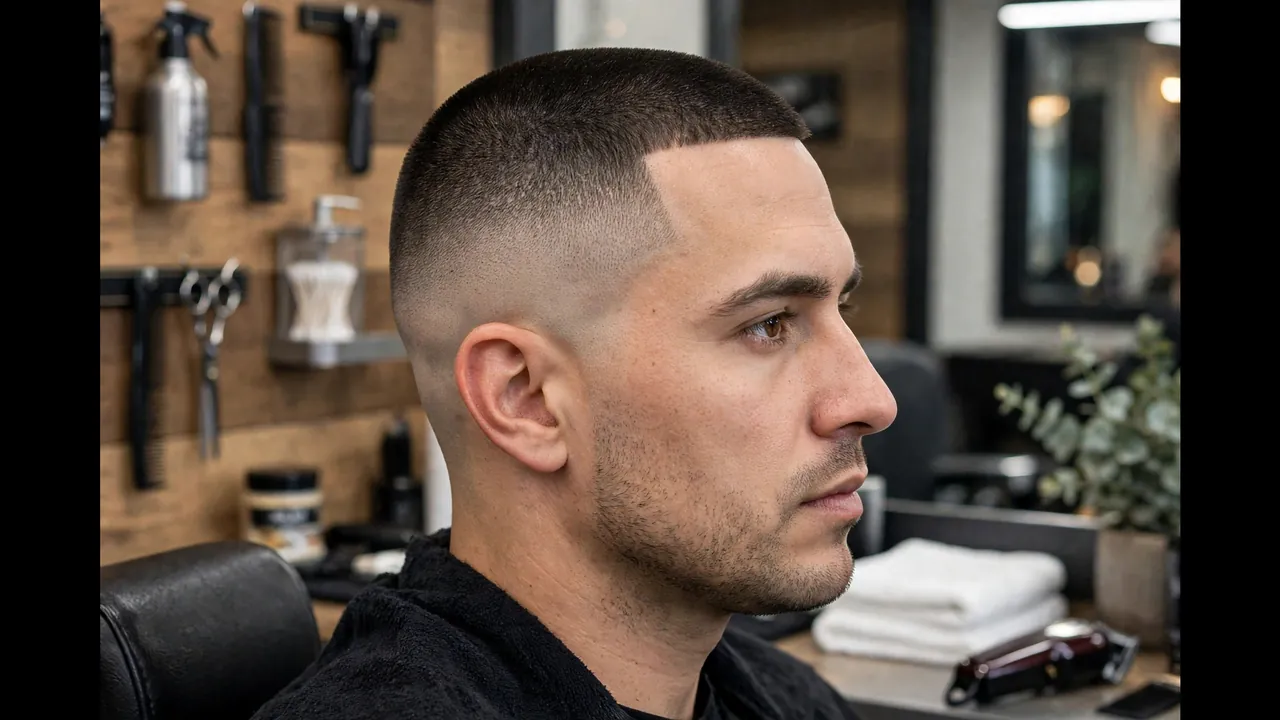
The high and tight razor fade takes the sides down with a straight razor or foil shaver instead of clippers, which gives the smoothest possible finish on the sides. It looks incredibly clean for the first week, then grows out into a normal short fade. It takes longer in the chair and usually costs more, so treat it as the dress uniform version of the cut: save it for events, not everyday wear.
The High and Tight Recon
The recon is the extreme end of the family, and its name comes from its association with reconnaissance units. The sides and back are shaved down almost to bare skin, the top is narrowed to a short strip, and there is no real fade, just a high, hard boundary all the way around. It needs the least upkeep of any version here, which is exactly why infantry units favor it. The tradeoff is that it hides nothing: with this little hair, every bump and ridge of your skull is on display, so it suits men with smooth, even head shapes best.

The High and Tight With a Textured Top
The modern civilian take keeps the high, tight sides but leaves up to two inches on top, cut with texture so it moves instead of lying flat. A pinch of matte clay or a spritz of sea salt spray gives it a messy, lived-in finish that fits a creative office where the barracks original would raise eyebrows. It is the same foundation with a different finish: the geometry is military, the styling is not.
The High and Tight With a Beard
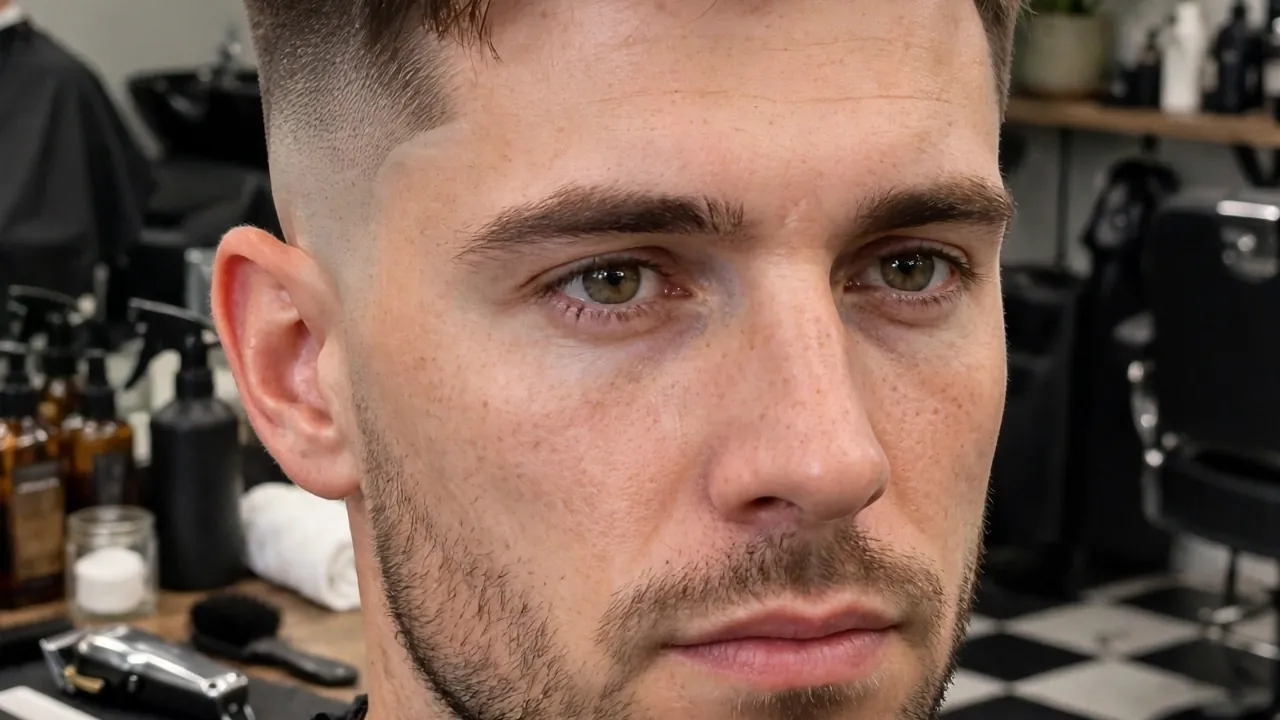
A beard changes the geometry of this cut. The high sides can make a short beard look disconnected, so the fix is to fade the beard up into the sideburns or keep the beard full enough to meet the cut. Pro barbers walk through this exact problem in this high and tight skin fade tutorial with beard shaping, and it is worth watching if your beard is part of the look. Clean neckline and lined up cheek lines do more for this pairing than any product.

Exactly What to Tell Your Barber
High and tight means different things to different barbers, which is why this is one of the most miscommunicated haircuts in the chair. Saying the name alone is not enough. Use this script in your own words and adjust the one variable that fits you.
“I want a high and tight. Take the sides down to a zero, or skin, and bring the blend high, up above my temples. Keep about half an inch on top, clipped even, and keep the line between the sides and the top defined. Clean up the neckline and line up the edges.”
The two decisions to make before you sit down: the guard on the sides and the finish of the line. Skin or zero gives the classic look. A one or two guard is the softer civilian version. And say whether you want the line hard or blended, because the barber will default to whichever one he prefers. If you are not sure, bring a photo on your phone. One picture of a high and tight you like removes more guesswork than any description. If the cut feels too aggressive once it is done, the Caesar cut is the nearest softer alternative with the same short, neat feel.
How to Keep a High and Tight Looking Sharp
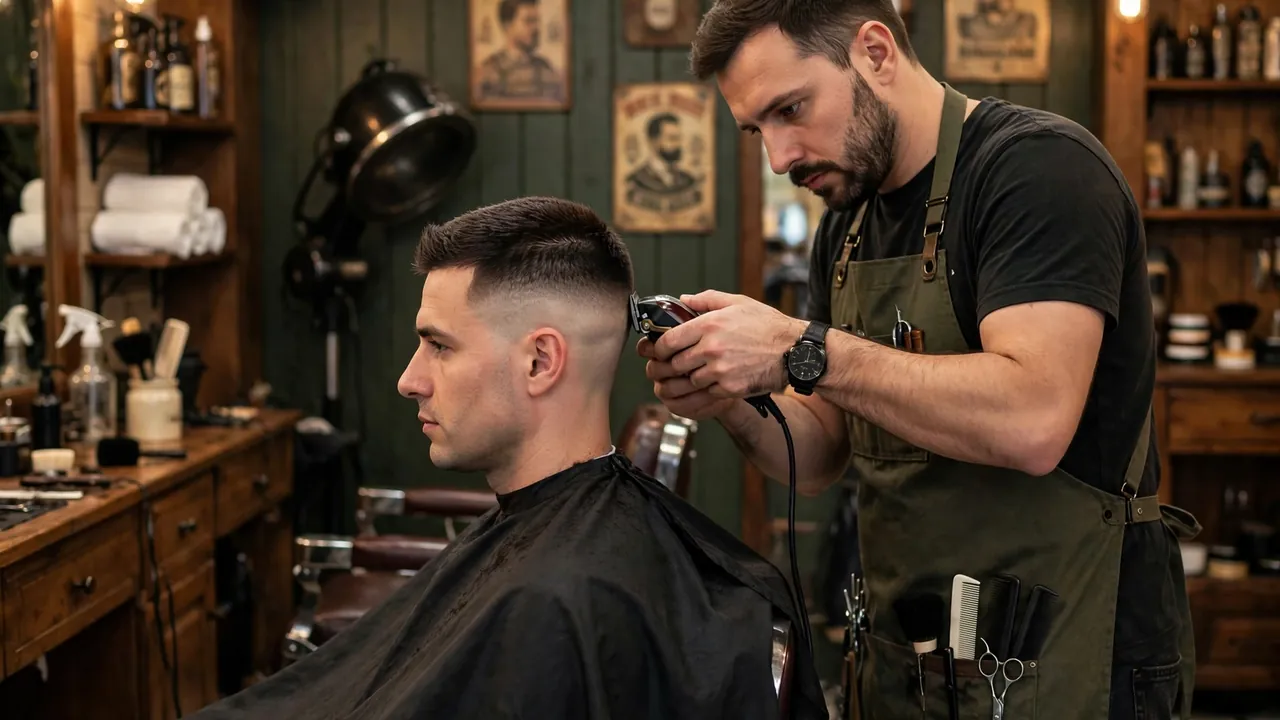
The good news is that a high and tight asks for almost nothing day to day. The bad news is that it grows out faster than it feels like it should. At this length, a week of growth visibly softens the lines that make the cut work. Follow the schedule below instead of waiting until it looks tired.
| Maintenance Task | How Often | Notes |
|---|---|---|
| Full haircut | Every two to three weeks | Skin and razor versions need the short end of this range |
| Sides and neckline cleanup | Between full cuts, if you stretch to four weeks | A quick tidy that keeps the high line defined |
| Daily styling | None, or a few seconds with the fingers | The top is too short to need product, a light matte paste adds texture if you want it |
| Sun protection for the scalp | Whenever you are outdoors | Freshly faded sides burn easily in the first week |
There is almost nothing to style, but there is something to maintain: the edges. A lined up hairline and a clean neckline are what separate a high and tight from a haircut that is just short. Some men touch up their own edges between visits with a trimmer, and this step by step high and tight tutorial shows the full process at home, including the blending order that makes it work.
Who Should Skip the High and Tight
This cut is honest about head shape, which is its one real drawback. The very short, high sides expose the skull, so irregular bumps, a very flat back of the head, or a sharply uneven crown will show more than they would under longer hair. If you have never worn your hair this short, try a regular crew cut first and see how you feel about the exposure.
Skip it if you want a cut you can change your mind about. A high and tight leaves almost no room to restyle the next morning, and growing it out takes you through an awkward phase where the top is longer than the sides but the sides are too short to blend. Skip it if your workplace expects a softer look, because even the tapered version reads as military. And if your hair is very fine and thin on top, the contrast with the tight sides can make the top look thinner than it is, so a cut with more blended weight up top suits you better.
FAQs
Conclusion
The high and tight haircut survives because it is honest about what it is. Short sides set high, a tight defined line, a top that needs nothing from you in the morning, and a trim every few weeks to keep it crisp. Pick your version from the six above, use the barber script word for word so nothing gets lost in translation, and give the cut two weeks before you judge how it settles. It is a military standard that earned its place in civilian life the hard way, by working.
For more cuts in the same low-maintenance family, browse the rest of the guides on the Barbersgrooming homepage.