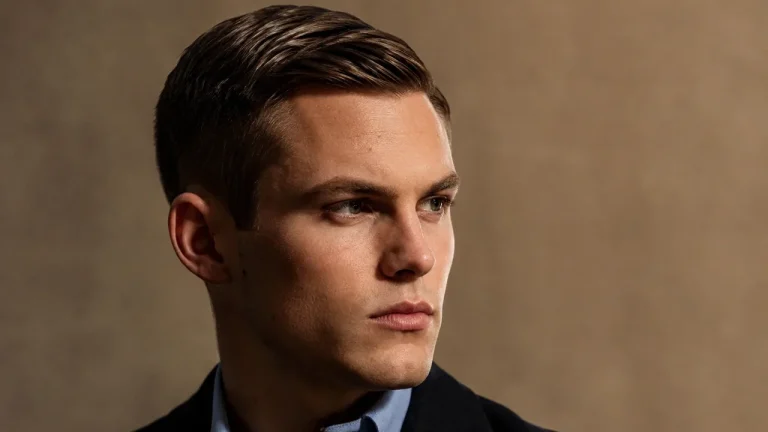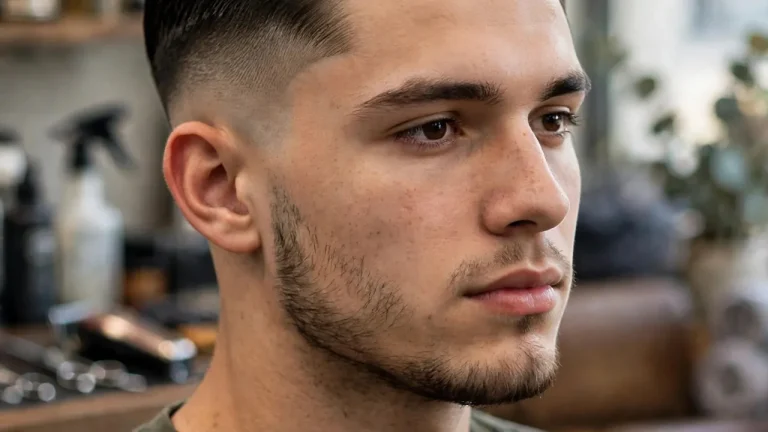
Side Swept Undercut, an Everyday Disconnected Cut
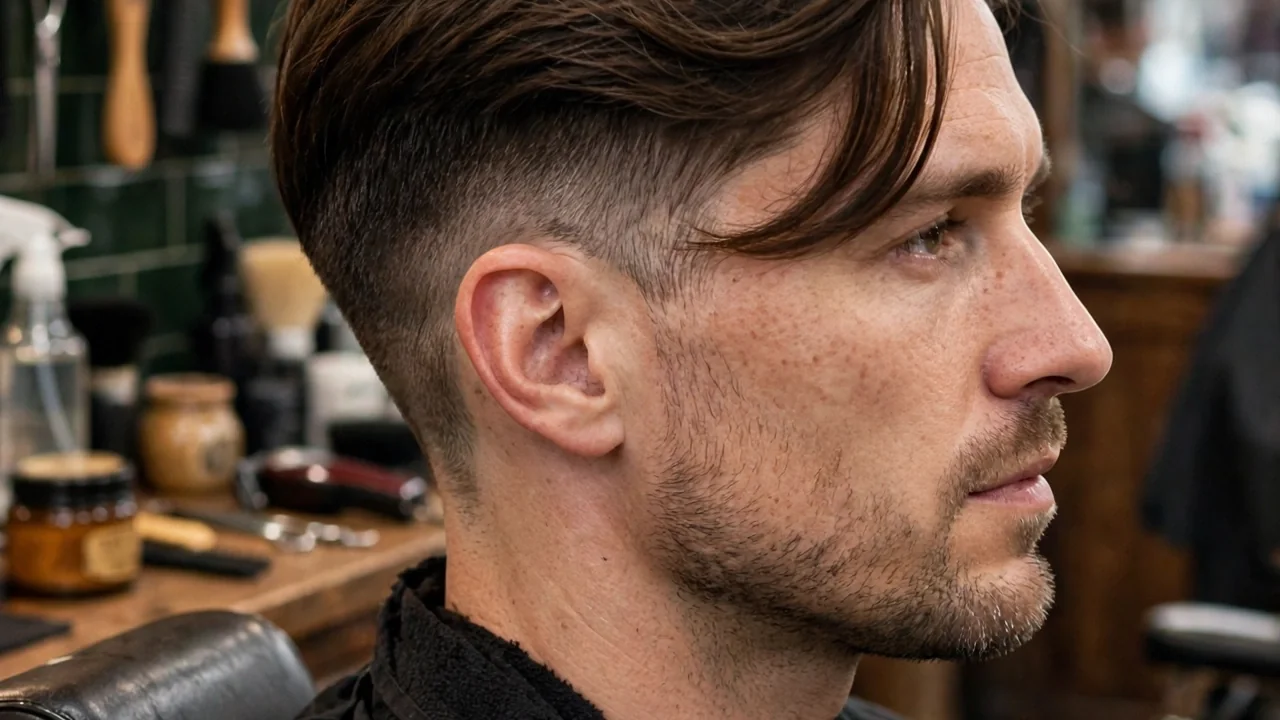
A side swept undercut is an undercut with the longer top hair pushed to one side instead of back. The sides and back are cut short and kept disconnected from the top, which stays long enough to sweep across. It suits straight, wavy and thick hair best, and it is one of the most wearable versions of the undercut family.
Most undercut styles ask the hair to go straight back or spike upward, which can look loud even when the cut is clean. This cut keeps the sharp contrast of short sides against a long top, but the sweep across the head softens everything. The result reads as stylish without looking like you tried too hard.
This guide covers how the cut is built, how it differs from the undercut fade and its taper variations, the versions worth asking for, the exact words to use in the barber chair, home styling, upkeep and who should skip it.
What the Side Swept Undercut Actually Is
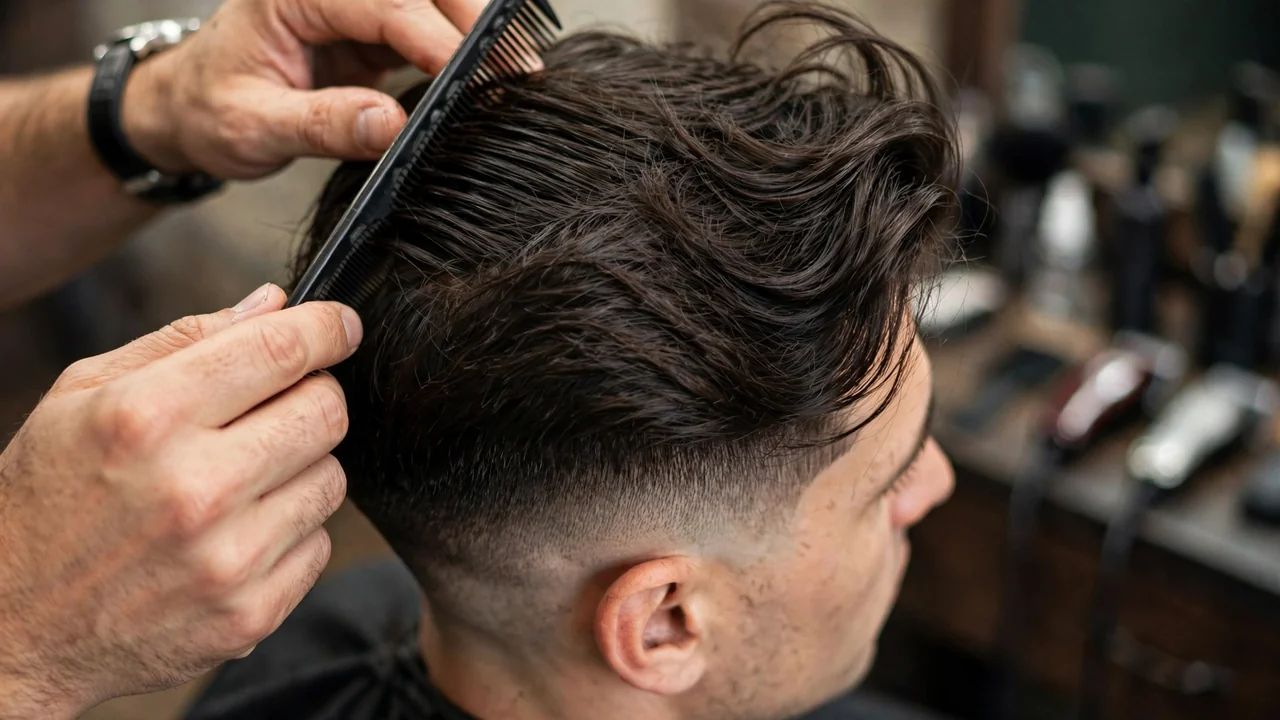
Strip away the styling and the cut underneath is simple. The barber takes the sides and back short, usually with clippers at one even length, and stops at a defined line around the head. Above that line, the hair stays long, often three to five inches. Nothing blends the two zones together. That hard line is what makes it an undercut rather than a fade.
The sweep is the styling choice that sits on top of that structure. Instead of pushing the long hair straight back, you part it and sweep it across the head. The undercut itself has a long history in various forms, as documented in the Wikipedia entry on the undercut hairstyle, and the side sweep is one of the oldest ways men have worn longer hair on top.
The Cut Underneath the Sweep
Two things decide whether the cut works. First, the sides need to be short enough to create contrast but not so short that the scalp shows through unevenly. Most barbers use a number 1 to number 3 guard on the sides, depending on hair density. Second, the top needs real length. Anything under three inches will not sweep. It will just lie flat or stick up. Ask your barber to keep length through the front and crown and add light texture so the hair has somewhere to go.
Texture matters more than people expect. A blunt, one-length top fights the sweep and falls as a solid sheet. Point cutting or light layering through the top breaks the hair into pieces that overlap and move, which is what makes the sweep look natural instead of pasted down.
Why the Direction of the Sweep Matters
Most men have a natural part, the spot where the hair wants to fall. Sweeping with it means the style holds all day with almost no product. Sweeping against it gives more volume and a more deliberate look, but it needs product and a blow dryer to survive the afternoon.
Side Swept Undercut vs Undercut Fade
The words get mixed up in barbershops every day, so it is worth drawing the line clearly. This cut has a disconnected transition. The sides go from short to long at a visible line. An undercut fade softens that line with a gradient, so the sides melt into the top instead of stopping at it. Both can be worn swept to the side. The difference is how loud the contrast is.
The taper versions sit between the two. A taper keeps the sideburn and neckline area neat while leaving more length higher up, which softens the disconnected look without turning it into a full fade. That middle ground is why the taper take on the undercut keeps gaining fans.
| Version | How the sides are cut | Contrast level | Best for |
|---|---|---|---|
| Disconnected undercut | One even clipper length with a hard line | High | Thick straight hair and bold contrast |
| Low taper fade undercut | Tapered low around the ears and neckline | Medium | First time undercut wearers and office settings |
| Drop fade undercut | Fade line that drops down behind the ear | Medium high | Round faces and defined head shapes |
| Burst fade undercut | Curved fade bursting around the ear | Medium high | Curly and wavy tops with an edgy finish |
| Razor fade undercut | Straight razor finish on the sides | Medium high | Very thick hair and ultra clean edges |
When the Tapered Version Wins
If this is your first undercut, start with the low taper fade version. The taper keeps the edges clean while leaving enough length on the sides that the cut grows out without an awkward stage. It reads as a normal short back and sides from most angles, with the sweep doing all the talking on top. The drop fade version suits rounder faces because the fade line follows the head shape and adds structure where the face is widest.
When the Disconnected Version Wins
The pure disconnected version is for thick, dense hair that can hold the contrast. Fine hair struggles here because the short sides expose the scalp and the long top has nothing to grip. The burst fade version is the middle ground for wavy and curly hair. The burst keeps the sides tight around the ear while the top keeps its natural movement, and the sweep works with the curl pattern instead of fighting it.
The Versions Worth Asking For
Once you know you want the sweep, the next choice is what happens on the sides. These are the four versions barbers cut most, and each one changes the personality of the haircut. Grow the top past six inches and the same cut doubles as an undercut ponytail style for weekends. If you wear a beard, ask for the sides to fade into a short boxed beard at the sideburns so the line between hair and beard stays clean.
The Low Taper Fade Undercut
The most office friendly version. The sides taper down low around the ears and neckline while the top keeps its length. It grows out gracefully and needs the least commitment. Tell your barber you want a low taper on the sides with the top left long enough to sweep.

The Drop Fade Undercut
The fade line drops down behind the ear instead of running straight around the head. It follows the natural curve of the skull, which makes the whole cut look intentional from every angle. It works well on thick hair because the drop removes bulk exactly where the head widens.

The Burst Fade Undercut
The fade bursts outward around the ear in a curved shape, leaving more length at the back. This is the version for men who want an edge without going full skin fade. It pairs well with a textured sweep because both the sides and the top have movement.

The High Fade Undercut
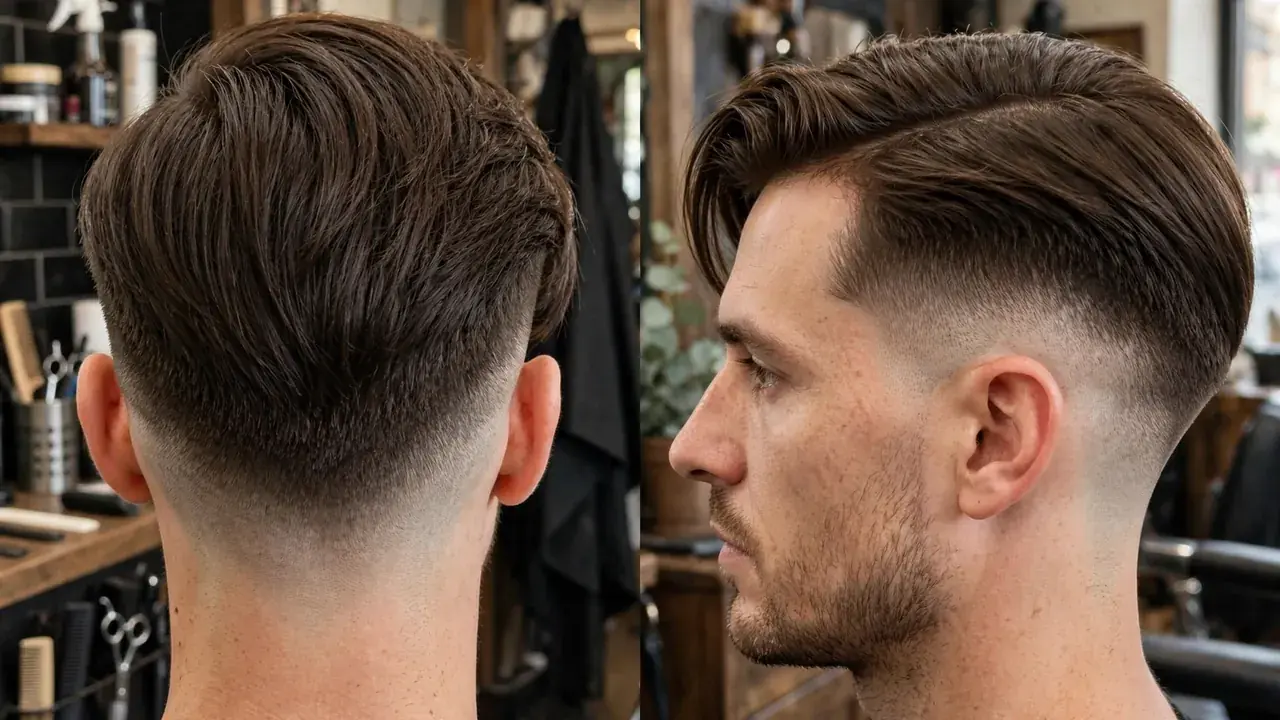
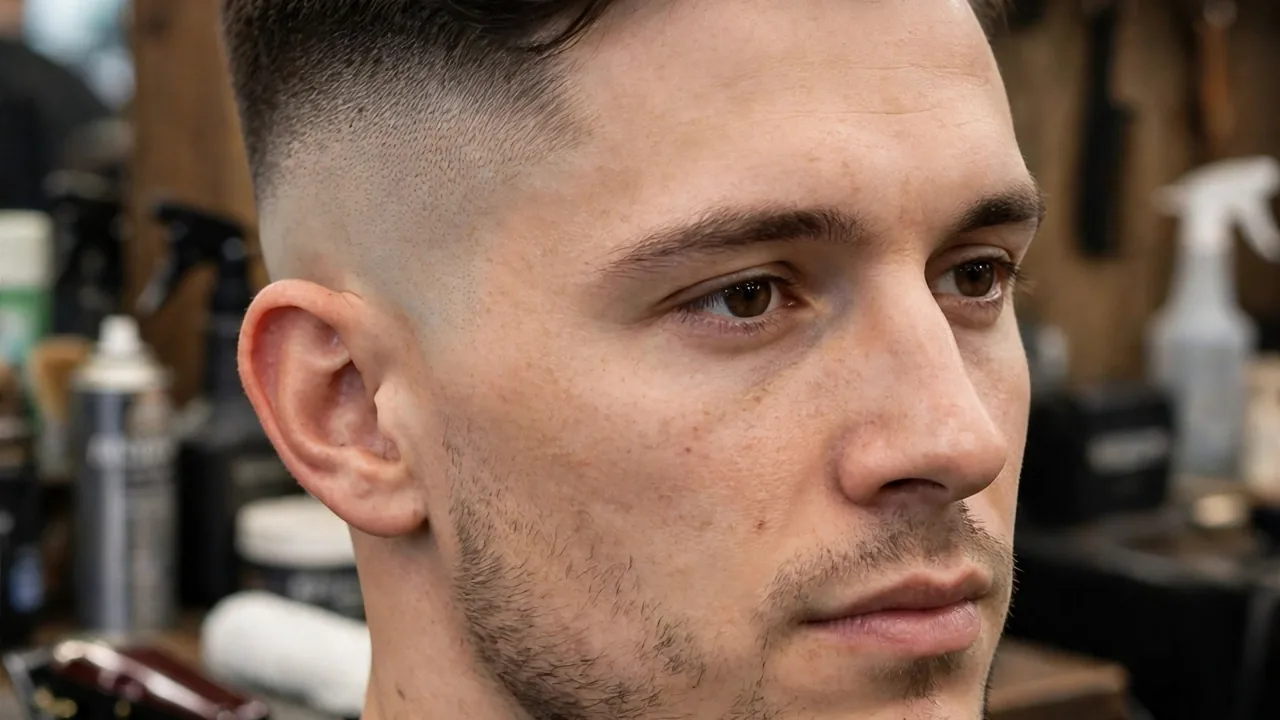
The high fade takes the short sides up almost to where the top starts, giving the strongest contrast of the four versions. Ask for the fade to start above the temples and keep four to five inches on top to balance it. This is the boldest version, and it suits oval and square faces best because it leaves no softening on the sides.
What to Tell Your Barber
The fastest way to get the right cut is to describe the structure and the styling separately. Most bad undercuts happen because the client described the style they saw in a photo but not the cut underneath it.
Say this: “I want an undercut with the sides taken short and disconnected, with a clean line and no blending into the top. Keep about four inches on top, a little longer in the front, with light texture so it sweeps to the side. I part it on the left. I will style it with matte clay.” That covers the sides, the line, the length, the texture, the direction and the product. Nothing is left to guess.
Bring two photos: one of the cut from the side showing the line, and one of the sweep from the front. Tell the barber which photo is about the cut and which is about the styling. And if you ever push the same top straight up instead of sweeping it, you will see how close this cut sits to a faux hawk.
The Words That Get the Sweep Right
Use “disconnected” if you want the hard line and “tapered” if you want it softened. Use “texture” and “point cutting” for the top, never “thinning” unless your hair is genuinely too thick, because thinning shears remove bulk in a way that can make the sweep look wispy. Name the direction. “Swept to the left on my natural part” beats “side swept” alone, because it tells the barber exactly where the hair should fall.
What to Avoid Saying
Do not ask for “short on the sides, long on top” without mentioning the line, or you will get a fade. Do not say “like the photo” and stop there, because the photo was styled with product and a blow dryer and your barber needs to know the cut underneath. And do not ask the barber to blend the sides into the top at the end “just a little.” That one request turns an undercut into something else entirely.
Styling the Sweep at Home
The cut does half the work. The styling does the rest, and it takes less effort than most men expect. Damp hair, the right product and two minutes are enough on a normal day.
Picking the Right Product
Matte clay is the default for a reason. It gives hold without shine, which keeps the sweep looking like hair instead of a helmet. Use a pea sized amount, warm it between your palms until it disappears, and work it through the top from roots to ends. Pomade gives a sleeker, shinier finish for evenings. Cream works for fine hair that gets weighed down easily. Avoid strong gels. They make the sweep look wet and rigid, which defeats the whole point of the style.
If you want to see the technique in motion, this side swept undercut styling tutorial walks through the blow dry and product steps on a real head of hair.
The Two Minute Morning Routine
Start with towel dried hair, damp but not dripping. Work the product through the top, then comb or push the hair toward your part. Blow dry in the direction of the sweep on medium heat, using your fingers or a vented brush to guide it. Finish by pressing the front lightly into place with your palm. The whole routine takes about two minutes once the muscle memory is there.
Messy or Polished, Pick Your Finish
Messy is a styling choice, not a different cut. For a messy finish, rough dry the top with your fingers instead of a brush and work matte clay through with your palms, letting the hair fall where it wants. For a polished finish, use a low shine cream and a comb to lay every strand in one direction, keeping the top even in length with no big layer variation. The messy version forgives bad hair days, and the polished one is the interview and wedding version.
On days you skip the blow dryer, apply product to damp hair and comb the sweep into place, then leave it. It will look softer and more casual, which suits weekends. The disconnected sides keep it looking deliberate even when the top is doing its own thing.
How Often the Cut Needs a Trim
The sides grow out faster than they look. Because the whole identity of the cut is the contrast between short sides and long top, the sides need attention every two to three weeks. The top can go six to eight weeks between trims and only needs the ends cleaned up and the texture refreshed.
| Section | Trim every | What the appointment covers |
|---|---|---|
| Sides and back | 2 to 3 weeks | Reclip the sides, clean the line, tidy the neckline |
| Top length | 6 to 8 weeks | Trim the ends, refresh the texture, check the sweep still falls right |
| The disconnected line | Every side trim | Redefine the line so it stays crisp |
| Full reshape | 8 to 10 weeks | Rebalance the whole cut if the top has outgrown the sides |
Stretching the Time Between Appointments
Two habits buy you an extra week. First, keep the neckline clean at home with a trimmer, following the line your barber set. Second, ask for the sides one guard longer than your ideal. The cut looks perfect on day one and still sharp at week three. The top is more forgiving, since longer hair just means a deeper sweep.
Who Should Skip This Cut
Skip it if your hair is very fine and thin on top. The sweep needs enough hair to cover the part and fall across the head. Fine hair goes see through when it is pushed sideways, and the short sides draw attention to exactly what you want to hide. A textured crop with forward styling hides thinning better.
Face shape decides how flat to sweep. Round faces look better with height kept on top instead of pressing the sweep flat against the head, while longer faces should sweep lower and closer to the scalp so the cut does not add more length. Square jaws carry the hard disconnected line best.
Skip it if you will not touch product or a blow dryer. An unstyled one looks like a grown out haircut, because the long top has no shape without guidance. If your routine is towel dry and go, pick a shorter cut that holds its own shape.
Skip the disconnected version if your workplace is conservative, but do not write off the whole family. The low taper version passes in most offices. When in doubt, watch a barber build the cut step by step. This undercut haircut tutorial shows how the sections, the line and the length work together.
FAQs
Conclusion
The side swept undercut works because it is two ideas in balance. The undercut brings the edge, the sweep brings the manners. Get the structure right in the chair, learn the two minute routine at home, and the cut takes care of itself between appointments.
If you are on the fence, start with the low taper version. It is the easiest to wear and the easiest to grow out, and it still gives you the full sweep on top. You can always go more disconnected next time. For more classic cut breakdowns in the same style, visit the barbersgrooming.com homepage.