Caesar Haircut for Men, What to Ask Your Barber

A Caesar haircut for men is a short, even cut with a straight horizontal fringe combed forward. The hair stays between half an inch and two inches all over, with the sides trimmed to match or faded, and the fringe cut blunt across the forehead. It is one of the lowest maintenance styles a man can wear, and it works best on straight to wavy hair with average thickness. The caesar haircut men ask for by name is this exact version, blunt fringe, short even length, styled forward.
What a Caesar Haircut Is
The Caesar is one of the oldest named haircuts in the world. Roman statues of Augustus show the same straight cut fringe that men wear today, and the style has cycled back into fashion every couple of decades since the 1990s. The cut is named after Julius Caesar, and the Wikipedia entry on the Caesar cut confirms the basics: short layered hair all over with horizontally cut bangs.
What makes it a Caesar and not just short hair is the fringe. Without the blunt fringe combed forward, the same cut becomes a crew cut or a plain short back and sides. The fringe is the signature, and a barber who knows the cut will spend as much time shaping it as the rest of the head.
The straight fringe that defines it
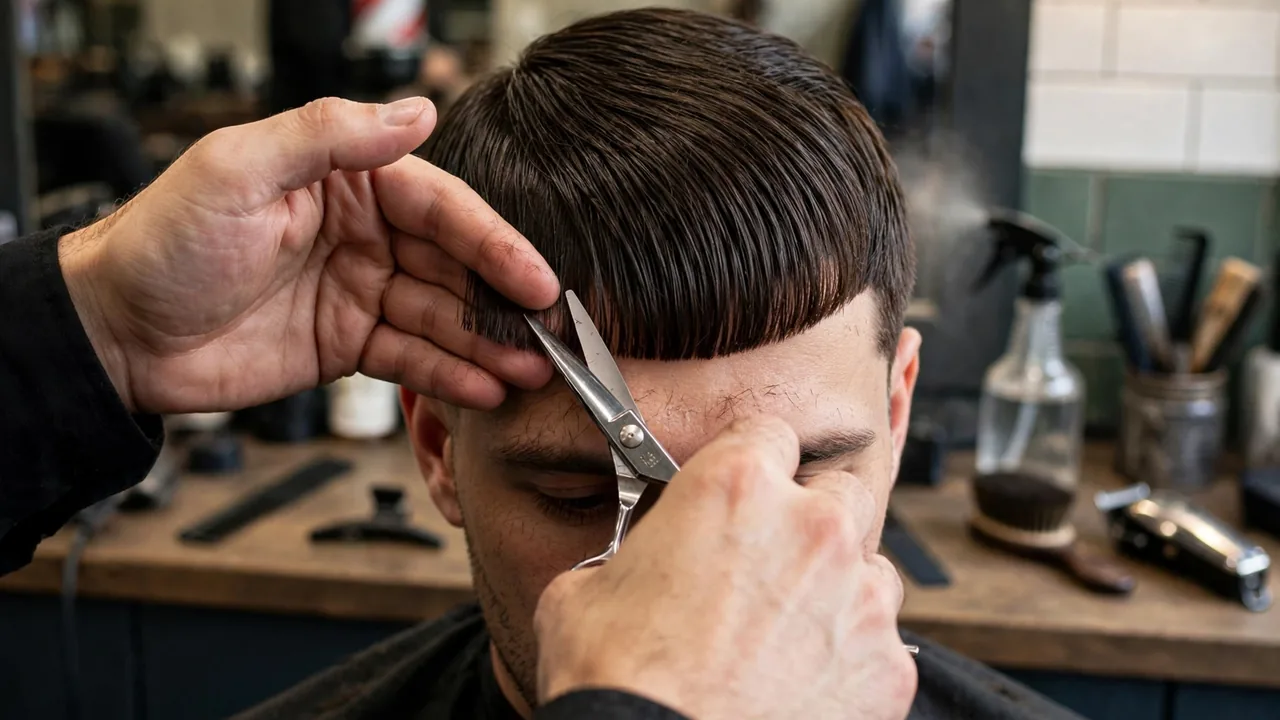
The fringe should sit flat against the forehead and end in a clean, straight line. Some men wear it barely covering the forehead, others wear it a little longer so it reads more clearly. The line must be level when the head is straight. A crooked fringe is the fastest way to ruin this cut, so a good barber checks it from the front with the client sitting upright, not tilted back.
On thick hair the fringe can look heavy, which is why barbers point cut the ends to soften them. On fine hair the fringe can look thin, which is why a shorter length often works better, since less length means less weight pulling it flat. The fringe does not need product on most hair types, which is part of the appeal of the cut.
Why barbers cut it the way they do
A traditional Caesar is cut to one even length all over, usually with scissors, and the sides are trimmed to match the top or taken slightly shorter. The even length is what separates it from faded versions, where the sides graduate down to the skin. Barbers work from the crown forward, combing everything toward the face, then cut the fringe last so it blends into the top.
The scissor work matters more here than in clipper heavy cuts, because clippers set the length fast but scissors control how the hair lies. A barber who cuts a Caesar well will mostly use scissors on top and reserve the clippers for cleaning up the sides and the neckline.
Which face shapes wear it best
Oval and square faces wear the Caesar best, since the even length and straight fringe sit naturally on balanced proportions. Diamond face shapes do well too, because the fringe adds width across the forehead. Men with high foreheads get a bonus, the fringe covers exactly what they want covered. Round and heart shaped faces need the modified versions, a Caesar fade with height left in the fringe for round faces, and a textured top that breaks the straight line for heart shapes.
The Modern Caesar Haircut Men Ask For Now
The classic version still shows up in the chair, but most men now ask for a modern take. The changes are small but they change how the cut reads. The four versions below cover what men actually request in 2026, and they all keep the defining fringe while updating the finish around it. Two more takes round out the modern menu, the long Caesar leaves two to four inches on top for movement, and the buzz Caesar takes everything down close while keeping the signature fringe line.
Textured Caesar
The textured Caesar is the modern default. The barber point cuts and texturizes the top so the fringe breaks apart into pieces instead of lying in one flat sheet. It is styled with the fingers and a matte product, and it reads younger and more relaxed than the classic. Men with wavy hair get this version almost by default, since their texture does half the work.

The textured Caesar hides a lot of sins. Slightly uneven growth, a cowlick near the front, and hair that refuses to lie flat all disappear under texture.
Caesar fade
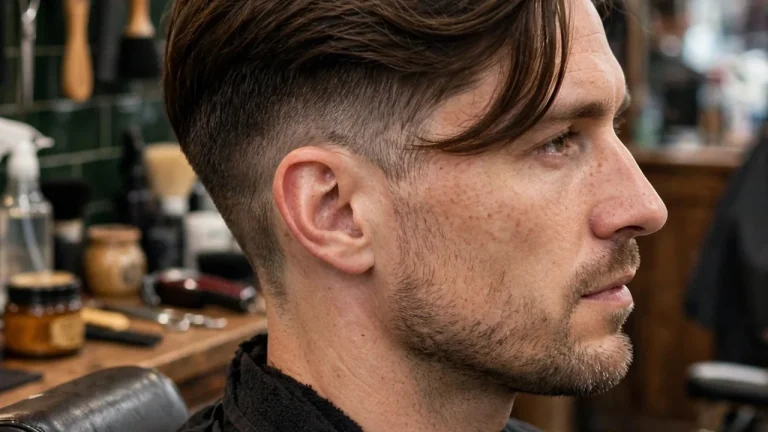
The Caesar fade keeps the classic fringe and top but graduates the sides down in a fade, low, mid, or high. The contrast between the longer top and the faded sides makes the cut read sharper and more current, and it photographs well, which is part of why it stays popular. A low fade keeps it office friendly, while a high fade pushes it toward statement territory. Beyond low, mid, and high, ask about a skin fade for maximum contrast, a drop fade that follows the curve of the head, or a temple fade that sharpens just the hairline while the rest stays classic.
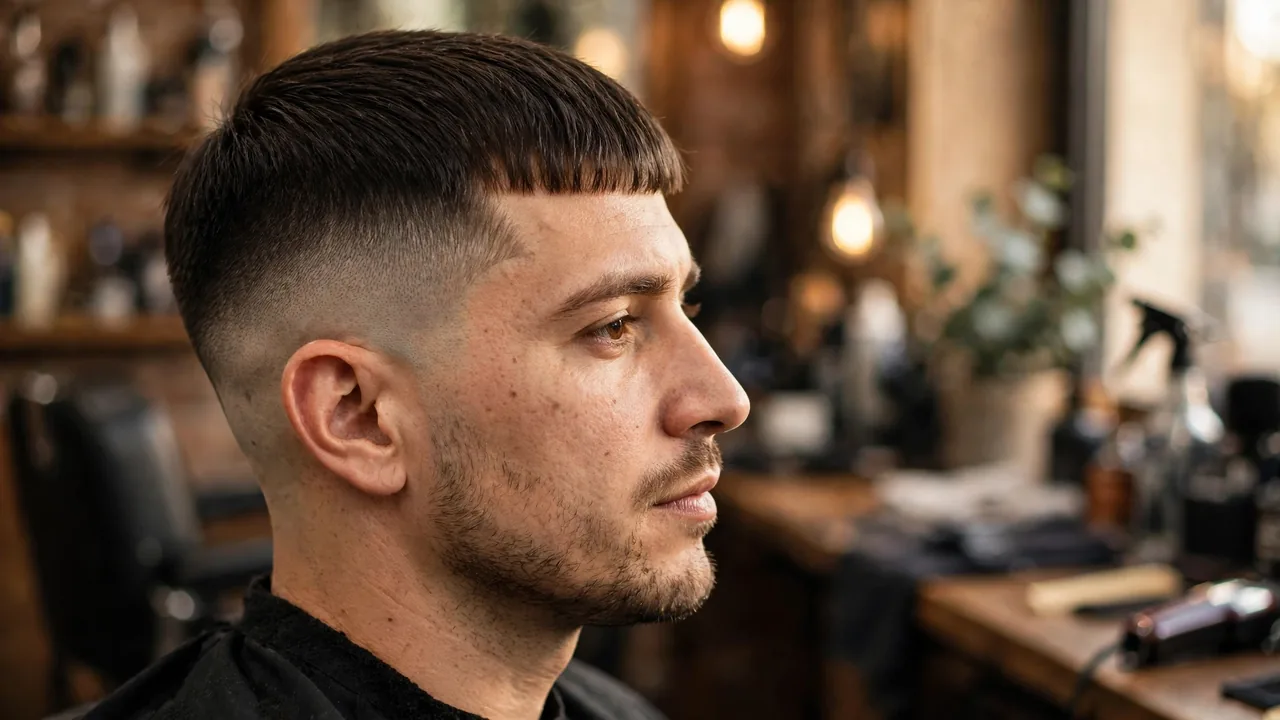
The fade does add maintenance. A blended fade loses its crispness in about two weeks, so this version commits you to more frequent barber visits than the even length classic.
Dark Caesar taper fade
The dark Caesar is a specific variation built for thick and coarse hair. It keeps the hair darker and fuller on top by cutting it shorter and closer to the head, which removes bulk without removing the shape. Paired with a low taper fade around the ears and neckline, it gives a clean outline while the top stays dense and dark, hence the name. Ask for a crisp lineup along the hairline and temples, since sharp edging is half of what makes this version read clean, and men with 360 waves often wear it with the waves brushed forward into the fringe.
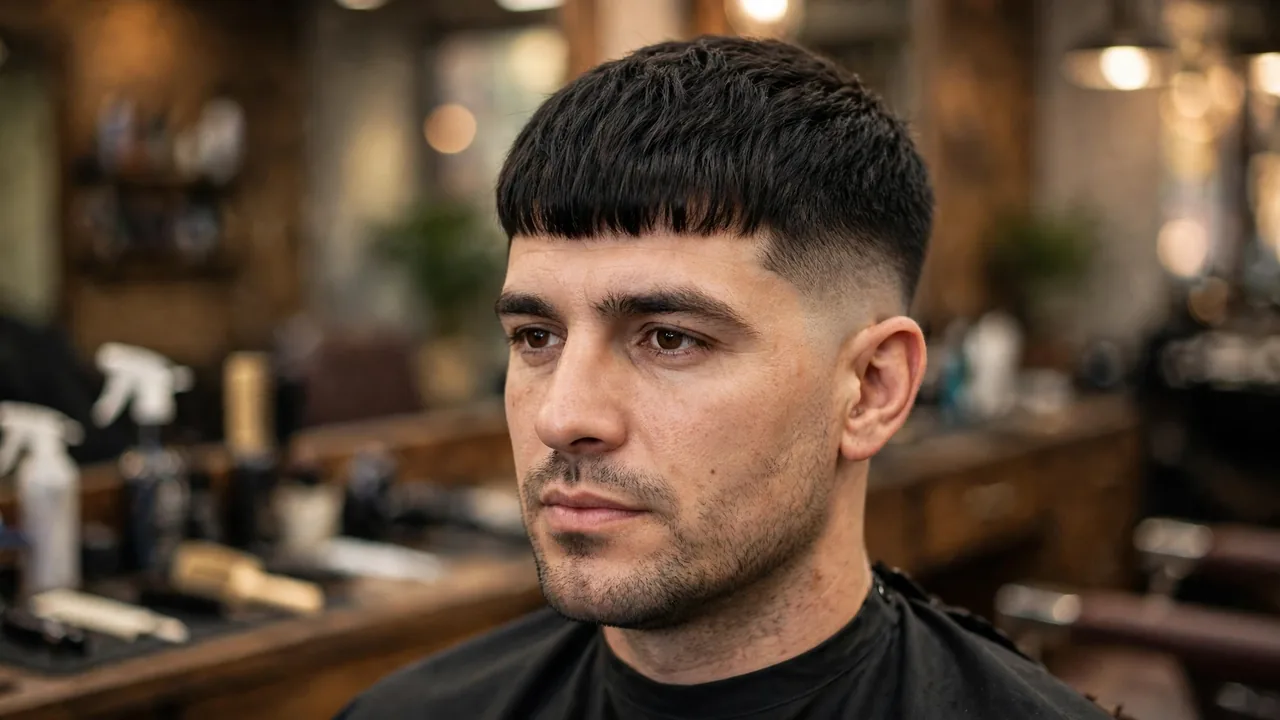
This version suits men whose hair grows outward instead of lying down. The shorter top length controls the volume, and the taper keeps the edges sharp. It is also the version that works best on very curly or coily hair, where a longer Caesar would puff up uncontrollably.
Caesar undercut
The Caesar undercut is the boldest take on the cut. The top keeps the classic length and the straight fringe, but the sides drop into a stark disconnected undercut instead of a blended fade. There is no graduation, just a hard line where the longer top meets the short sides, which makes the fringe read even sharper. It suits men who want the Caesar neatness with an edge, and it grows out into a messy disconnected style that still looks intentional for a few weeks.

Ask for it by naming the disconnect, since a barber who hears undercut will otherwise picture longer slicked back hair. The line for this cut is simple, Caesar on top, undercut on the sides, no blending between them.
Caesar vs French Crop vs Crew Cut
These three cuts get confused constantly because they are all short and neat. The differences are small but they matter when you are telling a barber what you want. This table settles it.
| Cut | Fringe | Top length | Sides | Overall feel |
|---|---|---|---|---|
| Caesar | Straight, blunt, combed forward | Half inch to two inches | Even length or faded | Classic and structured |
| French crop | Textured, often choppy or forward | One to three inches | Usually faded or tapered | Modern and relaxed |
| Crew cut | None, the front is short and upright | Quarter inch to one inch, shorter at the crown | Faded or tapered | Military and minimal |
| Ivy League | Side parted, no forward fringe | One to two inches, parted to the side | Tapered | Preppy and polished |
The French crop is the closest relative, and the line between the two has blurred as textured Caesars became popular. The honest difference is that a true Caesar keeps the fringe blunt and level, while a French crop lets it break up. If you want texture, our guide to the French crop haircut goes deeper on those choppy versions. The Ivy League haircut is the dressed up alternative for men who want the same short neatness with a side part instead of a forward fringe.
Exactly What to Tell Your Barber
Ask for a Caesar and most barbers will picture the classic version, so be specific about which take you want. Use these lines and adjust the length to your taste. On the sides, most barbers reach for a number 2 to number 4 guard for the classic even version, or blend down to a number 1 for the sharper faded takes. Naming the guard takes the guesswork out of the cut.
“I want a Caesar with the fringe cut straight across and combed forward.”
“Keep the top between one and two inches, cut with scissors so it lies flat.”
“For the sides, keep them even with the top” (or: “give me a low fade on the sides and back”).
“Point cut the fringe ends so it does not look like a solid shelf.”
“Square off the neckline” (or: “taper the neckline naturally”).
Bring a photo of the exact version you want, because the word Caesar alone covers too much ground. Watch a barber cut a Caesar step by step before your appointment so you can point to the parts you want changed. And if you are deciding between this and something shorter all over, the buzz cut styles guide covers what happens when you drop the fringe entirely.
How to Style a Caesar Haircut Every Day
Daily styling takes about two minutes, which is the whole point of the caesar haircut men pick when they want to stop thinking about their hair. Wash, towel dry, push everything forward, and you are close to done. The two finishes below cover the classic and the modern approaches.
The classic neat finish
After towel drying, comb everything straight forward from the crown. The fringe should land flat on the forehead in one clean line. A pea sized amount of light cream or a touch of pomade smooths flyaways without making the hair look wet. This is the version that works in an office and at formal events, and it photographs cleanly from the front.
The neat finish depends on the cut being fresh. Once the fringe grows past the eyebrows it stops looking neat and starts looking overgrown, which is your signal for a trim. Do not try to style an overgrown fringe with more product. It needs the barber, not the jar.
The textured messy finish
Work a small amount of matte clay or texture powder through dry hair with your fingers, pushing everything forward and slightly to one side. Then pinch small sections of the fringe to create separation. The result should look deliberately undone, not actually messy. This finish suits the textured and dark Caesar versions best.
Less product beats more product here. Too much clay clumps the fringe into spikes, which reads as a different haircut entirely. Start with half of what you think you need and add more only if the hair will not hold. Second day hair often styles better than freshly washed hair for this finish, since a little natural oil helps the pieces separate.

Pairing the Caesar with a beard
The Caesar and a short beard are a natural pair, but the proportions matter. Keep the beard shorter than the top so the fringe stays the focal point, and have the barber blend the fade into the beard instead of leaving a hard step at the sideburn. A crisp lineup running from the temple into the beard cheek line ties the whole cut together. Skip the pairing if your beard grows patchy on the cheeks, since the Caesar clean lines make patchiness more obvious.
How Often to Maintain a Caesar Cut
The fringe is the clock on this haircut. The sides can grow out a little without anyone noticing, but the fringe announces itself the moment it passes your eyebrows. Follow this rhythm and the cut never looks neglected.
| Task | How often | Why it matters |
|---|---|---|
| Full haircut | Every 3 to 4 weeks | Resets the fringe line and the even length |
| Fade cleanup (fade versions only) | Every 2 to 3 weeks | Keeps the blend crisp around the ears |
| Fringe check in the mirror | Weekly | Catches uneven growth before it shows |
| Shampoo | Every 1 to 2 days | Short hair shows oil fast, especially on the forehead |
| Neckline touch up | Between barber visits | A quick trimmer pass keeps the back clean |
Who Should Skip the Caesar Haircut
The Caesar is honest about what it hides and what it shows, and it shows the forehead. Men with a deeply receding hairline often find the straight fringe draws a hard line across the thinnest area, which highlights the recession instead of hiding it. A textured version can soften this, but a high hairline and a blunt fringe are a risky combination.
Very round faces are another honest exclusion for the classic version. The even short length adds width at the sides and the flat fringe shortens the face visually, which can make roundness more obvious. A Caesar fade with some height left in the fringe works better here, since the faded sides remove the width.
Cowlicks at the front hairline can fight the fringe all day. If your hair grows straight up at the front, forcing it forward needs product and patience every morning. Some men make it work with a longer textured version that has enough weight to sit down, while others are happier with a cut that works with the cowlick instead.
FAQs
Conclusion
The caesar haircut men keep coming back to earns its place by being honest. It is a short cut with a straight fringe, it takes two minutes to style, and it needs a trim every three to four weeks to keep the fringe line clean. Pick the version that matches your hair, classic for straight fine hair, textured for wavy or stubborn hair, dark Caesar for thick coarse hair, and use the barber script above so the chair time delivers exactly what you pictured. Pop culture keeps rediscovering this cut, from 1990s music videos to the endless commentary on one famous tech CEO’s fringe. Two thousand years in, the Caesar is not going anywhere. Compare it against the other short classics from the barbersgrooming.com homepage before you book.